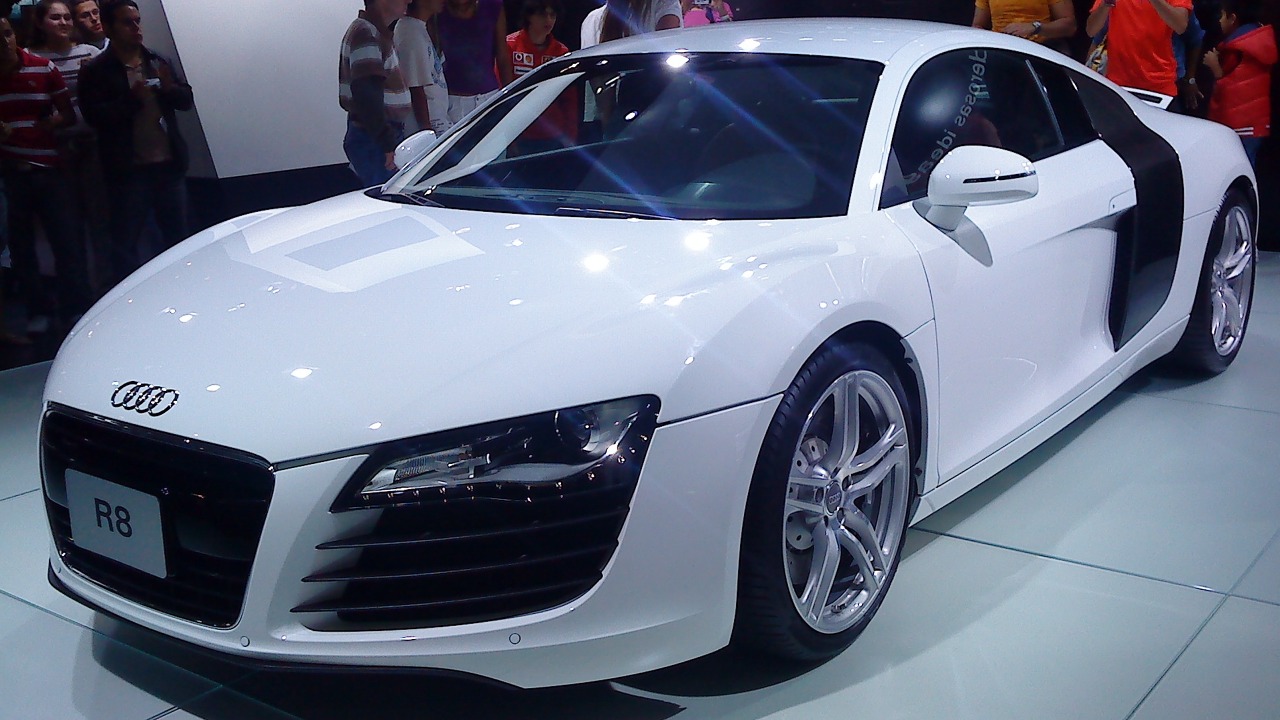
The 2008 Audi R8 arrived as a rare kind of supercar, one that chased exotic speed while still promising the manners of a luxury sedan. It borrowed drama from Audi’s Le Mans racing program yet wrapped that hardware in an interior and driving experience that owners could genuinely use every day. Nearly two decades later, it still stands out as a turning point for how fast cars could fit into ordinary life.
From Concept Stage To Street Icon
The first production R8, launched for 2008, grew out of the earlier Le Mans quattro concept and Audi’s success at endurance racing. Its mid‑engine layout, aluminum space frame, and all‑wheel‑drive system were configured to deliver stability at high speed while preserving the brand’s familiar sense of composure.
Under the glass engine cover sat a 4.2‑liter V8, shared in broad strokes with the period RS4, tuned for high‑revving character and a distinctive induction snarl. Power went to all four wheels through either a gated six‑speed manual or a single‑clutch automated gearbox, giving buyers a choice between old‑school involvement and paddle‑shift convenience. The chassis mixed aluminum and magnesium components to keep weight in check and sharpen responses.
Later generations added a 5.2‑liter V10 and ever more aggressive performance, but the original V8 car laid the template. It set expectations for how an Audi supercar should feel, with a blend of precision, traction, and refinement that carried into the later R8 V10 models.
Performance That Felt Accessible
The 2008 R8 was quick enough to sit comfortably among contemporary exotics. Its 4.2‑liter engine revved beyond 8,000 rpm, and the car’s low weight and all‑wheel‑drive traction delivered strong acceleration off the line. The way it delivered that speed, though, mattered as much as the numbers.
Many drivers found that the R8’s balance and grip inspired confidence rather than intimidation. The mid‑engine layout placed mass near the center of the car, which improved turn‑in and stability through fast corners. Quattro all‑wheel drive helped distribute torque to maximize grip, especially on imperfect roads or in wet conditions where traditional rear‑drive supercars could feel nervous.
Steering feel was tuned for precision rather than theatrics. The rack was quick but not twitchy, and the car’s responses built progressively with speed, helping owners explore more of the performance envelope without feeling that the car might suddenly snap out of line. Brakes were sized generously, with a firm pedal feel and strong resistance to fade in spirited driving.
Everyday Comfort In A Supercar Shape
What separated the 2008 R8 from many rivals was how it behaved when the driver was not chasing lap times. Audi focused heavily on cabin comfort, sound insulation, and ergonomic layout, making the car surprisingly easy to live with.
The seating position was low and sporty, but the seats themselves were shaped for long‑distance support rather than just aggressive bolstering. The driving environment felt familiar to anyone who had spent time in an A4 or A6 of the era, with clear instruments, intuitive controls, and high‑quality materials. Visibility, often a weakness in mid‑engine designs, was relatively good thanks to large front glass and carefully shaped pillars.
Ride quality was firm but controlled. On smooth roads, the suspension kept the body flat and composed. On rougher surfaces, it absorbed sharp impacts better than many competitors, making commuting or long highway trips realistic rather than punishing. Noise levels at a cruise were also well managed, so the car could settle into a relaxed rhythm when the engine was not being worked hard.
Design That Signaled A New Direction
Visually, the 2008 R8 announced itself as something distinct from the rest of Audi’s range. Its low, wide stance, mid‑engine proportions, and signature side blades gave it a profile that was instantly recognizable. At the same time, the design avoided the excess ornament of some Italian exotics, leaning instead on clean lines and technical detailing.
The LED lighting, particularly the daytime running light strip at the front, became a defining cue. It helped establish Audi as a leader in lighting technology and gave the R8 a futuristic presence at night. The rear featured large vents, a diffuser, and twin exhaust outlets that communicated performance without resorting to exaggerated wings or scoops.
Inside, the design language carried over from Audi’s premium sedans and coupes, with a driver‑oriented dashboard, metal switchgear, and carefully aligned seams. The result was a cabin that felt less like a stripped‑out racer and more like a high‑end grand tourer, reinforcing the car’s dual mission.
Technology Borrowed From Endurance Racing
The 2008 R8’s engineering drew heavily from Audi’s experience at events such as the 24 Hours of Le Mans. Its aluminum space frame, for example, was designed to provide high torsional rigidity while keeping weight relatively low, a lesson learned from building race cars that needed to be both strong and light.
The mid‑engine layout improved cooling and weight distribution, both critical in long‑distance competition. Audi adapted those principles for road use, integrating efficient airflow management to keep temperatures under control while still meeting noise and emissions standards. The result was a car that could handle repeated hard use without feeling fragile.
Quattro all‑wheel drive, long a core technology for the brand in rallying and touring cars, was tuned specifically for the R8. The system favored the rear axle for a more traditional sports‑car feel, but could send power forward when traction demanded it. That flexibility helped the R8 remain composed in varying conditions, from mountain passes to wet highways.
Usability That Expanded The Supercar Audience
By combining serious performance with everyday usability, the 2008 R8 attracted buyers who might have avoided more temperamental exotics. Owners could drive to work in traffic, park in tight city garages, and then head to a track day on the weekend without switching cars.
The cabin offered more storage than many rivals, with a usable front trunk and additional space behind the seats for bags or soft luggage. Infotainment and climate systems mirrored those found in Audi’s mainstream models, so there were fewer compromises in daily comfort. Even the door apertures and sill design were considered so that getting in and out felt less like climbing into a race car.
Service intervals and reliability expectations were closer to those of a premium German sedan than a hand‑built exotic. That perception of durability helped reassure buyers who wanted a high‑performance car that did not require constant specialist attention.
Positioning Against Rivals
When the 2008 R8 arrived, it entered a field dominated by established names such as the Porsche 911, Ferrari F430, and Lamborghini Gallardo. Each of those cars brought its own strengths, from heritage to raw theater, but Audi aimed for a different balance.
Compared with the 911, the R8 offered mid‑engine dynamics and a more overtly exotic shape, while still delivering similar levels of everyday comfort and build quality. Against the F430 and Gallardo, it often felt more approachable to drive at moderate speeds, with better visibility and a more forgiving ride.
Pricing placed the R8 within reach of buyers who might otherwise have chosen a high‑spec 911 or a front‑engine grand tourer. That strategic positioning helped Audi carve out a niche as the brand that could deliver supercar performance without demanding supercar sacrifices in practicality.
How Owners Used The Car
Many R8 buyers treated the 2008 model as a genuine all‑rounder. It was not uncommon to see the car used for daily commuting, weekend trips, and occasional track events, all on the same set of tires and with minimal modification.
The manual gearbox appealed to enthusiasts who valued engagement, while the automated option drew in drivers who wanted the convenience of paddles in traffic. All‑wheel drive meant that in regions with variable weather, owners could keep the car on the road for more of the year rather than storing it through entire seasons.
Some owners customized their cars with subtle suspension or exhaust changes, but many left the R8 largely stock, a sign that the factory setup already struck a satisfying compromise between comfort and performance.
Legacy Within The Audi Lineup
The 2008 R8 set a template that influenced Audi’s performance strategy for years afterward. It proved that the brand could build a mid‑engine halo car that still reflected its core values of technology, quality, and usability. That success paved the way for later R8 generations and for a broader acceptance of high‑performance models across the range.
Design cues from the R8, such as the prominent side blades and distinctive lighting signatures, filtered into other models. The car also helped reinforce the idea that Audi’s motorsport efforts had tangible benefits for customers, not just marketing value.
Within enthusiast circles, the first‑generation R8, and especially the early V8 cars, gained a reputation as a kind of modern classic. They represent a moment when analog driving feels, naturally aspirated engines, and relatively simple interfaces met newer ideas about daily usability and electronic assistance.
Why The 2008 R8 Still Matters To Buyers
For shoppers in the used market, the 2008 R8 remains attractive because it offers a mix of attributes that newer cars sometimes lack. The naturally aspirated V8 delivers a linear, high‑revving character that many turbocharged engines struggle to replicate. The gated manual option, where fitted, provides a mechanical connection that has largely disappeared from modern supercars.
At the same time, the car’s comfort and practicality mean it can still function as more than a weekend toy. The interior materials have aged well, and the underlying engineering has a track record of durability when maintained correctly. For drivers who want an exotic experience without giving up the ability to use the car regularly, the original R8 continues to make sense.
Values for clean examples reflect that appeal, with demand often focused on low‑mileage, well‑documented cars. Enthusiasts who prioritize driving feel and design purity frequently seek out the early models before later updates added more power but also more complexity.
How It Shaped Expectations For Modern Supercars
The 2008 Audi R8 helped shift expectations for what a high‑performance car could be. It showed that supercar performance did not have to come with punishing ride quality, cramped cabins, or temperamental behavior in traffic. That lesson influenced competitors and contributed to a broader trend toward more livable exotics.
Manufacturers across the segment began to place greater emphasis on comfort, technology, and year‑round usability, even in their most powerful models. Adaptive suspensions, quieter cabins, and more intuitive interfaces became common, in part because buyers had seen that such features were possible without sacrificing speed.
In that sense, the 2008 R8 did more than add another name to the supercar roster. It helped redefine the category for drivers who wanted both serious performance and genuine daily comfort, a balance that continues to shape how modern sports cars are designed and judged.
More from Fast Lane Only
- Unboxing the WWII Jeep in a Crate
- 15 rare Chevys collectors are quietly buying
- 10 underrated V8s still worth hunting down
- Police notice this before you even roll window down
*Research for this article included AI assistance, with all final content reviewed by human editors.