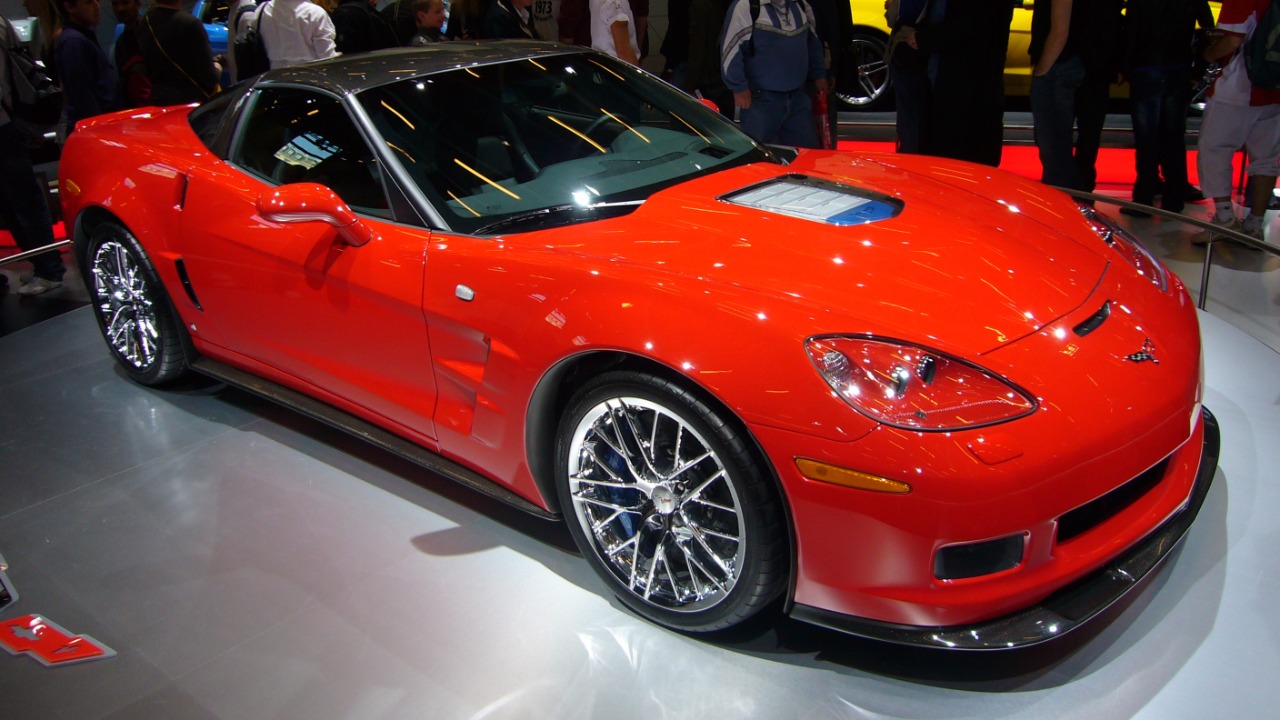
The C6-generation ZR1 arrived as the kind of American supercar that did not bother with subtlety, putting its most outrageous feature right where everyone could see it. Instead of hiding its hardware, Chevrolet cut a window into the hood and framed the supercharged V8 like a museum piece, turning every walk up to the car into a reminder that this Corvette carried a rocket under glass. I see that decision as the key to understanding the ZR1: it was engineered to be brutally fast, but also to look and feel like a piece of rolling aerospace theater.
The ZR1 name and the leap to 200-mph
To grasp why the C6 ZR1 mattered, I start with the badge itself. The ZR1 (or ZR-1) designation has appeared on several generations of the Chevrolet Corvette, always reserved for the most extreme factory performance package of its era. By the time engineers applied it to the C6 platform, the name already carried expectations of cutting edge powertrains, track-ready hardware, and a willingness to challenge European exotics on their own terms. That heritage set the stage for a car that could not simply be quick; it had to reset what a front-engine American sports car could do.
On raw numbers, the C6 ZR1 delivered. In period testing it became the first production Corvette to break the 200-mph barrier, a milestone that moved it from fast grand tourer into genuine supercar territory. I read that achievement as more than a bragging right, because it forced Chevrolet to rethink everything from aerodynamics to cooling to braking to keep the car stable and controllable at those speeds. The result was a machine that could sit in the same conversation as far more expensive European hardware, while still looking unmistakably like a Corvette.
Window Shopping and the rocket under glass

The most memorable design choice on the C6 ZR1 was not a wing or a diffuser, but a clear panel in the hood that turned the engine bay into a display case. The factory called this feature window shopping, a polycarbonate window that showcased the supercharger and engine beneath. Instead of a smooth expanse of painted aluminum, drivers got a raised carbon fiber hood with a literal viewing port into the powerplant, making the mechanical heart of the car part of its exterior styling. I see that as a deliberate choice to celebrate the hardware rather than hide it under layers of design minimalism.
That theatrical approach carried through to the details stamped on the engine itself. Factory documentation notes that the hood was not just raised and made of carbon fiber, it framed a view of the supercharged engine’s intercooler plate that boldly proclaimed “LS9 SUPERCHARGED,” a flourish that the National Corvette Museum highlights as also exclusive to the ZR1. When I look at that combination of a transparent hood insert and bold lettering, it reads like a factory-sanctioned engine bay flex, the automotive equivalent of leaving the watch caseback open so everyone can see the movement ticking away inside.
Bodywork, braking, and the C6 ZR1’s visual stance
The C6 ZR1 did not rely on the hood window alone to signal that it was something more serious than a standard Corvette. The car wore its own set of body panels, with exclusive ZR1 style fenders, hood, and rear quarters that widened its stance and made room for larger rolling stock. Period sales literature for a 2010 model underscores that these unique panels, along with exposed carbon fiber roof elements and advanced braking hardware, are what sets these ZR1’s apart from the other C6 cars, pairing the visual aggression with some of the best braking technology on the market at the time. I read that combination as Chevrolet’s way of making sure the car looked as serious as its performance numbers suggested.
Those visual cues mattered because they turned the ZR1 into an instant identifier in traffic or at a track day. The raised hood, flared rear quarters, and carbon fiber accents signaled to anyone who knew Corvettes that this was not a base model or even a Z06, but the top of the C6 food chain. In my view, that visual hierarchy helped justify the car’s price premium and reinforced the idea that the ZR1 was a halo product, a rolling billboard for what the Corvette engineering team could do when given room to chase lap times and top speed without compromise.
Gemini, rockets, and Corvette’s space-race subtext
Even before the C6 ZR1 arrived, Corvette lore had been flirting with aerospace imagery, and that thread only grew stronger as Chevrolet developed later high performance variants. In enthusiast discussions about the new Z06, fans pointed out a small rocket graphic on the car and connected it to internal interviews that described the engine as “Gemini” because of its double throttle body, double fuel pump, and twin cam layout, a nod to the Gemini program and its twin-astronaut missions. I see that naming choice as part of a broader pattern where Corvette engineers borrow language and symbolism from the space race to frame their most advanced powertrains as high tech propulsion systems rather than just big engines.
That context makes the C6 ZR1’s hood window feel even more like a rocket display under glass. While the sources tie the Gemini nickname specifically to the newer Z06, the idea of treating the engine as a piece of aerospace hardware is entirely consistent with how Chevrolet presented the ZR1’s LS9. The raised carbon fiber hood, the “LS9 SUPERCHARGED” script, and the Window Shopping panel all work together to turn the powertrain into a visual centerpiece, much like a cutaway rocket engine on a museum floor. In my reading, that is why the ZR1 still resonates with enthusiasts who grew up on stories of Mercury, Gemini, and Apollo, even as newer Corvettes adopt more sophisticated engines and electronics.
From showroom star to dusty survivor
More than a decade after the C6 ZR1 left production, its mix of performance and drama continues to shape how the car is perceived in the used market. Even when individual examples fall into neglect, the underlying reputation of the model keeps interest and values relatively firm. A recent feature on a dusty, seemingly abandoned C6-generation ZR1 points out that while it may not be as potent as the current offering, the C6-generation Chevrolet Corvette ZR1 remains one of the most desirable modern Corvettes, and its values have remained relatively strong compared to other models. I interpret that resilience as a direct reflection of how thoroughly the car delivered on its promise of supercar performance with everyday usability.
That same report underscores that the C6-generation Corvette ZR1 Edition did more than just post big numbers; it carved out a specific place in Corvette history as the car that pushed the C6 platform to its limits. Even as newer models surpass its output and technology, the combination of the 200-mph capability, the distinctive bodywork, and the unforgettable hood window keeps the C6 ZR1 from blending into the background of used performance cars. When I look at that dusty survivor, I see less an abandoned sports car and more a paused chapter in a story that still commands attention whenever someone lifts that hood and reveals the rocket under glass.