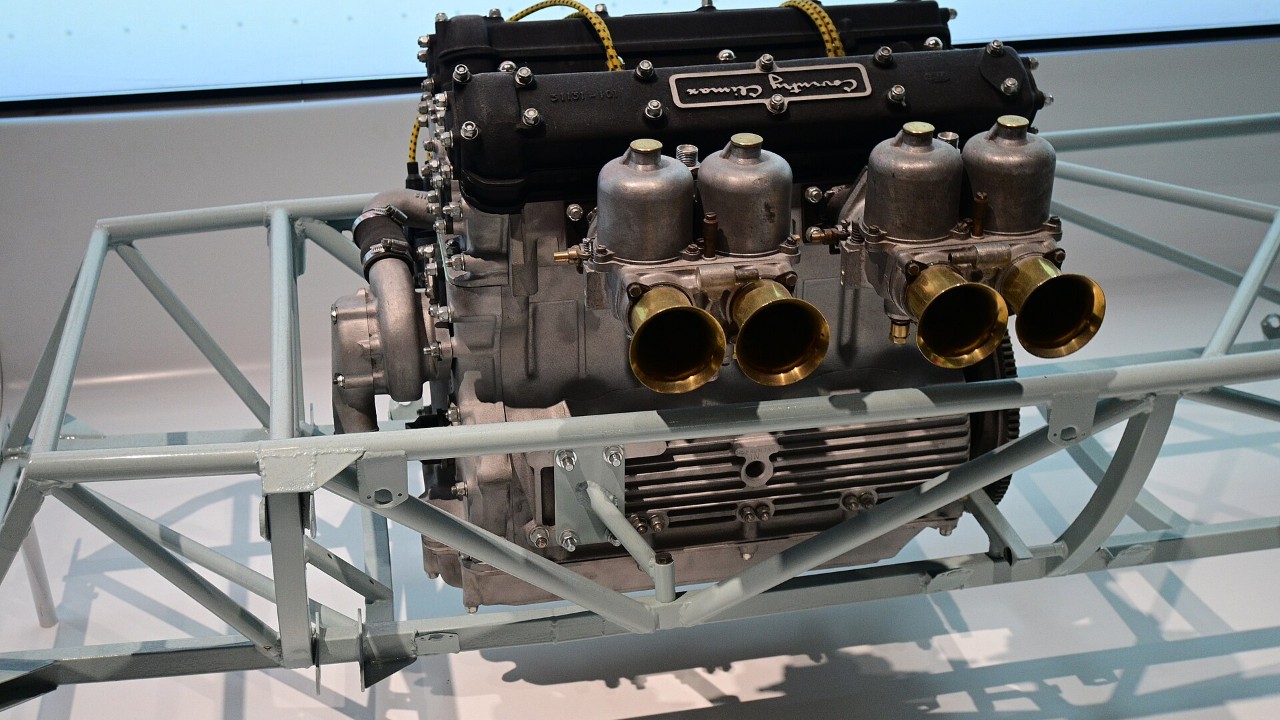
Lightweight engineering has often been overlooked in favor of sheer horsepower, yet one car has proven that a smart design can triumph over brute strength. The evolution of automotive design has shown that, with the right principles, a vehicle can achieve remarkable performance without relying solely on a powerful engine. This exploration into lightweight engineering reveals how a remarkable vehicle reshaped the automotive landscape.
THE RISE OF LIGHTWEIGHT ENGINEERING
Lightweight engineering focuses on reducing a vehicle’s weight to enhance performance, fuel efficiency, and handling. By prioritizing weight reduction alongside power, manufacturers have discovered a pathway to innovate their designs. This approach has gained traction as fuel economy regulations tighten and consumers demand more from their vehicles in terms of both performance and sustainability.
Historically, the automotive industry has placed a premium on horsepower, often viewing it as the primary metric of a car’s performance. Muscle cars of the 1960s and 70s, with their big V8 engines, epitomized this thinking. However, the tides began to change as engineers recognized that a lighter car could achieve better acceleration and handling with less engine power. This shift in perspective paved the way for significant advancements in lightweight materials and manufacturing processes.
Key innovations like the introduction of aluminum and carbon fiber have revolutionized the way cars are built. These materials are not only lighter but also stronger than traditional steel, allowing for more complex and efficient designs. As a result, vehicles can now achieve impressive power-to-weight ratios, which have become crucial in modern automotive engineering.
THE ICONIC CAR THAT CHANGED THE GAME
One car that stands out in this realm is the Lotus Elise. Launched in 1996, the Elise exemplifies the philosophy of lightweight engineering. Weighing in at just around 1,500 pounds, it boasts a modest 1.8-liter four-cylinder engine that generates approximately 190 horsepower. Despite its seemingly low horsepower figure, the Elise can accelerate from 0 to 60 mph in just over 5 seconds, showcasing the effectiveness of its lightweight construction.
The initial reception of the Lotus Elise was met with skepticism. Critics argued that a car with such low horsepower could not compete with more powerful rivals. However, the Elise challenged conventional automotive wisdom, proving that a well-designed vehicle could outperform those that relied purely on horsepower. Its agile handling and responsive steering quickly garnered a dedicated following among driving enthusiasts and demonstrated that lightweight engineering could indeed hold its own on the road.
HOW LIGHTWEIGHT BEATS HORSEPOWER
The performance comparison between lightweight vehicles like the Lotus Elise and their heavier counterparts highlights the importance of power-to-weight ratios. This metric, which is calculated by dividing a car’s weight by its horsepower, shows that a lighter car can achieve similar, if not superior, performance without the need for excessive horsepower. The Elise’s power-to-weight ratio allows it to accelerate briskly and navigate corners with remarkable precision, attributes that are critical for sports cars.
Real-world scenarios further illustrate the advantages of lightweight engineering. For instance, in competitive racing events, lighter vehicles often outperform their heavier competitors. In various track tests, the Elise has consistently shown better lap times than many muscle cars, despite having significantly less horsepower. This performance can be attributed to its superior handling characteristics and the ability to carry speed through corners, an aspect often overlooked by those who prioritize sheer power.
Aerodynamics also plays a vital role in enhancing the performance of lightweight vehicles. The Elise features a sleek design that minimizes drag, allowing it to slice through the air more efficiently. This focus on aerodynamics, combined with its lightweight structure, results in improved speed and fuel efficiency—further validating the principles of lightweight engineering.
TECHNOLOGICAL INNOVATIONS IN LIGHTWEIGHTING
Advancements in materials have been pivotal in the rise of lightweight engineering. The use of carbon fiber—known for its strength-to-weight ratio—has become increasingly common in high-performance vehicles. Manufacturers are now incorporating carbon fiber components not just in sports cars but also in more mainstream models, recognizing the benefits of weight reduction. For example, the BMW i3, an electric city car, utilizes carbon fiber reinforced plastic to keep its weight down while maintaining structural integrity.
Alongside material advancements, innovations in engineering processes have contributed to more efficient lightweight designs. Techniques such as additive manufacturing allow for the creation of complex structures that were previously impossible to achieve. These methods not only reduce weight but also minimize waste during production, aligning with sustainability goals in the automotive industry.
Lightweight principles are not limited to the automotive sector; other industries are also embracing these concepts. Aerospace and high-performance sporting goods have long utilized lightweight materials and designs, and their innovations are now influencing automotive engineering. For example, the aerospace industry’s focus on reducing weight for fuel efficiency has led to breakthroughs that can now be applied to car manufacturing.
IMPACT ON THE AUTOMOTIVE INDUSTRY
The success of lightweight engineering has led to a paradigm shift in manufacturing priorities. Automakers are increasingly focusing on developing vehicles that balance weight and power effectively. This trend is evident in the growing number of performance-focused vehicles that prioritize agility and responsiveness over sheer horsepower. Models like the Porsche 718 Cayman demonstrate this shift, combining a lightweight chassis with sufficient power to create an exhilarating driving experience.
As the automotive landscape continues to evolve, the demand for lightweight vehicles will only increase. Manufacturers are recognizing the value of efficiency and performance, particularly in an age where fuel economy is a top priority for consumers. This has led to a rise in hybrid and electric vehicles that harness lightweight engineering to maximize efficiency while still delivering impressive performance.
Looking to the future, the role of lightweight engineering in the automotive sector will likely expand, especially as sustainability becomes a pressing concern. The integration of new technologies and materials will pave the way for even more innovative designs that prioritize environmental responsibility without sacrificing performance. Vehicles that can achieve high efficiency while maintaining the joy of driving will define the next generation of automotive engineering.
LESSONS LEARNED AND THE ROAD AHEAD
Key takeaways from the success of lightweight engineering in automotive design underscore the importance of efficiency and performance in modern vehicle development. The Lotus Elise serves as a prime example of how a focus on weight reduction can lead to superior handling and acceleration, setting a benchmark for future designs. As drivers increasingly value performance without compromising on sustainability, lightweight engineering will play a crucial role in shaping the vehicles of tomorrow.
The growing importance of efficiency is evident in the development of new technologies aimed at further revolutionizing lightweight engineering. Innovations such as advanced composites and smart manufacturing processes will enable carmakers to produce lighter vehicles that do not sacrifice safety or durability. As we look ahead, the interplay between lightweight engineering and advancements in electric propulsion systems will likely yield exciting new automotive solutions.
The automotive industry is on the brink of a transformation driven by the principles of lightweight engineering. As manufacturers continue to push the boundaries of design and technology, we can expect to see a new wave of vehicles that blend agility, performance, and environmental responsibility. The road ahead is promising, with lightweight engineering at its forefront, redefining what we can expect from the cars of tomorrow.
More from Fast Lane Only
- Unboxing the WWII Jeep in a Crate
- 15 rare Chevys collectors are quietly buying
- 10 underrated V8s still worth hunting down
- Police notice this before you even roll window down
*Research for this article included AI assistance, with all final content reviewed by human editors.