Every era produces at least one car that quietly slips past the spotlight, only to be rediscovered decades later by enthusiasts who cannot believe everyone else missed it. Values rise, forum threads multiply and a once-forgotten model suddenly becomes the talk of auctions and social feeds. That is the story now unfolding around an unlikely Japanese compact from the late 1960s.
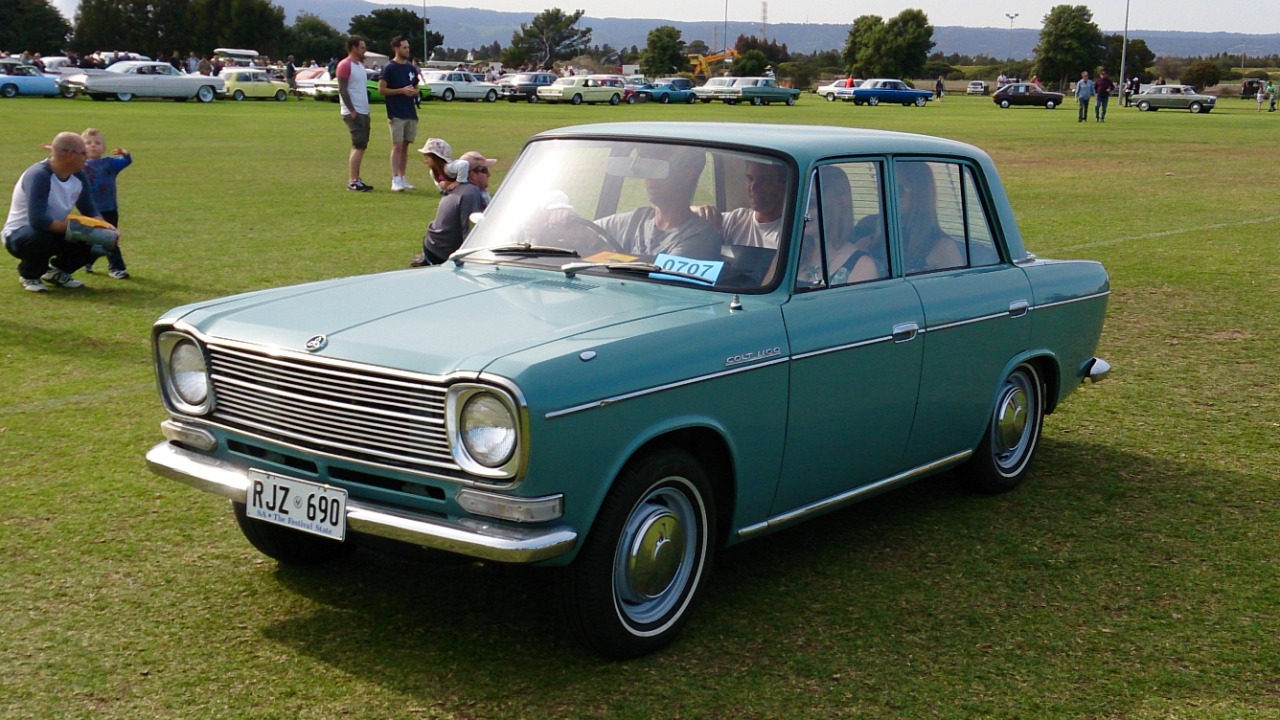
The 1968 Mitsubishi Colt 1100, a modest sedan that spent most of its life in obscurity, is rapidly emerging as one of the most talked about sleeper classics in the entry level segment. Long overshadowed by European and American icons of the same period, it is now drawing attention from collectors who see rarity, period charm and attainable pricing converging in a way that is increasingly unusual in the classic market.
What happened
The Colt 1100 arrived in the late 1960s as a practical small car built by Mitsubishi for buyers who wanted reliable transport rather than glamour. Contemporary rivals from Japan, Europe and the United States grabbed the headlines, while the Colt quietly filled driveways and company fleets. Its compact footprint, front engine and rear wheel drive layout, and simple four cylinder powertrain made it a straightforward ownership proposition, but not a car that inspired posters on bedroom walls.
That anonymity persisted for decades. When collectors began chasing Japanese classics in large numbers, they gravitated first to halo models such as the early Nissan Skyline, Toyota 2000GT and first generation Mazda RX 7. Even more accessible icons like the Datsun 240Z and early Toyota Celica attracted attention long before anyone outside specialist circles mentioned the Colt 1100. As one retrospective on the 1968 Colt 1100 put it, the car not only flew under the radar when new, it stayed there for most of its life.
Several factors kept it invisible. Mitsubishi did not have the global enthusiast following that brands like Nissan and Toyota built through motorsport and export success. The Colt 1100 also lacked the dramatic styling or high performance variants that tend to anchor a model in collective memory. Many cars were driven hard, rusted away or were scrapped once they reached the end of their working lives, leaving relatively few survivors to remind people the model had ever existed.
That dynamic has shifted as collectors hunt for fresh territory. As the most celebrated Japanese classics climb into price brackets that exclude many younger enthusiasts, attention has started to move toward lesser known models that still capture the look and feel of the era. The Colt 1100, with its clean lines, thin pillars and unpretentious cabin, fits that brief. It represents the everyday side of 1960s motoring that is increasingly interesting to historians and fans who want to experience how ordinary drivers actually lived with their cars.
Broader enthusiasm for underappreciated vehicles has also primed the market. Guides to sleepers, from obscure SUVs to overlooked coupes, have helped buyers think beyond the usual shortlists. A survey of SUVs that fly shows how this mindset has spread, encouraging readers to value originality, usability and character over badge prestige. That same logic now benefits cars like the Colt 1100, which offer a distinctive story without the crowding and cost of headline models.
At the same time, the wider classic market has embraced the idea that not every collectible car needs to be a six figure investment. Enthusiast platforms have highlighted affordable classics that still deliver period style and mechanical engagement. Lists of radar classics below have become reference points for buyers who want to get into the hobby without taking on the financial risk of a blue chip model. The Colt 1100 fits squarely into this emerging category, especially in markets where examples remain relatively inexpensive compared with more famous contemporaries.
Online culture has amplified the shift. Social media accounts that celebrate obscure machinery, along with video creators who specialize in walkarounds and driving impressions of forgotten cars, have brought the Colt 1100 and similar models in front of audiences that would never have encountered them at traditional shows. As those videos circulate, they create a feedback loop. Curiosity leads to research, research leads to classified searches, and each change of ownership generates fresh posts and workshop stories that keep the car in circulation.
The contrast with the hypercar world only sharpens the appeal. Coverage of extreme machines such as the 3.6 million dollar owned by a Dubai royal highlights how far the top of the market has moved from the experience of most enthusiasts. Against that backdrop, a modest Mitsubishi sedan from 1968, still within reach of a dedicated hobbyist, feels refreshingly grounded.
Why it matters
The Colt 1100’s sudden rise in profile is more than a curiosity for brand historians. It illustrates how the classic car market is evolving as new generations of enthusiasts bring different priorities and budgets. For many younger buyers, the appeal lies less in outright performance and more in authenticity, story and the chance to participate in a community that values discovery.
One reason the Colt 1100 resonates is that it embodies the idea of the attainable classic. For those priced out of headline Japanese icons, it offers a way to own a period correct, analog car with genuine historical interest without entering a speculative bubble. That aligns with the broader trend toward sub 20,000 dollar classics that can be driven regularly, maintained at home and insured without special arrangements. The car’s simplicity, from its naturally aspirated engine to its manual gearbox, makes it a realistic project for hobbyist mechanics who want to learn by doing.
This shift toward attainable obscurities has implications for how value is defined. Collectors once focused heavily on provenance, limited production numbers and motorsport pedigree. Those factors still matter at the top end, but the rising interest in cars like the Colt 1100 suggests that emotional connection and cultural context can be just as influential. For some buyers, the memory of a parent’s or grandparent’s similar car, or the appeal of driving something completely different from the usual show field mix, carries more weight than a famous badge.
The Colt’s story also highlights how regional histories are being rebalanced. Japanese domestic market cars that were rarely exported in period are now being imported into Europe, North America and other regions by enthusiasts who want something outside the mainstream. As that happens, models that once had limited visibility outside their home country gain fresh audiences and new narratives. The Colt 1100, which spent much of its life in markets where documentation can be patchy, is now being photographed, catalogued and discussed in detail, effectively rewriting its place in automotive history.
For Mitsubishi, the growing interest offers an unexpected boost to brand heritage. The company is better known in enthusiast circles for later performance models such as the Lancer Evolution, yet the Colt 1100 shows that its back catalog includes characterful small cars that capture the design language and engineering priorities of their time. As more owners restore and showcase these early models, they create a richer backstory that can influence how current and future products are perceived.
There is also a preservation angle. Cars that were once considered disposable transport are now being saved from scrapyards and parts bins. Each Colt 1100 that finds a sympathetic owner is one less example lost to history. That matters because these everyday cars provide context for the more glamorous machinery of the same era. They show what traffic actually looked like, how families traveled and how manufacturers balanced cost, reliability and style for mass market buyers.
The rise of the Colt 1100 intersects with a wider conversation about sustainability in car collecting. Restoring and maintaining an existing vehicle, rather than commissioning a new one, can be framed as a form of reuse, especially when the car is driven sparingly. While classic cars are not a solution to environmental challenges, the decision to extend the life of a modest, efficient vehicle from the 1960s instead of chasing a modern high consumption performance car reflects a shift in priorities for some enthusiasts.
From a market perspective, the Colt’s trajectory is a case study in how information changes value. For years, the lack of awareness kept prices low and discouraged investment in high quality restorations. As more information circulates, from original brochures to workshop manuals and parts cross references, the perceived risk of ownership declines. That in turn encourages better restorations, which raise the profile of the model at shows and online, creating a virtuous cycle.
Insurance and valuation guides are beginning to respond, tracking transaction data and adjusting estimates as demand grows. While the Colt 1100 remains far from the upper tiers of the market, even modest appreciation can influence which cars survive. Owners who once viewed their car as an old runabout may now see it as a piece of history worth preserving, especially if they encounter other examples at events or in enthusiast groups.
The Colt’s newfound visibility also affects how enthusiasts think about risk and reward. Instead of chasing already expensive models in the hope of further appreciation, some buyers are deliberately looking for the next underappreciated classic. That approach carries its own risks, since not every obscure car will enjoy a renaissance, but the Colt 1100’s example encourages more exploratory collecting. The hunt becomes part of the enjoyment, and the satisfaction of rescuing a neglected model can outweigh any financial return.
What to watch next
The Colt 1100’s emerging status raises several questions about where the classic market goes from here. One factor to watch is how quickly values move relative to supply. The model’s long period of obscurity means many cars were lost, but it also means that surviving examples may have led gentle lives in the hands of long term owners. If more of those cars come to market as awareness grows, prices could rise steadily without the sharp spikes that sometimes accompany sudden hype.
Another key variable is parts support. For any niche classic, the availability of mechanical and cosmetic components often determines whether a project is viable. Enthusiast networks can help by sharing information about interchangeable parts from other Mitsubishi models or period suppliers. If specialist shops begin reproducing trim pieces, badges or body panels, that will signal confidence in the model’s future. Conversely, if owners struggle to source essentials, enthusiasm may be tempered by practical constraints.
Events and clubs will also shape the Colt 1100’s trajectory. Dedicated model registries, online forums and social media groups give owners a place to share restoration tips, document surviving cars and coordinate meetups. If the Colt starts appearing in larger numbers at mixed marque events, it could inspire more people to consider similar under the radar cars. Organizers who feature these models alongside established icons help normalize the idea that a humble compact can be as interesting as a supercar, just in a different way.
More from Fast Lane Only