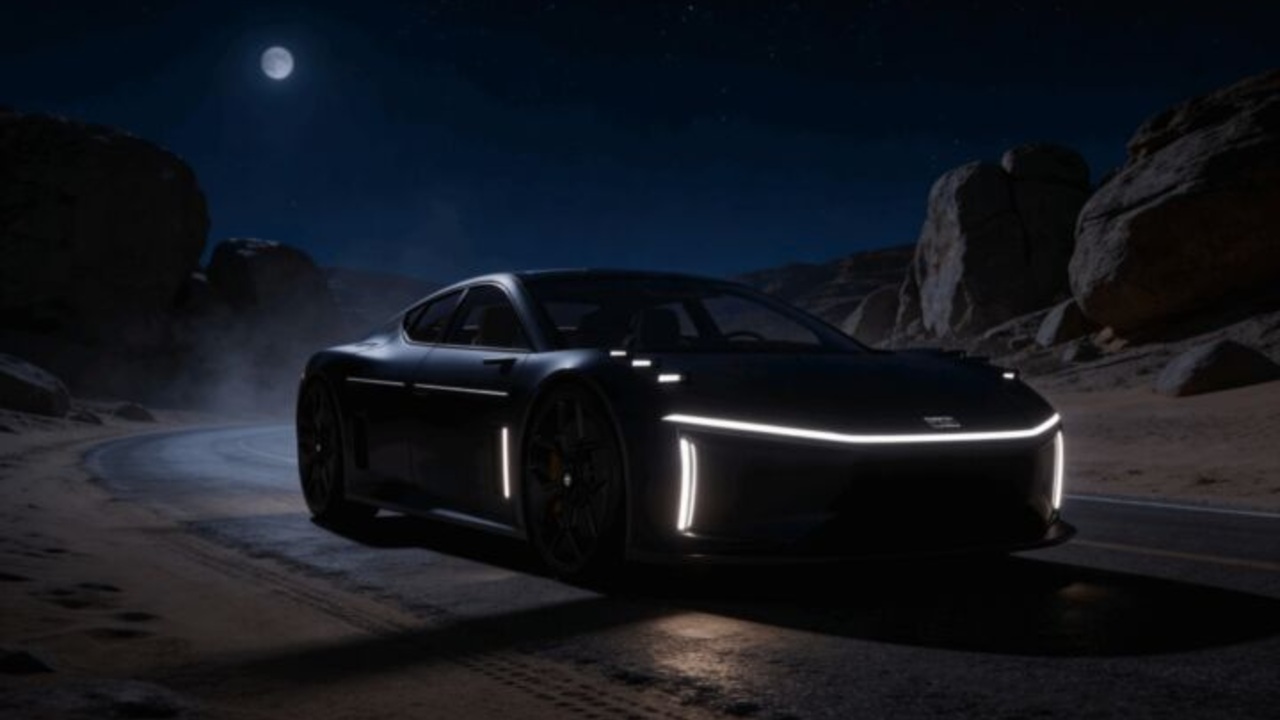
The DarkSky One is a supercar that treats the night not as an obstacle but as its home turf, turning the usual arms race over lumens into a campaign against glare and skyglow. Instead of chasing lap times, it is built to show how a car can move quickly and safely while preserving the darkness that most modern lighting erodes. In an era when light pollution is rising sharply, this concept positions performance design as a tool for restoring the night rather than overpowering it.
Reimagining the supercar for darkness, not daylight
I see the DarkSky One as a deliberate inversion of the traditional supercar brief, which usually starts with power and speed and only later worries about what the headlights might do to everyone else. Here, the starting point is the night itself, with the car conceived from the outset as a vehicle that should work best after sunset. DarkSky International describes the One as the first car designed for nighttime first, a concept that reframes lighting as a shared environmental resource rather than a styling flourish or a safety checkbox. That shift matters because the organization links vehicle lighting directly to a growing source of light pollution that washes out stars, disrupts wildlife, and affects human health.
Instead of treating this car as a one-off styling exercise, DarkSky International uses the One to anchor a broader campaign to restore the nighttime environment. Alongside the concept, the group has introduced foundational recommendations for vehicle headlights and exterior lighting that it wants policymakers and carmakers to adopt across the industry. The One is therefore less a collectible object and more a rolling argument that the way we illuminate roads can be both safer and gentler, with the concept serving as a tangible demonstration of what those recommendations might look like in practice.
How DarkSky One’s lighting fights glare and skyglow
The core of the DarkSky One’s mission lies in how it reshapes the beam of light itself, trading brute-force brightness for control and subtlety. In interviews about the project, executive creative director Peter Bray criticizes current headlights as “binary,” either on or really on, which leaves drivers constantly fighting brightness instead of seeing comfortably into the dark. The One counters that pattern with a lighting system that uses a more nuanced distribution, aiming to reduce direct glare for oncoming traffic while improving peripheral vision for the driver. The goal is to illuminate the road and its edges without assaulting anyone’s eyes or blasting stray light into the sky.
To achieve that, the concept relies on intelligent, LIDAR driven features that adapt the lighting pattern to conditions in real time. DarkSky International describes this ADAPT system as a way to keep light pointed only where it is needed, using sensors to read the environment and then sculpt the beam accordingly. Instead of glaring side lighting and decorative strips that spill light in every direction, the One favors targeted illumination that respects the surrounding darkness. By minimizing upward and sideways spill, the car aims to cut down on skyglow and the halo of wasted light that typically hangs over highways and cities.
Designing a “quiet” presence on the road
What strikes me about the DarkSky One is how its exterior design reinforces this quieter approach to light. The car wears a matte black skin that visually recedes into the night, a deliberate contrast to the chrome and reflective surfaces that often amplify visual noise on modern performance cars. Reporting on the concept emphasizes that the maker wants to minimize the car’s visual footprint, treating it almost like a ninja that lurks in the dark with sensible lighting rather than a neon billboard on wheels. That restraint extends to the way the lighting elements are integrated, with the emphasis on function and environmental impact rather than theatrical signatures.
This philosophy also shapes how the One interacts with other road users. Instead of using aggressive daytime running lights and oversized light bars that dominate the field of view, the car’s system is tuned to be easier on the eyes of pedestrians and drivers alike. DarkSky International argues that when people are not constantly fighting brightness, they can perceive motion and hazards more naturally, which can improve safety without resorting to ever-brighter beams. The One therefore models a kind of visual courtesy, suggesting that a supercar can announce its presence through precise, well-aimed light rather than sheer intensity.
From concept car to policy blueprint
For all its dramatic proportions, the DarkSky One is explicitly framed as a means to an end rather than an end in itself. DarkSky International states that it is About a Goal, Not a Car, underscoring that the concept exists to push for systemic change in how vehicles are lit. The organization has outlined five recommendations for vehicle lighting that it says will help reduce light pollution, calling for research to drive new standards across the industry. These recommendations are meant to guide regulators and manufacturers toward designs that limit glare, control beam spread, and prioritize adaptive systems over static, high-output lamps.
Alongside the reveal of the One concept, DarkSky International has also developed foundational guidance for policymakers and carmakers that extends beyond this single vehicle. That guidance is intended to influence everything from headlight regulations to how exterior accent lighting is treated in future models. By tying the concept to a concrete policy agenda, the group is trying to ensure that the ideas embodied in the One do not remain confined to a show stand. Instead, the car becomes a persuasive visual aid in a broader effort to rewrite the rules that currently reward brightness over balance.
Challenging what drivers think they want at night
Perhaps the most radical aspect of the DarkSky One is not its technology but its challenge to driver expectations. For years, car buyers have been conditioned to equate brighter headlights and more dramatic light signatures with safety and status. DarkSky International has cited polling that suggests people are increasingly frustrated with the glare from modern vehicles, yet they still tend to assume that more light must be better. The One pushes back on that assumption by arguing that darkness, handled correctly, can actually help drivers see better, because the eye can adapt and pick up contrast when it is not being overwhelmed.
This is where the One’s identity as a supercar becomes strategically useful. Supercars have historically been showcases for excess, from horsepower to exhaust noise to visual drama. By presenting a four door supercar that was not Built to Break Speed Records but instead It Was Made to Fight Light Pollution, DarkSky International is using the most extroverted corner of the car world to sell a message of restraint. If a flagship performance concept can make subdued, adaptive lighting aspirational, that aesthetic may eventually filter down to more attainable models, much as carbon ceramic brakes and active aerodynamics have done over time.
More from Fast Lane Only