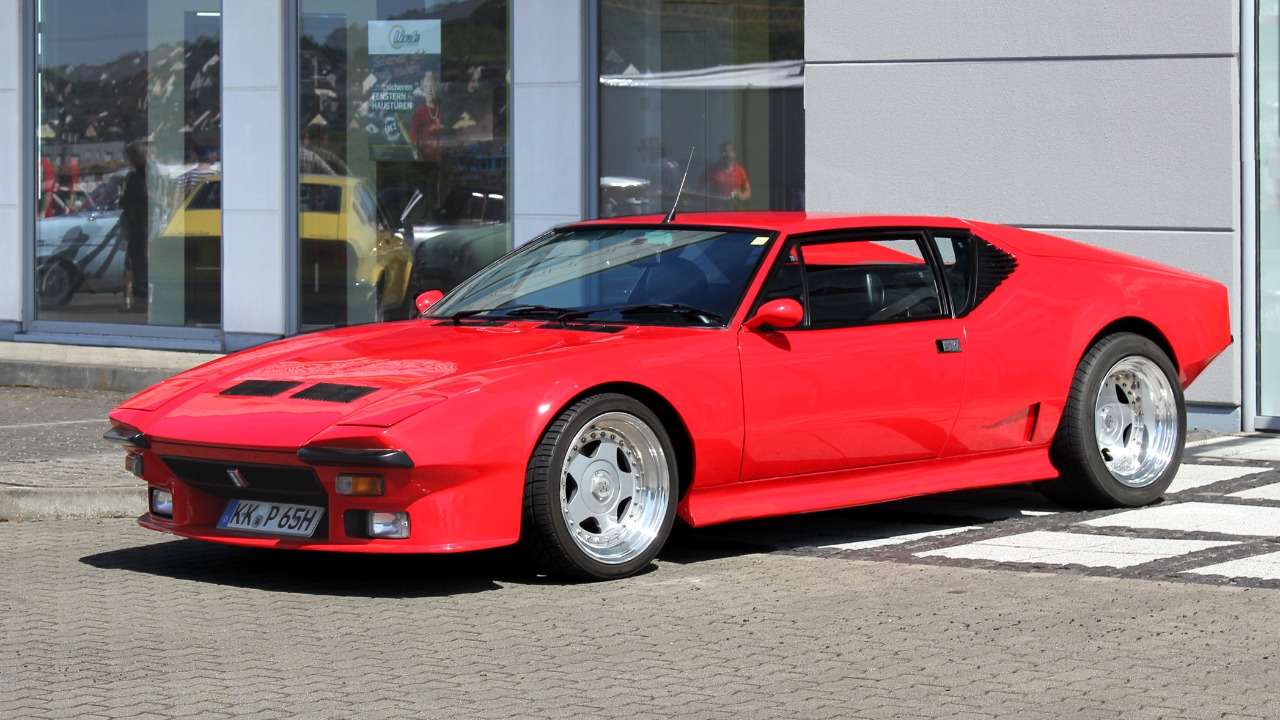
The DeTomaso Pantera arrived at a moment when Detroit muscle and Italian style were racing in different lanes, then fused them into a single mid‑engine statement. It wrapped sharp‑edged European design around a burly American V‑8, creating a car that could sit in a showroom next to a Mustang yet look like it had just rolled off a Modenese side street. In the process, it turned a transatlantic business deal into one of the most distinctive performance cars of the 1970s.
How Alejandro de Tomaso turned a transatlantic idea into reality
The Pantera began as a deliberate attempt to build An Italian, American Icon rather than a niche curiosity. Alejandro de Tomaso, an Argentine‑born racer who had settled in Italy, saw that pairing Italian coachwork with American power could deliver exotic looks without the fragile complexity that often came with European engines. His relationship with Ford first took shape in the early 1960s, when he developed his first road car and began positioning his small company as a bridge between Turin and Detroit.
By the time the Pantera project crystallized, Alejandro de Tomaso had refined that vision into a clear commercial strategy. The goal was not just to build another low‑volume Italian exotic, but to create a car that could be sold through mainstream American dealers with the backing of a major manufacturer. Official material from De Tomaso describes the Pantera as An Italian, American Icon, a phrase that captures how the car was engineered from the outset to blend Italian design sensibility with the scale and service network of Ford in the United States and other markets.
The Italian design that made Detroit steel look exotic
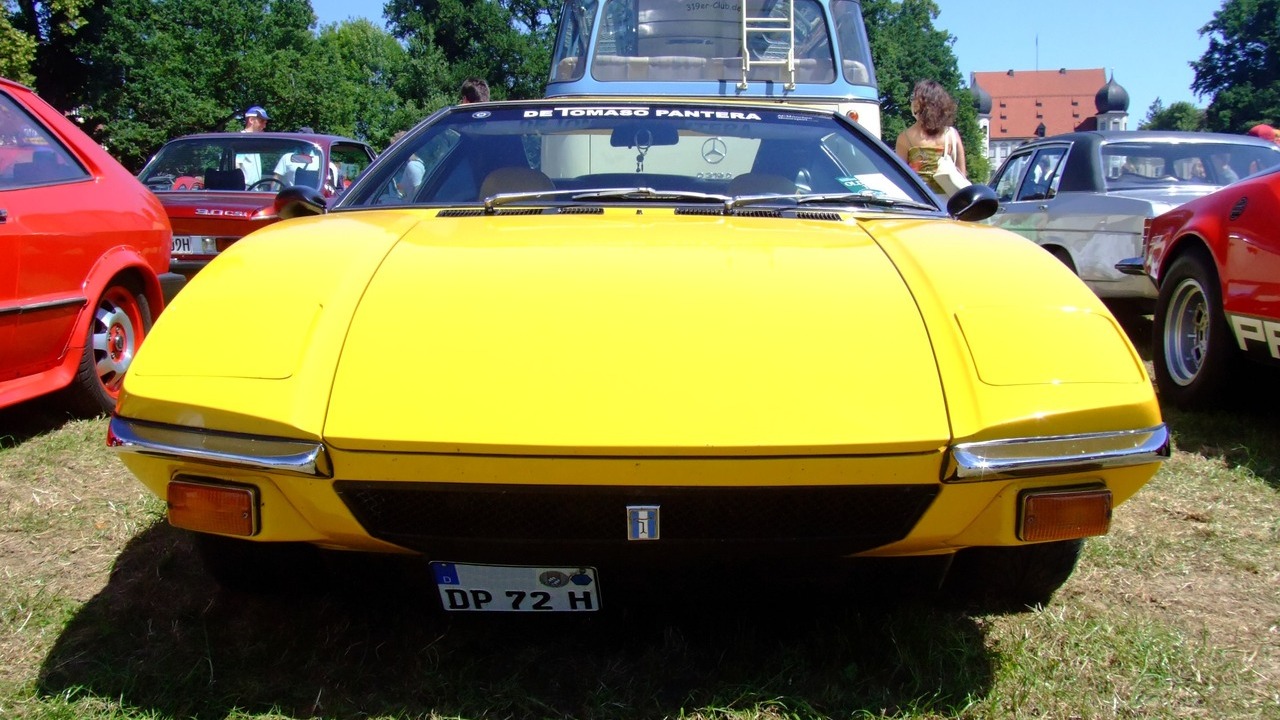
What made the Pantera instantly recognizable was its shape, a wedge that looked ready to pounce even at idle. The body was penned by the Italian studio Carrozzeria Ghia, where American designer Tom Tjaarda translated Alejandro de Tomaso’s ambitions into steel. According to the model’s History, The Pantera was designed by the Italian firm Carrozzeria Ghia’s American stylist Tom Tjaarda and was intended to replace an earlier De Tomaso model, giving the company a more modern, angular flagship.
The result was a car that looked every bit the Italian exotic yet carried subtle American cues in its stance and practicality. The low nose, pop‑up headlights, and sharply cut tail echoed contemporary supercars, while the cabin and visibility were more forgiving than some of its European rivals. That mix of drama and usability helped the Pantera stand out as The De Tomaso Pantera that enthusiasts still describe as an Italian supercar hybrid, a machine that could turn heads on a boulevard but still feel approachable to drivers used to Detroit proportions.
The Ford V‑8 that gave the Pantera its American heart
If the styling was pure Turin, the powertrain was unmistakably Dearborn. At the core of the 1971‑74 DeTomaso Pantera sat a robust Ford V‑8 that delivered the kind of torque American buyers expected from a muscle car. Contemporary accounts of the 1971‑74 DeTomaso Pantera emphasize how it combined Italian exotic sports car styling with a reliable, potent Ford V‑8, a pairing that made the car less intimidating to own than some hand‑built European rivals that demanded constant tuning.
That engine choice was not just about convenience, it was central to the business case. In 1971, Ford, along with De Tomaso, moved to sell a mid‑engine supercar through its own dealer network, giving the Pantera an American Heart in both mechanical and commercial terms. Reporting on The Real Story Of The Ford, Powered, De Tomaso Pantera notes how the partnership allowed De Tomaso to tap into Ford’s parts supply and service infrastructure, while Ford gained a halo car that could sit above its existing performance models. The arrangement meant that a buyer could walk into a Lincoln‑Mercury showroom and order a De Tomaso Pantera with the confidence that the Ford, Powered drivetrain would be familiar to technicians trained on domestic V‑8s.
From showroom experiment to cult classic
Once the Pantera reached American showrooms, it became a rolling experiment in how far Detroit customers would go for Italian flair. The car’s mid‑engine layout, sharp styling, and Ford, Powered performance put it in rare company for a vehicle sold through a mass‑market network. Coverage of The Real Story Of The Ford, Powered, De Tomaso Pantera explains that in 1971 Ford, along with De Tomaso, effectively sold a supercar in ’71, something no other major American manufacturer was attempting at that scale. That decision signaled a willingness to test whether buyers who loved Mustangs and Torinos might stretch for a mid‑engine exotic that still carried a familiar blue‑oval heartbeat.
Over time, the Pantera’s blend of virtues and flaws helped cement its cult status. Owners appreciated the way the Ford V‑8 could be serviced with domestic parts, while the Italian bodywork and chassis demanded more specialized attention. The 1971‑74 DeTomaso Pantera run, often cited with the figure 74 to mark the end of that initial production window, gave the car a finite aura that later boosted its appeal among collectors. As the years passed, enthusiasts came to see the Pantera as a snapshot of a specific moment when an Italian company and Ford tried to stretch the definition of what a showroom performance car could be.
Why the Pantera still matters in the age of global platforms
Looking back from today’s world of global platforms and shared architectures, the Pantera feels like a precursor to the modern performance alliance. It showed that an Italian company could lean on American hardware without losing its identity, and that a Detroit giant could experiment with mid‑engine layouts and Italian styling without building everything in‑house. The official description of the Pantera as An Italian, American Icon captures how Alejandro de Tomaso and his partners at Ford anticipated a future where cross‑border engineering would be the norm rather than the exception.
For enthusiasts, the car’s enduring pull lies in that tension between worlds. The Pantera is at once The De Tomaso Pantera that fans celebrate as an Italian supercar hybrid and a product of American corporate ambition. Its story, traced through the History of The Pantera and the accounts of how Alejandro de Tomaso worked with Ford, shows how a single model can carry the weight of two automotive cultures at once. In an era when performance cars are often engineered by committee across continents, the Pantera stands as a reminder that the idea of blending Italian artistry with Detroit steel has been with us for decades, and that when it works, the result can be far more than the sum of its parts.