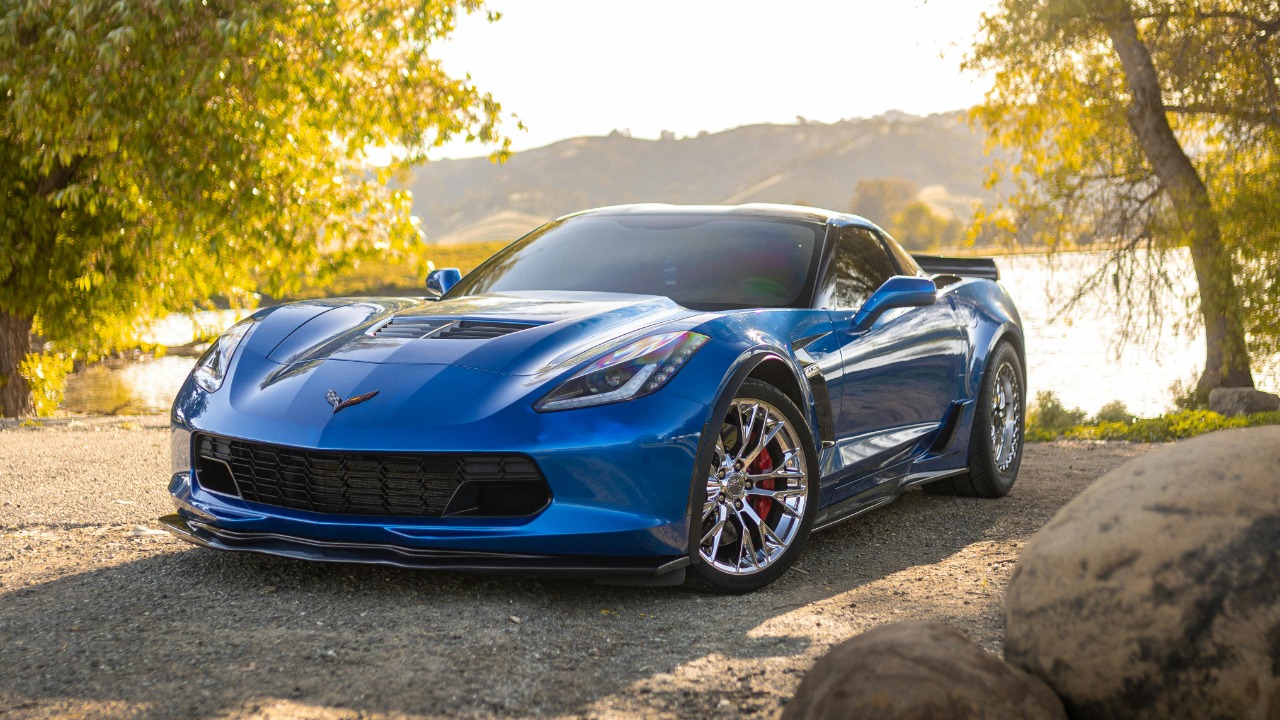
The Corvette C8 Z06 does not just sound different from every Corvette that came before it, it sounds like it slipped out of a European supercar paddock and onto American streets. The shriek from its LT6 V8 seems to defy what a pushrod small-block lineage is supposed to deliver, and that is exactly why it feels like this car is breaking long standing rules about how an American V8 should behave.
Instead of the familiar off beat burble that has defined generations of Chevrolet Corvette models, the C8 Z06 delivers a sharp, metallic wail that climbs toward motorcycle like engine speeds. I hear in it a deliberate attempt to merge American displacement with race bred engineering, and the result is a soundtrack that challenges expectations as aggressively as the car challenges lap records.
The rulebook Corvette sound: cross plane thunder
For decades, the classic Corvette voice has been built around a cross plane crankshaft, the layout that gives most American V8s their deep, syncopated rumble. In a traditional cross plane design, the crank pins are arranged at 90 degree intervals, which smooths out primary and secondary vibrations but creates uneven exhaust pulses that our ears interpret as that signature loping idle and heavy beat. Technical breakdowns of the Difference Between Cross and Flat, Plane Cranks explain how this geometry adds mass and complexity to the crankshaft, trading some responsiveness for refinement and that unmistakable low frequency thump.
That layout has defined not only the sound but also the character of the American performance V8, including generations of front engine Corvettes that leaned on big displacement and strong midrange torque. Analyses like Quick Tech on Crossplane and Flat Plane Crankshafts Explained point out that the cross plane crankshaft is heavier and less eager to spin to extreme engine speeds, but it rewards drivers with smoothness and a broad, accessible powerband. That is the acoustic and mechanical rulebook the C8 Z06 deliberately walks away from.
Flat plane rebellion: why the Z06 sounds like a Ferrari in disguise
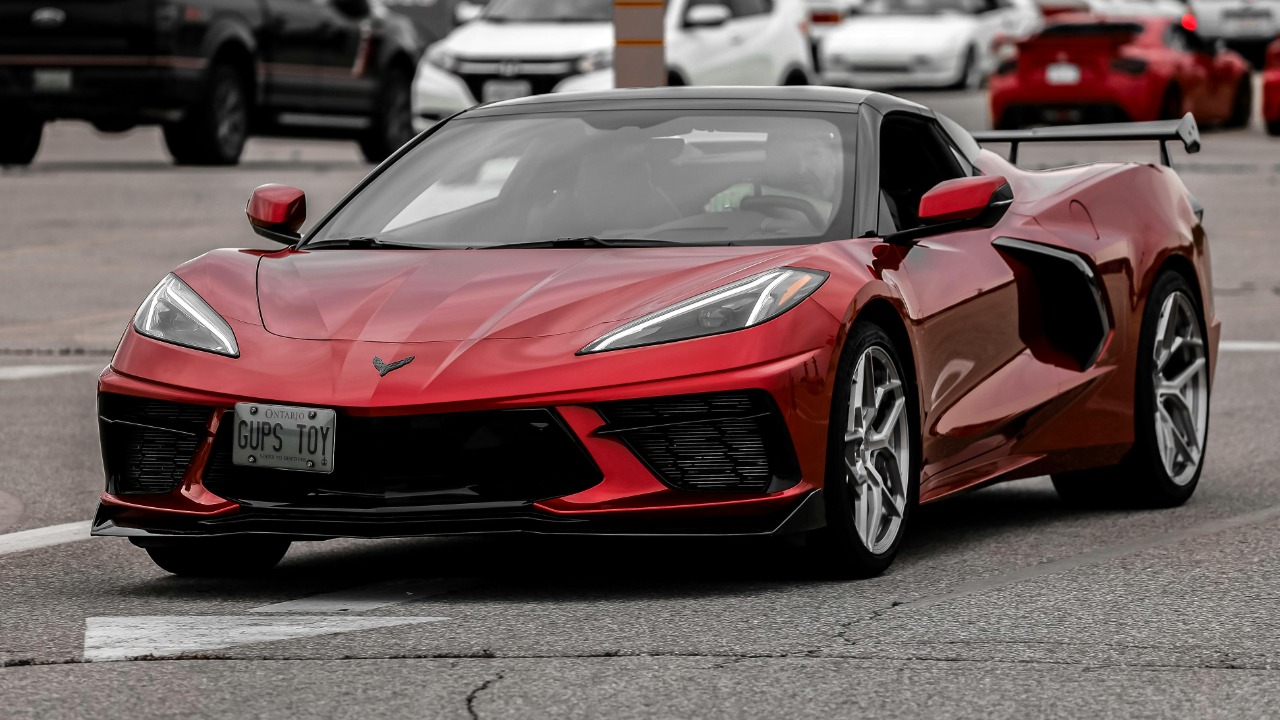
The C8 Z06’s LT6 engine flips that script by adopting a flat plane crankshaft, a configuration more commonly associated with high revving European exotics. In a flat plane layout, the crank pins are arranged in a 180 degree pattern, which simplifies the crankshaft, reduces rotating mass, and creates evenly spaced firing events that favor rapid scavenging of exhaust gases. Technical explainers on the All New Flat Plane Crank DOHC layout that helps Power the Corvette LT6 describe how this design, combined with short stroke and oversquare cylinders, encourages the kind of sky high revs that transform the exhaust note from a baritone rumble into a tenor scream.
That change in crank geometry is why so many enthusiasts compare the Z06’s voice to Italian machinery rather than its own family tree. A widely shared breakdown of Ferrari V8 vs Corvette sound characteristics highlights how a flat plane Ferrari V8 produces a higher pitched, more even tone, while a traditional Corvette cross plane V8 delivers a choppier, bass heavy soundtrack. By adopting the flat plane approach, the C8 Z06 intentionally moves its acoustic signature into Ferrari territory, yet it does so while retaining the displacement and everyday usability that define an American supercar.
The LT6: numbers that explain the noise
Under the rear hatch, the LT6 is the mechanical reason the Z06 sounds like it is ignoring the old rules. The engine is a 5.5 liter, naturally aspirated V8 that pairs its flat plane crank with dual overhead cams and an appetite for revs that would have been unthinkable in an old school small block. Official specifications for the While the LT6 confirm a redline of 8,600 RPM, with a maximum of 670 hp, 500 k W, 679 PS at 8,400 RPM and 460 lb⋅ft of torque at 6,300 RPM, figures that place this engine squarely in the realm of exotic track specials rather than traditional muscle cars.
Those numbers are not just bragging rights, they are the reason the exhaust note climbs and hardens instead of flattening out as the tachometer sweeps clockwise. A detailed breakdown of how the LT6 engine shapes the Chevrolet Corvette Z06 experience describes the powerplant as the heart of the car and notes that its character can only be described as otherworldly, a word that fits the way the sound keeps building intensity all the way to that 8,600 RPM ceiling. In practice, the LT6’s combination of displacement, revs, and breathing efficiency is what lets the Z06 sing like a race car while still delivering the torque and drivability expected from a road going Chevrolet Corvette.
Exhaust alchemy: how Chevrolet tuned the scream
Even with a flat plane crank and a high revving LT6, the Z06 would not sound the way it does without careful exhaust tuning. Engineers had to decide how much of that raw, high frequency energy to let out and how much to tame for daily use, and they clearly chose to showcase the drama. Technical explainers on the 2023 Chevrolet Corvette Z06 exhaust note emphasize that, Thanks to its flat plane crank and high revving nature, the system was designed so the car could show off that unique sound rather than hide it behind heavy muffling.
From the driver’s seat, that philosophy comes through in the way the exhaust changes character as the revs climb, starting with a purposeful growl and building into a piercing, motorsport style shriek. Early independent tests of the C8 Corvette Z06 exhaust describe the note as unmistakable, but not in the way that it is distinctive to Corvette, instead highlighting how the flat plane character sets it apart from the rest of the Corvette family. That is the sound of a company choosing to lean into the LT6’s unusual voice rather than smoothing it into something more familiar.
From track focus to street theater
The C8 Z06 is not just a sound experiment, it is a purpose built track weapon whose noise is a byproduct of its mission. Official materials describe the 2026 Corvette Z06 as a supercar that is not just fast but focused, with an LT6 5.5L mid engine layout, available 20 inch front and 21 inch rear visible wheels, and a dual clutch transmission that keeps the engine on the boil. That hardware is there to deliver lap time, yet it also ensures the LT6 spends more of its life in the upper reaches of the rev range where its voice is most dramatic.
From my perspective, that track focus is exactly what turns every on ramp or back road into a kind of street theater. A widely shared clip titled What makes the Corvette Z06’s engine unlike any other V8 in the world frames the LT6 as a statement about what a Corvette can be, and the soundtrack is central to that argument. The car’s willingness to rev, combined with the immediacy of its dual clutch shifts, means the engine is constantly brushing against that 8,600 RPM redline, turning ordinary acceleration into something that sounds like a qualifying lap.
Why it feels like rule breaking, even when it is not
On paper, nothing about the C8 Z06 violates any regulations or engineering principles, yet to enthusiasts steeped in decades of cross plane thunder, it feels like a rebellion. The contrast is so stark that many longtime fans have had to recalibrate what they expect from a Chevrolet Corvette, especially when they hear the car before they see it. A closer look at the Plane Crank DOHC strategy behind the LT6 shows that Chevrolet did not abandon its performance roots, it simply applied race bred solutions like short stroke, oversquare cylinders, and aggressive breathing to a platform that used to rely more on brute force.
That is why, when I listen to the Z06, I hear less of a betrayal and more of an evolution. The car still delivers the power, presence, and attainable supercar positioning that have long defined the nameplate, but it does so with a soundtrack that borrows from the world of Ferrari and other high revving exotics. In that sense, the C8 Z06 does not actually break the rules, it rewrites them, proving that an American V8 can keep its identity while sounding like nothing else on the road, a point underscored every time a Why style comparison video lines it up against European rivals and the LT6 holds its own by ear as much as by stopwatch.