The fully robotic car plant that once sounded like science fiction is now a concrete industrial goal, with analysts expecting the first facility where machines build entire vehicles with no human on the line by around 2030. The prospect is both technically impressive and socially unsettling, because it promises cheaper, faster cars while raising hard questions about jobs, safety, and who actually controls the factory of the future. I see this moment as a hinge point, when the auto industry decides whether automation will augment human work or quietly erase it.
The dark factory moves from concept to countdown
The core idea is stark: a “dark factory” in which robots and artificial intelligence handle every step of car production, from welding and painting to final assembly and inspection, with no workers on the floor and no need to keep the lights on. Analysts now expect the first such plant, capable of building complete vehicles without human intervention, to open in either China or the United States by 2030, turning what was once a thought experiment into a dated milestone on a project plan. Forecasts suggest that by the end of this decade there could be dozens of these fully automated facilities worldwide, each designed from the ground up around robotic systems rather than retrofitted onto legacy assembly lines.
What makes this shift plausible is not a single breakthrough but the convergence of several technologies that have matured at the same time. Industrial robots have long handled repetitive tasks, yet the new wave of humanoid machines, advanced sensors, and factory-scale AI coordination is what allows planners to talk about end-to-end automation with a straight face. Reporting on the coming generation of “dark” car plants describes how increasingly capable robots and artificial intelligence are expected to transform vehicle assembly within a few years, not a few decades, with projections that by 2030 there will be at least 10 such fully automated sites in operation.
Humanoid robots step onto the line
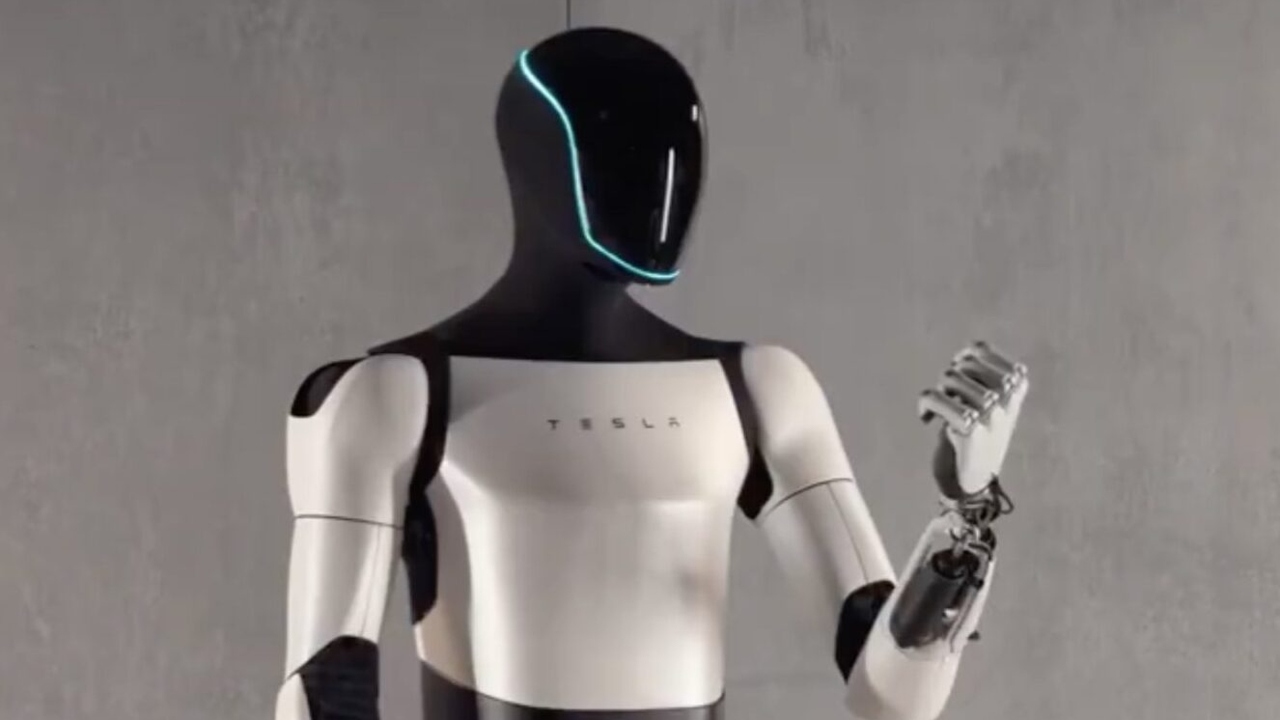
The most visible symbol of this transition is the humanoid robot, designed to move through a factory built for people and to use the same tools, stairs, and workstations. Automakers are already running pilot programs with these machines, and at least 12 of the 25 largest carmakers are testing advanced robotics in production environments. The logic is simple: if a humanoid can safely and reliably perform tasks like installing seats, routing wiring looms, or loading parts into presses, then companies can automate without redesigning every inch of their plants, accelerating the path to a fully robotic line.
Concrete plans are emerging. Hyundai intends to deploy Boston Dynamics humanoid robots at its plant in Georgia starting in 2028, a clear signal that these machines are moving from demonstration videos to scheduled production roles. Tesla is pushing even harder with its Optimus program; the company has broken ground in Texas on a facility described as a 10 million per year Optimus robot factory, an investment that only makes sense if management expects large scale industrial demand for humanoid labor. Commentators around Optimus V3 have noted that Tesla CEO Elon Musk now frames the robot as one of the company’s most important products, with an eventual commercial rollout that explicitly includes factory work as a primary application.
Prototype plants show how far automation has already gone
While the first completely human free car plant is still on the horizon, several facilities already operate as partial previews of that future. Hyundai’s Innovation Center in Singapore, known as HMGICS, is built around highly automated, flexible cell based production rather than a single long line, with robots and automated systems handling much of the work. The site operates as a digital twin Meta Factory, synchronizing a virtual model of the plant with the physical one so that engineers can test changes in software before applying them to real robots and equipment. That approach, in which the factory is treated as a programmable system, is a foundational principle of the dark factory concept.
Hyundai has also described a broader “SDF model” for its future manufacturing, emphasizing software defined factories that can respond quickly to market changes, improve product quality, and reduce costs by reconfiguring robotic cells rather than retraining large human workforces. At the same time, the company is positioning robots like Atlas within a Robotics Mediated Autonomous Cell, where machines coordinate with each other to move parts, perform inspections, and adapt to variations in real time. These examples show that the leap to a fully robotic plant is not a single jump but the culmination of incremental steps that are already reshaping how cars are built today.
Economic promise and the human cost
The economic case for a robot only plant is brutally compelling. Analysts expect that a fully automated car factory could cut manufacturing costs by as much as 50 percent, largely by reducing labor expenses, minimizing downtime, and running production around the clock. Chinese brands are widely seen as front runners in this race, in part because they are building new plants in fast growing markets and can design automation in from the start rather than retrofitting older facilities. For automakers under pressure to fund electric vehicle development, software platforms, and new mobility services, the lure of halving factory costs is difficult to ignore.
The social cost is just as significant, and it is here that I find the “terrifyingly real” aspect of this story most acute. A dark factory does not simply reduce headcount, it eliminates entire categories of work, from line operators and material handlers to some maintenance roles, replacing them with a smaller cadre of engineers, data specialists, and robot technicians. Reporting on the rise of dark car factories underscores that the goal is not partial automation but the complete elimination of all roles on the line, a shift that could displace thousands of workers per plant. While some advocates argue that new jobs will emerge in robot design, programming, and oversight, the skills gap between a seasoned assembler and a robotics engineer is vast, and there is little evidence in the available sources that large scale retraining programs are being funded at the pace this transition implies.
Safety, control, and the politics of a robot run line
Beyond economics, a factory run entirely by machines raises difficult questions about safety and control. In a traditional plant, human supervisors can intervene when something looks wrong, whether that is a misaligned panel or a dangerous situation on the floor. In a dark factory, those judgments are delegated to sensors and algorithms, with remote monitoring replacing direct human presence. The same AI systems that coordinate robots and optimize throughput would also be responsible for detecting anomalies, handling emergencies, and deciding when to halt production, concentrating a great deal of operational power in software that is often proprietary and opaque.
There is also a broader political dimension. As robotaxis, robots, and AI take center stage at events like CES, the auto sector is increasingly framed as a technology industry, with value measured in code and data rather than in stable employment at local plants. Sony Honda Mobility, for example, is using a prototype electric crossover as a platform for software and services, while Hyundai Motor Group projects that the robotics and AI market it is targeting could reach 5 trillion dollars by 2050. Against that backdrop, a fully robotic car plant is not just a manufacturing experiment, it is a statement about whose interests the industry serves. Without clear public policy on labor transitions, data governance, and safety oversight, the first dark factory will not only be a marvel of engineering, it will be a test of how far society is willing to let automation reshape work without a democratic say.
More from Fast Lane Only