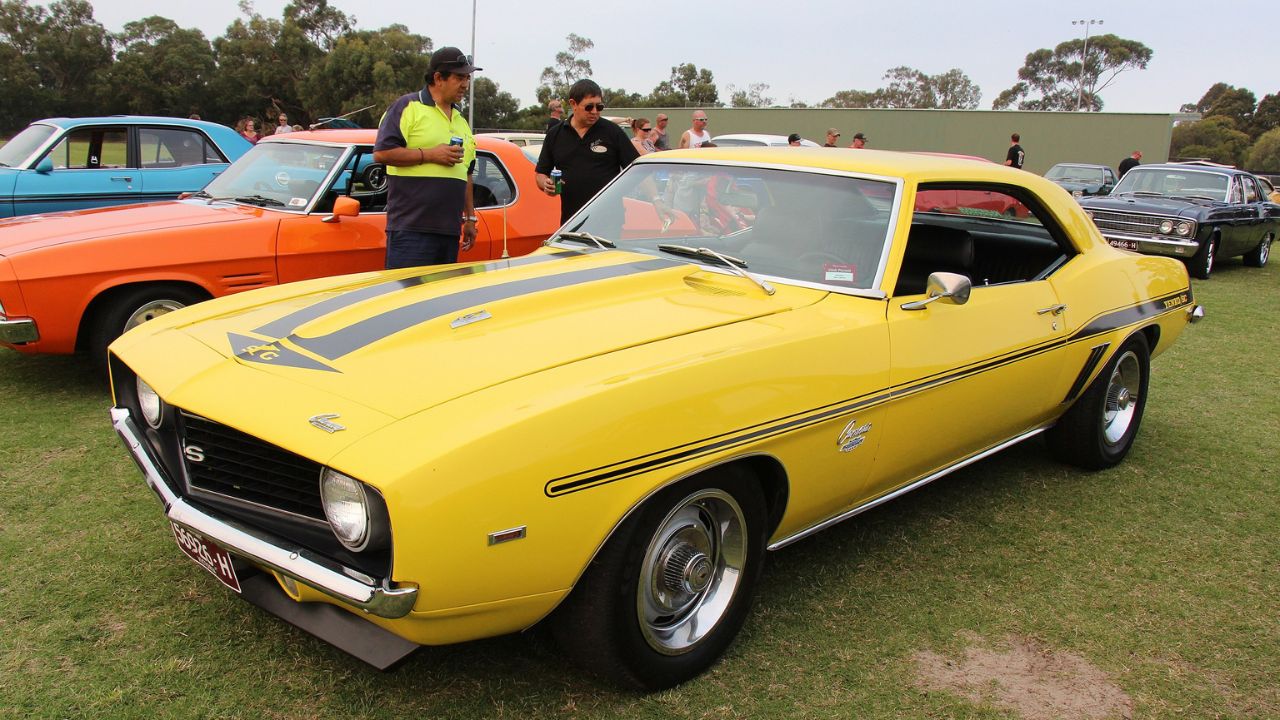
Muscle car history tends to orbit the same legends, yet one corporate workaround quietly turned a handsome pony car into a genuine street terror. By slipping a race-bred big-block into a showroom-friendly package, a small dealer operation exposed how fragile Detroit’s performance limits really were. That forgotten engine swap did more than inflate horsepower figures; it rewrote what enthusiasts expected from an American coupe and still echoes in the way builders mix parts and cultures today.
At the center of the story is a compact Chevrolet that was never supposed to carry such firepower, shaped by internal rules at General Motors and subverted by a dealer who understood the paperwork as well as the quarter mile. The same spirit of bending the rules now surfaces in everything from Japanese engines in classic Fords to turbocharged experiments and unlikely factory specials, each tracing a faint line back to that original act of mechanical defiance.
How a corporate rule created the perfect outlaw canvas
In the late 1960s, muscle buyers saw a horsepower war, but inside the boardrooms the mood was far more cautious. A corporate edict at General Motors empire barred any engine larger than 400 cubic inches from entering its smaller performance cars, even as rivals escalated displacement. That limit shaped the early years of Chevrolet’s answer to the Mustang, a car that had to fight on style, gearing, and small-block tuning rather than brute cubic inches. The rule did not kill performance, but it fenced it in, and enthusiasts quickly sensed that the chassis could handle far more than the official spec sheets allowed.
The loophole arrived through an internal ordering path known as the Central Office Production Order, or COPO, originally meant for fleet buyers rather than speed merchants. Detailed accounts explain that by using the COPO system, a savvy dealer could specify parts unavailable to normal showroom customers, including big-block powertrains that bypassed the 400 cubic inch limit. That bureaucratic side door turned a compliance-minded policy into an opportunity, offering a way to build cars that looked fully sanctioned on paper yet carried hardware far closer to the drag strip than the daily commute.
The 427 swap that turned a pony car into a menace
The forgotten hero status of the 1969 Yenko Camaro rests on a single, audacious decision: to install a 427 cubic inch big-block where corporate policy said it did not belong. Using the COPO path, dealer Don Yenko had Chevrolet assemble cars with the heavy-duty 427 already in place, then add his own touches to create a package that felt like a factory special with underground intent. Contemporary coverage of the project emphasizes that the 427 swap effectively bypassed the official displacement cap and turned an attractive coupe into something far more serious.
One period account describes how a tuner started with a sourced 427 big-block and turned a street pony car into a street-legal machine with drag-strip performance. The same basic formula appeared in other compact bodies, including the ferocious Yenko Nova that carried a 425 horsepower L72 427 V8 and was built in a run of only 37 cars. In each case the swap did more than raise output; it redefined the character of the car, turning relatively modest platforms into bare-knuckle bruisers that could humble larger and more expensive machinery.
Factory-sanctioned rule bending and the wider muscle playbook
Once the COPO path had proven that internal systems could be repurposed for performance, other factory-backed projects began to look less improbable. The partnership that created the Hurst Olds demonstrated how a specialty firm and a division could collaborate to install higher-performance engines and hardware into a fully warrantied package. A separate survey of factory builds notes that in the mid-1960s, Opel struggled to create a flagship coupe and turned to shared corporate resources to improve its performance. Each of these efforts shared a mindset with the Yenko program: use internal channels to create cars that technically complied with policy but felt far more aggressive on the road.
Beyond Chevrolet, the appetite for bending norms produced powertrains that would have seemed unlikely only a few years earlier. Pontiac’s experiment with the 301 Turbo V8 created the division’s first turbocharged muscle car, an engine that was not the most reliable and lasted only two years but still laid groundwork for later forced induction programs inside General Motors. Oldsmobile’s Hurst collaboration, Pontiac’s boosted V8, and the COPO-based Chevrolets all pointed to the same conclusion: official channels could be stretched, and once stretched, they invited even bolder interpretations of what a factory performance car could be.
From Yenko’s paperwork hack to modern hybrid builds
The spirit that put a 427 into a compact Chevrolet did not end with the original muscle era; it migrated into the garage culture that now mixes brands and technologies with little regard for old boundaries. One modern example is a 1967 Ford Mustang fastback fitted with an RB26DETT twin-turbo engine from a Nissan Skyline GT-R, creating a hybrid build that combines classic American bodywork with Japanese performance engineering. Another builder installed a Ford Escape-derived powertrain into a Mustang, demonstrating that compact crossover hardware can be adapted for performance applications with appropriate chassis modifications and tuning. These projects echo Yenko’s willingness to ignore traditional pairings and instead focus on the performance potential of any given engine and body.
More from Fast Lane Only