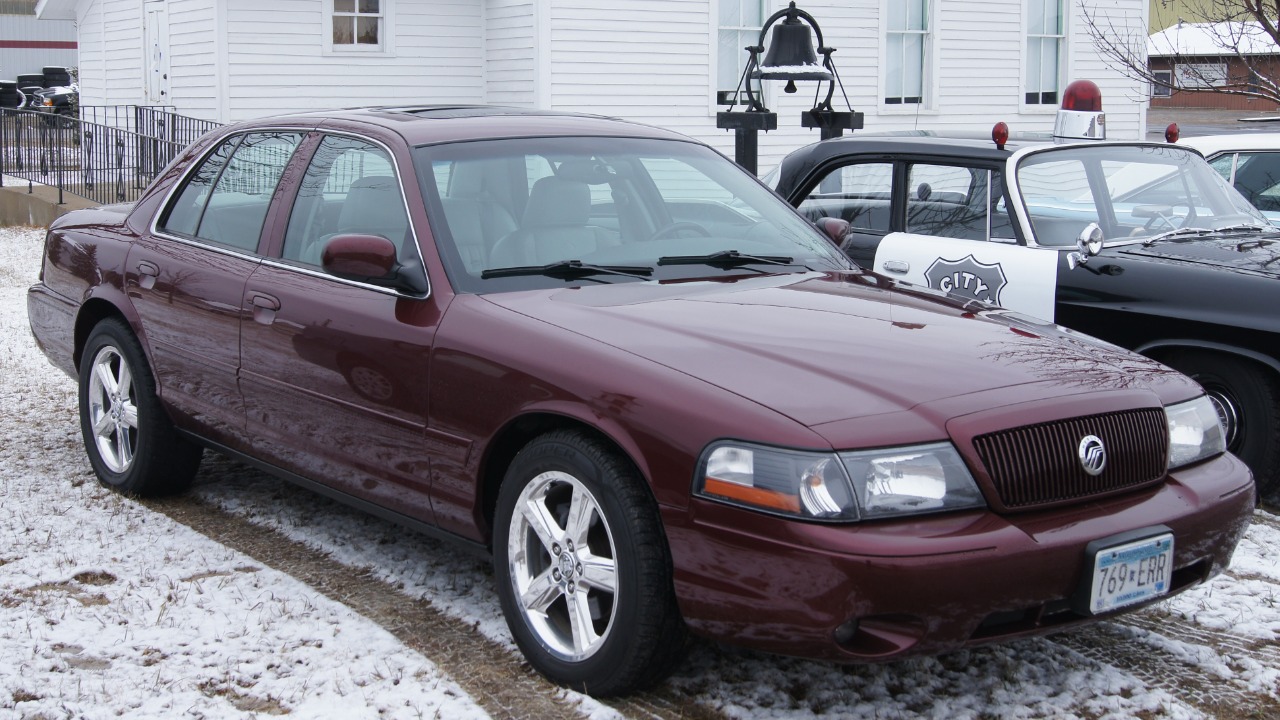
The Mercury Marauder arrived as a full-size sedan that looked every bit like a retiree’s highway companion, yet it quietly carried the hardware to run with contemporary performance cars. By turning a platform shared with the Mercury Grand Marquis into a sleeper capable of touching 150 miles per hour, Mercury created an unlikely bridge between muscle car nostalgia and modern highway speed. The story of how a so-called grandpa car hid serious pace reveals as much about engineering choices as it does about the culture that adopted it.
Built for buyers who wanted V8 power without the flash of a sports coupe, the Marauder wrapped its performance in subtle styling and familiar proportions. Underneath, though, it borrowed heavily from Ford’s performance bin and from police-spec hardware, which gave the sedan a depth of capability that enthusiasts and law enforcement would eventually test to the limit.
The Marauder nameplate returns to an unlikely host
When Mercury revived the Marauder name in the early 2000s, the company intentionally reached back to a heritage of big, powerful Mercurys and applied it to a platform better known for comfort than aggression. The modern version, described as The Marauder Nameplate Returns and a Modern Interpretation of a Classic Idea, used a 4.6 liter DOHC V8 and performance oriented wheel and tire packages to sharpen a chassis that had previously served quiet boulevard duty for the Mercury Grand Marquis and its corporate siblings. By placing the badge on a full-size sedan, Mercury signaled that the new car would honor the old formula of discreet muscle rather than chase lightweight sports sedans.
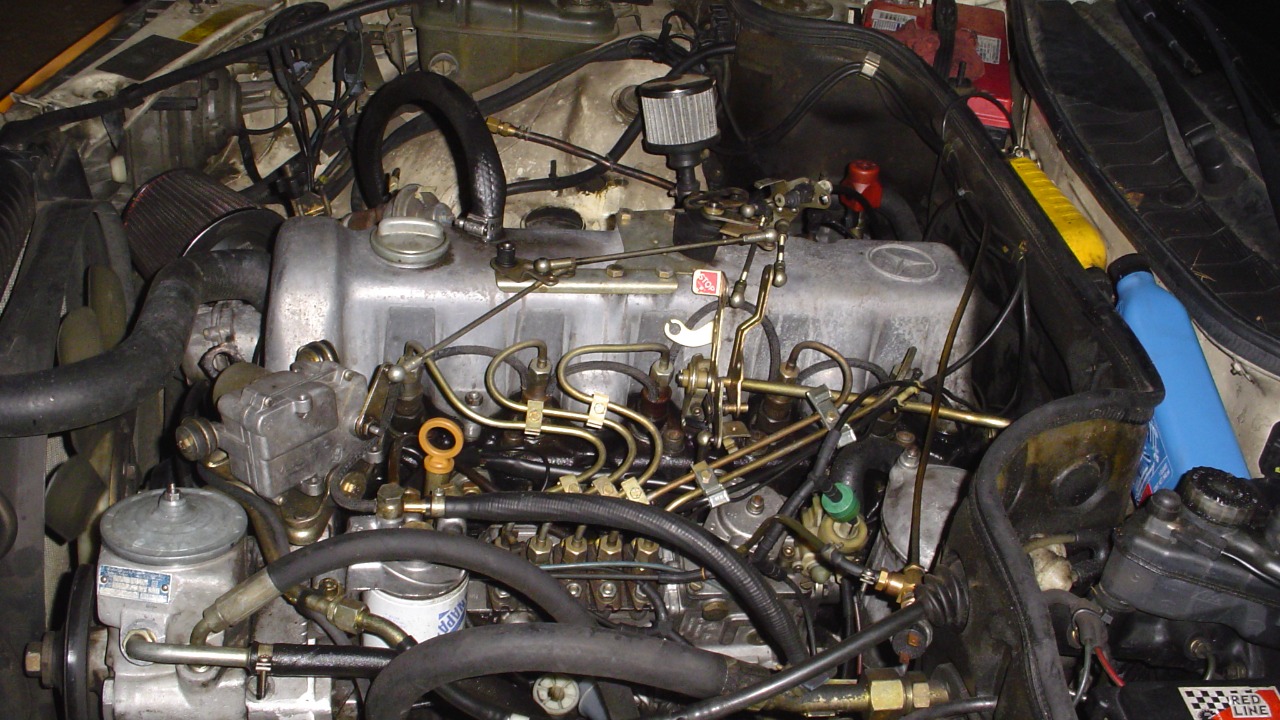
Under the hood, the engineering brief was straightforward: take proven Ford modular V8 hardware and tune it for highway speed in a heavy four door body. The result was a 32-valve engine rated at 302 horsepower and 318 lb-ft of torque at 4,300 rpm, figures that had to move a 4,200-lb sedan that still carried full luxury equipment. Contemporary analysis noted that while the output looked respectable on paper, the torque peak arrived relatively high in the rev range for such a heavy car, which shaped the Marauder’s character as a machine that came alive when the driver stayed in the throttle rather than one that leapt forward from idle. That balance between weight and power would later motivate owners and tuners to look for more speed, but it also gave the stock car a long-legged stride that suited high speed cruising.
From Grand Marquis to grand surprise
Visually, the Marauder’s greatest trick was that it did not appear to be trying very hard. The car adopted a monochromatic appearance, with trim pieces finished in body color and the only chrome limited to the wheels and a few small details, which made it blend in with traffic at a glance. To the casual observer it still resembled the Mercury Grand Marquis, a model long associated with retirees and quiet suburban commutes, yet a closer look revealed the truth in the form of larger wheels, subtle badging, and a stance that sat lower and more purposeful than the standard sedan. That contrast between sleepy styling and hidden intent laid the foundation for its reputation as a sleeper.
The mechanical differences went far deeper than paint and wheels. When enthusiasts compare the Mercury Marauder and the Mercury Grand Marquis, they point to a more powerful V8, performance oriented suspension tuning, and uprated brakes that separate the former from its softer sibling. The Marauder also shared key components with the Crown Vic police packages, including chassis upgrades and rack and pinion steering that made the big car respond more sharply than its size suggested. Those changes transformed the driving experience from floaty cruiser to something closer to an undercover interceptor, even if most drivers who saw it in their mirrors still assumed it was just another grandpa car.
Law enforcement turns the sleeper into a 150 mph tool
The Marauder’s understated looks and highway poise did not go unnoticed by law enforcement agencies that already relied on the Panther platform. In Florida, a fleet of cars was prepared with the explicit goal to convert the factory sleepers into 150-mph Dirty Harries, a phrase that captured both the cinematic bravado and the technical ambition behind the project. The first step in that program involved swapping the factory driveshaft, a necessary modification once speeds climbed far beyond the stock limiter, and the work did not stop there. Tuners such as Reinhart adjusted gearing, engine output, and suspension settings, including revised sway bars, to improve stability when the needle swept past triple digits.
Real world accounts from that era describe troopers using the modified cars at speeds that would have been unthinkable for a typical full-size sedan. One report recounts When one of the troopers rapidly decelerated from over 150 in order to catch some bikers he cracked one of the rotors, a vivid illustration of both the velocity involved and the strain placed on components that had originally been designed for more modest duty. The legend that grew around these Florida Highway Patrol Marauders painted them as some of the fastest and rarest Panther platform variants of all, and it cemented the idea that a car which looked like a Mercury Grand Marquis could, in the right hands, run with performance machinery that proudly advertised its speed.
Enthusiast culture and the sleeper legacy
Enthusiasts quickly recognized that Mercury had created a blank canvas for performance. One of the most detailed breakdowns of the car’s stock capabilities highlighted Performance Numbers That Defied Expectations, with attention to how the specification of the Mercury Marauder allowed it to stretch its legs far beyond what its sedate styling suggested. Owners and tuners shared stories of the car’s autobahn worthy stability and its ability to nudge toward 150 miles per hour once factory limiters and driveline constraints were addressed, which aligned with the broader reputation of certain Corvettes and Mustangs of the era that could also reach 150 miles per hour in stock or lightly modified form. In that context, the Marauder’s achievement was striking, because it delivered similar velocity while carrying four adults and a full trunk.
More from Fast Lane Only