Mickey Thompson was not just a legendary figure in the realm of motorsports; he was a pioneer whose relentless quest for speed changed the landscape of racing forever. His story, marked by groundbreaking achievements and a tragic end, is often overshadowed by his competitors and contemporaries.
The Early Years: A Passion Ignited
Born in 1928 in Los Angeles, California, Mickey Thompson’s fascination with automobiles began at an early age. Growing up in the heart of car culture, surrounded by the sights and sounds of the burgeoning automotive industry, he quickly developed a keen interest in racing. His father, a mechanic, provided him with an environment teeming with the smells of gasoline and the thrill of speed. This early exposure nurtured Thompson’s innate talent, leading him to build his first car at just 16 years old—a modified 1934 Ford that ignited his passion for speed.
As a teenager, Thompson immersed himself in the vibrant racing scene of Southern California. He began competing in local events, honing his skills behind the wheel. His early racing career saw him participating in drag races and off-road events, laying the groundwork for what would become a legendary journey in motorsports. By the time he turned 18, he had already made a name for himself among peers, showcasing not just his driving prowess but also a knack for engineering that would set him apart from others in the field.
Innovations in Racing: The Thompson Legacy
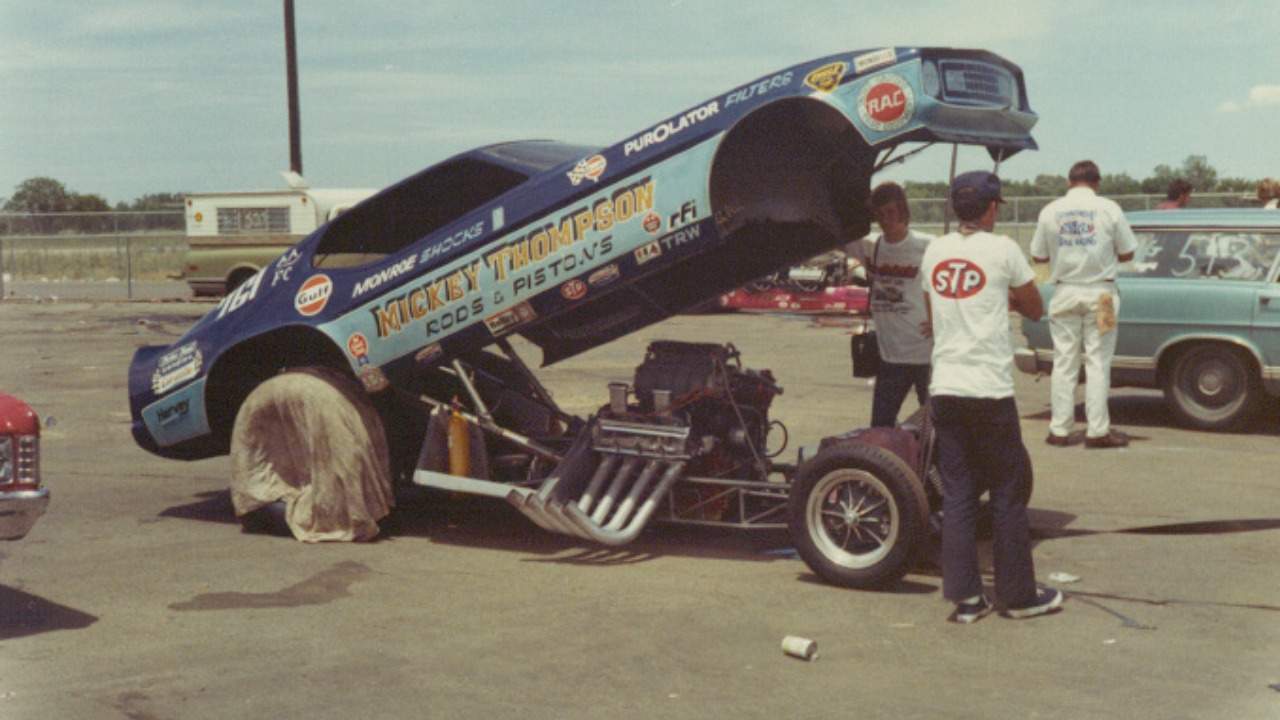
Mickey Thompson was not just a driver; he was a visionary who revolutionized the world of racing with his innovative contributions. One of his most significant achievements was the creation of the first-ever dragster to break the 200 mph barrier in 1964. The “Mickey Thompson Challenger I” was a groundbreaking vehicle that combined advanced aerodynamics with cutting-edge engineering to push the limits of speed. Thompson’s relentless pursuit of innovation extended beyond vehicle design; he was also a pioneer in tire technology.
Thompson’s tire designs, specifically his “Mickey Thompson Tires,” played a crucial role in enhancing performance on both drag strips and off-road tracks. His unique tread patterns and construction materials improved grip and durability, allowing racers to achieve previously unattainable speeds. This innovation not only benefited Thompson’s own racing endeavors but also had a lasting impact on the entire motorsport community. His advancements in tire design continue to influence modern racing today, demonstrating the far-reaching significance of his work.
The Record-Breaking Runs: Glory and Triumph
One of the highlights of Mickey Thompson’s racing career was his series of record-breaking runs that captivated audiences and challenged the boundaries of speed. In 1960, he set a world record for the fastest speed on dirt, achieving 131.45 mph in a modified Pontiac at the Bonneville Salt Flats. This accomplishment was not just a personal victory; it was a statement that solidified his position as a force to be reckoned with in the world of racing. His meticulous preparation and strategic mindset were key components of his success, as he meticulously analyzed every aspect of his vehicles before each record attempt.
Witnesses to Thompson’s record-breaking runs often recount the electric atmosphere surrounding these events. The anticipation, the roar of engines, and the cheers of fans created an unforgettable ambiance. His groundbreaking achievement in 1964, when he broke the 200 mph barrier, was met with awe and admiration from fellow racers and enthusiasts alike. This moment is often considered a turning point in racing history, marking the beginning of a new era defined by speed and innovation. Thompson’s passion and determination were evident as he pushed the limits, inspiring countless others to pursue their own dreams of speed.
Challenges and Rivalries: The Dark Side of Speed
While Mickey Thompson’s career was marked by incredible achievements, it was not without its share of challenges and rivalries. Thompson faced fierce competition from other racing legends, including Don Garlits and Art Arfons, who were equally determined to push the limits of speed. These rivalries often fueled Thompson’s ambition but also added a layer of tension to the racing community. The competitive nature of motorsports meant that friendships could easily turn sour, and Thompson found himself at the center of several controversies throughout his career.
The personal toll of his relentless pursuit of speed also became increasingly evident. Thompson’s commitment to racing often came at the expense of his relationships and personal life. As he pushed the boundaries of what was possible, he faced scrutiny not only from competitors but also from sponsors and the media, who questioned his methods and business dealings. This scrutiny, combined with the pressure of maintaining his status as a top racer, created a complex environment that challenged Thompson both personally and professionally.
The Tragic End: A Life Cut Short
Mickey Thompson’s life came to a shocking and tragic end on March 16, 1988, when he and his wife, Trudy, were murdered in their home in California. The circumstances surrounding their deaths remain shrouded in mystery and speculation, leading to various theories about the motives behind the crime. Some believe it was linked to Thompson’s business dealings in the racing world, while others suggest personal vendettas. The lack of conclusive evidence has left many questions unanswered, adding to the tragic narrative of his life.
The impact of Thompson’s death reverberated throughout the racing community, as many mourned the loss of a true innovator and pioneer. His contributions to the sport were undeniable, and his untimely passing left a void that has never been filled. In the years following his death, Thompson’s legacy began to fade from mainstream motorsport narratives, overshadowed by newer racing personalities and developments. However, his story remains a poignant reminder of the sacrifices made in pursuit of speed and the complex dynamics of the racing world.
Legacy and Impact: Remembering Mickey Thompson
Despite the passage of time, Mickey Thompson’s innovations and records continue to influence modern racing. His pioneering spirit is reflected in the advancements seen in contemporary motorsport, from vehicle design to tire technology. Thompson’s contributions laid the groundwork for the high-speed racing we see today, showcasing how one individual’s passion can leave a lasting impact on an entire industry. His legacy is honored not only by those who knew him but also by countless racers who look to his achievements for inspiration.
Recent efforts to memorialize Thompson’s contributions have gained traction, with various initiatives aimed at educating new generations about his life and work. Documentaries and articles, such as those featured in Donut Media, have helped to revive interest in his story and highlight his significance in the racing community. Additionally, discussions surrounding the culture of speed and innovation in motorsports often reference Thompson’s groundbreaking achievements, ensuring that his legacy endures.
Ultimately, Mickey Thompson’s story serves as a powerful reminder of the passion and drive that fuel the world of racing. His relentless pursuit of speed, coupled with the challenges he faced, paints a vivid picture of a man who was not just a racer but a true pioneer. As we reflect on his life and contributions, it’s clear that Mickey Thompson’s legacy will continue to inspire future generations of racers, reminding them that the quest for speed is as much about passion as it is about innovation.
More from Fast Lane Only
- Unboxing the WWII Jeep in a Crate
- 15 rare Chevys collectors are quietly buying
- 10 underrated V8s still worth hunting down
- Police notice this before you even roll window down
*Research for this article included AI assistance, with all final content reviewed by human editors.