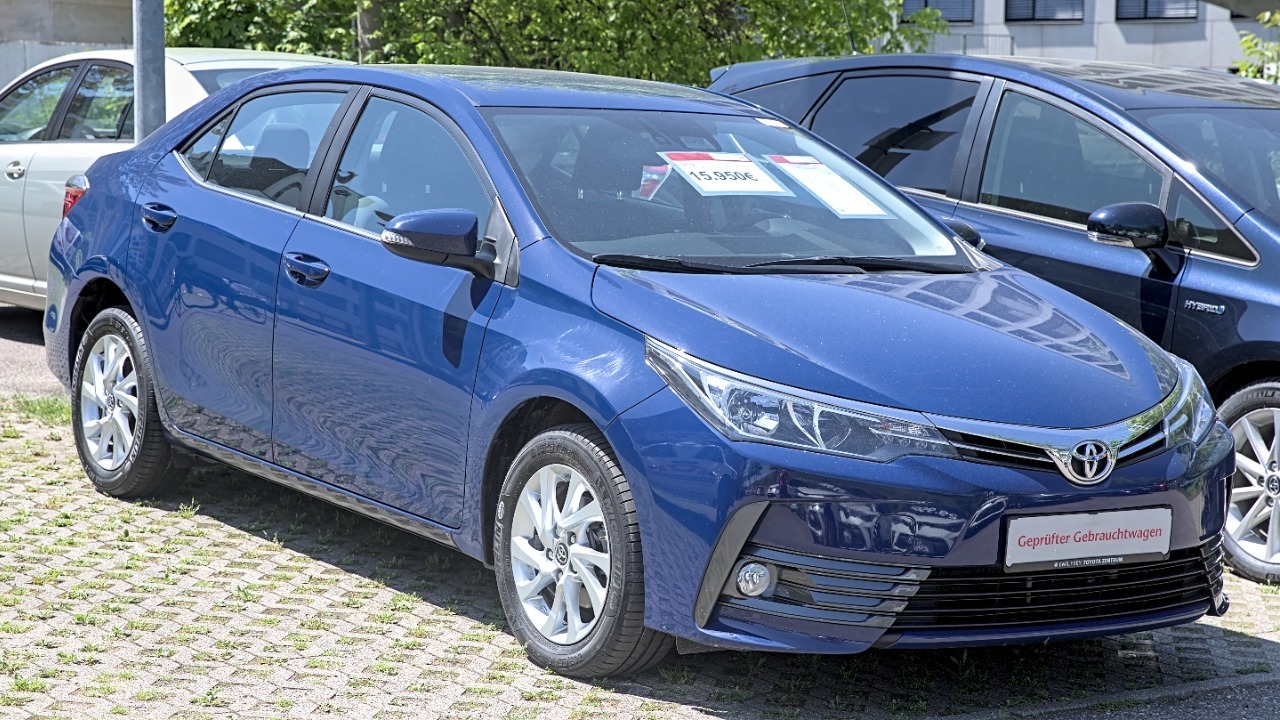
Toyota has built its reputation on reliability, not on wild factory specials. Yet tucked inside the company’s recent history is a little-known factory package that quietly turned an everyday commuter into something far more focused. That obscure project has slipped from mainstream memory, but it captures a side of Toyota that enthusiasts keep wishing to see again.
Revisiting that forgotten effort shows how Toyota once used a low-volume option to test ideas about performance, handling, and brand image. With the company now juggling electrification, carbon-neutral fuels, and a renewed interest in enthusiast models, the logic behind that package suddenly feels very current.
How Toyota’s overlooked factory package came together
The project in question was not a standalone model like the Supra or the GR Yaris. Instead, it was a factory package layered onto a mainstream platform, sold through normal dealers, and backed by Toyota’s warranty. Enthusiasts who have tracked its history describe it as a “forgotten factory package” that sharpened a familiar car with upgraded suspension, unique wheels, and subtle cosmetic cues that signaled its intent to those who knew what to look for. Coverage of the option, preserved in enthusiast write-ups such as a detailed factory package overview, paints a picture of a company experimenting from inside its most conservative showroom spaces.
Rather than chasing headline-grabbing horsepower, Toyota’s engineers focused on chassis tuning. The package bundled firmer springs and dampers, revised anti-roll bars, and in some cases a quicker steering ratio. The goal was to preserve daily usability while giving the car a more alert, connected feel on back roads. This philosophy matched Toyota’s broader approach at the time, which prioritized refinement and longevity, yet it also hinted at a willingness to cater to drivers who valued feedback as much as comfort.
Cosmetically, the changes were restrained. Period brochures and dealer guides referenced distinctive alloy wheels, modest aero pieces, and interior trim that separated the package from the base car without drifting into boy-racer territory. The car still looked like a Toyota first and a special edition second. That subtlety likely contributed to its later obscurity. Parked in a crowded lot, it blended in, which was part of the appeal for owners but a liability for long-term recognition.
Distribution also limited its footprint. The package was often tied to specific trims and powertrains, sometimes bundled with a manual transmission or a particular engine. Dealers in certain regions received more allocations, while others barely saw it. Without a major advertising push, awareness relied on word of mouth, local sales staff, and the small circle of buyers who followed Toyota’s option codes closely.
From niche option to near-obscurity
The factory package never became a volume seller. Internal targets were modest, and production numbers stayed low compared with the standard car. That scarcity had two effects. In the short term, it made the option hard to find, which discouraged casual shoppers who might have been tempted if a car had been sitting on the lot. Over time, it turned surviving examples into curiosities that only dedicated fans recognized.
Used-car listings rarely highlighted the package accurately. Many owners treated their cars as regular transportation, unaware of the significance of the suspension code on the build plate or the unique wheel design. As those vehicles cycled through multiple owners, details blurred. Some were modified, others were repaired with generic parts that erased the package’s distinct hardware. The result was a slow fade from the public record.
At the same time, Toyota’s lineup moved on. New generations of the same model arrived with different priorities, and the company began to channel its enthusiast energy into more visible halo products. The rise of the GR sub-brand, along with collaborations on cars like the GR86, shifted attention toward purpose-built sports models. In that context, a lightly massaged factory package on a family car looked less essential and eventually dropped from the order sheet.
Yet the DNA of that project never fully disappeared. The idea that a mainstream Toyota could be transformed at the factory into something sharper, without sacrificing reliability or comfort, remained attractive to a small but vocal group of owners. Their online threads, build logs, and parts cross-references kept the memory alive, even as the broader market forgot.
Why this obscure Toyota experiment matters now
The forgotten package looks different when viewed against Toyota’s current strategy. The company is trying to balance mass-market hybrids and battery-electric models with a promise that driving enjoyment will not vanish. Executives have repeatedly argued that enthusiasts still matter to the brand, and recent products suggest that this is more than a slogan.
In that light, the earlier factory package reads like a prototype for how Toyota could inject character into otherwise sensible cars. Instead of reserving engaging dynamics for a small stable of GR models, the company could again use targeted options to reach buyers who want one car to do everything. A modern equivalent might be a handling-focused package on a hybrid sedan or a compact crossover, with recalibrated dampers, better tires, and slightly more communicative steering, all delivered with full factory backing.
There is also a branding lesson. The old package was subtle to a fault. Its quiet approach suited Toyota’s conservative image at the time, but it left little imprint on public memory. Today, the company understands the value of clear visual cues and consistent naming. GR Sport trims, for example, use recognizable badges and styling elements that signal a shared philosophy across different models. If Toyota revisited the earlier concept, a stronger identity could prevent it from sliding into obscurity again.
From an enthusiast perspective, the project shows how much value can be unlocked with relatively modest changes. Owners who have driven both the standard car and the factory-tuned version describe a marked difference in body control and steering feel without a corresponding hit to ride quality or fuel economy. In an era when performance often arrives bundled with aggressive styling or high running costs, that kind of quiet improvement holds real appeal.
The package also hints at how Toyota could use limited-run options as rolling test beds. Chassis settings validated on a small batch of enthusiast-oriented cars can inform later mainstream updates. Feedback from owners who push their cars harder than average can reveal weaknesses in bushings, mounts, or software calibration that might not surface in typical fleet testing.
What a revival could look like in the electrified era
Revisiting the spirit of the forgotten package would not mean simply copying its parts list. The technical context has changed. Hybrids and battery-electric vehicles introduce new variables such as weight distribution, regenerative braking, and energy management. A modern factory handling package might focus on software as much as hardware.
For a hybrid, engineers could recalibrate the interplay between engine, motor, and regenerative braking to create more predictable pedal feel on a twisty road. Suspension tuning could target the extra mass of battery packs, using frequency-sensitive dampers and revised bushings to keep body motions in check without harshness. On an electric model, the package might include specific torque delivery maps that favor linear response over outright acceleration numbers.
Crucially, such options would need clear positioning. Toyota now has the GR badge for full-blooded performance cars. A revived factory package on a mainstream model could sit just below that, marketed as a “driver’s” specification rather than a track tool. Pricing would matter as well. The original project asked buyers to pay a premium for hardware that many could not see at a glance. Any new version would need to demonstrate value through both feel and features, perhaps bundling driver-assistance tech or interior upgrades alongside the chassis work.
The used market would likely treat a modern package differently too. With better digital records, clearer naming, and a stronger enthusiast community around Toyota’s sportier offerings, such cars would be easier to identify and preserve. That, in turn, would help the brand sustain a narrative about caring for drivers who want more than basic transportation.
More from Fast Lane Only
- Unboxing the WWII Jeep in a Crate
- 15 rare Chevys collectors are quietly buying
- 10 underrated V8s still worth hunting down
- Police notice this before you even roll window down
*Research for this article included AI assistance, with all final content reviewed by human editors