The Oldsmobile 442 W-30 engine package represents a pivotal moment in American automotive history, blending innovative engineering with high-performance muscle. Delving into the hidden story behind this iconic engine package reveals not only its development and specifications but also its lasting impact and legacy in the automotive world.
The Birth of the Oldsmobile 442
The Oldsmobile 442 has roots that trace back to the mid-1960s, when the number “442” was adopted as a designation for a series of performance-oriented vehicles. The name itself is derived from the car’s four-barrel carburetor, four-speed manual transmission, and dual exhaust system, symbolizing the essence of the muscle car era. Oldsmobile, a division of General Motors, was a pioneer in the American automotive industry, known for its innovative designs and engineering prowess during this transformative time.
When the Oldsmobile 442 debuted in 1964, it was initially offered as an option package for the Cutlass and quickly garnered the attention of performance enthusiasts. The early models were powered by a 330 cubic inch V8 engine, producing 310 horsepower—a respectable figure for the time. The 442 was celebrated for its impressive acceleration and handling, and it quickly gained a loyal following among car enthusiasts. The initial reception of the 442 laid the groundwork for what would become a legendary nameplate in the muscle car landscape.
The Development of the W-30 Engine Package
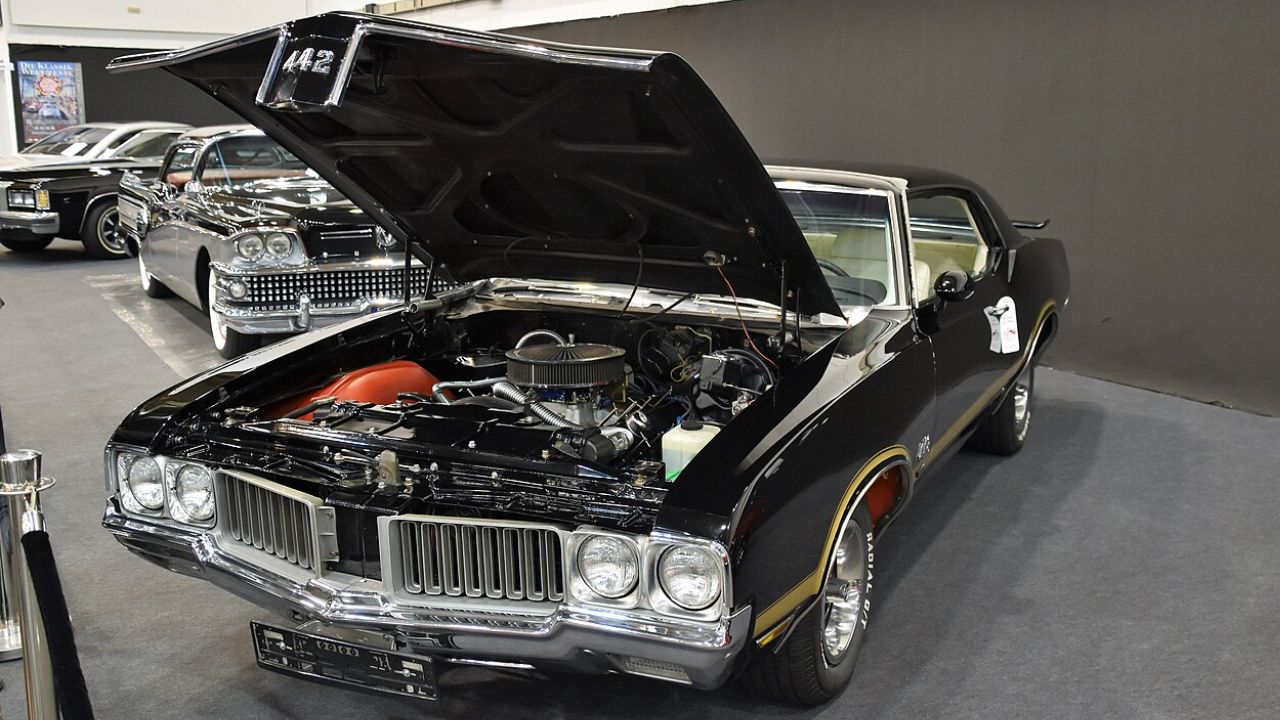
The W-30 engine package was introduced in 1970 as an upgrade to the already potent 442 lineup. Key figures in its development included engineers like Ed G. Cramer, who played a crucial role in enhancing the performance capabilities of the Oldsmobile brand. The W-30 package featured a 455 cubic inch V8 engine, which boasted an impressive 360 horsepower and 500 lb-ft of torque, making it one of the most powerful muscle cars of its time. The enhancements included a unique air induction system, a high-performance camshaft, and a lighter fiberglass hood that contributed to weight reduction.
When compared to other performance options available during the same era, the W-30 stood out not just for its raw power but also for its innovative engineering. It offered a high compression ratio of 10.5:1, which was a significant factor in its horsepower output. The W-30 package was not merely about numbers; it represented a commitment to performance that resonated with enthusiasts. It was a response to the growing demand for powerful engines and set a new standard within the muscle car market.
Performance Features and Innovations
The W-30 engine’s performance specifications were groundbreaking for the time. With 360 horsepower at 5,400 RPM and 500 lb-ft of torque at 3,600 RPM, it delivered exhilarating acceleration and speed. This power was harnessed through a Turbo Hydramatic 400 automatic transmission, which provided smooth gear shifts and enhanced performance. The W-30 also featured a unique air cleaner design that included a functional hood scoop, ensuring that the engine received ample airflow for optimal performance.
Beyond the raw power, the W-30 was notable for its innovative features, such as the fiberglass hood that not only reduced weight but also gave the car a distinctive appearance. This design choice was a reflection of Oldsmobile’s willingness to push boundaries in pursuit of performance. The upgraded intake systems and exhaust manifolds further enhanced engine efficiency, allowing the W-30 to outperform many of its contemporaries on the street and the racetrack. The innovations embodied in the W-30 helped to establish Oldsmobile’s reputation as a manufacturer of high-performance vehicles, attracting a dedicated following among car enthusiasts.
The Market Context: Muscle Car Competition
The late 1960s and early 1970s marked a golden era for muscle cars, with fierce competition among manufacturers to deliver the most powerful and compelling vehicles. The Oldsmobile 442 W-30 entered a crowded market filled with iconic models like the Pontiac GTO, Ford Mustang, and Chevrolet Camaro. Each manufacturer was vying for the attention of performance-minded consumers, and the W-30 package was Oldsmobile’s answer to the growing demand for speed and power.
Oldsmobile strategically positioned the W-30 as a premium option within the 442 lineup, emphasizing its engineering excellence and performance capabilities. Marketing campaigns highlighted the W-30’s superior horsepower and innovative features, appealing to potential buyers who wanted more than just a standard muscle car experience. The marketing materials often showcased the W-30 in performance-oriented settings, which helped to solidify its status as a serious contender in the muscle car arena. As a result, the W-30 gained recognition not only for its impressive specifications but also for the brand’s commitment to performance.
Consumer Reception and Impact
The consumer reception of the Oldsmobile 442 W-30 was overwhelmingly positive, with many buyers drawn to its performance and distinctive style. Sales figures from the early 1970s indicate that the W-30 package contributed significantly to the overall popularity of the 442 model. While specific sales numbers can vary, estimates suggest that around 1,500 W-30 units were produced in 1970, making it a relatively rare find today. The demographics of W-30 buyers included younger car enthusiasts who were looking for a vehicle that could deliver both performance and style.
Automotive critics and performance enthusiasts praised the W-30 for its impressive acceleration and handling characteristics. Publications such as Motor Trend and Car and Driver highlighted the W-30’s performance during their road tests, cementing its reputation as a top-tier muscle car. The car’s ability to deliver a thrilling driving experience helped shape consumer expectations for what a muscle car should be, influencing future designs across the industry. The W-30 became a benchmark against which other performance cars were measured, leaving an indelible mark on the muscle car landscape.
Racing Legacy and Achievements
The Oldsmobile 442 W-30 made its mark not just on the streets but also on the racetrack. Notable racing events in which the W-30 participated include various drag racing competitions and regional racing circuits. Its powerful engine and lightweight design allowed it to compete fiercely against other muscle cars, leading to several victories. These racing successes not only validated the performance claims made by Oldsmobile but also created a strong connection between the car and the racing community.
The influence of racing on the W-30’s development cannot be overstated. Feedback from racers and enthusiasts played a crucial role in refining the engine package and enhancing its performance features. The racing legacy of the W-30 contributed to Oldsmobile’s reputation in motorsports, establishing it as a brand synonymous with high-performance vehicles. As enthusiasts sought to replicate the success of the W-30 on the racetrack, the car became an integral part of the muscle car culture, further solidifying its place in automotive history.
Collectibility and Current Market Value
Today, the Oldsmobile 442 W-30 is highly sought after by collectors and automotive enthusiasts alike. The combination of its performance pedigree, limited production numbers, and unique features has contributed to its status as a collectible classic. Well-preserved W-30 models can command impressive prices at auctions, with some examples selling for upwards of $100,000. Factors that contribute to the high value of these vehicles include their rarity, condition, and provenance, making them a prized possession for collectors.
Stories of collectors and enthusiasts searching for the perfect W-30 abound. Many are drawn to the car’s unique history, performance capabilities, and cultural significance. Online communities and forums dedicated to muscle cars often feature discussions about W-30 restoration projects and the challenges faced by owners in sourcing original parts. The ongoing fascination with the W-30 reflects its status as not just a vehicle, but a symbol of an era defined by performance and style.
The Cultural Significance of the W-30
The Oldsmobile 442 W-30 holds a significant place in American automotive culture. It represents not only a high-performance vehicle but also a reflection of the aspirations and spirit of freedom that characterized the muscle car era. The W-30 has made appearances in various forms of popular culture, including movies, television shows, and car magazines, further cementing its status as an icon of American performance.
The W-30’s legacy continues to resonate with car enthusiasts and historians today. Its engineering innovations and racing achievements are studied by those interested in the evolution of muscle cars. The ongoing fascination with the W-30 serves as a reminder of a time when American manufacturers were pushing the limits of performance and design, creating vehicles that captured the hearts of drivers across the nation. For many, the W-30 is a testament to the enduring appeal of muscle cars and their role in shaping automotive history.
More from Fast Lane Only