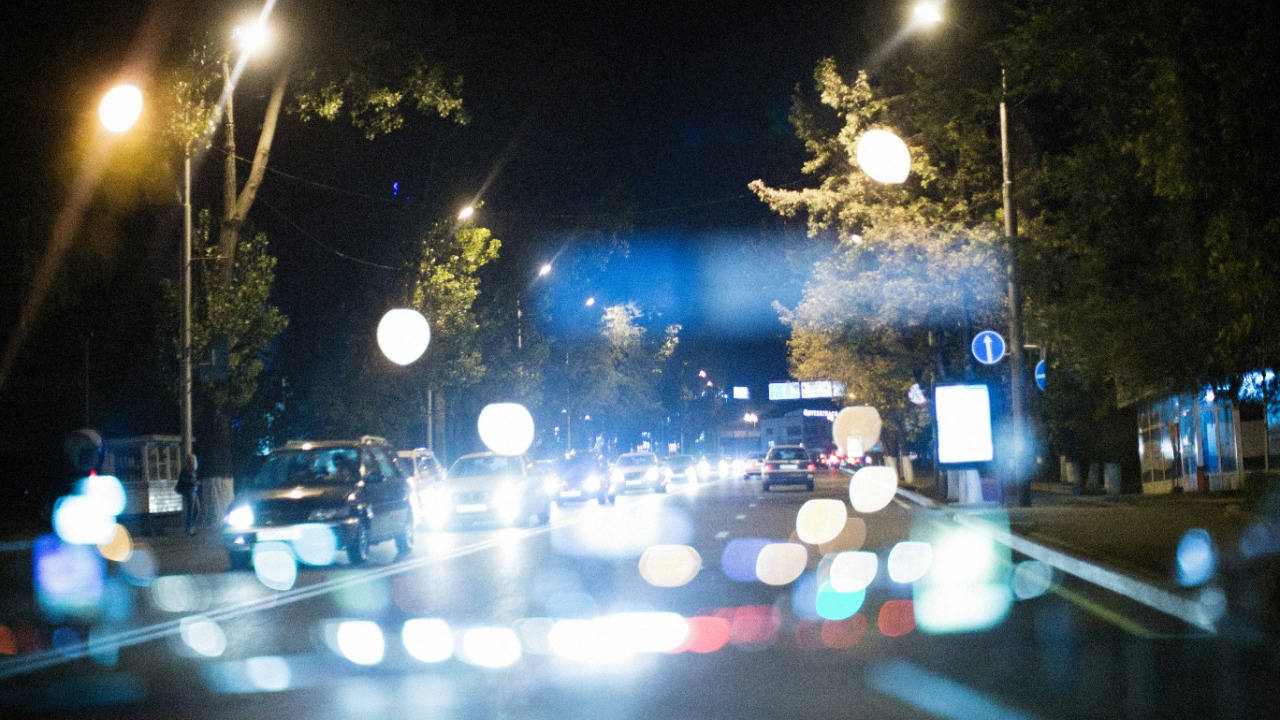
Night driving has quietly turned into a white‑knuckle experience for many people, not because of speed or weather, but because of the piercing glare from oncoming cars. You feel it as a physical hit to your eyes, a blast of light that leaves you blinking at the dark. The overlooked part of that story is not just that headlights are brighter, but that the way they are aimed, mounted, and regulated often ignores the reality of the drivers coming toward them.
Instead of a single villain, you are dealing with a stack of design choices, aging eyes, taller vehicles, and testing rules that reward what a lab sensor sees more than what your retinas can handle. Put together, they explain why you keep getting dazzled even as safety scores and lighting technology supposedly improve.
Brighter bulbs, harsher light
The most obvious change you notice is sheer brightness. Over the past decade, carmakers have shifted from traditional halogen lamps to light emitting diodes, and that jump in intensity is not your imagination. One detailed look at modern headlights notes that LEDs can throw more light on the road while drawing less power, which is great for efficiency but brutal when that beam hits you square in the face. The color of that light matters too, because cooler, bluer tones feel harsher than the warmer glow of halogens.
Another analysis of Bulbs stresses that the most important factor in the glare problem is this shift to LEDs, which typically emit a bluer light than halogens. That same bluish spike is what eye specialists worry about in other contexts, and one report on bright lighting notes that here on Earth, additional blue light from LED sources is driving complaints that they are simply too bright. When you combine that spectral punch with higher output, you get beams that feel like high beams even when they are technically on low.
The real culprit: where the light is pointed
Brightness alone does not explain why you feel attacked by every other car. The overlooked reason is aim. A powerful lamp that is carefully cut off at the right height can be comfortable to face, but a modest lamp that is tilted a few degrees too high can be miserable. Guidance on dazzling lights points out that over time, vibrations and bumps in the road can knock headlights out of position, and that Over the years those misaligned units end up pointing too high, throwing light straight into oncoming eyes instead of onto the tarmac.
That misalignment problem is magnified by the rise of taller vehicles. Drivers in compact cars now find themselves staring directly into the lamps and fog lights of lifted pickups and SUVs, a frustration that shows up in online complaints where one person notes that Truck fog lights sit above their window belt line. When those higher lamps are even slightly off, the beam hits you at eye level instead of skimming over your hood, and the result is the blinding wall of white you brace for on every two lane road.
Why it feels worse in the United States
If you drive in the United States, you are not imagining that the problem feels particularly bad. A detailed look at why headlight glare is mostly an American issue points to the way regulations differ from those in Europe. In much of Europe, adaptive matrix systems can carve out dark zones around oncoming cars so you can run full power without blasting other drivers, but in the United States, rules have been slower to embrace that technology, so you are often stuck with a simple high or low beam.
That same reporting notes that some adaptive systems overseas can maintain full illumination until another vehicle is detected ahead, then automatically dim specific segments of the beam, while American drivers are still waiting for widespread deployment of similar features. The number 37 appears in that context as part of a broader explanation of how many different regulatory and technical factors feed into the problem. When you add in the American love of tall trucks and bright accessory lighting, you end up with a uniquely hostile visual environment for night driving.
Older eyes, blue light and the science of discomfort
Even if every headlamp were perfectly aimed, your eyes might still struggle more than they used to. As you age, your pupils respond more slowly and your lenses scatter more light, which makes glare linger. A detailed look at why headlights feel so harsh notes that headlight glare is especially tough for older drivers, who report more trouble recovering after being dazzled. That means the same beam that a 25 year old shrugs off can leave you effectively blind for a few seconds if you are 65.
Another breakdown of the issue, framed around the question Why Are Headlights, highlights how the combination of newer vehicles and older drivers is driving complaints. On top of that, research into bright LED light notes that the extra blue content is particularly bothersome, something Representative Gluesenkamp Perez has heard from constituents who say they are simply too bright. Your biology has not changed nearly as fast as the lighting technology around you, and that gap shows up every time a cool white beam hits a rain slick road and scatters into your field of view.
What safety testers see that you do not
One of the most frustrating parts of this story is that on paper, headlights are getting better. The Insurance Institute for Highway Safety has pushed carmakers to improve their designs, and to encourage manufacturers to do that, the Insurance Institute for began rating vehicles for headlight performance. Those ratings are technology agnostic, and The Institute notes that the program has led manufacturers to use more LED headlamps that light up the road ahead more effectively.
At the same time, that focus on what a sensor sees in a controlled test can miss what you feel in the real world. A detailed piece by Brian Silvestro describes how the IIHS testing metrics can rate a headlamp highly even if drivers complain that it is blinding. Another discussion of those metrics, framed around the idea that it is all in your head, still concedes that IIHS metrics do not fully capture discomfort glare. So while crash data may not show a spike in glare related collisions, your nightly experience can still feel worse, and both realities can be true at once.
More from Fast Lane Only