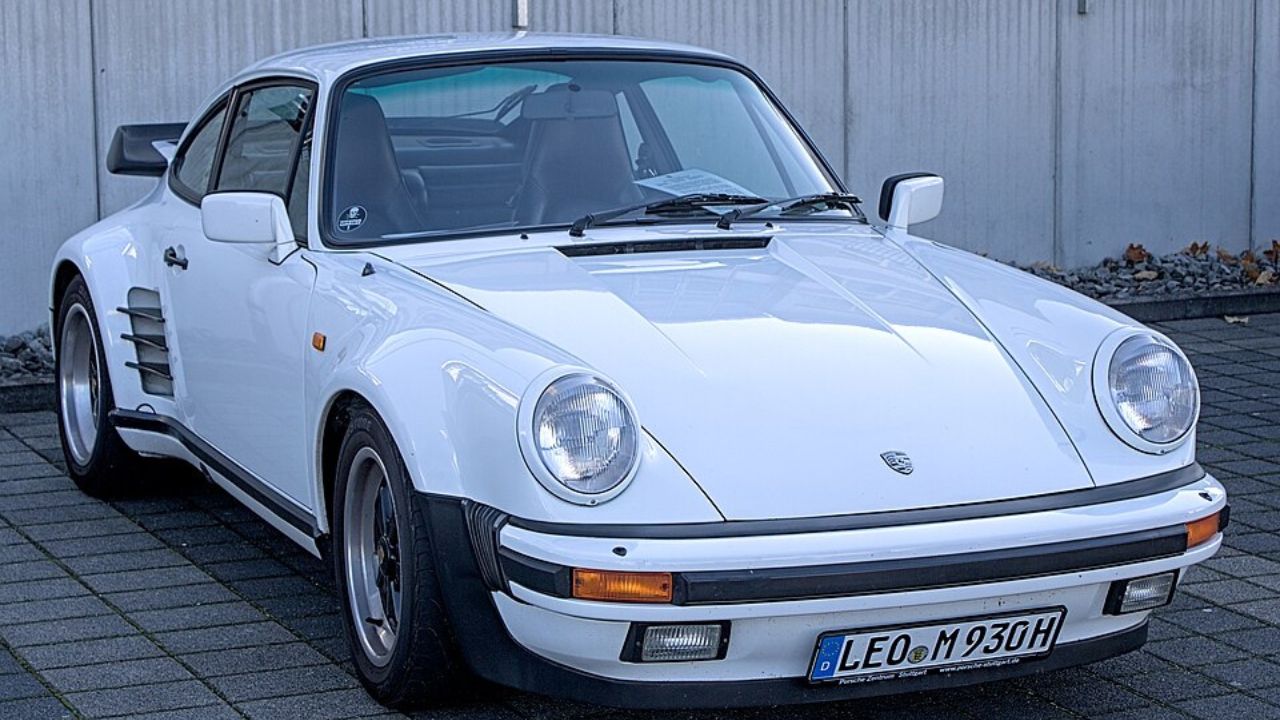
The Porsche 930 Turbo became one of the most feared performance cars of the 1970s and 1980s. Combining turbocharged power with challenging handling characteristics, the car earned the infamous nickname “Widowmaker” from drivers who discovered just how brutally unforgiving the rear-engine Porsche could become at high speeds.
Porsche created the 930 Turbo to push performance limits
When Porsche introduced the Porsche 930 Turbo, the company transformed the already capable 911 into something dramatically more aggressive. Porsche wanted to showcase turbocharging technology developed through motorsports competition and apply it to a road-going sports car.
Inside Porsche engineering development, the 930 Turbo represented a major leap in performance. Wide fenders, larger brakes, aggressive aerodynamics, and turbocharged flat-six power created a machine capable of shocking acceleration during an era when few road cars could match its speed.
Turbo lag made the power delivery extremely difficult to manage
One reason the Porsche 930 Turbo became so intimidating involved its infamous turbo lag. Early turbocharging systems delivered power unevenly, often producing a sudden surge of acceleration once boost pressure arrived.
For drivers unfamiliar with Porsche turbocharged behavior, the transition could feel violent and unpredictable. The engine might seem manageable one moment before suddenly unleashing overwhelming power that could quickly upset the car’s balance, especially during cornering or aggressive throttle inputs.
The rear-engine layout amplified the car’s dangerous reputation
The Porsche 930 Turbo already carried the unique handling characteristics associated with Porsche’s rear-engine design. With much of the car’s weight positioned behind the rear axle, the 930 demanded skill and concentration from drivers operating near the limit.
Within Porsche performance history, the combination of turbocharged power and rear-engine dynamics created a car capable of sudden oversteer if drivers reacted improperly. This demanding behavior helped generate the legendary “Widowmaker” nickname among enthusiasts and journalists.
The 930 Turbo quickly became one of the fastest cars of its era
Despite its intimidating nature, the Porsche 930 Turbo earned enormous respect for its incredible straight-line performance. During the late 1970s and 1980s, few production cars could accelerate with the same ferocity once the turbocharger reached full boost.
For enthusiasts of Porsche engineering, the 930 represented a thrilling blend of speed and mechanical rawness. Drivers who mastered the car often described it as one of the most exciting and rewarding sports cars ever built.
Aggressive styling matched the car’s brutal personality
The appearance of the Porsche 930 Turbo perfectly reflected its performance reputation. Wide rear fenders, dramatic whale-tail spoilers, and low aggressive stance gave the car unmistakable road presence compared with standard 911 models.
Under Porsche design philosophy, the 930 Turbo looked purpose-built for high-speed performance. Enthusiasts immediately recognized the car as something far more serious than an ordinary sports coupe.
Today the 930 Turbo remains one of Porsche’s most respected legends
Modern collectors still admire the Porsche 930 Turbo because it represents a raw and uncompromising era of performance engineering before modern electronic driver aids softened high-speed behavior.
For fans of Porsche history, the 930 Turbo symbolizes a time when sports cars demanded real skill and respect from drivers. Its terrifying reputation, explosive turbocharged performance, and unmistakable personality are exactly why enthusiasts still call it the Widowmaker decades later.
More from Fast Lane Only