The Corvette has worn some famous engine badges, from fuel-injected small-blocks to big-block bruisers and modern LT-series V8s. Hidden in that history is a powerplant so scarce that most enthusiasts have never seen one, and many have never even heard its coded name. It was built in tiny numbers, sold almost in secret, and today survives mostly as a legend told in auction catalogs and museum placards.
This is the Corvette engine that lived in the shadows of Chevrolet’s option sheets, engineered for racing but slipped into a handful of street cars through back channels. Tracing how it came to exist, why it vanished, and what remains of it today reveals not just a rare part number, but an entire era when Detroit quietly armed customers for the track.
What happened
In the second half of the 1960s, Chevrolet engineers were chasing dominance in American performance, and the Corvette sat at the center of that effort. Officially, corporate policy frowned on direct racing involvement. Unofficially, engineers and product planners worked every angle of the ordering system to funnel race-grade hardware to customers who knew what to ask for.
That culture produced some of the wildest “secret” Chevrolets, including Central Office Production Order (COPO) Camaros and Chevelles that dealers could not find in their own catalogs. One such program created a Chevrolet muscle car that was so carefully hidden that even many showroom staff did not realize it existed, a pattern documented in accounts of a dealer-blind COPO build. The same mindset shaped a handful of Corvettes that carried an engine never advertised in glossy brochures.
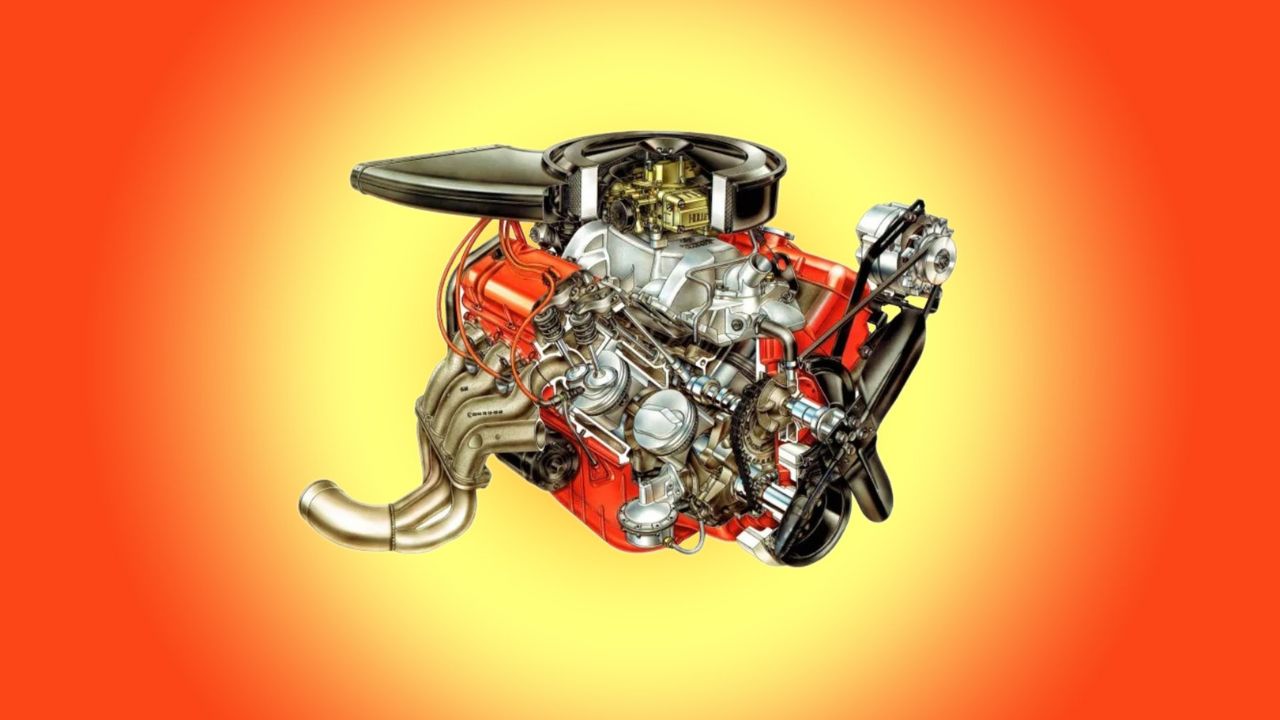
Inside Chevrolet, engineers had already experimented with exotic small-blocks for competition. The most famous of these was the all-aluminum ZL1 427, a racing-spec big-block that officially appeared as Regular Production Option ZL1 for the 1969 model year. Only a tiny run of Corvettes received that engine, and contemporary records point to a production figure in the low double digits. The ZL1 combined an aluminum block with open-chamber aluminum heads, a radical camshaft, and a racing intake, and it was rated at 430 horsepower even though track testing suggested a much higher real output.
Yet even the ZL1, as scarce as it was, had a paper trail. The rarest Corvette engine sat deeper in the gray zone between sanctioned option and under-the-counter racing part. It grew out of Chevrolet’s habit of creating competition-only engines that were technically available through parts counters, then quietly installing them in a few factory-built cars to satisfy sanctioning bodies that required production examples. The logic was simple: if a race team could point to a handful of street-legal Corvettes with a specific engine, that powerplant could be argued as “production” equipment.
These engines often started life as special builds in the engineering department, with blocks machined for higher compression, forged rotating assemblies, and cylinder heads that never appeared in mainstream catalogs. They were assembled in low volumes, sometimes by hand, and allocated to trusted insiders. In some cases, a dealer with strong ties to Chevrolet’s performance office could order one of these units installed in a customer car through internal codes that never appeared in public order guides.
The result was a Corvette that, on paper, looked like any other high-performance model, but under the hood carried a race-bred engine that shared little with the regular production version. The block casting numbers did not match the standard listings, the heads carried experimental port shapes, and the valvetrain was set up for sustained high rpm use that would have been impractical for typical street buyers.
Only a few of these engines were ever assembled in complete cars. Surviving examples tend to surface in highly curated collections that specialize in one-off or prototype hardware. Curators at one museum of one-off cars describe how such specials often arrived with little documentation, then required years of research to verify. In that environment, a Corvette with a unique engineering-department engine becomes less a used car and more an artifact from a brief, experimental chapter in General Motors history.
Because the production run was so small, and because these cars were often used hard on track, many of the original engines were blown up, rebuilt with more common parts, or removed entirely when racing regulations changed. That attrition is a major reason enthusiasts can spend decades around Corvettes without ever encountering this specific configuration in person.
Why it matters
The story of this near-mythical Corvette engine matters for more than trivia. It captures how American manufacturers navigated the tension between public restraint and private competition during the muscle car era. Officially, corporate leadership wanted to avoid the liability and political heat that came with overt racing programs. Unofficially, performance divisions understood that track victories sold cars, and they responded by creating limited-run engines that threaded the needle between policy and ambition.
In that context, the rarest Corvette engine becomes a symbol of the quiet arms race among Detroit brands. Chevrolet engineers were not alone. Rivals at Ford and Chrysler also produced homologation specials with engines that barely met the letter of production rules. The difference is that many of those competitors, such as the Boss 429 Mustang or the Chrysler Hemi wing cars, were marketed heavily enough that they entered mainstream enthusiast lore. The Corvette engine in question remained almost completely in the shadows.
Its scarcity also reshaped how collectors approach provenance. With only a few documented cars, and with many having passed through years of racing modifications, verifying an authentic example requires more than a quick glance at a block stamping. Historians cross-check casting dates, internal part numbers, and even machining marks that match known engineering-department practices. Museums that specialize in unique prototypes and one-offs have shown how deep this research can go, using internal memos, engineering build sheets, and retired employee testimony to confirm that a particular car truly carries its original exotic engine.
For the Corvette community, the existence of such an engine challenges assumptions about what counts as “factory correct.” Traditional restoration culture emphasizes returning a car to the configuration listed on its build sheet. In the case of these hidden-engine Corvettes, the build sheet might not fully capture what the engineering team installed. A car that appears to deviate from the official record might actually be more authentic, not less, if it preserves a one-off engine that never appeared in regular documentation.
This tension also affects value. Auction houses and private sales often place enormous premiums on rare drivetrains, and the rarest Corvette engine sits at the extreme end of that spectrum. With so few confirmed examples, each documented car becomes a benchmark for pricing. Collectors weigh originality, completeness, and racing history. A chassis that still carries its as-delivered engineering engine, even if worn, can command a higher figure than a cosmetically perfect restoration built around a replacement block.
There is a cultural dimension as well. Corvette history is usually told through the lens of big milestones: the first small-block in 1955, the move to independent rear suspension in the C2, the introduction of the LS-series engines in the C5, and the modern mid-engine layout. The obscure racing-derived engine at the center of this story adds a more clandestine thread. It shows that, alongside the public product cycles, there was a parallel world of experiments and quiet favors for racers.
That parallel world explains why some of the most hardcore Chevrolet projects never received marketing campaigns. The company did not need to sell thousands of these engines. It needed just enough cars to satisfy racing rules and to keep the most committed customers loyal to the brand. The fact that even some dealers were unaware of the existence of certain COPO builds, as documented in accounts of a secretive muscle car, shows how tightly controlled that pipeline could be.
For modern engineers and product planners, the story offers a case study in how limited-run hardware can influence brand image. A handful of exotic engines, placed in the right hands, can create a legend that outlasts entire generations of mass-market models. The rarest Corvette engine never appeared in a mainstream ad campaign, yet it continues to animate discussions among historians and collectors decades later.
There is also an engineering legacy. Many of the technologies tested in these low-volume engines eventually filtered into broader production. Lightweight materials, improved cylinder head designs, and more aggressive valvetrain setups first appeared in racing or near-racing engines, then evolved into street-friendly versions. Even if most Corvette buyers never saw the original exotic unit, they benefited indirectly from the lessons it taught Chevrolet’s powertrain team.
From a preservation standpoint, the existence of such engines has encouraged museums and private collections to prioritize documentation as much as restoration. Institutions that curate one-off prototypes have demonstrated how critical it is to preserve engineering notes and internal correspondence alongside the hardware itself. Without that paper trail, a rare engine risks being dismissed as a modified part rather than recognized as a factory experiment.
What to watch next
The future of this obscure Corvette engine, and others like it, will likely play out in three arenas: the auction market, the museum world, and the digital record that ties everything together.
On the auction side, the combination of extreme rarity and rising interest in period-correct race hardware suggests that any confirmed car carrying this engine will draw intense scrutiny. Potential buyers will demand exhaustive documentation, including period photographs, internal memos, and testimony from former Chevrolet personnel. As more money enters the market for 1960s and 1970s performance cars, the incentive to clone or misrepresent rare engines grows, which in turn raises the bar for verification.
Museums and serious private collections will continue to play a central role. Institutions that already specialize in unique engineering cars are well positioned to acquire and stabilize surviving examples. Their curators can invest the time and resources needed to authenticate engines, preserve original finishes, and interpret the story for the public. Exhibits that place these engines alongside more familiar Corvette powerplants can help visitors see how experimental ideas eventually shaped mainstream models.
Digitization is likely to change the research process. As more internal documents, build sheets, and engineering drawings are scanned and indexed, historians gain new tools to trace the life of specific engines. A casting number that once required phone calls to retired employees might now be cross-referenced against an online archive of engineering logs. That shift does not eliminate the need for hands-on inspection, but it can reveal patterns that were previously hidden, such as small batches of parts produced for a single racing program.
Another area to watch is how Chevrolet and General Motors choose to recognize this part of their history. Official heritage programs often focus on high-profile models and major anniversaries. Yet there is growing interest among enthusiasts in the behind-the-scenes stories that shaped the brand. If corporate archives highlight more of the engineering-department experiments, including the rarest Corvette engine, it could bring new visibility to cars that spent decades in obscurity.
More from Fast Lane Only