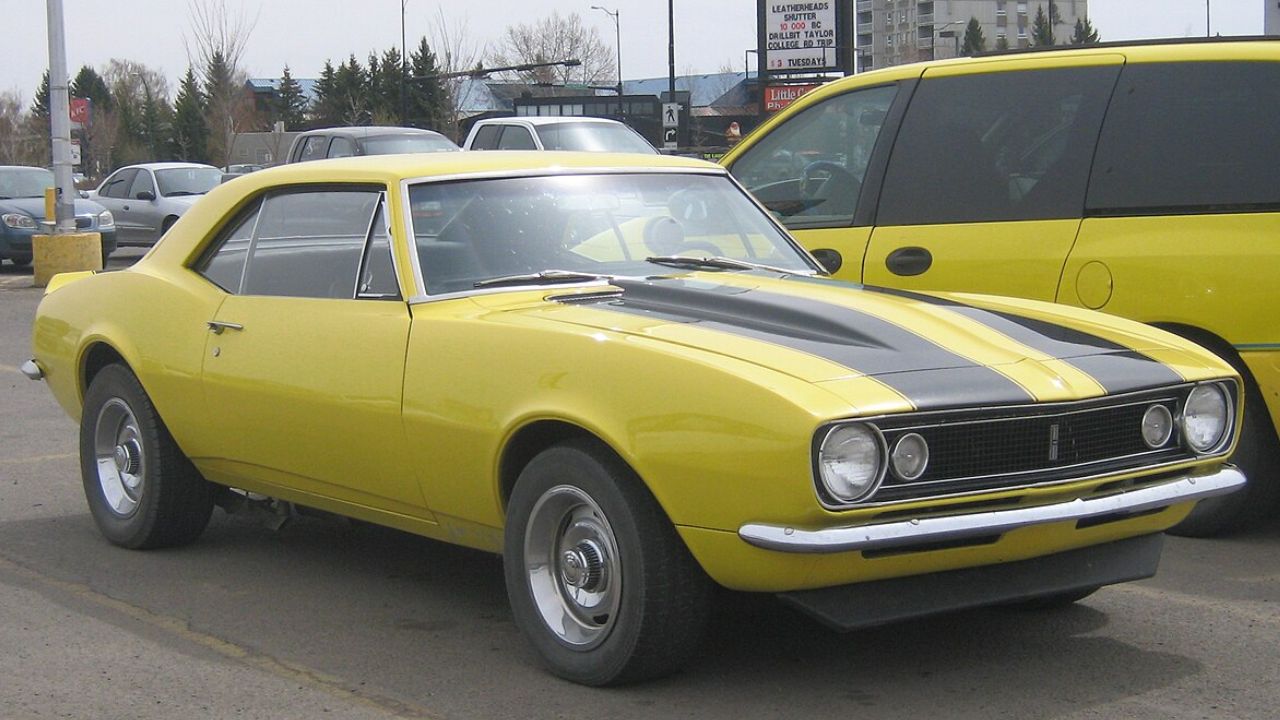
Chevrolet built thousands of third-generation Camaros, but only a tiny handful left the factory so quick and so focused that even insiders struggled to explain how they slipped through the corporate rulebook. One of those cars, ordered with a cryptic internal code and built more like a race car than a showroom coupe, has become the kind of legend that forces engineers and historians to dig back through old paperwork and dyno sheets to understand what really happened. Its existence shows how a supposedly standardized production line could still produce something that behaved like a factory hot rod with its own secret handshake.
The story of this Camaro is not just about one fast car. It is about the tension between regulation and performance, the way racing quietly shaped street machines, and the odd places where Hollywood stunt logic and Detroit engineering start to look surprisingly similar.
What happened
In the late 1980s, Chevrolet sold the third-generation Camaro as a modern, fuel-injected answer to the classic muscle era. Buyers could pick familiar performance trims, but buried behind the public order sheets was a configuration that did not appear in glossy brochures. Dealers who knew the right people could request a car through a special internal process that essentially told the factory to build a Camaro aimed at the track first and the street second. The code did not advertise big horsepower on paper. Instead, it bundled a network of small, purposeful changes that added up to a car that felt very different once the driver buried the throttle.
Documentation from enthusiasts and former insiders describes that hidden configuration as a package that quietly upgraded the core hardware of the car. The engine received components closer to what Chevrolet used in competition, the suspension was tuned for higher cornering loads, and the car often arrived with stripped-down comfort options. On the surface it was still a Camaro, with the same basic 5.0 or 5.7 liter small-block and the same familiar silhouette. Take it to a drag strip or road course, though, and it behaved like something that had skipped several layers of corporate compromise.
Owners who later dyno tested these cars found numbers that did not match the official ratings. The factory might have claimed output that kept insurance companies calm, but real-world measurements suggested that the engine was breathing far better than the paperwork implied. Some cars trapped higher speeds in the quarter mile than contemporary magazine tests reported for ostensibly identical models, even when the secret-code cars were running on the same tires and fuel. That gap between claimed and observed performance fuels the idea that the factory itself did not fully map out how quick the configuration could be when everything lined up.
The way the cars were ordered helped keep the story underground. Dealers could not simply click a box on a public order form. They had to know the internal shorthand, then work with a regional representative to push the request through. That process filtered the cars toward buyers who were already deeply involved in racing or performance circles. Many of those customers treated the cars as starting points for competition builds, so the fastest examples disappeared into garages and trailers rather than staying stock for journalists to test. By the time enthusiasts started comparing notes, production had already ended and the paper trail was thin.
Surviving examples show how extreme the configuration could be. Some were delivered with heavy-duty cooling systems, quick-ratio steering, and suspension pieces that matched parts used in showroom stock racing. Others combined the stronger driveline with minimal sound insulation and few luxury features, cutting weight and making the car feel raw compared with typical street Camaros. The result was a machine that could run lap times and straight-line numbers closer to dedicated track specials, yet still carried a factory VIN and warranty.
One detailed examination of such a car describes how the chassis and engine choices mirrored the logic of purpose-built race Camaros of the period. The owner traced casting numbers, part tags, and build sheets to confirm that the car had left the assembly line with components most buyers could only access through motorsport catalogs. That account, which ties the configuration to a little-known internal order path, has become a primary reference for enthusiasts trying to decode how the secret package worked in practice. It shows how a supposedly ordinary build sheet could hide a very different machine beneath a few ambiguous alphanumeric codes, something highlighted in a close look at a third-generation Camaro described as a hardcore racer that could only be ordered via a secret code.
Even former factory staff have struggled to give a single, neat explanation for why some of these cars ran as hard as they did. Emissions and output ratings were certified on representative builds, not on every possible combination of internal codes, which left room for certain configurations to slip through with more aggressive tuning. Small variances in machining, assembly, and calibration could stack in the same direction on a given car. When those variances met a configuration already biased toward performance, the result was a Camaro that outpaced its own spec sheet by a margin that surprised the people who built it.
Why it matters
The story of this unusually quick Camaro matters because it captures a moment when factory performance, regulation, and motorsport were colliding in complex ways. By the late 1980s, manufacturers had to balance emissions rules, fuel economy targets, and insurance pressures with the marketing appeal of fast cars. Official horsepower ratings became as much about politics as physics. A car that quietly made more power than advertised allowed a brand to sell speed without inviting extra scrutiny.
That tension is part of why enthusiasts care so much about the secret-code Camaro. It represents a loophole in a system designed to flatten differences. On paper, two cars might share the same engine displacement and rating. In the real world, one of them left the line with a hotter cam profile, freer-flowing exhaust, and more aggressive fuel and spark calibration. The company could point to the shared rating while the buyers who knew the code enjoyed a car that pulled harder through the midrange and kept pulling at the top of the tach.
There is also a cultural dimension. American muscle lore has always included stories of factory freaks, cars that ran quicker than they should have due to lucky tolerances or quiet running changes. The third-generation Camaro in question is different because it was not just a statistical outlier. It was the product of a deliberate, if discreet, engineering choice to give certain customers something closer to a race car in showroom clothing. That choice hints at internal debates inside the company about how far to push performance within the rules.
Motorsport influence is central here. During this period, Chevrolet and its partners were deeply involved in series where production-based cars formed the skeleton of the race entries. Rules often required that certain components exist on road cars so that teams could use them on track. The fastest showroom Camaros therefore served as homologation tools, giving racers access to stronger blocks, better heads, or more capable suspensions. The secret-code configuration lines up with that logic. It put competition-grade parts into customer hands under the cover of a regular production option.
The car also offers a window into how performance is communicated to the public. Modern buyers are used to detailed spec sheets, launch control modes, and manufacturer-verified acceleration times. In the era of this Camaro, information was more fragmented. A buyer might hear from a local racer that a certain build code was worth an extra tenth in the quarter mile, then rely on a friendly dealer to place the order. Magazine tests might never touch that configuration, so its capabilities remained a kind of oral tradition. The mystique that surrounds the car today is a direct result of that gap between official documentation and lived experience.
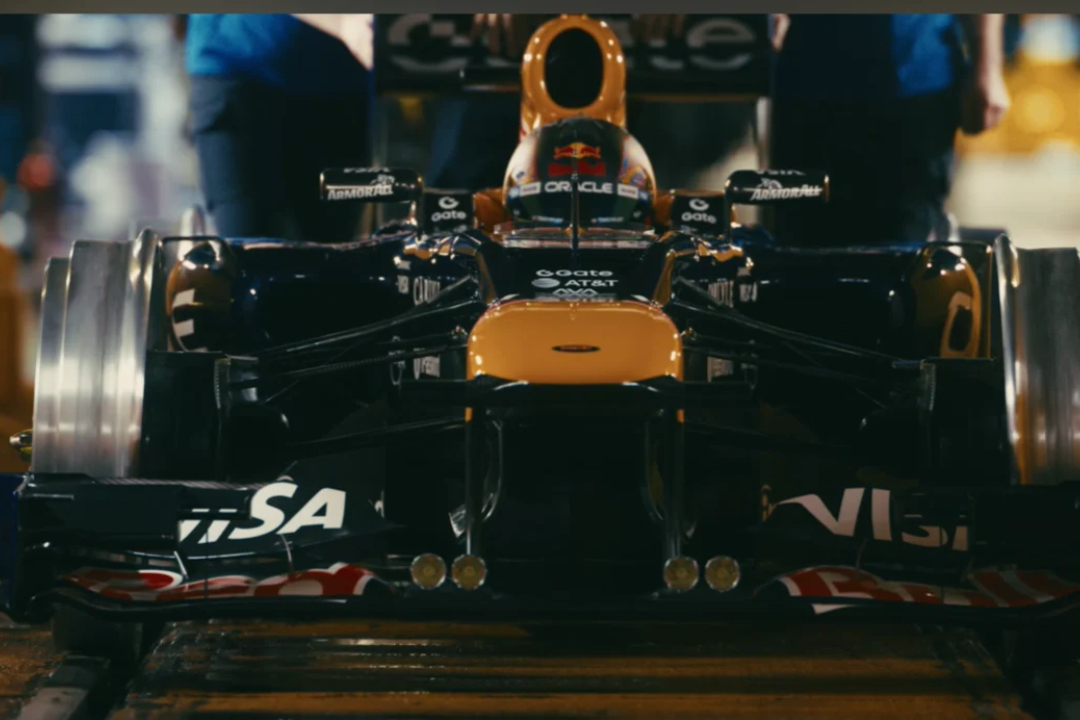
Comparisons with modern stunt and movie car work help underline how unusual it was to have this level of performance baked into a street-legal production car. Contemporary stunt coordinators routinely modify vehicles far beyond factory spec to survive jumps, rolls, and high-speed chases. For a film like the seventh installment of the Fast and Furious series, teams built multiple versions of the same car with reinforced chassis, upgraded suspension, and tuned engines, then used those cars to perform complex stunts that would destroy a stock vehicle.
The secret-code Camaro occupied a strange middle ground. It was not a one-off stunt build, nor a pure race car, yet its configuration leaned far enough toward performance that it blurred the line between street and track. Owners could drive to work during the week, then head to a local autocross or drag strip on the weekend and run times that embarrassed cars with more aggressive marketing. That dual identity, and the fact that it came straight from the factory, gives the car a kind of authenticity that heavily modified builds cannot quite match.
There is also a lesson here about how enthusiasts read factory intent. When a manufacturer officially launches a track-focused variant, the message is clear. With a car like this Camaro, the message was coded, literally, into internal order systems. That subtlety has made the car a magnet for researchers who like decoding old build sheets and part numbers. Every confirmed example adds another piece to the puzzle, helping to map out how often the configuration was used and how consistent its hardware really was.
At a broader level, the car illustrates how performance innovation can slip through in unexpected ways. Engineers working under tight constraints sometimes find small, clever paths to better results. A slightly different casting here, a revised calibration there, and a car that looks identical on the outside suddenly feels alive in the driver’s hands. The fact that the company itself never fully publicized or neatly explained the configuration shows how internal priorities can diverge from enthusiast values. What might have been seen as a minor, technical option in corporate paperwork has become a holy grail for collectors.
What to watch next
The story of this Camaro is still unfolding because the evidence base is incomplete. Production records from the period are not always digitized or easy to search by internal code. That means each newly documented car, especially those with original paperwork and unmodified drivetrains, has the potential to refine the understanding of what the secret configuration included. Enthusiast communities are already comparing casting numbers, ECU codes, and suspension part tags to build a shared registry of known examples.
As that registry grows, a clearer picture should emerge of how many such cars were built and whether there were sub-variants within the configuration. It is possible that some cars received a more aggressive mix of parts than others, depending on which plant built them or which supplier batches were on hand. Systematic dyno testing of surviving stock cars could also help quantify how far their real-world output diverged from the official ratings. That kind of data would move the conversation from legend toward measurable fact.
More from Fast Lane Only