Reputations in the sports car world are rarely settled on launch day. Some machines arrive to fanfare, only to fade once real owners live with them. Others stumble out of the gate, then spend years quietly proving early critics wrong until values, forums and track-day paddocks tell a very different story.
The cars that manage this kind of turnaround show how much context matters. As tastes, regulations and rival models change, yesterday’s flawed coupe can become today’s cult hero, prized precisely for the quirks that once counted against it.
How early backlash shaped these late-blooming sports cars
Many sports cars that now enjoy cult status began life with a reputation problem. Some were launched into the wrong economic moment, others were overshadowed by a more glamorous sibling, and a few simply suffered from unrealistic expectations. Lists of poorly received sports are full of machines that were too heavy, too soft or too compromised for the purists of their day.
Time has a way of reframing those flaws. A car dismissed as underpowered when new can feel refreshingly usable once the market fills with 600 horsepower missiles that struggle to deploy their performance on public roads. Cabin plastics that looked cheap next to a contemporary luxury saloon can seem charmingly simple compared with the touchscreens and complex menus of modern performance models.
One recurring pattern is that early reviews focus on headline numbers and spec sheet comparisons, while owners later discover qualities that are harder to quantify. Steering feel, pedal weighting and the way a chassis moves over a challenging road often emerge only after thousands of miles. As those strengths filter through owner communities and specialist reviewers, the narrative starts to shift.
Rivals evolve as well. A car that launched into a crowded field of similar coupes might have looked average at the time. A decade later, if most competitors have disappeared or moved upmarket, that same model can stand almost alone as an affordable route into a particular driving experience, whether that is a naturally aspirated engine, a manual gearbox or a mid-engined layout.
When criticism turns into appreciation
The most striking reversals tend to involve cars that were fundamentally well engineered but misjudged on price, positioning or timing. As depreciation erases the original sticker shock, enthusiasts start to see the underlying hardware rather than the launch-day narrative.
Mid-engined sports cars are a good example. For years, the idea of a mid-engined model sitting below a flagship supercar created tension. Buyers expected the cheaper car to feel like a scaled-down exotic, while manufacturers often tuned it for everyday usability. The result was criticism that these cars were neither focused enough for track addicts nor comfortable enough for luxury buyers.
Over time, that balance has come to look like a strength. Owners who use their cars on real roads, in mixed weather and traffic, value a chassis that communicates without punishing, and an engine that rewards revs without feeling antisocial at half throttle. As online communities share setup tips and recommended modifications, many of these once-maligned models gain a second life as highly capable all-rounders.
Market data tends to follow. Auction results and classified listings start to show firmer prices for clean, low-mileage examples. Special editions, manual gearboxes and rare colors fetch premiums. What began as a bargain for the few who ignored early reviews becomes a recognized modern classic.
The Cayman GT4 and the power of hindsight
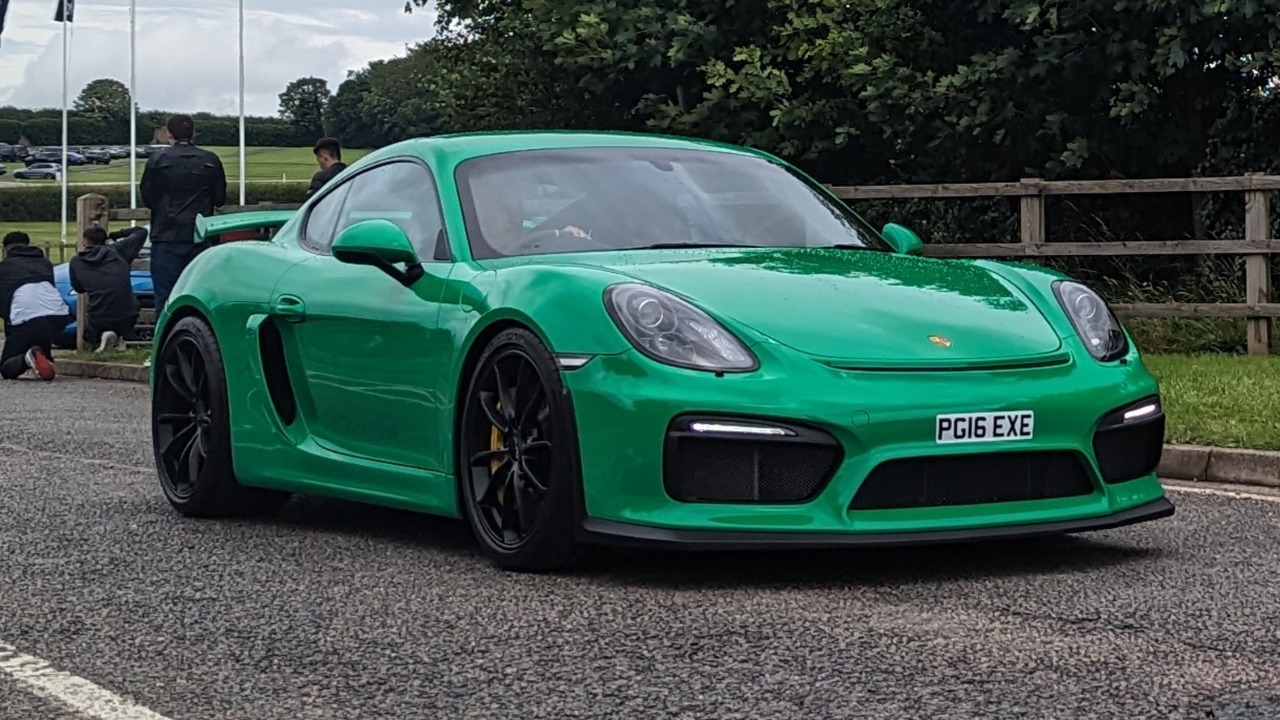
Porsche’s Cayman story illustrates how perceptions can shift with context. When the first Cayman arrived, some enthusiasts saw it as a threat to the 911’s status, while others complained that it was deliberately held back on power. That tension lingered until the arrival of the 981-generation Cayman GT4, which put a motorsport-flavored chassis and a 3.8 litre flat-six into a compact mid-engined shell.
At launch, the Cayman GT4 was praised for its steering feel and track capability, but there were grumbles about its long gearing and the sense that it still sat in the 911’s shadow. Used-market analysis of the 981 Cayman GT4 now paints a very different picture. The car is widely regarded as a modern benchmark for driver involvement, with values that reflect intense demand for its naturally aspirated engine and manual gearbox.
Several forces helped that transformation. Later generations of the Cayman adopted turbocharged four-cylinder engines in many variants, which sharpened appreciation for the older flat-six models. Tightening emissions rules and the spread of dual-clutch automatics also made the GT4’s specification feel increasingly rare. What once looked like a slightly compromised track car now appears to be one of the last opportunities to buy a relatively simple, high-revving Porsche with a gearlever and three pedals.
The GT4 also benefited from motorsport success and a growing track-day culture. Owners discovered that its chassis responded well to alignment tweaks and tire upgrades, and that it could handle repeated circuit use without the fragility associated with some more exotic machinery. As these stories circulated, the car’s reputation moved from “interesting alternative” to “future classic” in the eyes of many collectors.
Why these reputation comebacks resonate today
The rehabilitation of once-maligned sports cars matters now because it reflects broader shifts in what enthusiasts value. As performance figures climb and electronics take over more driving tasks, engagement and character have become harder to find. Cars that deliver a clear sense of mechanical connection, even if they fall short on raw numbers, feel increasingly special.
There is also a generational element. Younger enthusiasts who grew up seeing certain models on posters or in video games are now reaching the point where they can buy those cars. Their nostalgia is often tied less to contemporary reviews and more to how the cars looked and sounded. That can lift demand for models that journalists once criticized but which featured heavily in popular culture.
At the same time, tightening urban regulations and rising running costs push many buyers toward smaller, lighter sports cars rather than big-engined GTs. A coupe that was once dismissed as underwhelming compared with a flagship V8 may now look like the more realistic and enjoyable option for weekend drives and occasional track days.
For manufacturers, these shifts offer lessons. Cars that were engineered with a clear focus on driver enjoyment, even if that meant compromising on marketing-friendly metrics, tend to age well. Models that chased trends or relied heavily on gimmicks often struggle to attract affection once the novelty fades. The long view taken by the used market can reward depth of engineering in ways that short-term sales figures do not capture.
Where the next reputation turnarounds may come from
Looking ahead, several current and recent sports cars could follow a similar path. Manual versions of models that are mostly sold with automatics, for example, are likely to gain status as enthusiasts seek out the last analogue experiences. Lightweight variants that were overlooked when new, because they lacked luxury equipment, may become prized for their purity once touchscreens and driver aids dominate the mainstream.
Early electric performance cars are another candidate. Some have been criticized for weight and limited range, yet they often deliver instant torque and precise control that suits twisty roads. As charging infrastructure improves and battery technology advances, the first generation of electric sports models may be re-evaluated as important stepping stones that combined new drivetrains with traditional chassis tuning.
There is also growing interest in cars that sit on the boundary between sports and grand tourer. Coupes that were once accused of being neither hardcore enough for the track nor plush enough for cross-continent cruising may find a new audience among drivers who want one car that can do both. As multi-car garages become harder to justify, versatility can turn from a perceived weakness into a selling point.
More from Fast Lane Only
- Unboxing the WWII Jeep in a Crate
- 15 rare Chevys collectors are quietly buying
- 10 underrated V8s still worth hunting down
- Police notice this before you even roll window down
*Research for this article included AI assistance, with all final content reviewed by human editors