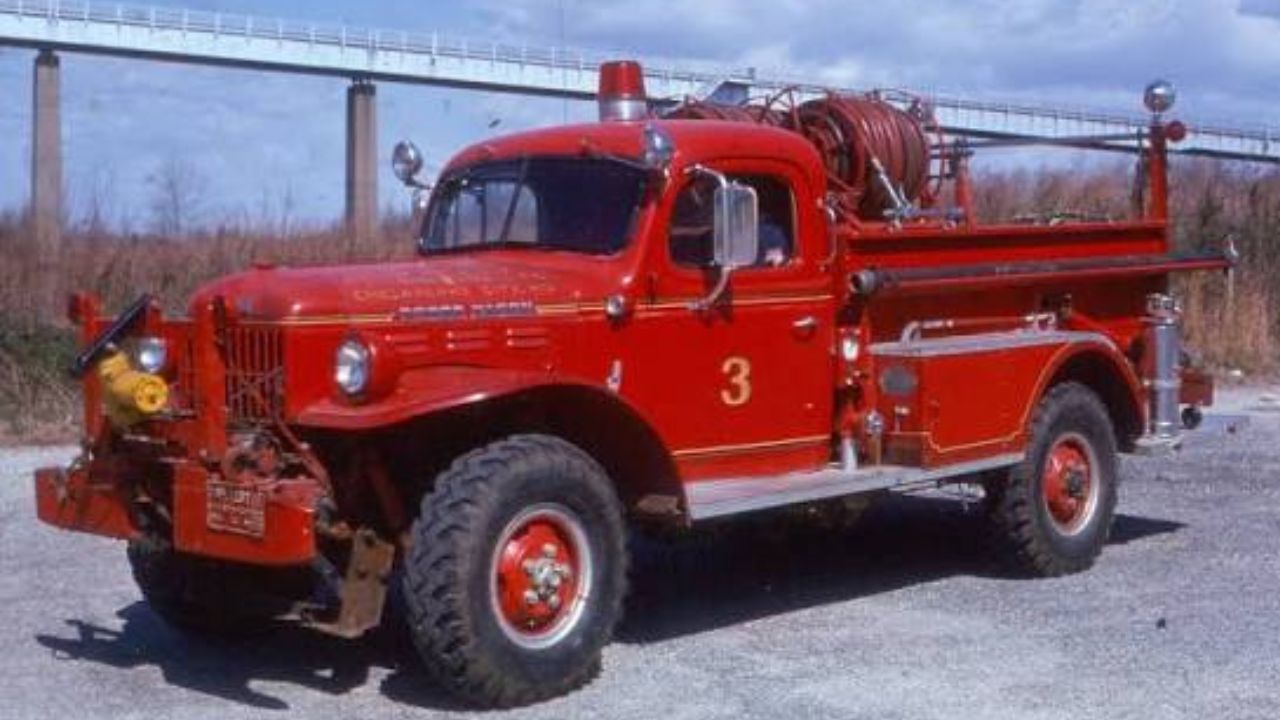
The 1955 Dodge Power Wagon earned its reputation as one of America’s toughest work trucks, but one of its most unusual roles took place far from farms and construction sites. Across the country, specially equipped Power Wagons served as airport rescue vehicles, combining rugged four-wheel-drive capability with firefighting equipment to protect the rapidly growing aviation industry.
Growing Airports Needed Specialized Emergency Vehicles
The 1950s marked a period of rapid expansion for commercial aviation. Larger airports welcomed faster aircraft carrying more passengers, creating new safety challenges that existing municipal fire trucks were not always equipped to handle. Airport operators needed vehicles capable of responding quickly across long runways, grassy areas, and undeveloped sections of airfields.
The Dodge Power Wagon already had an outstanding reputation for durability in military and industrial service. Its proven four-wheel-drive system made it an appealing platform for airports that required dependable emergency vehicles capable of operating in nearly any weather or terrain.
Unlike standard city fire engines, airport rescue trucks had to travel beyond paved roads when accidents occurred. The Power Wagon’s exceptional off-road ability allowed emergency crews to reach damaged aircraft even if they came to rest in muddy fields or rough ground surrounding the runway.
These practical strengths made the truck an ideal starting point for specialized airport rescue equipment.
Fire Equipment Manufacturers Created Unique Conversions
Most airport rescue Power Wagons were not built entirely by Dodge. Instead, specialized companies purchased chassis from the manufacturer and fitted them with custom firefighting bodies, water tanks, foam systems, pumps, and emergency lighting designed specifically for aviation emergencies.
The resulting vehicles often looked dramatically different from ordinary Power Wagons. Many featured enclosed equipment compartments, hose reels, roof-mounted warning lights, and specialized firefighting nozzles capable of delivering water or foam directly onto burning aircraft.
Because airports had different operational requirements, no single configuration became standard. Some rescue trucks emphasized rapid response with smaller water tanks, while others carried larger firefighting systems intended for more extensive emergencies.
This variety has made surviving examples especially interesting to collectors, as few airport rescue Power Wagons were exactly alike.
Four-Wheel Drive Gave Crews a Major Advantage
One of the biggest reasons airports valued the Power Wagon was its ability to reach accident sites regardless of ground conditions. Aircraft sometimes left paved surfaces during emergency landings or overshot runways into soft terrain where conventional emergency vehicles could become stuck.
The Power Wagon’s rugged drivetrain, generous ground clearance, and low-range transfer case allowed rescue crews to continue moving when heavier highway-based fire engines struggled for traction. During rain, snow, or muddy conditions, that capability could make a critical difference in response times.
The truck’s strong frame also supported the additional weight of firefighting equipment without sacrificing reliability. Operators appreciated that the vehicle remained dependable despite carrying pumps, hoses, water tanks, and specialized rescue tools.
Its versatility meant the same truck could handle routine airport maintenance one day and respond to a serious aviation emergency the next.
A Rare Chapter in Power Wagon History
As airport firefighting technology advanced during the 1960s and beyond, larger purpose-built crash tenders gradually replaced modified Power Wagons. These newer vehicles carried substantially greater quantities of water and firefighting foam while offering higher speeds and increased rescue capability for larger commercial aircraft.
Even so, the airport rescue Power Wagon occupies a unique place in automotive history. It demonstrated how a rugged civilian truck could be adapted to meet highly specialized emergency needs during an important period of aviation growth.
Today, surviving examples are exceptionally rare because most spent decades in demanding service before being retired and eventually scrapped. Those that remain are prized by collectors for their unusual appearance and fascinating history.
Looking back, the 1955 Dodge Power Wagon’s airport rescue role highlights the remarkable versatility that made the truck legendary. While many remember it as a hardworking farm or military vehicle, its quiet service protecting airports remains one of the most distinctive chapters in its enduring legacy.
More from Fast Lane Only
- Unboxing the WWII Jeep in a Crate
- 15 rare Chevys collectors are quietly buying
- 10 underrated V8s still worth hunting down
- Police notice this before you even roll window down
*Research for this article included AI assistance, with all final content reviewed by human editors