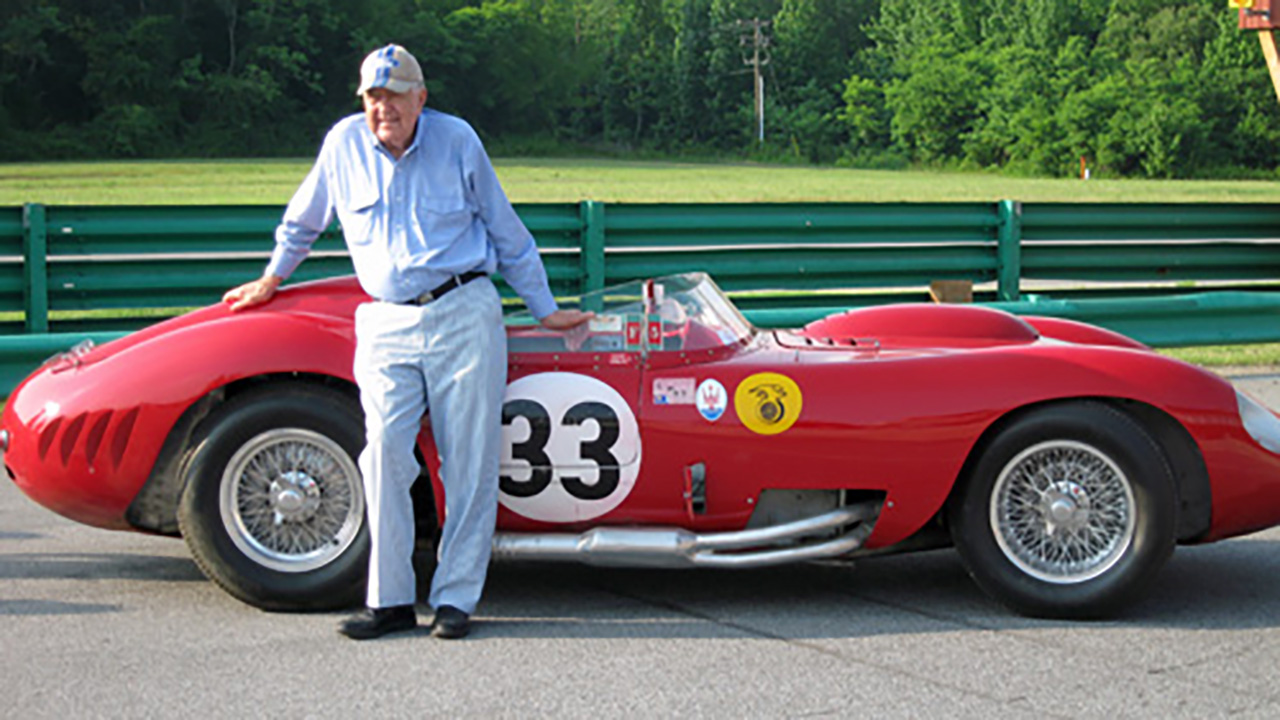
Carroll Shelby’s journey from a struggling racer to an automotive legend is not just about speed and power; it’s a tale of ingenuity, persistence, and passion. At the heart of this story lies the transformation of a humble roadster into the iconic Shelby Cobra, a vehicle that would forever change the landscape of American muscle cars.
The Early Years of Carroll Shelby
Born in 1923 in Leesburg, Texas, Carroll Shelby developed an affinity for automobiles from a young age. His childhood was marked by a fascination with speed and engineering, often tinkering with cars in his father’s garage. Shelby’s early interest in racing was ignited by the thrill of motorsport, but it wasn’t until he enlisted in the Army Air Corps during World War II that his passion took flight. Serving as a flight instructor, he learned discipline and resilience—qualities that would serve him well later in his racing career.
Following the war, Shelby returned to Texas and began racing professionally. However, his journey was fraught with challenges. He initially raced in various competitions, including the 1952 Mexican Road Race, but struggled to secure consistent sponsorship and funding. Despite facing numerous setbacks, his determination pushed him to refine his skills and build a network within the racing community. Ultimately, his perseverance led him to the prestigious Le Mans race, where he gained recognition for both his driving prowess and his innovative approach to vehicle performance.
The Birth of the Cobra
The inception of the Shelby Cobra can be traced back to Shelby’s desire to create a high-performance vehicle that combined British engineering with American muscle. In 1961, while contemplating the potential of the AC Ace roadster, Shelby saw an opportunity to innovate. He envisioned a car that would not only be fast but also agile and aesthetically appealing. This concept became the foundation of the Cobra, a car that would soon capture the hearts of automotive enthusiasts around the world.
To bring his vision to life, Shelby partnered with AC Cars, a British manufacturer known for its quality craftsmanship. The collaboration began with the modification of the AC Ace, which required a powerful engine to match its sleek design. Shelby opted for the Ford V8 engine, a decision that would revolutionize the Cobra’s performance. The initial prototypes faced numerous design challenges, including weight distribution and aerodynamics. However, Shelby’s relentless pursuit of perfection led to innovative solutions that ultimately defined the Cobra’s legacy.
Performance Engineering
One of the defining features of the Shelby Cobra was its choice of powertrain. Shelby’s decision to use a Ford V8 engine was strategic; it provided the necessary horsepower and torque to elevate the Cobra’s performance to unprecedented levels. The first production model, the Shelby Cobra 260, debuted in 1962 and boasted a 260 cubic-inch engine, capable of delivering a remarkable 260 horsepower. This combination of lightweight design and powerful engine set the stage for the Cobra’s dominance on the track.
The performance engineering did not stop at the engine. Shelby and his team meticulously tested and tuned the Cobra to achieve optimal performance. This rigorous process involved extensive track testing, where Shelby pushed the car to its limits. Innovations, such as the introduction of disc brakes and a refined suspension system, contributed to the Cobra’s exceptional handling and braking capabilities. These enhancements not only distinguished the Cobra from its competitors but also laid the groundwork for future high-performance vehicles.
The Cobra’s Racing Legacy
The Shelby Cobra quickly made a name for itself in the racing world, with notable victories that established its reputation as a formidable competitor. In 1963, the Cobra achieved its first major success at the American Road Race of Champions, where it secured a victory in its class. This win was a critical turning point, propelling the Cobra into the spotlight and attracting attention from racing enthusiasts and manufacturers alike.
Central to the Cobra’s racing legacy was the legendary driver Ken Miles. Shelby recognized Miles’ exceptional talent and enlisted him to help refine the Cobra’s performance on the racetrack. Together, they pushed the boundaries of what the Cobra could achieve, leading to a series of impressive wins in events such as the 1965 SCCA National Championship. Miles’ contribution was instrumental in shaping the Cobra’s racing history, and his partnership with Shelby exemplified the power of collaboration in achieving greatness.
The Cultural Phenomenon of the Cobra
The impact of the Shelby Cobra transcended the racetrack, becoming a cultural icon in American automotive history. Its sleek design and powerful performance captured the imagination of car enthusiasts, leading to its appearances in popular media. Movies like “Gone in 60 Seconds” and television shows such as “The Dukes of Hazzard” showcased the Cobra, further cementing its status as a symbol of speed and style.
As the Cobra gained fame, it also became a highly sought-after collectible among car enthusiasts. Original models fetch impressive prices at auctions, with some rare versions selling for millions of dollars. Shelby’s branding played a crucial role in elevating the Cobra’s status, as he skillfully marketed the vehicle to the public. The Shelby name became synonymous with performance and innovation, influencing generations of car makers and enthusiasts.
Challenges and Triumphs
Despite the Cobra’s success, Carroll Shelby faced numerous challenges throughout his career. Financial struggles were a constant presence, as the costs of production and competition strained his resources. In the mid-1960s, Shelby American faced significant financial difficulties, leading to the decision to cease production of the Cobra in 1968. This moment was particularly poignant for Shelby, who had dedicated his life to the pursuit of automotive excellence.
Competition also posed a challenge to Shelby’s vision. Rival manufacturers, such as Ferrari and Dodge, entered the market with their own high-performance vehicles, intensifying the race for dominance in the muscle car segment. However, Shelby’s resilience and innovative spirit allowed him to adapt and continue pushing the boundaries of automotive design. His ability to learn from setbacks and maintain focus on his goals exemplified the qualities that made him a legendary figure in the automotive industry.
The Legacy of the Shelby Cobra
Today, the Shelby Cobra stands as an iconic symbol in automotive history, recognized for its blend of power, design, and racing pedigree. Its influence extends beyond its production years, inspiring a new generation of performance vehicles. Manufacturers continue to draw on the Cobra’s legacy, with modern interpretations that pay homage to Shelby’s pioneering spirit. The continued production of the Cobra line, including the recent Shelby Cobra 427, keeps the legend alive, captivating enthusiasts worldwide.
The community surrounding the Shelby Cobra remains vibrant, with clubs and events dedicated to celebrating the vehicle’s history. Enthusiasts share their passion for the Cobra through restoration projects and gatherings, ensuring that Shelby’s legacy endures. The impact of the Cobra is felt not only in the automotive world but also in popular culture, where it continues to symbolize the thrill of speed and the pursuit of excellence.
Carroll Shelby’s Later Years
After stepping back from the automotive scene, Carroll Shelby continued to influence the industry through various ventures. He returned to the spotlight in the 1980s with the release of the Shelby Series 1, a modern interpretation of his legendary design philosophy. This resurgence was marked by Shelby’s commitment to pushing the boundaries of performance, demonstrating that his passion for innovation never waned.
In addition to his contributions to automotive engineering, Shelby dedicated his later years to philanthropy. He supported various charitable causes, including diabetes research, which was particularly close to his heart due to his own battle with the disease. His commitment to giving back to the community showcased his character beyond the realm of racing, inspiring others to pursue excellence while making a positive impact on society. Carroll Shelby’s philosophies and dedication to automotive innovation continue to inspire new generations, ensuring that his legacy lives on.
More from Fast Lane Only