Toyota has built millions of engines, but a select few have taken on mythic status among owners and mechanics long after the assembly lines stopped. The most celebrated are not the most powerful or the most advanced. They are the ones that quietly rack up huge mileage totals, survive abuse, and keep older vehicles on the road long after rivals have been scrapped.
One engine family in particular, Toyota’s straight-six diesels, has become shorthand for overbuilt reliability. Its reputation has only grown as newer powertrains add complexity and as used buyers hunt for machines that can outlast a typical car loan by hundreds of thousands of miles.
How Toyota’s straight-six diesel became a durability benchmark
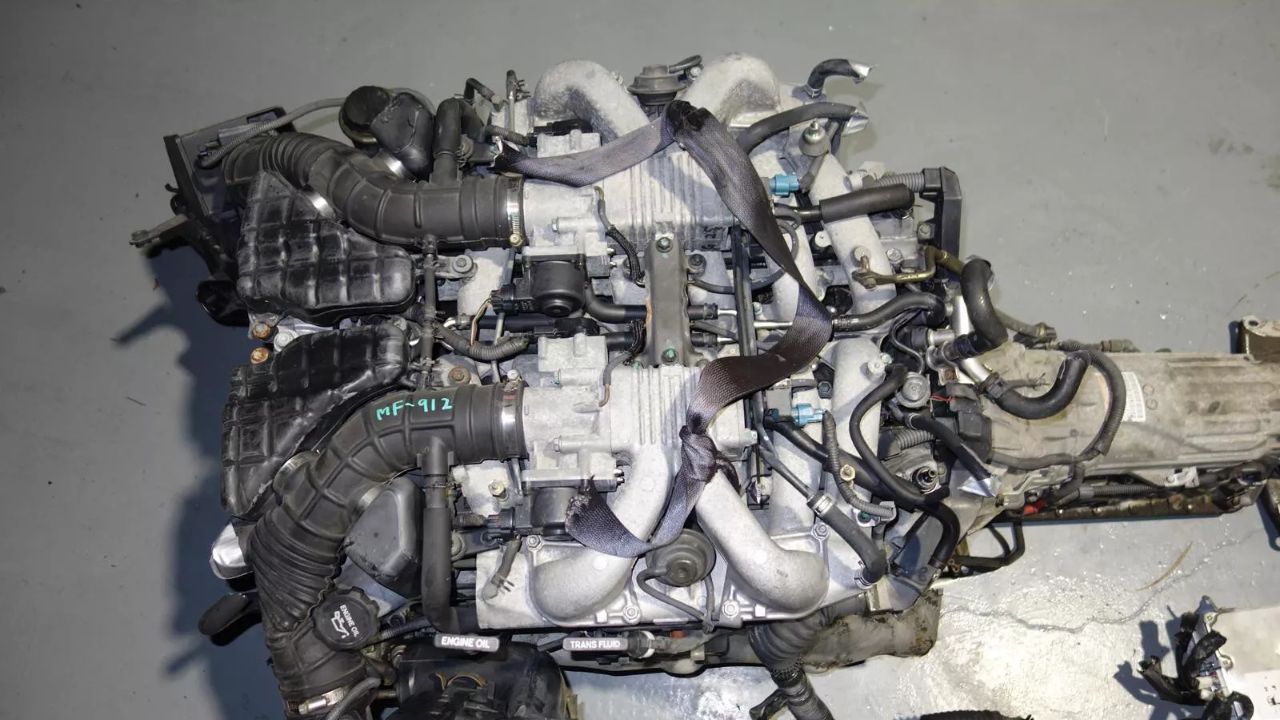
Among Toyota loyalists, the company’s classic inline-six diesels are often described as “bulletproof.” That label reflects a long record of engines that keep running in harsh climates, on poor fuel, and with minimal maintenance. Reports on the long-serving straight-six diesel highlight thick cast-iron blocks, conservative boost levels, and simple mechanical injection that collectively favor longevity over outright performance, which is why enthusiasts still chase these old Toyota diesels on the used market.
These engines powered Land Cruiser models that were expected to work as farm tools, expedition rigs, and humanitarian vehicles in regions where breakdowns could be dangerous. Owners who use them for towing, overlanding, or commercial work often recount odometer readings that climb far beyond typical expectations for a passenger vehicle. The design philosophy was straightforward: build in generous safety margins, avoid cutting-edge tech that had not yet proven itself, and accept extra weight as the cost of durability.
That conservative approach stands in contrast to many modern turbocharged gasoline engines that chase smaller displacement and higher output. While newer designs lean on direct injection and complex emissions hardware, Toyota’s older straight-sixes rely on fewer moving parts and lower specific stress. The result is an engine that is easier to repair in the field and less likely to suffer catastrophic failure from a single sensor or software issue.
What changed as Toyota shifted to newer powertrains
As emissions rules tightened and fuel economy standards rose, Toyota gradually moved away from these heavy, low-revving diesels. The company pivoted toward cleaner gasoline engines and, eventually, hybrid systems that could deliver better efficiency and lower tailpipe emissions. That transition brought gains in refinement and environmental performance, but it also introduced more complex components that depend heavily on software and careful maintenance.
The difference becomes clear when comparing Toyota’s older workhorse engines with some of its more recent large-displacement gasoline units. Toyota, for example, has had to recall around 270,000 Tundra pickups for problems related to engine-related recalls, a reminder that even manufacturers with strong reputations can run into trouble as designs grow more sophisticated. The issues do not erase decades of reliability, but they highlight how much more can go wrong when turbocharging, complex timing systems, and emissions aftertreatment are layered onto a modern truck engine.
At the same time, Toyota’s engineering priorities have broadened. The company still aims for long life, yet it now has to balance that goal with efficiency targets, crash packaging constraints, and customer expectations for quietness and power. In that context, the old inline-six diesel looks like a product of a different era, one where engineers could overspec components without worrying as much about grams of weight or fractions of a liter in fuel consumption tests.
Why that old reputation still shapes Toyota’s image today
The legend of Toyota’s long-lived engines does not exist in isolation. It feeds into a wider perception that the brand builds cars that run for a very long time. Studies of vehicle longevity often place Toyota near the top, with sedans such as the Camry and Avalon frequently appearing among the longest-lasting sedans on the road. Those rankings draw on registration data that track how many vehicles pass high mileage thresholds, and they reinforce what many owners already believe about the brand.
Hybrid technology has added another layer to that story. Research into hybrid longevity has found that Toyota’s gasoline-electric systems tend to keep running for extended periods, with one study concluding that Toyota has the among major manufacturers. That finding matters because it shows the company has managed to bring its durability mindset into a newer generation of powertrains, even as the hardware has grown more complex than the old mechanical diesels.
Luxury models have benefited from the same culture. The original Lexus LS 400, which shared engineering DNA with Toyota’s mainstream products, built a reputation for near-indestructible V8 engines and transmissions. Owners often cite that car as proof that Toyota’s approach to overengineering can succeed even in a premium segment where quietness and refinement are as important as longevity, and reports on the LS 400’s durability have helped cement its status as a benchmark for long-term reliability.
The straight-six diesel’s legend also resonates outside the Toyota ecosystem because it fits into a broader car culture that celebrates engines known to reach six-figure mileages with ease. In the motorcycle world, for instance, some Harley-Davidson V-twins are routinely expected to cross 100,000 miles when maintained properly, and that expectation is reflected in coverage of Harley-Davidson engines that run well past that mark. For many enthusiasts, Toyota’s old diesel sits in the same mental category: an engine that can be trusted to do hard work for a very long time.
Why the old straight-six diesel matters in the current market
Used-vehicle shoppers are increasingly sensitive to long-term costs, especially as prices for new trucks and SUVs climb. That pressure has pushed more buyers toward older, proven platforms. In that environment, Toyota’s retired straight-six diesels have become prized assets. Land Cruisers and similar models equipped with these engines often command high resale values because buyers associate them with low mechanical risk and the ability to handle abuse that might cripple a lighter-duty powertrain.
Fleet operators and overlanding builders take a similar view. When a vehicle is expected to cross remote terrain or operate in regions with limited access to parts, simplicity and durability often matter more than peak output. The straight-six diesel’s ability to run on lower quality fuel and tolerate imperfect maintenance gives it an advantage in those scenarios. That is why some expedition outfits still seek out older Toyota platforms rather than newer, more complex alternatives.
The engine’s reputation also influences how people interpret Toyota’s modern products. When a new hybrid or turbocharged truck engine arrives, many buyers mentally compare it with the company’s historical high points. The question is not just whether the new unit is efficient or powerful, but whether it can live up to the standard set by those earlier workhorses that seemed to run indefinitely with basic care.
What comes next for Toyota’s durability legacy
The straight-six diesel era is unlikely to return in its original form. Emissions standards and climate goals leave little room for heavy, slow-revving diesels in mainstream passenger vehicles. Instead, Toyota’s challenge is to translate the qualities that made that engine legendary into cleaner, more efficient powertrains that can still earn trust over decades of use.
Hybrid systems are one pillar of that strategy. By pairing relatively unstressed gasoline engines with electric motors, Toyota can keep revs and thermal loads lower than in a comparable non-hybrid, which may help extend service life. Longevity data on existing Toyota hybrids suggests that this approach is working, at least for the first generation of owners who have now accumulated substantial mileage.
Yet Toyota must also manage the risks that come with complexity. Recalls on large trucks and SUVs show how quickly confidence can be shaken when engines or associated components fail in significant numbers. The company’s response to issues like the Tundra engine recalls will influence whether buyers continue to see Toyota as the safest bet for long-term ownership or start to view it as just another brand grappling with modern engineering trade-offs.
More from Fast Lane Only
- Unboxing the WWII Jeep in a Crate
- 15 rare Chevys collectors are quietly buying
- 10 underrated V8s still worth hunting down
- Police notice this before you even roll window down
*Research for this article included AI assistance, with all final content reviewed by human editors