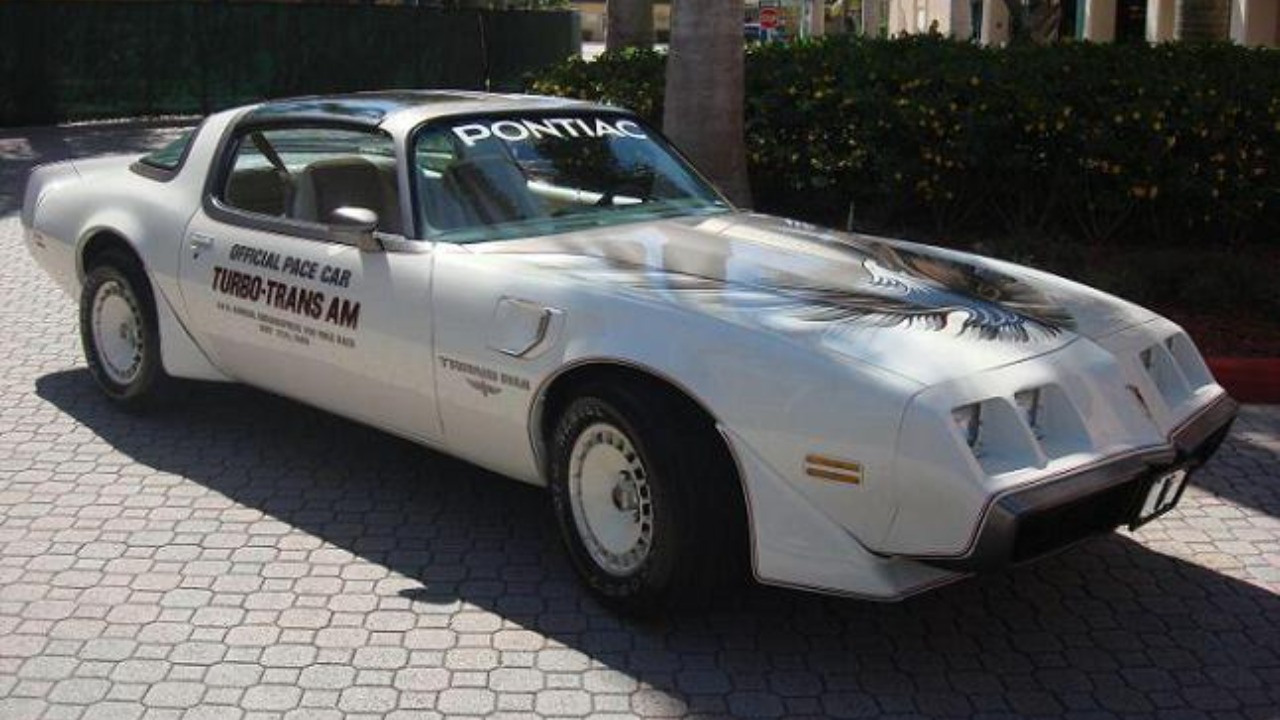
The 1980 Turbo Trans Am Pace Car arrived at the Indianapolis 500 with the kind of theatrical flair that could upstage the race it was meant to lead. Wrapped in bold graphics and powered by a then-radical turbocharged V8, it turned a ceremonial duty into a rolling statement about where American performance might be headed. I want to trace how that car, and the technology and image behind it, managed to steal the spotlight in style and still captivate enthusiasts decades later.
To understand why this particular Pace Car still resonates, it helps to see it not as a one-off special but as the culmination of Pontiac’s long push to keep excitement alive in an era of tightening rules and shrinking engines. The Turbo Trans Am did not just pace the field, it symbolized a brand trying to reinvent muscle for a new decade, blending nostalgia, engineering risk and unapologetic showmanship.
The turbocharged gamble that led to Indianapolis
By the turn of the 1980s, traditional big-displacement muscle was fading, yet Pontiac was not ready to surrender its performance image. The answer was the Trans Am Turbo, a car that tried to translate the swagger of earlier Firebirds into a more efficient, forced-induction package. In that context, the decision to build a special version as the official Indianapolis 500 Pace Car was both a marketing coup and a technical showcase, positioning the turbocharged Trans Am as the brand’s new halo.
The scale of that ambition shows in the production numbers and the way Pontiac framed the project. The ultimate Trans Am Turbo was the Indianapolis 500 Pace Car replica, with plans for 6,300 examples to echo the exclusivity of the 500-mile classic at Indianapolis. That pairing of a limited run with a headline racing event gave the Pace Car an aura that went beyond its raw numbers, turning it into a symbol of how far the division was willing to go to keep performance alive under new constraints.
Styling that shouted “pace car” from across the infield
What truly stole the show, though, was the way the car looked. Pontiac understood that a Pace Car had to be instantly recognizable on television and from the grandstands, so the Trans Am Turbo was dressed to command attention. The graphics, contrasting paint and aggressive stance made it more dramatic than a standard Firebird, and the overall effect was closer to a street-legal race car than a mere trim package.
That visual drama was not accidental. When ordering the turbo, the Firebird received a unique bonnet with an asymmetric power bulge that signaled its boosted heart before the engine ever fired. When Pontiac adapted this package for the Indianapolis 500 role, the Firebird gained even more visual theater, from bold striping to special badging that left no doubt it was the official pace car for the race. Unusually for a production-based special, the styling cues were not subtle, and that lack of restraint is a big part of why the car still turns heads.
The “Super Bird” hood and the art of turbo bragging rights
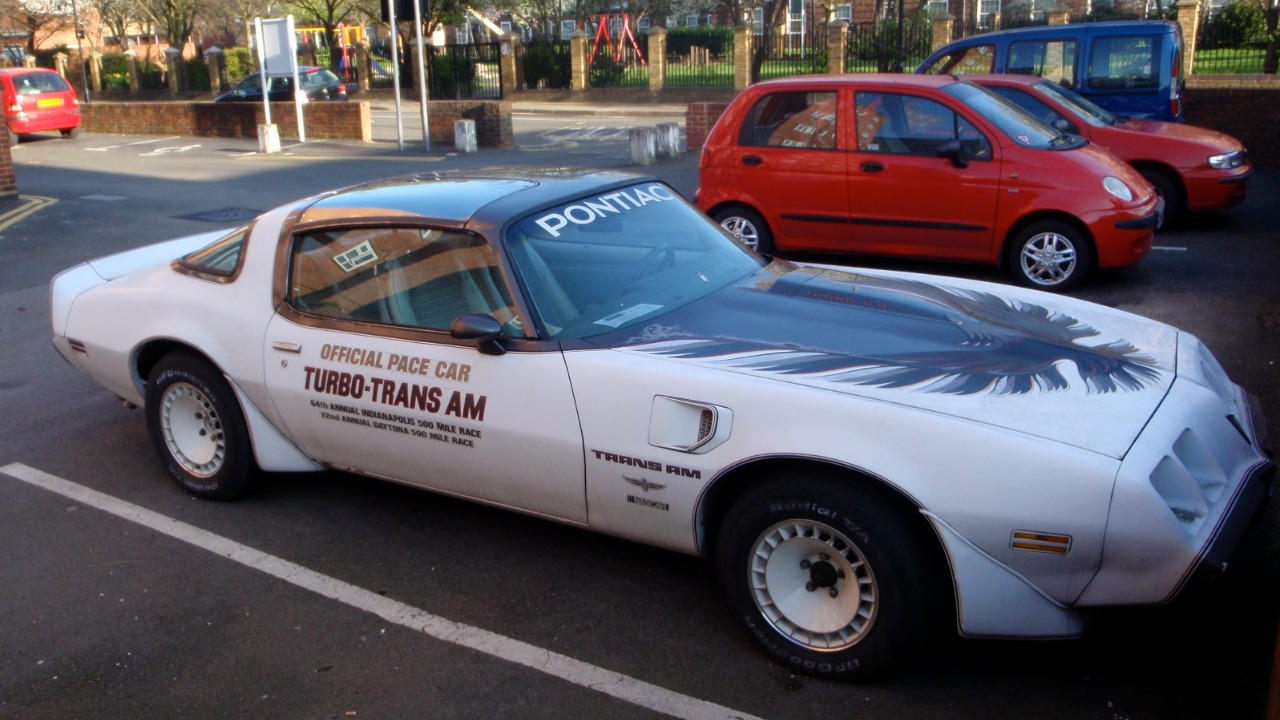
On a car built to pace the Indianapolis 500, the hood became a billboard for technology as much as a functional panel. Pontiac wanted everyone in the stands and watching at home to know that this was not just another V8 Trans Am, so the turbocharged engine received pride of place in the graphics. The result was a design that blended marketing bravado with genuine mechanical distinction.
A vivid example of that approach survives in a showroom-fresh 1980 #PontiacTransAm Indy 500 Pace Car that displays a larger “Super Bird” sticker on the hood stretching well onto the fenders, a graphic that highlights Pontiac’s addition of the Trans Am’s 4.9L Turbocharged V8. In that car, the new arrival is described as an Indy 500 Pace Car with that oversized Super Bird graphic, a reminder that the hood art was as much a declaration of turbocharged intent as any spec sheet.
Turbo tech as the last stand of American muscle
Underneath the graphics, the Turbo Trans Am Pace Car represented a turning point in how American brands approached performance. Instead of relying on ever-larger displacement, Pontiac leaned on forced induction and careful engineering to extract speed from a smaller package. That shift mirrored a broader industry move away from the 1960s formula, but in the Pace Car it was wrapped in a body that still looked every bit the classic muscle coupe.
The turbocharged V8 sat within a lineage of engines that had long defined the brand. The division had already produced powerplants that were described as the pinnacle of Pontiac engine development, with strong performance and race-specific features such as provisions for dry-sump oiling. By the time the Turbo Trans Am arrived, that heritage of serious engineering allowed the company to present its boosted 4.9-liter as a legitimate heir to the big-cube legends, even if the character of the power delivery had changed.
From big-block glory to turbocharged survival
To appreciate how radical the Turbo Trans Am Pace Car looked in its own time, I find it useful to set it against the cars that came just before it. In the late 1970s, Pontiac and Detroit were still building some of the last traditional muscle machines, with large-displacement engines and a focus on straight-line punch. Those cars were already becoming rarer as regulations tightened, which made the shift to a smaller turbocharged engine feel like a clear line between eras.
One of the clearest markers of that transition is the 1979 Trans Am 10th Anniversary Edition, described as one of the last true muscle cars manufactured by Trans Am builders in Pontiac and Detroit from the 1960-70 big-displacement era. Set against that backdrop, the Turbo Pace Car reads as a survival strategy, a way to keep the Trans Am name relevant by embracing new technology while still trading on the visual language of classic muscle.
Rarity, restoration and the collector’s eye
Today, the Turbo Trans Am Pace Car’s appeal is amplified by its relative scarcity and the care some owners have lavished on preserving it. Limited production, combined with the specific Indianapolis connection, has turned surviving examples into sought-after collectibles. Enthusiasts who grew up watching the car on television now hunt for clean survivors, and the best of them are treated with the same reverence once reserved for earlier high-performance Pontiacs.
The broader collector market shows how that reverence plays out in practice. A 1972 GTO 2 Door Hardtop, for instance, has been documented to be one of 325 by Pontiac Hist and underwent a no-expense-spared rotisserie restoration, a level of attention that signals how seriously collectors take rare performance models. The Turbo Trans Am Pace Car now sits in similar company, with well-preserved or restored examples commanding strong interest from buyers who see them as both artifacts of a transitional era and rolling tributes to Pontiac’s determination to keep building exciting cars.
Why the Turbo Pace Car still captures imaginations
Looking back, the 1980 Turbo Trans Am Pace Car stands out not just because it led the field at Indianapolis but because it encapsulated a moment when American performance had to reinvent itself. The car combined a bold visual identity, a then-novel turbocharged drivetrain and a direct link to one of motorsport’s most famous events. That mix allowed it to transcend its spec sheet and become a cultural reference point for enthusiasts who saw in it both the end of one era and the beginning of another.
For me, that is why the car continues to steal the spotlight whenever it appears at shows, auctions or in museum collections. It represents a brand pushing hard against the limits of its time, using every tool available, from asymmetric hood bulges to “Super Bird” graphics and turbo technology, to keep the Trans Am name in the conversation. In doing so, the Turbo Pace Car secured a place in history that feels larger than its production run, a reminder that style, context and ambition can matter just as much as raw horsepower.