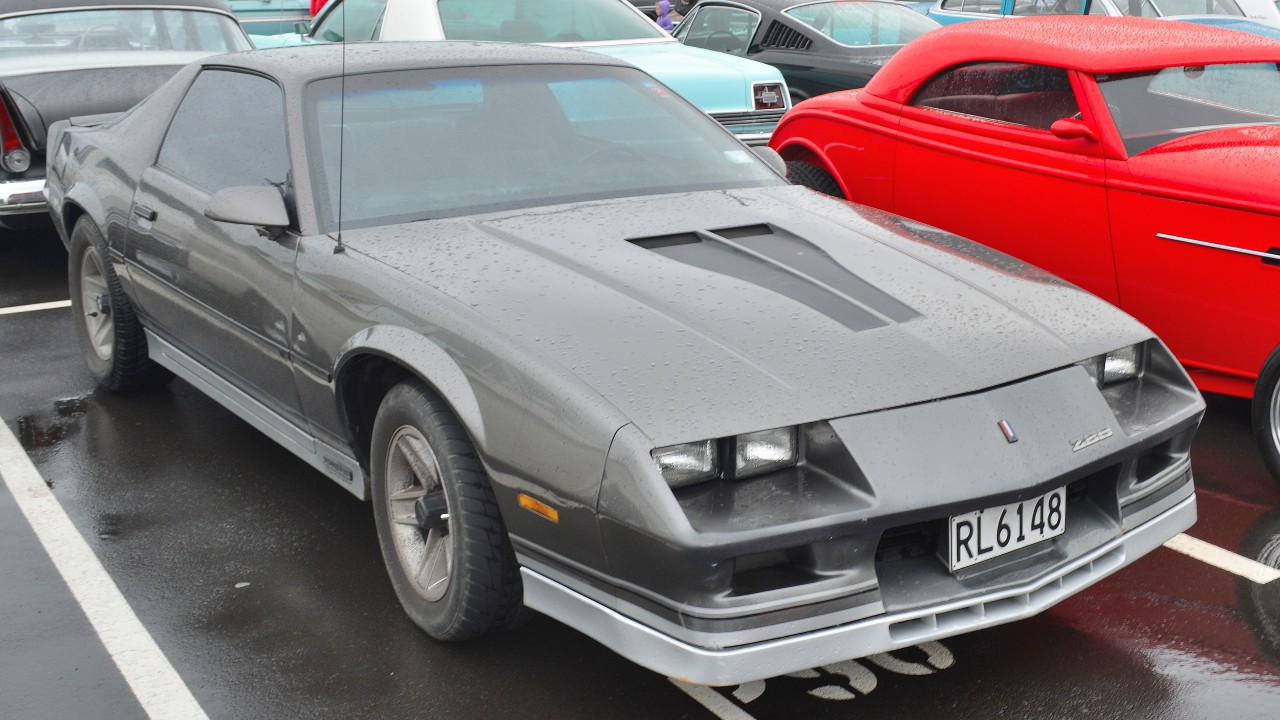
The 1982 Chevrolet Camaro Z28 marked a dramatic rebirth of American performance after years of tightening emissions rules and corporate uncertainty. What many enthusiasts don’t realize is that the car’s release was nearly delayed or reshaped multiple times during development, as Chevrolet struggled to balance power, efficiency, and survival it.
A Camaro reborn under pressure from emissions and economy rules
By the late 1970s, the original muscle car formula had collapsed under the weight of fuel crises, insurance pressure, and strict emissions regulations. The Camaro had already lost much of its raw performance identity, and production of the Z28 badge had been discontinued after 1975. When development for a new generation began, engineers were not just redesigning a car—they were trying to revive a performance nameplate that many inside General Motors believed might never return in its original spirit.
The challenge was enormous. The new platform had to be lighter, more efficient, and compliant with federal regulations while still convincing buyers that performance had not completely disappeared. That balancing act nearly killed the project multiple times. Internal discussions reportedly questioned whether a performance-focused model like the Chevrolet Camaro Z28 even made sense in a market increasingly dominated by fuel economy ratings rather than horsepower wars.
Why the 1982 Z28 almost didn’t reach production
During development, the biggest obstacle was not styling—it was engineering reality. The return of the Z28 required a V8 engine that could meet emissions standards without completely losing its performance character. Early prototypes struggled with drivability, fuel efficiency, and power delivery, especially as catalytic converters and electronic controls became mandatory. Engineers had to repeatedly retune the engine management systems just to make the car street-legal in all 50 states.
At the same time, corporate leadership questioned whether the investment was worth it. The Camaro line needed to stay profitable, and every performance upgrade increased production costs. Some internal proposals reportedly leaned toward canceling the Z28 badge entirely and focusing only on economy-oriented trims. Even the new aerodynamic hatchback design went through multiple revisions as designers tried to make the car modern enough for the 1980s without alienating traditional Camaro fans.
What ultimately saved the project was timing. A new wave of interest in performance cars was slowly emerging, and Chevrolet believed there was still a niche audience willing to embrace a return of the Z28 name. Still, the decision to move forward was cautious, and the final production version was toned down compared to early aggressive concepts.
How the 1982 Camaro Z28 defined a new generation
When the 1982 Camaro Z28 finally reached showrooms, it represented a completely new interpretation of performance. Instead of raw, tire-shredding horsepower, the focus shifted toward handling, balance, and everyday usability. The car featured a modernized suspension setup, improved aerodynamics, and a more refined driving experience that reflected the realities of early-1980s automotive engineering.
The Chevrolet Camaro Z28 was not the fastest muscle car ever built, but it played a crucial role in restoring credibility to the Camaro name. Buyers who had grown up during the golden era of muscle cars finally had a new version that hinted at performance without completely ignoring fuel economy and emissions requirements. It became a bridge between two automotive worlds: the untamed past and the regulated future.
Over time, the 1982 Z28 gained recognition for what it represented rather than just its specifications. It marked the survival of the Camaro during one of the most difficult periods in American automotive history. Without it, the performance identity of Chevrolet might have taken a very different path, and the Camaro nameplate itself could have faded into history rather than continuing into future generations.
More From Fast Lane Only: