Modern cars are equipped with a multitude of features designed to enhance convenience and safety. However, many drivers hold misconceptions about how these features actually function, leading to frustration and misuse. Understanding the intricacies of these technologies can help drivers make the most of what their vehicles offer.
Understanding Advanced Driver Assistance Systems (ADAS)
Advanced Driver Assistance Systems (ADAS) are a collection of technologies designed to automate and enhance vehicle safety. Features such as adaptive cruise control, lane departure warnings, and automatic emergency braking are all part of this innovative suite. The intended benefits of ADAS include reducing driver workload and minimizing the risk of accidents by providing real-time feedback and intervention. However, many drivers mistakenly believe that these systems can handle driving tasks independently, leading to dangerous situations.
The misconception that ADAS can lead to fully autonomous driving is widespread. For example, many believe that features like Tesla’s Autopilot or Chevrolet’s Super Cruise allow for complete hands-free operation. In reality, while these systems can assist with certain driving tasks, they still require active driver involvement. The driver must remain alert and ready to take over at any moment, as these systems are not foolproof. The reality is that understanding the boundaries of these features is critical for safe driving.
The Myth of Fully Autonomous Vehicles
Fully autonomous vehicles are often depicted in media as a near-future reality, but the truth is more complex. There are distinct levels of vehicle autonomy defined by the Society of Automotive Engineers (SAE), ranging from Level 0 (no automation) to Level 5 (full automation). Most vehicles on the road today, including those with advanced driver-assistance features, fall into the semi-autonomous range, typically around Level 2. This means that while the car can assist with some driving tasks, the driver is still in control and responsible for the vehicle’s operation.
The limitations of current AI technologies contribute significantly to these misunderstandings. Current systems rely on sensors and algorithms that can struggle in complex driving environments, such as heavy traffic or adverse weather conditions. For instance, the Waymo One service, which operates in limited areas, showcases the potential of autonomous vehicles, but it still requires human oversight in many cases. Understanding these limitations is crucial for drivers to avoid over-relying on their vehicles’ capabilities.
Misinterpretations of Lane Keeping Assist
Lane Keeping Assist (LKA) is designed to help drivers stay within their lane by providing gentle steering inputs. However, a common misconception is that LKA allows for truly hands-free driving. Many drivers assume that once they activate this feature, they can relax their grip on the steering wheel, leading to a false sense of security. In reality, LKA is meant to assist, not replace, the driver’s control over the vehicle.
There are numerous scenarios where LKA may fail or require immediate driver intervention. For example, sharp curves, poorly marked lanes, or sudden lane changes can confuse the system, rendering it ineffective. In one incident, a driver relying solely on LKA while navigating a winding road experienced a near-miss when the system failed to respond adequately. This emphasizes the importance of staying engaged while driving, even when using advanced features. It is essential for drivers to understand that these systems are there to assist, not to take over.
Blind Spot Monitoring: More Than Just a Warning Light
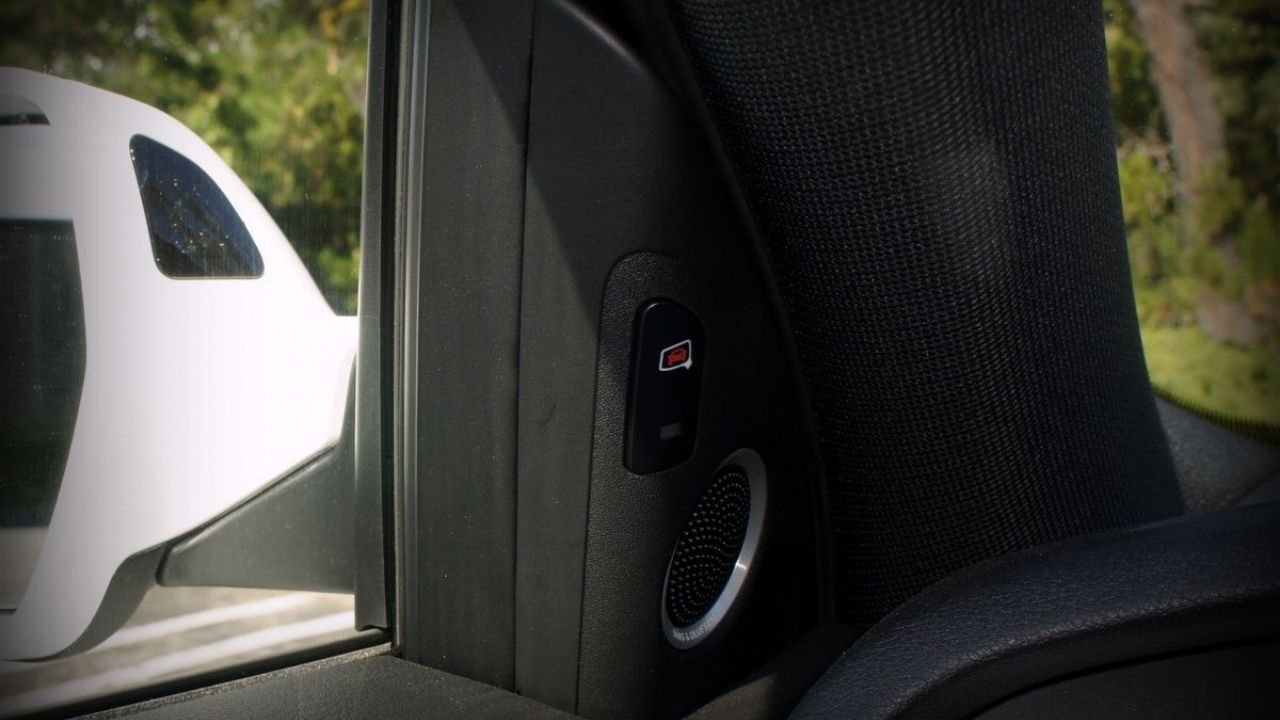
Blind Spot Monitoring (BSM) systems are designed to alert drivers when there is a vehicle in their blind spot, typically through a visual indicator on the side mirrors. However, many drivers mistakenly believe that these systems eliminate the need for traditional shoulder checks. This assumption can be dangerous, as BSM systems are not foolproof and have limitations.
For instance, during a recent investigation, a driver relying solely on a BSM system attempted to change lanes without checking their blind spot and collided with another vehicle that the system did not detect. This incident highlights the critical need for drivers to maintain their traditional checking habits, ensuring they are aware of their surroundings. Blind spot monitoring is a helpful tool, but it should not replace basic driving safety practices.
The Reality of Adaptive Cruise Control
Adaptive Cruise Control (ACC) is designed to automatically adjust a vehicle’s speed to maintain a safe distance from the car in front. While this feature can enhance comfort during long drives, many drivers misunderstand its capabilities, believing it can handle all driving situations. For example, a driver may activate ACC in heavy traffic, expecting the system to manage both speed and steering. However, ACC is not equipped to navigate complex scenarios, such as sudden stops or sharp turns.
Using ACC safely involves understanding its limitations. Drivers must be prepared to take over at any moment, particularly in unpredictable traffic conditions. The user manual of vehicles like the Honda Accord or Ford Explorer provides guidelines on when and how to utilize ACC effectively. By adhering to these guidelines and remaining vigilant, drivers can enjoy the benefits of this technology while ensuring their safety.
Infotainment Systems: Not as Intuitive as They Appear
Modern infotainment systems are packed with features that promise to enhance the driving experience. However, many users find these systems to be far more complicated than they anticipated. The expectation is often that these systems will be intuitive and easy to navigate. Still, the reality is that they can present significant learning curves, especially for those who are not tech-savvy.
Voice recognition capabilities, often touted as a key feature, can also be misleading. Users may assume that they can issue commands without any issues, but many have experienced frustration when the system fails to understand their requests. For instance, a driver attempting to use the voice command feature in a 2022 BMW 3 Series may find that it struggles with accents or background noise. This disconnect between user expectations and actual performance can lead to dangerous distractions as drivers attempt to interact with their infotainment systems while driving.
The Limitation of Parking Assistance Features
Parking Assistance features are designed to help drivers navigate tight parking spaces with ease. However, many drivers incorrectly assume that these systems can park their cars independently without any input. While they do provide valuable assistance, such as steering guidance, the driver is still responsible for controlling the vehicle’s speed and monitoring the surroundings.
A well-documented incident involved a driver who relied solely on the parking assist feature of a 2022 Toyota Camry. The system misjudged the available space and nearly collided with another vehicle while attempting to park. Such occurrences underscore the necessity of maintaining vigilance, even when using advanced features designed to simplify parking. Understanding that these systems are aids, not replacements for driver involvement, is essential for ensuring safety in parking situations.
The Role of Software Updates in Feature Performance
The technology in modern vehicles is continuously evolving, and software updates play a crucial role in optimizing feature performance. Many drivers mistakenly believe that their vehicle’s features will function perfectly right out of the box. However, manufacturers frequently release updates to address bugs, improve functionality, and even enhance existing features based on user feedback.
For instance, Tesla regularly updates its vehicles with over-the-air software updates that can enhance the performance of its Autopilot system. These updates can fix issues that users may have encountered, ultimately improving the overall driving experience. It’s important for drivers to stay informed about these updates and understand that the initial performance of a feature may not represent its long-term capabilities. Keeping software up to date is a critical component of enjoying the full potential of modern automotive technology.
Looking Ahead: The Future of Car Features
As technology continues to advance, the landscape of vehicle features is poised for significant changes. Emerging technologies, such as AI-driven systems and improved sensor capabilities, promise to enhance both safety and user experience. However, as these innovations come to market, the importance of consumer education cannot be overstated. Understanding how to effectively use new features will be crucial for maximizing their benefits.
In the future, automakers will likely focus on addressing current misconceptions by providing clearer information and training for their customers. As seen in current innovations, such as those discussed in this article, the goal will be to create vehicles that are not only technologically advanced but also user-friendly. By fostering a better understanding of these features, drivers can navigate the evolving automotive landscape with confidence.
More from Fast Lane Only