Chrysler has built plenty of strong engines, but a handful were so aggressive that even the company’s own executives hesitated to sign off on them. Among Mopar loyalists, those powerplants have become legends: rare, temperamental, and barely tamed enough for showroom duty. The story of one such engine, nearly strangled by corporate caution and changing regulations, helps explain why surviving cars are now treated like artifacts rather than just old iron.
From 1960s big-blocks to early 1990s turbo fours, Mopar’s most extreme engines pushed the limits of what regulators, insurers, and even Chrysler’s accountants would tolerate. That ongoing tension between raw power and real-world constraints is what makes these cars so compelling today.
What happened
By the late 1960s, Detroit’s horsepower war had reached a peak. Chrysler was already selling the 426 Hemi, a race-bred V8 that dominated NASCAR and drag strips, but engineers kept looking for ways to package serious speed in more models and body styles. That is how a handful of B-body convertibles ended up with engines that made them far more violent than their relaxed appearance suggested.
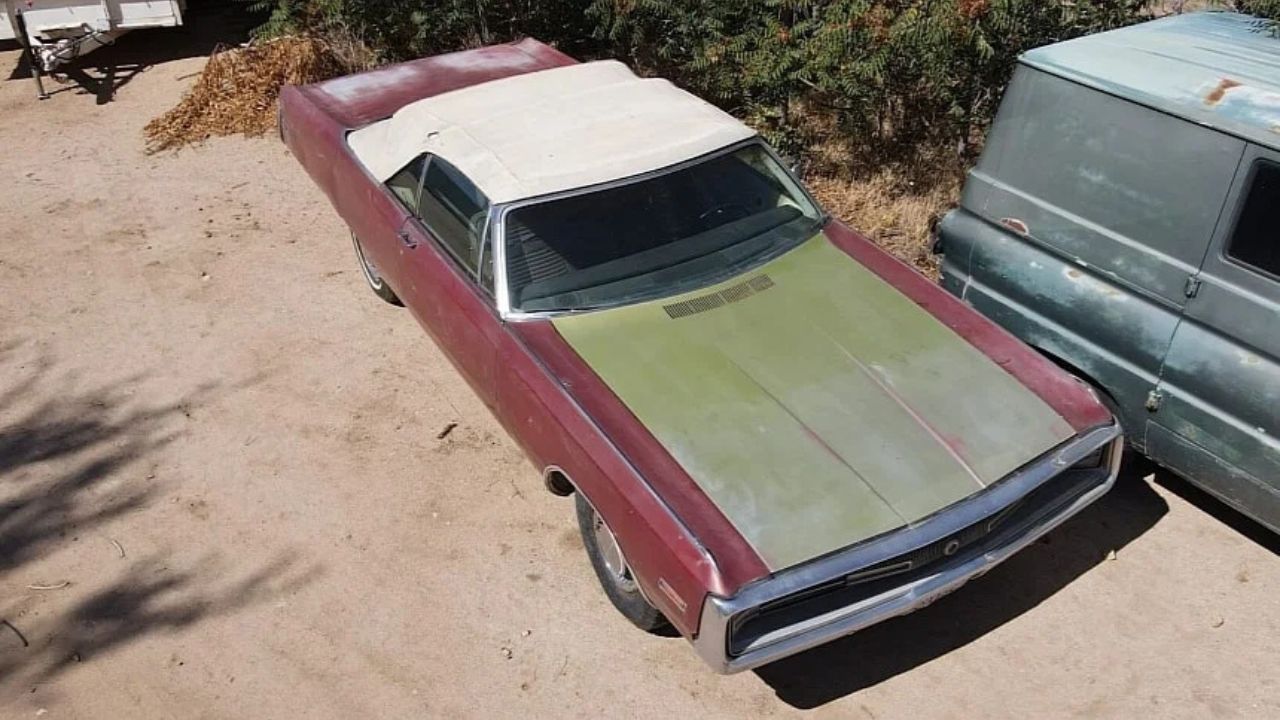
One collector car that illustrates this contradiction is a 1970 Mopar convertible ordered primarily for its V8 output rather than its open roof. The original buyer reportedly did not even like convertibles, yet still chose a rare ragtop configuration purely to secure the high-powered engine and the specific combination of performance options that came with it. Decades later, that decision left behind a super-rare 1970 Mopar that blends boulevard looks with serious muscle.
Cars like this sat at the edge of what Chrysler’s leadership was willing to approve. High compression ratios, aggressive cam profiles, and heavy-duty driveline parts made these engines expensive to build and tricky to warranty. Insurance companies had already started to penalize big horsepower numbers, and federal regulators were tightening rules on emissions and safety. Every new high-output engine had to fight its way past those obstacles.
As the 1970s wore on, those pressures began to win. Big-blocks were detuned or dropped, compression ratios fell, and many of the wildest options disappeared from order sheets. The rare survivors that combined full-strength engines with low-production body styles, such as certain 1970 convertibles, slipped through the cracks at precisely the moment the muscle era was collapsing.
The pattern repeated itself in a different form in the early 1990s. Chrysler engineers, now working with turbocharging and electronic fuel injection instead of huge displacement, created a compact four-cylinder that made power numbers unthinkable for an economy sedan only a few years earlier. That engine, a turbocharged 2.2 liter with aggressive tuning, found its way into the Dodge Spirit R/T.
The Dodge Spirit R/T was a boxy, front-wheel-drive sedan that looked like a rental car but carried performance that embarrassed more expensive European machines. Contemporary testing showed that it was the fastest sedan built in America at the time, with acceleration that put it very close to a contemporary BMW M5. The heart of that performance was the turbo four under the hood, which turned an ordinary family car into a genuine sleeper. As one detailed account notes, the Spirit R/T stood out because its engine and tuning were far more aggressive than the rest of the lineup.
Inside Chrysler, that created tension. The Spirit R/T’s engine pushed the limits of what the company’s front-drive platform and automatic transmissions could comfortably handle. Warranty concerns, production costs, and the need to keep fuel economy numbers respectable all worked against the idea of offering such a hot version of an otherwise mainstream car. The fact that it reached showrooms at all reflects a brief window when engineers and product planners were willing to take a risk on a halo powertrain.
Production remained limited. The Spirit R/T never became a volume seller, in part because its performance focus ran against the grain of Chrysler’s broader push toward comfort and efficiency in the early 1990s. That short run, combined with the mechanical strain that came with hard driving, has left relatively few intact examples. Owners who kept them stock and well maintained preserved not just a quick sedan but a snapshot of Chrysler at its most adventurous with turbocharged power.
Why it matters
Engines that nearly fail to reach production often become the most interesting chapters in a company’s history. They show what engineers were capable of building when they were given freedom, and they reveal where corporate leadership drew the line between bold and reckless. Mopar’s rarest high-output engines capture that tension more clearly than any marketing brochure.
In the late muscle-car period, Chrysler’s big V8s carried reputations that still shape collector values today. The fact that a buyer in 1970 would order a convertible he did not even like, simply to secure a particular performance configuration, says a lot about how enthusiasts viewed Mopar powertrains. The car’s rarity today is not just a matter of low production numbers. It reflects the way those high-spec engines were squeezed into the final years before emissions rules and fuel crises forced a retreat.
That retreat had long-term consequences. When big-blocks vanished and horsepower ratings plunged, many enthusiasts assumed the era of serious performance was over for good. Chrysler’s own lineup shifted toward personal luxury and practicality, and for a time the company’s most memorable engines were relics from the late 1960s. The survival of a few brutal V8 convertibles from 1970 keeps that memory alive, showing how close Mopar came to losing its performance identity entirely.
The Spirit R/T’s turbo four tells a different part of the story. By pushing a compact engine to levels that rivaled European sports sedans, Chrysler showed that it could still surprise the market. The fact that this output came in a front-drive sedan with conservative styling made the achievement even more striking. It proved that Mopar performance did not have to rely solely on big displacement or rear-wheel drive.
Yet the Spirit R/T also highlighted the constraints of its time. High boost and aggressive tuning strained components that had been designed with more modest power in mind. The car’s short production run and relatively small audience suggest that Chrysler’s leadership viewed it as an experiment rather than a template. That caution, while understandable from a business standpoint, limited the engine’s influence on the rest of the lineup.
For modern enthusiasts, both the 1970 V8 convertibles and the 1990s turbo sedans have become case studies in what happens when performance programs run up against corporate limits. Their engines were not just powerful. They were outliers, built at the edge of what regulators, insurers, and internal budgets would allow. The fact that they survived the approval process at all makes them more compelling than higher-volume performance packages that fit neatly into corporate plans.
These engines also matter because they broaden the definition of Mopar heritage. The stereotype focuses on big-block Chargers and Hemi-powered drag cars, but the reality is more varied. A rare high-output convertible that slipped through during the final muscle years and a turbocharged four-cylinder sedan that briefly became the quickest American four-door both show how flexible the Mopar performance story can be.
Collectors have responded accordingly. Cars that combine these near-canceled engines with unusual body styles or low production numbers have seen growing interest. The 1970 ragtop with its muscular V8 is valued not just for its condition but for the unlikely circumstances that put such a strong engine into a convertible that few buyers ordered. The Spirit R/T, once dismissed as a quirky used car, has started to attract attention from enthusiasts who appreciate its underdog status and its role as a bridge between old-school muscle and modern turbo performance.
From a historical perspective, these engines also help explain why later Mopar projects, such as high-output SRT models and supercharged Hellcat V8s, were possible. Engineers and executives who remembered the lessons of the 1970s and 1990s knew how far they could push power before warranty costs, regulations, or fuel economy targets became unmanageable. The near-misses of earlier decades gave them a map of the boundaries.
At the same time, the rarity of these powertrains serves as a reminder that corporate courage has limits. The fact that a handful of engines barely cleared those limits, and that the cars carrying them now command attention far beyond their original marketing plans, suggests that there is long-term value in letting engineers overachieve once in a while.
What to watch next
For Mopar fans and collectors, the next few years are likely to bring more attention to these fringe engines. As values for headline cars such as Hemi Chargers and high-profile SRT models continue to climb, enthusiasts often look for the next tier of historically significant powertrains. Rare V8 convertibles from 1970 and turbocharged sleepers like the Spirit R/T fit that search perfectly.
One trend to watch is how documentation affects desirability. Cars that can prove their original engine and option combinations, especially when those combinations were unusual or nearly canceled, tend to attract more serious buyers. Build sheets, dealer invoices, and period photos help verify that a car truly carries the rare powertrain it claims. In the case of the 1970 ragtop ordered by a buyer who did not even care for convertibles, paperwork that confirms the original engine and options turns a curious story into verifiable history.
Another factor is how the market values engineering risk. Enthusiasts increasingly appreciate cars that represent turning points or experiments, even if they were not the most polished products of their time. The Spirit R/T’s turbo four, with its mix of strong performance and platform strain, fits that description. As more people learn that this plain-looking sedan was once the quickest American four-door on sale, interest in surviving examples is likely to grow.
There is also a broader shift under way as the industry moves toward electrification. As electric performance cars become more common, combustion engines that squeezed remarkable power from limited displacement or aging platforms may gain a new kind of respect. The idea of a small turbocharged four-cylinder outrunning larger, more prestigious sedans, or a big-cube V8 turning a relaxed convertible into a straight-line weapon, will feel increasingly distant from everyday experience.
That distance tends to fuel nostalgia. Younger enthusiasts who grew up around modern turbo fours and electric torque may find something exotic in the mechanical drama of an old Mopar engine fighting traction and driveline limits. Older fans who remember when these cars were new will see them as tangible links to a time when corporate decision makers were still figuring out how to balance performance with responsibility.
On the preservation side, owners of these rare engines face practical decisions. Parts availability, especially for unique internal components or specific turbo hardware, can become a challenge as years pass. Some will choose careful upgrades in the name of reliability, while others will pursue strict originality. The choices they make will shape how future generations experience these cars, whether as fully stock time capsules or as lightly modernized drivers that still honor the spirit of the original engineering.
More from Fast Lane Only