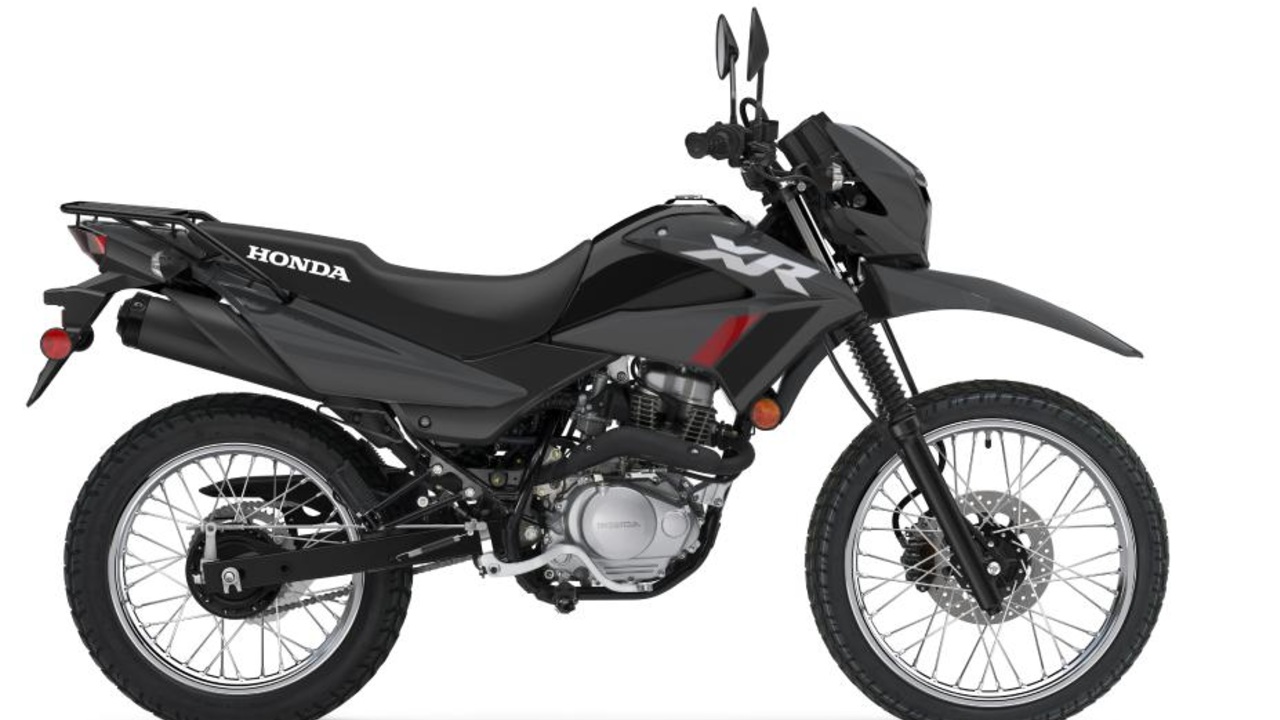
Riders who track every dollar of ownership cost have a clear standout in Honda’s 2026 lineup. The XR150L, a compact dual-sport machine, has emerged as the Honda motorcycle that drives routine upkeep costs to the floor while still delivering everyday usability and genuine trail capability. For commuters, learners, and rural riders alike, it is the rare bike that keeps both the purchase price and the workshop bills firmly under control.
Rather than relying on marketing promises, the XR150L’s reputation is being built in real-world use, where owners are putting serious mileage on the bike with little more than basic servicing. That combination of durability, simplicity, and low parts consumption is what allows it to undercut other models on maintenance, even within Honda’s already frugal range.
Why the XR150L is Honda’s maintenance-cost champion
The core reason the XR150L sits at the bottom of Honda’s maintenance-cost ladder is its straightforward engineering. The air-cooled single-cylinder engine is tuned for reliability and fuel efficiency rather than peak power, which reduces stress on internal components and extends service intervals for items like valves and clutch plates. In practice, owners are finding that the bike can handle extended use on mixed terrain with little more than oil changes, chain care, and periodic inspections, a pattern that keeps workshop invoices modest compared with more complex machines.
Pricing also plays a role in the overall cost picture. With a Starting Price of $3,399, the XR150L enters the market as one of Honda’s most accessible dual-sport options, and that affordability carries through to its running costs because the same simplicity that keeps the sticker low also limits the number of parts that can fail. Such real-world testing proves the XR150L’s durability, and At the same time, it goes to show just how affordable the bike can be to maintain in the long term, especially in regions where it is used daily on rough roads and light trails.
Simple hardware, fewer things to break
Low maintenance is rarely an accident, and in the XR150L’s case it is baked into the hardware choices. The chassis uses a conventional steel frame and basic suspension components that prioritize toughness over adjustability, which means fewer seals, linkages, and electronics to service. The braking system is similarly uncomplicated, relying on proven components that are easy for any competent workshop to inspect and refresh, keeping labor times short and parts costs predictable.
Honda’s decision to keep the XR150L largely unchanged for 2026 reinforces this philosophy. Reports on the 2026 model describe it as Honda’s smallest dual-sport, continuing with simple engineering, low running costs and easy access to key components for routine checks. That continuity matters for maintenance because it ensures a wide supply of compatible parts and a deep pool of mechanic experience with the platform, both of which help keep repair quotes low and turnaround times short when the bike does eventually need attention.
Real-world durability that protects the wallet
Durability is where the XR150L converts its spec sheet into genuine savings. Riders in markets where the bike is popular are using it as a daily tool on broken tarmac, gravel, and farm tracks, conditions that quickly expose weak designs. Instead, the XR150L has built a track record of shrugging off this punishment with minimal unscheduled repairs, which means owners are not constantly paying to replace bent levers, cracked plastics, or fragile electronics after minor drops or rough use.
Such real-world testing proves the XR150L’s durability, and that resilience is not limited to the frame and bodywork. The engine and drivetrain have shown an ability to handle sustained low-speed work and frequent stop‑start riding without overheating or developing chronic issues, a trait that is particularly valuable for delivery riders and commuters who cannot afford downtime. At the same time, it goes to show just how affordable the bike can be to maintain when the bulk of workshop visits are planned services rather than emergency repairs triggered by component failures.
How the XR150L compares with other small Hondas
Within Honda’s own stable, the XR150L sits alongside other small-capacity models that are also known for low running costs, such as the Honda CRF150L in certain markets. The CRF150L shares a similar displacement and off-road focus, but it is typically positioned as a slightly more performance-oriented trail bike, with suspension and chassis tuning that favor more aggressive riding. That focus can translate into higher consumable wear for riders who regularly push the bike hard, which in turn nudges maintenance spending upward compared with the more relaxed, utility-minded XR150L.
Reports that examine both models note that the Honda CRF150L has been a strong seller in the markets where it is popular, yet the XR150L is singled out when the conversation turns specifically to the lowest maintenance costs. The distinction comes down to mission: the XR150L is engineered first as an affordable workhorse, with every design decision filtered through the lens of durability and ease of service. In contrast, the CRF150L’s slightly sharper performance envelope can be attractive to enthusiasts, but for riders who prioritize minimal workshop time and the lowest possible upkeep bills, the XR150L remains the more economical choice.
Who benefits most from the XR150L’s low upkeep
The riders who stand to gain the most from the XR150L’s frugal maintenance profile are those who treat a motorcycle as essential transport rather than a weekend toy. Urban commuters who face traffic, potholes, and tight parking every day will appreciate a bike that can be dropped, squeezed through gaps, and idled in queues without developing expensive quirks. For them, the combination of a Starting Price of $3,399 and a service schedule dominated by basic consumables makes the XR150L one of the most financially predictable ways to move around a city.
Rural and small‑business users are another core audience. Farmers, delivery operators, and utility workers often need a machine that can carry light loads, traverse unpaved routes, and run for long hours with minimal fuss. Honda’s smallest dual-sport continues to answer that brief by pairing simple engineering with low running costs and a riding position that stays manageable at low speeds and when stopping, which reduces the likelihood of tip‑overs and the repair bills that follow. In markets where the XR150L is already a familiar sight, that blend of durability, ease of service, and restrained purchase price is precisely what keeps it at the top of the list for anyone determined to keep maintenance spending to an absolute minimum in 2026.
More from Fast Lane Only