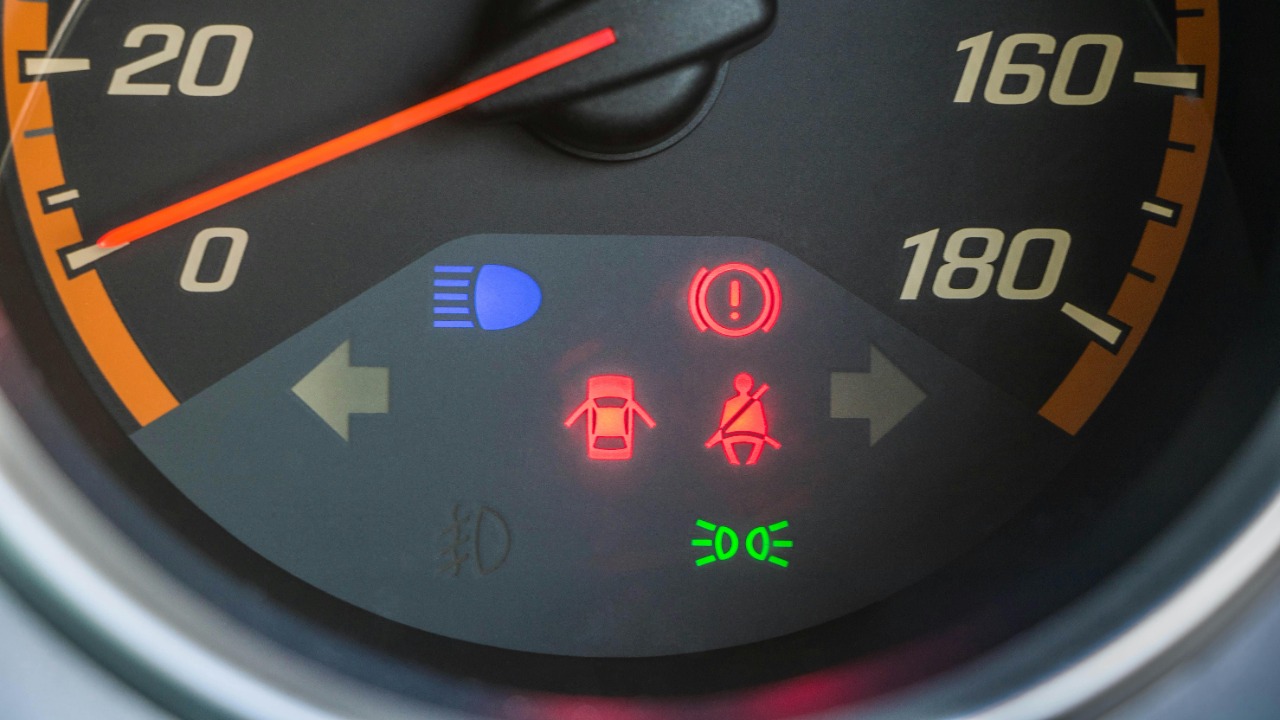
Your dashboard is not trying to nag you, it is trying to keep you alive. Yet one of its most important warnings, the little amber “check engine” symbol, has become background noise for millions of drivers who keep right on commuting as if nothing is wrong. That habit is not just expensive, it can quietly turn a fixable glitch into a safety risk for you and everyone sharing the road.
Modern cars are very good at hiding their own problems, so the engine warning light often appears while everything still feels normal behind the wheel. That illusion of normal is exactly why this simple warning keeps getting brushed off, and why treating it as harmless is one of the most costly mistakes you can make with your car.
Most drivers do not actually understand their warning lights
If you have ever stared at a glowing symbol and guessed what it meant, you are far from alone. Research into driver knowledge of dashboard symbols found that an incredible 96% of drivers cannot accurately identify the meaning of all their dashboard warnings. That confusion shows up in everyday conversations too, from people mixing up the brake warning with the parking brake to others assuming every amber icon is “just emissions stuff.” Guides that walk you through warning lights you exist precisely because so many of these symbols are poorly understood.
Online communities are full of drivers admitting they have no idea what a particular icon means, including threads where nearly half of younger drivers could not identify a basic dashboard warning symbol. Even quizzes built to test your knowledge of icons like the engine, oil, and ABS lights acknowledge that, as Quicklinks You work through them, you are likely to bump into symbols you have seen but never really learned. When you do not fully understand what the lights are saying, it becomes much easier to convince yourself that a glowing engine icon is optional homework instead of a priority.
The check engine light is not “just emissions”
The warning most people wave away is that small outline of an engine, usually amber, that can either stay solid or flash. Many drivers assume it is tied only to emissions, or that it is safe to ignore if the car still feels fine. In reality, the engine icon is wired into your car’s onboard diagnostics and can be triggered by anything from a misfiring cylinder to a failing catalytic converter, as detailed in explanations of how check engine light works. When that system sees something outside normal parameters, it stores a fault code and turns on the light to tell you the car needs attention.
Some of the triggers really are simple, like a loose or damaged fuel cap that lets vapors escape and prompts a “check fuel cap” or similar gas cap warning. Others are early signs of serious trouble, such as low oil pressure, overheating, or ignition problems that can damage the engine if you keep driving. Shops that specialize in diagnostics stress that Check Engine Light is exactly the scenario where you should not relax, because the car’s computer is catching issues long before you can feel them from the driver’s seat.
“It runs fine” is one of the most dangerous myths
One of the most persistent beliefs in car culture is that you can safely ignore the engine warning if the vehicle still seems to drive normally. Shops that see the aftermath of that decision are blunt about it, describing the idea as a Myth summed up as “You Can Ignore It If the Car Runs Fine Reality,” and warning that Feeling normal does not mean everything is okay. When you keep driving with the light on, you give a small, fixable problem time to snowball into a major failure that can leave you stranded or facing a four-figure repair bill.
Engine specialists point out that these warnings are not minor inconveniences, they are indicators of potentially severe issues that could threaten your safety and that of others on the road, a point underscored in advice on engine warning signs you should never brush off. Another breakdown of what happens if you keep driving with the light on notes that What Happens If is often a chain reaction: a misfire that could have been fixed with a coil or plug ends up destroying a catalytic converter, or a small leak leads to overheating and a warped cylinder head. By the time the car finally feels “not fine,” the damage is already done.
Ignoring the light can put you and others at risk
It is tempting to frame the engine warning as a wallet issue, but the safety stakes are real. When your car’s computer flags a problem with systems like the engine, ABS, or oil pressure, it is warning that performance and braking can be compromised in ways you may not notice until you need them most. Technicians who see these failures up close emphasize that When these dashboard warnings illuminate, they are signaling conditions that can damage the vehicle and compromise your safety while driving.
Guides that walk through critical alerts explain that the engine icon sits alongside other must-not-ignore warnings like low oil pressure, overheating, and brake system faults, all grouped as brake warning and engine lights that demand immediate attention. Broader explainers on why you should not shrug off any of these symbols note that The Check Engine and Service Engine Light are specifically designed to alert you to potential problems that, if ignored, can have serious implications for your vehicle. That can mean sudden loss of power while merging, reduced braking performance on a wet road, or a stall in the middle of an intersection, all scenarios where a “harmless” light turns into a very real hazard.
Why you keep ignoring it, even when you know better
So if the stakes are this high, why do so many drivers keep covering the light with tape or pretending it is not there? Part of the answer is timing and stress. Research into driver behavior notes that dashboard warnings always seem to pop up at the worst possible moment, like the first day of a long trip or when money is already tight, which helps explain Why so many people delay dealing with them even when they know they are taking a risk. It is easier to hope the car will “make it a bit longer” than to rearrange your week around a repair appointment.
There is also a psychological gap between what the car is telling you and what you can feel. When the engine warning comes on but the vehicle still accelerates, steers, and stops normally, your brain tends to trust your senses over a small amber icon. That disconnect is reinforced by stories you hear from friends or in online groups where someone drove for months with the light on and “nothing bad happened,” like posts in an automotive forum where people swap tales of ignoring warnings. Over time, that normalizes the idea that the light is optional, even though professional advice on dangerous situations created by unchecked warnings is very clear that this is a gamble you eventually lose.
More from Fast Lane Only