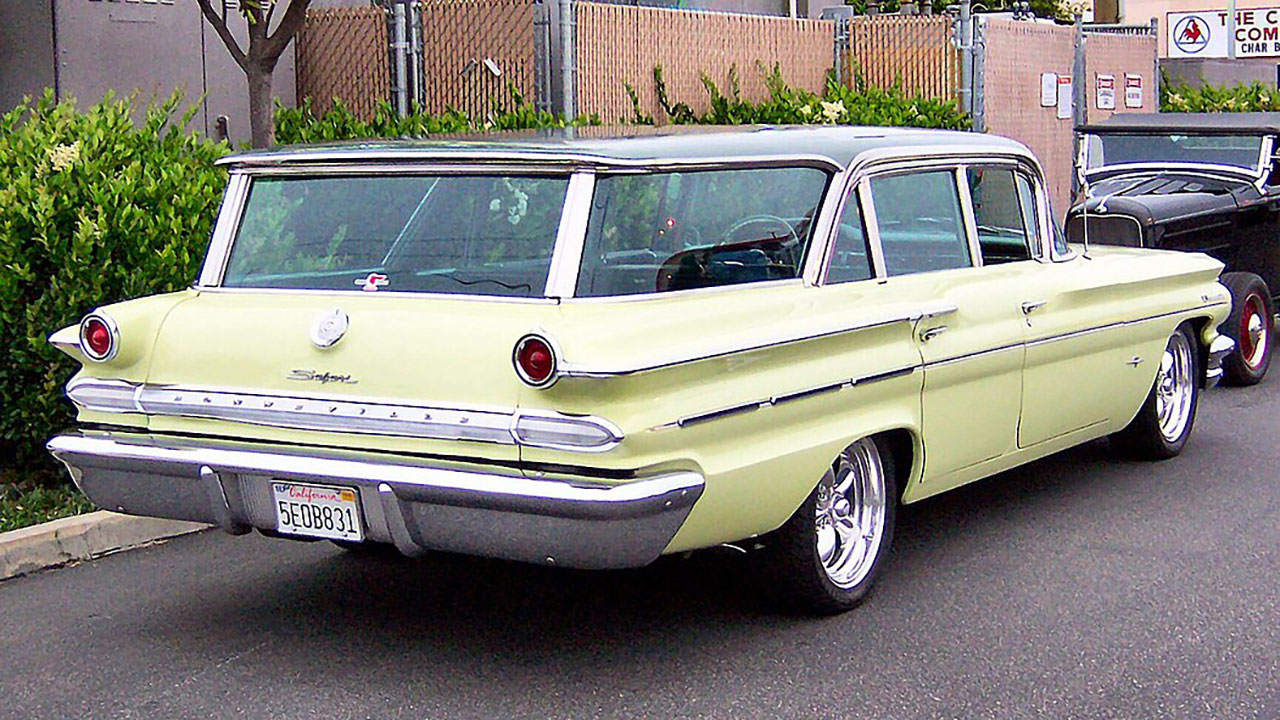
Highways really did feel shorter when you were settled into a 1960 Pontiac Bonneville, watching the center line unwind while the engine hummed and the horizon seemed to lean in your favor. You were not just covering distance, you were gliding through it, wrapped in chrome, fins, and a kind of confident calm that modern traffic rarely delivers. That mix of style, power, and poise is why the Bonneville still lingers in memory as a car that turned long drives into something closer to a moving living room than a chore.
To understand why those miles slipped by so easily, you have to look at how Pontiac shaped the Bonneville’s stance, its powertrain, and its cabin to work together rather than as separate bragging points. The car’s wide track, generous wheelbase, and big V‑8 were not just spec-sheet trophies, they were tools for making you feel unhurried even when the speedometer needle was climbing.
The wide-track idea that made interstates feel tame
When you slide behind the wheel of a 1960 Bonneville, the first thing you notice is how planted it feels, as if the car has already claimed its lane and invited you to relax. That sensation traces back to Pontiac’s “Wide Track” philosophy, which pushed the wheels farther toward the corners of the body so the car sat lower and wider on the road. Period engineering write-ups describe how this layout gave the full-size Pontiacs a more stable footprint than their rivals, a point underscored in detailed histories of the brand’s wide-track development. You feel that in the way the Bonneville shrugs off crosswinds and expansion joints, turning what could be fatiguing corrections into minor wrist movements.
Corporate planners at General Motors leaned into this identity, and later accounts of the program note how GM’s management, reacting to shifting buyer tastes, eventually ordered a slightly smaller B-body for the 1961 cars while Pontiac kept promoting the Wide Track slogan in its advertising. For you as a driver, that corporate backstory translates into a simple feeling: the 1960 car sits in a sweet spot, big enough to float over rough pavement yet engineered to track straight and true at turnpike speeds, which is exactly why those long highway stretches seemed to compress.
Chassis, wheelbase, and the science of relaxed cruising
Under the Bonneville’s sheet metal, the numbers quietly explain why the car feels so unflustered at speed. Official Pontiac Facts list the 1960 full-size cars’ Chassis Features with a Wheelbase of Series 21, 23 and 27 at 122.0 inches, while Series 24 and 28 stretch to 124.0 inches, and the Overall dimensions follow suit. That long wheelbase smooths out the pitch and dive that can make a shorter car feel busy on concrete slabs, so you experience a gentle, almost railcar-like motion instead of a constant bobbing.
Road tests from the period emphasize that a particular appeal of Pontiac performance is that it is complemented by exceptional roadability, and Much of that composure is credited to the suspension tuning and weight distribution in the 1960 Bonneville. Contemporary evaluations of the chassis talk about how the car holds a line through sweeping curves without the wallow you might expect from such a large machine. When you are covering hundreds of miles in a day, that stability is not just a handling virtue, it is a form of fatigue management, letting your shoulders drop and your grip on the wheel loosen as the car does more of the work.
Power that turns distance into background noise
Of course, a highway cruiser is only as relaxing as its engine, and the Bonneville’s big V‑8 was built to make speed feel almost incidental. Auction records and factory literature agree that a 389-cubic-inch V‑8 served as the sole engine for the 1960 Pontiac Bonneville Convertible, with output ranging from 215 to 345 horsepower depending on carburetor setup and tune. That spread, documented in detailed listings of the convertible, meant you could choose anything from a relaxed two-barrel to a more urgent multi-carb setup without sacrificing the car’s core character.
Later collector descriptions echo that same specification, noting again that a 389-cubic-inch V‑8 was available as the sole engine and provided from 215 to 345 horsepower, paired with a plush interior that often included front bucket seats. When you read through those figures, you can almost feel how easily the car would surge past slower traffic, the engine turning lazily while the scenery sped up. That effortless reserve is what makes an interstate leg feel shorter, because you are never straining the car or yourself to keep pace with the flow.
Styling that made every mile feel like a scene
Even before you turn the key, the 1960 Bonneville sets a mood that changes how you experience distance. Enthusiasts still describe how the Bonneville is Known for its distinctive styling, with sweeping lines, a wide stance, and prominent tail fins that give it a sense of motion even when parked. That description of the Bonneville captures why you feel like you are stepping into a scene rather than just a vehicle. The car’s long, low profile and dramatic rear treatment turn even a mundane gas stop into a small event.
Owners and fans often single out the 1960 Pontiac Bonneville The Bonnevilles as some of the most visually appealing American cars of their year, pointing to the interplay of chrome, color, and proportion that still looks striking in modern traffic. That sentiment shows up in enthusiast write-ups of the American design, where the car is praised for turning everyday drives into something closer to a rolling parade. When you feel that sense of occasion every time you merge onto the highway, the monotony of the route fades, replaced by the simple pleasure of being seen in a car that looks this confident.
Inside the cabin, comfort that eats up the clock
Open the door of a Pontiac Bonneville Convertible and you are greeted by an interior that treats long drives as a design brief, not an afterthought. Enthusiast posts highlight how the 1960 Pontiac Bonneville Convertible is a full-size luxury car known for its performance and style, featuring a 389-cubic-inc engine and often a tri-tone interior that wraps you in color and texture. That combination, described in detail in fan discussions of the convertible, means you are not just sitting in a seat, you are settling into a space that feels curated for the open road.
Period tests of the Pontiac stress that a particular appeal of Pontiac performance is that it is complemented by exceptional roadability, and Much of that comfort comes from how the seats, suspension, and steering effort are tuned to work together. Contemporary evaluations of the Pontiac note that the car’s cabin remains composed even when the pavement does not, so you can carry on a conversation or simply listen to the radio without raising your voice. When you are cocooned like that, hours slip by with fewer aches and less mental fatigue, which is exactly how a long highway leg starts to feel surprisingly short.
More from Fast Lane Only