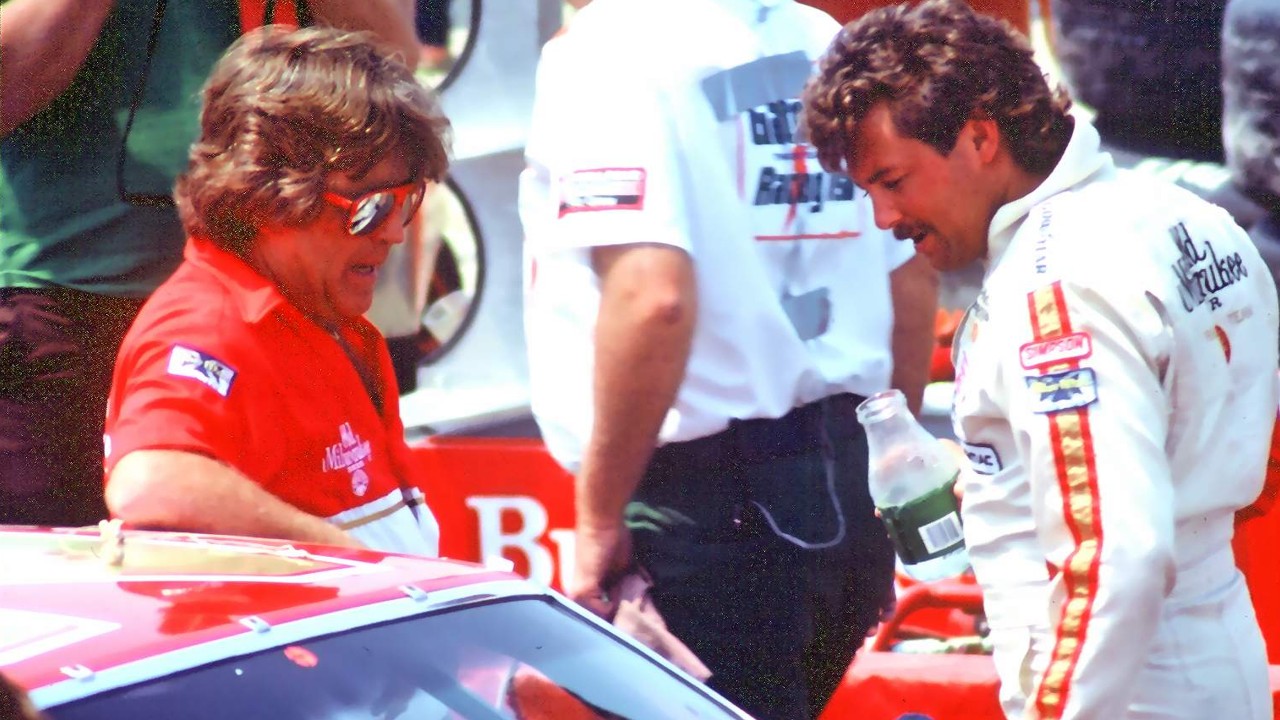
Tim Richmond did not simply drive race cars, he seemed to bend stock-car reality around his personality, turning every weekend into a traveling rock show with fenders. His brilliance behind the wheel was obvious even to casual fans, but the reason his legend keeps expanding is that he felt like a time traveler from a louder, looser future dropped into a sport still buttoned up in starched uniforms and straight faces.
All these years later, I find that the wins, the wild stories, and the way he left the stage so abruptly have fused into something bigger than a highlight reel, a kind of NASCAR folk tale that keeps picking up new verses. The more the sport changes, the more Tim Richmond looks like the prototype for the modern superstar it is still trying to manufacture.
The fast rise of a “NOVA” in a conservative universe
Timothy Lee Richmond did not ease into NASCAR, he arrived like a firework that someone lit indoors. In a relatively short Cup career, he stacked multiple victories across eight seasons, enough that his name still sits comfortably in any conversation about pure driving talent. One detailed account even likens Tim Richmond to a “NOVA,” a star that burns for a short time with intense light, which is about as subtle as calling a hurricane “a bit breezy” and still somehow feels accurate for a driver who seemed to live as if his life depended upon speed. That compressed timeline, paired with the obvious skill, is the first reason his legend keeps growing: there is no long decline, only a sharp rise and a hard cut to black, which leaves the imagination to do the rest.
What made that rise so striking was how out of place he looked in the garage he invaded. While many of his peers projected a blue-collar, keep-your-head-down image, Tim Richmond showed up with the flair of a movie star who had taken a wrong turn off Sunset Boulevard and ended up in the infield. Contemporary reflections describe him as NASCAR’s wild man of the 1980s, a kind of ultimate “fish out of water” who brought thrills with his driving and smiles with his personality, and who seemed more at home in New York or Los Angeles than in a sleepy mill town. That contrast, the glamorous outsider thriving in a sport proud of its roots, is the kind of narrative tension storytellers dream about, and it is baked into every memory people share of him.
Charisma that could have its own car number
Plenty of drivers have been fast, but very few have been fast and impossible to ignore. Tim Richmond managed both. People who worked around him still talk about a unique charisma that they rank alongside Hall of Famers like Darrell Waltrip and Rusty Wallace, which is a polite way of saying he could own a room even when he was not the one holding the trophy. He dressed sharply, leaned into the spotlight, and treated media attention less like a chore and more like a second sport he intended to win. That kind of presence is rare in any era, but in a paddock that was still suspicious of big-city flash, it made him unforgettable.
Modern fans trying to reverse-engineer his appeal often compare him to a current Formula 1 star, someone with the fashion, the money, the looks, the driving skill, and the colorful personality to match. It is the sort of description that would sound like exaggeration if it were not repeated so consistently by people who watched him up close. One retrospective even notes that Richmond had a larger-than-life demeanor away from the track while also flashing so much natural talent on it that he ended up on the cover of GQ magazine, a crossover moment that would still be headline material for a stock-car driver today. When a sport that prides itself on modesty produces a driver who looks like he should be stepping out of a Manhattan loft instead of a hauler, the stories practically write themselves, and they keep getting retold.
A “take no prisoners” artist at 200 miles per hour
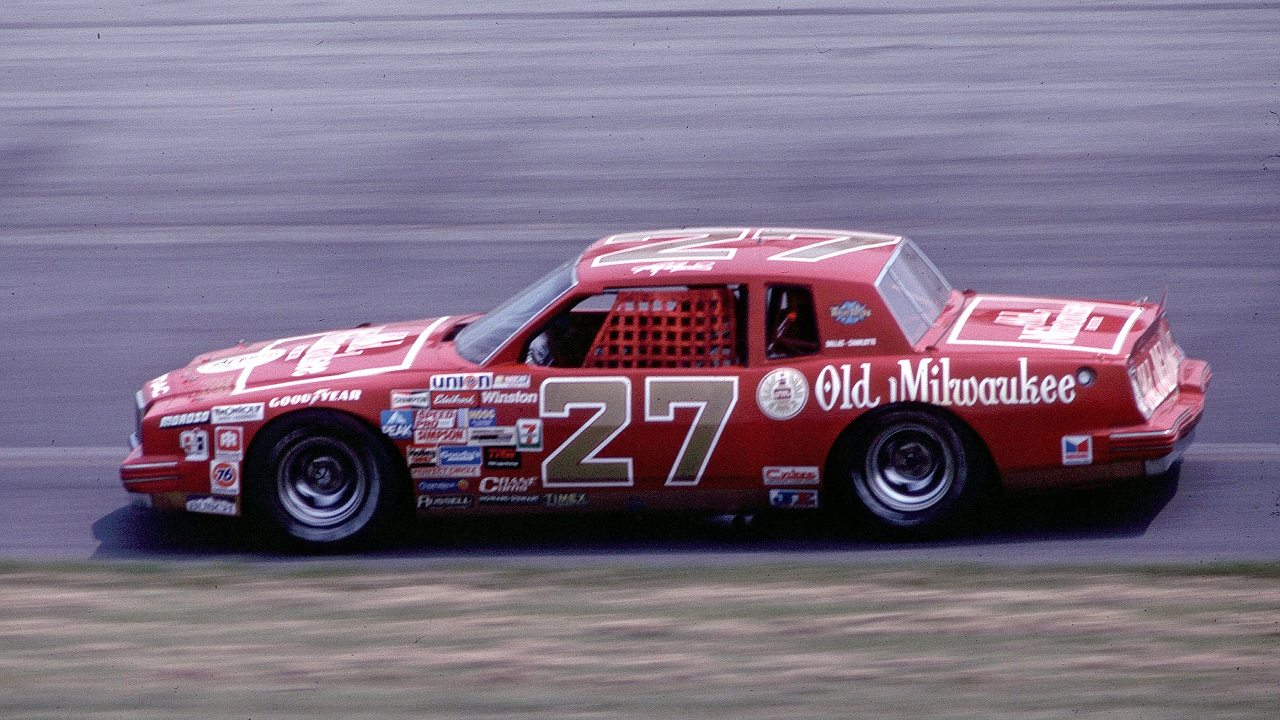
Of course, charisma without results is just a good audition tape, and Tim Richmond backed up the showmanship with a driving style that bordered on reckless poetry. Accounts from his contemporaries describe a “take no prisoners” approach, especially on road courses, where he attacked corners with the kind of aggression that makes crew chiefs reach for antacids and fans reach for their cameras. He was not simply fast in a straight line, he was creative in traffic, willing to try lines and moves that looked like they had been storyboarded by a Hollywood stunt coordinator. That willingness to push the envelope, and to live with the consequences, is part of why his races are still replayed and dissected.
One of the clearest examples of that artistry came in the summer of 1986 at Pocono Raceway, when Tim Richmond wheeled the No. 25 Folgers Chevrolet to a Cup Series win that has since taken on near-mythic status. The lore around that race, preserved in everything from die-cast replicas to long-form remembrances, paints a picture of a driver who could bend a tricky triangle-shaped track to his will. It is not just that he won, it is how he did it, with the kind of command that makes a victory feel inevitable even when the box score later shows it was anything but. When a single afternoon can still be summoned in such detail decades later, you are not just talking about a good race, you are talking about a foundational chapter in a legend.
Why the myth keeps growing long after the checkered flag
There is a cruel physics to sports memory: the shorter the career, the easier it is for myth to outrun the facts. Tim Richmond’s story fits that pattern almost too well. His life ended in 1989, and the gap between what he did and what he might have done has been expanding ever since. Fans and historians still debate his Hall of Fame case, some arguing that his peak was so brilliant it should outweigh the brevity, others pointing out that the numbers on the page are frozen in time. One passionate defense even opens with a personal anecdote about “Because I had failed to properly respect the hooch,” before veering into a meditation on how unforgettable Richmond was, which tells you everything about how people still talk about him: the stats are the skeleton, but the stories are the muscle.
That storytelling has only intensified as NASCAR has tried to define its own history in a more formal way. The sport now celebrates its icons with museums, curated exhibits, and carefully preserved memorabilia, and Tim Richmond keeps finding his way into those spaces. Curators describe his charisma in the same breath as established Hall of Famers, while fan communities trade memories and favorite clips, including online threads that resurface every year to mark the anniversary of his passing. The more the sport codifies its past, the more obvious it becomes that Richmond occupies a unique lane, not quite enshrined in the official pantheon but impossible to leave out of any honest retelling of the 1980s.
From Pocono die-casts to internet rabbit holes: how fans keep him alive
One of the more revealing measures of a driver’s staying power is what happens in the collectibles world, long after the last engine has cooled. Tim Richmond’s presence there is surprisingly robust for someone with a relatively short career. You can still find detailed 1:64 scale replicas of that No. 25 Folgers Chevrolet from Pocono, marketed with language that leans into the “lore of NASCAR legend Tim Richmond” and treats that 1986 win as a touchstone moment. That kind of product is not just a nostalgic trinket, it is a physical vote that his story still sells, that fans want a piece of his myth on their shelves next to the usual suspects like Dale Earnhardt, whose own legacy is sustained through treasured memorabilia and a well-documented impact on NASCAR safety and culture.
The digital equivalent of those die-casts lives in the endless scroll of fan forums and social media threads, where Richmond’s name reliably sparks long chains of memories. In one recent discussion marking the anniversary of his death, fans described him as having all the flair of a modern F1 driver, marveling at how someone that stylish and outspoken thrived in a sport they remember as “so set in its ways.” Elsewhere, long-form essays revisit his career as NASCAR’s ultimate “fish out of water,” emphasizing how his Hollywood energy clashed with, and ultimately reshaped, expectations for what a stock-car star could look like. Every new fan who stumbles into those rabbit holes and emerges with a fresh appreciation for Tim Richmond adds another layer to the legend, proof that some drivers keep gaining fans long after their last lap.
In the end, that is why Tim Richmond’s brilliance still feels present, not preserved. His career reads like a script that cut to credits halfway through the second act, leaving everyone to argue over how the story should have ended. The numbers confirm that Timothy Lee Richmond was an American driver of rare ability, but it is the combination of NOVA-bright talent, movie-star charisma, and a life that ended too soon that keeps his name echoing through NASCAR history. The sport has produced champions with more trophies and longer résumés, yet few have inspired as much imaginative what-if as Tim Richmond, the wild man who still seems to be accelerating in the rearview mirror.
More from Fast Lane Only: