Toyota is quietly drawing a line down the middle of its global electric future. On one side sits China, where the company is preparing a wave of affordable battery models and advanced technology. On the other sits the United States, where drivers are being steered toward hybrids and gasoline engines while true next generation EVs arrive late, in smaller numbers, and with fewer incentives to make them attractive.
The result is a two tier strategy that leaves American buyers with a thinner slice of Toyota’s innovation at the very moment the market is being reshaped by policy shifts, tariffs, and intensifying competition. The company insists it is committed to an electric future, but the way it is sequencing that future suggests that U.S. consumers will wait longer and pay more for the same progress that is already accelerating elsewhere.
A deliberate split: China gets EVs, America gets hybrids
Toyota has made a strategic choice to pursue different technologies in different regions, and the contrast could hardly be sharper. In China, the company is prioritizing fully electric models, including compact vehicles such as the bZ3X that are designed to be affordable and tailored to local tastes. Reporting on the company’s product plans describes China as an electric first market, with Toyota channeling development resources into battery powered cars and new platforms that can compete directly with domestic manufacturers that already dominate the EV space.
In the United States, by contrast, Toyota is concentrating on hybrids and preserving internal combustion engines. Analysts describe the American market as less clear cut on EV adoption, and Toyota appears to be leaning into that ambiguity by expanding hybrid production and promoting gasoline electric models as the default choice for mainstream buyers. The company’s split development strategy explicitly pairs China’s EV push with a U.S. focus on hybrids and ICE, a decision that effectively assigns different technological futures to different customers.
Why Toyota is cautious in the U.S. EV market
Part of Toyota’s caution in America is rooted in policy and demand. The U.S. electric vehicle market has entered a turbulent phase, with federal EV tax credits eliminated and new tariffs reshaping import economics. Those changes have made it harder for foreign built EVs to compete on price, particularly Japanese made models that now face higher costs just as consumer enthusiasm has cooled. In that environment, Toyota’s leadership has judged that hybrids offer a safer commercial bet than a rapid, expensive pivot to all electric vehicles.
The company’s production plans reflect that wariness. Toyota Scales Back its 2026 EV Production Target By 30% Amid Market Slowdown, cutting its goal to 1 million Vehicles As Japa adjusts to weaker demand and shifting subsidies. Executives have also delayed key U.S. projects, including Toyota Pushes Production of First US, Made Electric SUV Into 2026, even as they reiterate that the Automaker still intends to have seven EVs in the U.S. within the next two years. Another update from Jul noted that Toyota remains committed to its electric future but confirmed a delay in U.S. electric vehicle production, underscoring how the company is stretching out its timeline rather than racing ahead.
What Americans actually get: a thin EV lineup and pricey options
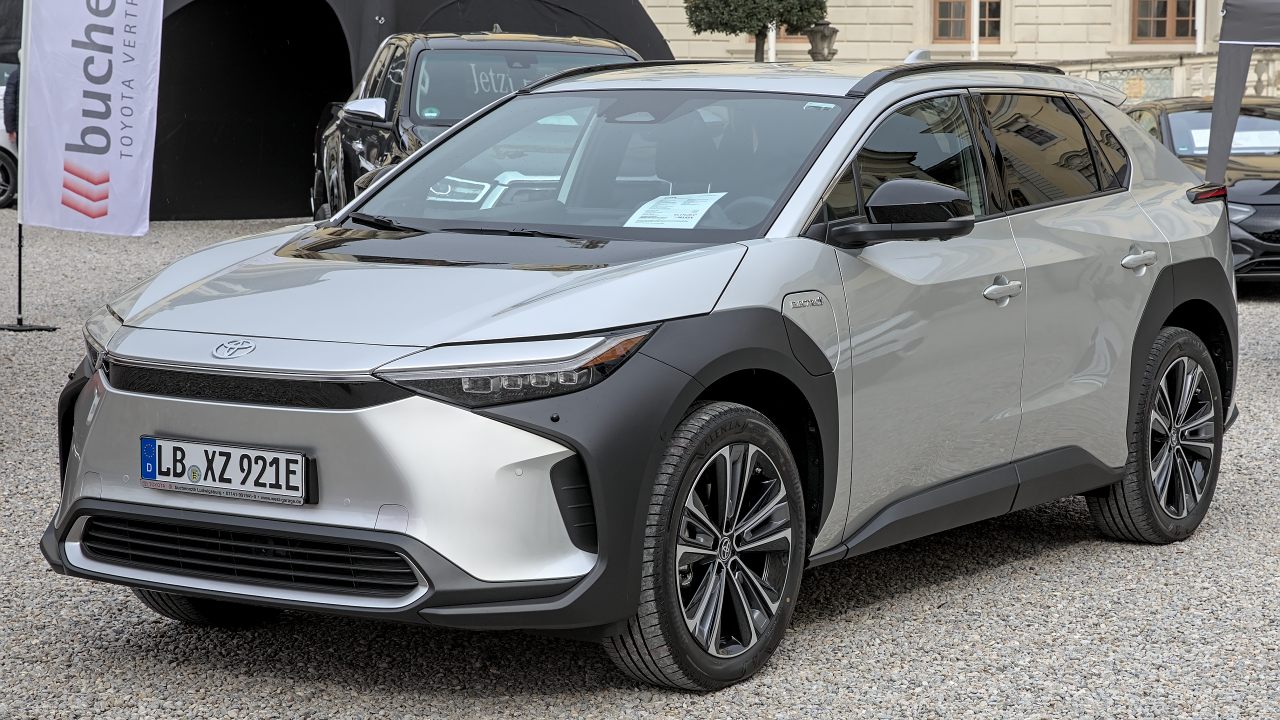
For U.S. buyers, Toyota’s strategy translates into a relatively narrow EV menu and a heavy emphasis on hybrids. At present, Toyota sells two all electric models in the country, the bZ4X, which will be renamed simply “bZ,” and the Lexus RZ. Company plans described from LOS ANGELES indicate that Toyota intends to launch 2 US made EVs in 2025 and expand its lineup to 7 by 2027, pairing those vehicles with new battery production on American soil. Yet those ambitions sit alongside repeated delays and scaled back targets, which raise questions about how quickly those seven models will reach meaningful volumes.
Price is another pressure point. Dealer materials for the Toyota Electric Vehicle Lineup list the 2025 Toyota bZ4X with Key Features and a Starting price of $38,455 M, explicitly noted as $38,455. Without federal tax credits to soften that sticker, and with tariffs pushing up the cost of Japanese built models, Toyota’s EVs risk being positioned as niche products rather than mass market workhorses. Meanwhile, the company is pouring investment into hybrids that can be sold profitably at lower prices, reinforcing the sense that American customers are being nudged toward yesterday’s technology while newer battery platforms are reserved for more favorable markets.
China’s EV surge and the technology gap
The contrast with China is stark. Domestic manufacturers there are already selling affordable EVs with advanced technology, and one major player, Limited (HK:1211), is attracting consumers with aggressive pricing and rapid innovation. Reports on global competition note that this company is experiencing high demand for its gasoline petrol hybrids as well, but the core story is the speed at which Chinese brands are iterating on electric drivetrains, software, and battery chemistry. Toyota’s decision to prioritize EV development for China is a recognition that this is where the fiercest competition and the fastest learning curve now reside.
Battery technology illustrates the emerging gap. Solid state batteries are widely expected to redefine EV performance and safety, with higher energy density, faster charging, and improved durability. Despite progress, consumer availability in the U.S. remains limited. While China already offers EVs equipped with solid state batt technologies, American drivers are still largely confined to conventional lithium ion packs. Toyota has signaled interest in solid state systems, but by centering its most aggressive EV work in China, it risks allowing that market to become the primary test bed for next generation batteries while U.S. products lag behind.
Big U.S. investments, but benefits skew to hybrids
Toyota is not ignoring the United States entirely. The company has opened a $14 billion battery factory in the Tar Heel State, a project that is expected to reshape the American supply chain for electrified vehicles. Reporting on the facility notes that Still, Electrek characterized Toyota’s activity in the EV space as laggardly to date, even as it acknowledged the scale of the investment. The plant will support both hybrids and full EVs, but given the company’s current product mix, a significant share of its early output is likely to feed hybrid production rather than a sweeping all electric lineup.
At the same time, Toyota remains publicly committed to new EV launches in 2026 despite the market slowdown. Analysts at Nov have pointed out that the U.S. electric vehicle market is facing headwinds from policy changes and tariffs, yet Toyota insists that it will continue rolling out new models and expanding its presence. A separate assessment from Sep framed the company’s decision to trim its 2026 targets as a pragmatic response to demand, with one commentator remarking, “Yeah, not a surprise, given what’s happening,” and adding that Toyota’s cautious stance means its EV volumes are “nowhere near what people expected.” That caution may protect short term profitability, but it also means American buyers will see fewer choices and slower innovation than their counterparts in China.
More from Fast Lane Only