Toyota has finally confirmed what enthusiasts have long suspected: a new mid-engine sports car is in development, but it will not reach showrooms for several years. The company has used a mix of social media teasers, concept cars, and carefully worded executive comments to stoke excitement while making clear that patience will be required. For fans who grew up with the MR2 badge, the message is both tantalizing and sobering, hinting at a serious performance project that must still navigate a changing industry and Toyota’s broader electrification strategy.
The path to this future model runs through a series of prototypes and concepts that reveal how Toyota now thinks about compact performance. From the GR Yaris M Concept to the FT-Se electric coupe, the company is experimenting with layouts, powertrains, and even branding. The result is a sports car roadmap that looks more complex than a simple MR2 revival, and that complexity helps explain why the finished product is still years away.
The mid-engine tease that set expectations sky-high
The latest wave of anticipation began when Toyota Gazoo Racing used social media to hint at a “mid-engine” reveal tied to the Tokyo Auto Salon. A short clip on a Japanese account asked, “Will @toyota be revealing an all new MR2 at Tokyo Auto Salon this weekend??” and the comments quickly filled with speculation about a full production car. The wording, combined with hashtags such as #Toyota, #MR2, #MidEngine, #Midship, #TokyoAutoSalon, and #GazooRacing, primed fans to expect a direct spiritual successor to the classic midship coupe rather than a modest engineering exercise.
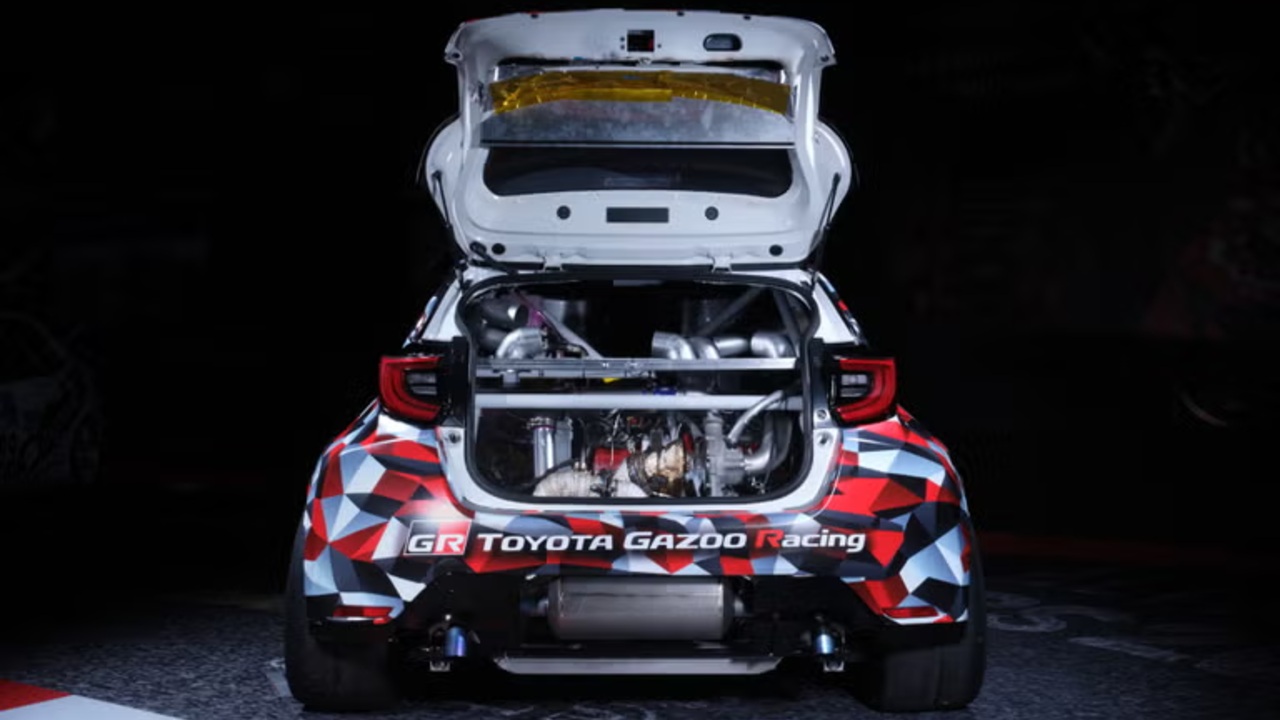
When the curtain finally lifted, the reality was more nuanced. Instead of a showroom-ready MR2, Toyota unveiled a prototype known as the GR Yaris M Concept at the Tokyo Auto Salon. Reporting indicates that this project actually dates back to 2021, when Akio Toyoda pushed engineers to explore a compact midship layout using the Yaris as a starting point. The car on display was effectively a heavily reworked GR Yaris with its powertrain moved behind the seats, a proof of concept that demonstrated packaging and handling possibilities rather than a finished product. For enthusiasts who had taken the teaser literally, it felt like a bait and switch, but for Toyota’s engineers it was a public milestone in a longer development arc.
Inside Toyota’s real mid-engine sports car program
Behind the theatrics of the Tokyo Auto Salon reveal sits a more serious program that Toyota executives now acknowledge openly. A senior figure has stated that a New Mid Engine Sports Car Is Coming, But It Might Take Years, framing the project as a long-term commitment rather than a quick marketing play. The same executive has been quoted confirming that the car is officially in development and that the timeline could stretch to around five years before customers can buy one. That window aligns with the complexity of engineering a bespoke midship platform that can meet modern safety, emissions, and performance targets.
Additional reporting on the GR Yaris M Concept suggests that Toyota has already been race-testing a prototype, using motorsport as a laboratory for the mid-engine layout. Engineers have reportedly been refining weight distribution, cooling, and drivetrain durability in a track environment, treating the concept as a rolling test bed. This approach mirrors how Gazoo Racing has previously used competition to sharpen models like the GR Yaris and GR Supra, and it signals that the eventual road car is intended to be more than a styling exercise. The fact that the project traces back several years, and that it has now been acknowledged at the executive level, reinforces that Toyota is serious about putting a mid-engine sports car back into its portfolio even if the badge and final specifications remain undecided.
Why the wait will be measured in years, not months
The long lead time is not simply a matter of cautious messaging. Executives who have spoken about the New Mid Engine Sports Car Is Coming, But It Might Take Years have tied the schedule to broader powertrain and regulatory decisions. Toyota is still committed to internal combustion engines in certain segments, and the mid-engine project appears to be one of the last opportunities to showcase a compact, high-revving gasoline unit before emissions rules tighten further. Balancing that desire with the need to future-proof the platform, possibly for hybridization, adds engineering complexity that cannot be resolved in a single product cycle.
There is also the question of where this car fits within Toyota’s expanding sports car lineup. The company is already preparing the FT-Se, a battery electric coupe planned to Launch 2026 or Later as a Porsche 718 rival. Designers have described the FT-Se as a low, driver-focused machine that targets the same territory as the future electric 718, which suggests that Toyota is developing parallel performance tracks: one electric, one combustion-based mid-engine. Coordinating these efforts so they complement rather than cannibalize each other, while sharing as much technology as possible, is another reason the mid-engine car will not arrive quickly.
MR2 heritage, FT-Se ambitions, and the badge question
For many enthusiasts, the natural assumption is that any compact midship Toyota must be the next MR2. The original MR2, which can be easily found in reference materials and search results, established the company’s reputation for affordable mid-engine fun. However, recent commentary from people close to the FT-Se project suggests that the future sports car landscape may not map neatly onto historic nameplates. One widely shared post noted that a new MR2 sports car is coming, but it might not wear Toyota badges at all, hinting at the possibility of a co-developed model or a different brand identity that leverages Toyota engineering without using its logo.
At the same time, the FT-Se itself has been framed as a spiritual successor to the MR2 line-up, even though it is a full EV Mid Engined sports car rather than a traditional gasoline model. Social media posts describing the FT-Se emphasize its compact proportions, driver-centric cockpit, and performance intent, all qualities that echo the MR2 formula. Another analysis of Toyota’s plans argued that What is certain, however, is that Toyota has clearly sent a signal through the FT-Se: even in the era of electrification, driving pleasure remains at the core of the brand’s development plan. That statement suggests that whether or not the MR2 name returns, the philosophy behind it is being carried forward in both the electric FT-Se and the combustion mid-engine project.
What the slow burn means for enthusiasts and the market
The confirmation that a New Toyota Sports Car Is Years Away, even if It Sounds Promising, has split opinion among enthusiasts. Some feel that Toyota has “duped” the automotive world by using mid-engine language in teasers while only showing a prototype based on the Yaris, a sentiment captured in coverage that described how Toyota Gazoo Racing’s earlier social media post set expectations that the Tokyo Auto Salon reveal could not meet. Others see the GR Yaris M Concept and FT-Se as encouraging signs that the company is investing heavily in performance at a time when many rivals are retreating from niche sports cars. For this second group, the wait is a price worth paying if it results in a genuinely focused driver’s car.
From a market perspective, the extended timeline positions Toyota to arrive just as several key competitors transition their own sports cars to electric or hybrid power. The FT-Se is already being positioned against the future Porsche 718 EV, while the combustion mid-engine project could appeal to buyers who are not yet ready to give up the sound and feel of a gasoline engine. Reports that a New Toyota MR2 Sports Car Is Years Away, but It Sounds Promising, underline that the company is trying to thread a needle: keep internal combustion alive in a halo product while using concepts like the FT-Se to show that it can deliver excitement in an electric format as well. If Toyota can manage that balance, the years of teasing and incremental reveals may ultimately look less like a fake-out and more like a carefully staged return to form.
More from Fast Lane Only