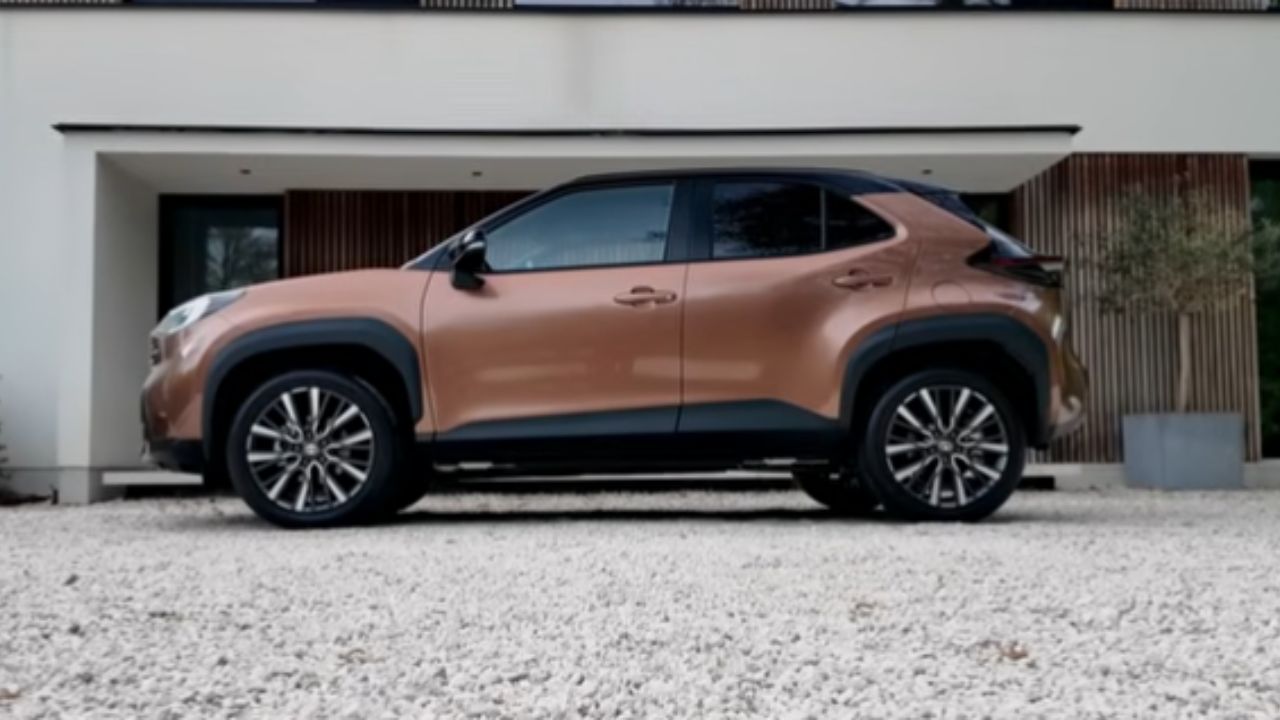
Toyota has given the Yaris Cross a significant mid-life update that quietly reshapes its role in the small SUV class. The entry-level hybrid powertrain is gone, a more powerful hybrid 130 option steps in, and the cabin tech and refinement are lifted to match newer rivals. It is a familiar facelift on the surface, but underneath it signals how Toyota now expects buyers to pay more for electrified performance and equipment.
For city drivers who saw the Yaris Cross as the most affordable path into Toyota hybrid ownership, this shift is more than a light refresh. Pricing, specification and powertrain strategy are moving in step with what the company has already done with other models, and that will have clear winners and losers among private buyers, fleets and downsizing households.
What happened
The updated Yaris Cross keeps its compact footprint and basic packaging, but Toyota has reworked the range so the cheapest hybrid is no longer the headline act. According to detailed model information, the previous entry-level hybrid 115 powertrain has been dropped in some markets in favour of a higher output hybrid 130 system that is now the focus of the line-up, paired with new trim levels and a more premium equipment mix in the refreshed car.
The hybrid 130 uses a revised 1.5 litre three-cylinder petrol engine working with a stronger electric motor and updated control software to deliver a noticeable bump in power over the outgoing hybrid 115 option. Reporting on the technical changes highlights that the electric motor output has been increased and the combined system power is higher, which in turn improves acceleration and flexibility in everyday driving.
Alongside the powertrain reshuffle, Toyota has applied a light exterior redesign. The front end gains a new grille pattern and revised bumper detailing, while the rear receives subtle trim and lighting tweaks that align the Yaris Cross more closely with newer Toyota SUVs. Wheel designs and colour options have also been updated, particularly for higher grade variants that now carry more distinctive visual signatures.
Inside, the facelift focuses on perceived quality and technology. Higher specification versions gain a larger central touchscreen with crisper graphics and faster responses, while the driver display is upgraded to a configurable digital cluster on upper trims. Materials around the dash and doors are improved, and the latest Toyota infotainment software brings enhanced smartphone integration and connected services that were not available when the model first launched.
The trim walk now leans more heavily into well-equipped versions. New or revised grades, including a range-topping launch specification, bundle the hybrid 130 with larger wheels, upgraded upholstery and a longer list of driver assistance features. The effect is that the most desirable Yaris Cross variants are more powerful, more digital and more upmarket than before, and the brand has structured the range so that the hybrid system sits at the heart of that move upmarket.
Pricing has shifted accordingly. While exact figures vary by market, the pattern follows other recent Toyota updates in which entry-level sticker prices rise as cheaper powertrains are deleted and equipment levels are pushed higher. The Yaris Cross facelift does not simply swap like for like; it reshapes the value equation by asking buyers to pay more for a stronger hybrid system and richer specification.
Why it matters
The decision to remove the base hybrid from the Yaris Cross range is not an isolated move. It fits a broader Toyota strategy that has already seen similar rationalisations in other segments. In Thailand, for example, the facelifted Camry arrived with the 2.0 litre and hybrid 2.0 litre variants dropped, leaving a line-up built around a 2.5 litre engine and a hybrid 2.5 litre option, with prices running from RM184,000 to RM226,000.
In the light car segment, Toyota has already shown it is willing to walk away from the lowest price points. When the current Yaris hatch arrived in Australia, the range restructure and added safety equipment pushed prices up by more than AUD 9,000, effectively removing the model from the sub AUD 20,000 bracket that had defined it for years. The Yaris Cross facelift follows the same playbook, but this time in the hotly contested small SUV class where price sensitivity is intense.
For Toyota, the commercial logic is clear. Hybrid technology is now central to the brand’s identity and profit model, and customers have shown they are prepared to pay a premium for fuel savings and perceived reliability. By concentrating on the hybrid 130 and better equipped trims, the company can protect margins and simplify manufacturing, while also lifting average transaction prices across the Yaris Cross range.
For buyers, the picture is more mixed. On one hand, the more powerful hybrid improves drivability, particularly in urban and suburban use where the Yaris Cross spends most of its time. Stronger electric assistance helps the car pull away more briskly from junctions, and the updated control software is designed to keep the petrol engine quieter and less intrusive. The upgraded infotainment and digital instruments also bring the cabin into line with newer rivals that already offer large screens and advanced connectivity.
On the other hand, removing the base hybrid raises the cost of entry into Toyota’s smallest SUV with an electrified powertrain. Budget-conscious private buyers who previously stretched to the cheapest hybrid may now find themselves pushed into a non-hybrid petrol variant or out of the model entirely. Fleet operators that relied on the Yaris Cross as a low running cost option for urban duty cycles will also need to recalculate whole-of-life costs based on a higher purchase price, even if fuel consumption remains competitive.
The move also reshapes how the Yaris Cross sits against rivals. In markets such as Australia, the closely related Corolla Cross is itself being repositioned with a revised range that includes a new GR Sport variant and higher prices across the board as it lines up against models like the Hyundai Kona and Nissan Qashqai. As the larger Corolla Cross edges upmarket, Toyota has more room to nudge the Yaris Cross higher too, particularly in hybrid form.
Within the small SUV segment itself, the facelift keeps the Yaris Cross competitive on technology and perceived quality. Rivals such as the Renault Captur, Peugeot 2008 and Hyundai Kona have all moved to larger screens, more sophisticated driver assistance and electrified powertrains. The updated Yaris Cross responds with a more powerful hybrid and a cabin that feels more modern, which helps defend its position among buyers who prioritise efficiency but now expect a more premium experience.
There is also a regulatory angle. As fleet emissions targets tighten in Europe and other regions, manufacturers are under pressure to sell a higher proportion of low-emission vehicles. By focusing on a stronger hybrid system and encouraging buyers to opt for it through range structure and marketing, Toyota can improve its fleet average without relying solely on full battery electric models. The Yaris Cross, as a compact and relatively affordable SUV, plays an important role in that balancing act.
From a brand perspective, the facelift reinforces Toyota’s shift away from bare-bones entry cars. The company that once dominated the bottom end of the market with simple, low-cost models is now more comfortable positioning its products as safe, efficient and well equipped, even if that means leaving the very cheapest price points to other manufacturers. The Yaris Cross update is a clear example of that repositioning in action.
What to watch next
The most immediate question is how buyers respond to the new pricing and powertrain structure. If demand for the Yaris Cross hybrid remains strong despite the removal of the base option, Toyota will see validation for its strategy of pushing customers toward higher output, better equipped variants. If sales skew sharply toward non-hybrid petrol models, or if overall volume softens, there may be pressure to reintroduce a more affordable hybrid grade in some markets.
Another area to watch is how the updated Yaris Cross influences the broader B-segment SUV class. The model has been a strong seller in Europe and other regions, and competitors pay close attention to Toyota’s moves. If the hybrid 130 proves popular, other manufacturers may accelerate plans for more powerful hybrid systems in their own small crossovers, moving beyond mild-hybrid setups to full hybrid or plug-in configurations with higher outputs and better efficiency.
There is also the question of how Toyota balances the Yaris Cross with its other compact and mid-size SUVs. The Corolla Cross, C-HR and RAV4 already span a wide price and size spread, and each has hybrid options that overlap in power and equipment. The refreshed Yaris Cross, with its stronger hybrid and improved cabin, narrows the perceived gap to the Corolla Cross in particular. Toyota will need to carefully manage specification and pricing so that each model has a clear role and does not cannibalise the others.
Future regional launches will provide further clues. In some markets, the Yaris Cross has already been positioned as a more premium alternative to budget small SUVs, with higher standard safety equipment and a strong focus on hybrid power. In others, it has served as a relatively accessible entry point into Toyota’s SUV family. The facelifted car gives the company more flexibility to tilt the range either way, depending on local competition and consumer expectations.
Observers will also look at how the updated Yaris Cross fits into Toyota’s long term electrification roadmap. The company continues to invest heavily in hybrid and plug-in hybrid technology, even as it expands its battery electric offerings. A successful, more powerful hybrid in a mass-market small SUV would support the argument that full electrification does not need to happen overnight, particularly in regions where charging infrastructure remains patchy or electricity prices are high.
At the same time, the facelift raises expectations for refinement and technology in any future electric small SUV from Toyota. Buyers who experience the improved digital cockpit and smoother hybrid powertrain in the Yaris Cross will expect at least the same level of polish from a compact battery electric model, whether that arrives as a dedicated EV or as part of a broader family of small crossovers.
There is also the competitive response from non-hybrid rivals to consider. Some manufacturers have chosen to focus on efficient turbocharged petrol engines or mild-hybrid systems rather than full hybrids in this segment, often arguing that the cost and complexity of full hybrid technology are not justified for price-sensitive small SUVs. If the Yaris Cross facelift helps Toyota maintain or grow its share of the segment, those rivals may need to revisit that calculation.
For consumers, the key practical questions will revolve around real-world fuel economy, performance and ownership costs. Independent testing of the hybrid 130 in mixed driving will reveal how much efficiency has been preserved or improved compared with the old hybrid 115, and whether the extra power translates into meaningful gains in everyday use. Insurance, servicing and residual values will also feed into the overall picture of whether the facelifted Yaris Cross still represents strong value despite higher upfront prices.
More from Fast Lane Only