Toyota has kept one of its workhorse four-cylinder engines in production for roughly a quarter of a century, an unusually long run in an industry that constantly refreshes powertrains to chase efficiency rules and marketing buzz. The engine has evolved over time, but its basic architecture, mission and reputation for durability have allowed it to outlast many of the models it originally powered.
That kind of longevity is not an accident. It reflects a deliberate strategy inside Toyota to treat engines as long-term industrial products rather than disposable technology cycles, and it helps explain why some of the company’s powerplants are still earning contracts in trucks, vans and off-road vehicles long after their rivals have been retired.
What happened
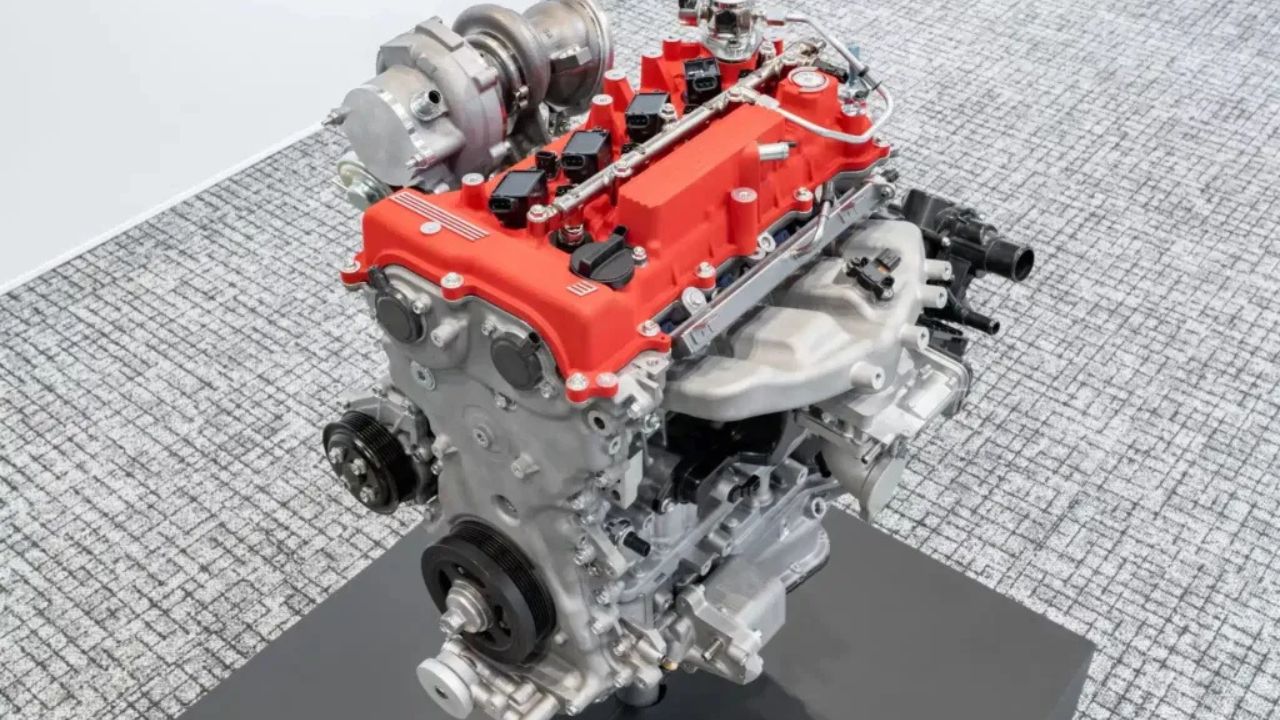
More than two decades ago, Toyota launched a mid-displacement inline-four that was designed less for headline performance and more for consistent, repeatable work in markets that valued reliability over novelty. Engineers specified a conservative bore and stroke, a cast-iron block and an aluminum head, with an emphasis on thermal stability and ease of service. In its earliest form it relied on port fuel injection and relatively simple electronics, which made it easy to maintain in regions with limited diagnostic infrastructure.
Instead of replacing the engine outright, Toyota updated the unit with incremental improvements. Variable valve timing, better engine management and refined fuel delivery were layered onto the same basic block. In several applications the engine was tuned for lower specific output but higher torque at modest revs, which suited commercial vehicles and light trucks that needed to haul loads rather than chase redlines.
That philosophy mirrors how Toyota has treated some of its longest-serving six-cylinder engines. The company has kept a straight-six gasoline unit in production for around 25 years, using it in vehicles that require smooth power delivery and long service life. Reporting on this engine notes that Toyota has continued to build it for markets that prize durability, with the same core layout still in use even as emissions controls and tuning have evolved over time, a pattern that helps explain why a Japanese six-cylinder from the brand can remain viable across multiple generations of vehicles.
The same mindset extends to diesel. Toyota’s long-serving straight-six diesel, often described as nearly indestructible, has powered Land Cruiser variants and heavy-duty models in regions where fuel quality can be inconsistent and maintenance intervals long. Detailed breakdowns of this engine highlight its stout construction, conservative boost levels and overbuilt internals, traits that have allowed the straight-six diesel to stay in production for decades with only gradual refinements.
Within that broader context, the four-cylinder that quietly passed the 25-year mark has followed a similar path. It has been produced in several displacements and emission calibrations, but the underlying design has remained recognizable. Toyota has kept the tooling active, continued to validate the engine for new fuel and emissions standards in select markets and supported it with a large ecosystem of parts and service training.
In practical terms, the same basic engine that once powered compact pickups and early-generation crossovers can still be found under the hood of later utility vehicles and commercial platforms. In some regions it has migrated from mainstream passenger cars into more specialized roles, such as fleet vans, agricultural support vehicles or ruggedized off-road models that prioritize ease of repair.
The continued production run is also tied to Toyota’s global manufacturing footprint. Engine plants in Asia, the Middle East and other regions have been configured to build this four-cylinder alongside newer powertrains. By maintaining a stable design, Toyota can keep production efficient, with suppliers delivering familiar components and assembly lines requiring minimal retooling.
Why it matters
An internal combustion engine that stays in production for roughly 25 years is more than a curiosity. It is a window into how Toyota balances innovation with continuity, especially as the company navigates a transition toward electrification while still serving markets that rely on traditional powertrains.
Trust is a key factor. Fleet operators, government agencies and rural buyers often base purchasing decisions on long-term experience rather than spec sheets. When a particular four-cylinder has proven capable of running hundreds of thousands of kilometers with basic maintenance, those customers are reluctant to switch to an unproven alternative. Toyota’s willingness to keep a known quantity in production caters directly to that mindset.
There is also a strong economic logic. Developing a new engine family is expensive, from design and validation to tooling and regulatory certification. Stretching the lifespan of a proven design helps spread those costs over a longer period. For a global manufacturer that sells vehicles in both high-margin and price-sensitive markets, the ability to pair a mature engine with simpler models can make the business case work where a cutting-edge powertrain might be too costly.
Environmental and regulatory pressures complicate that picture, but they do not erase it. In wealthier markets with strict emissions rules, Toyota has shifted toward newer engine families, hybrids and battery-electric models. Yet in countries where regulations are less stringent or where infrastructure for alternative powertrains is limited, a durable four-cylinder that meets local standards can still be the most practical option. The company’s strategy has been to adapt combustion engines with improved combustion control, better catalytic converters and cleaner fuel mapping rather than abandon them entirely.
Longevity also has implications for the aftermarket and repair economy. A 25-year production run means parts are widely available, mechanics are familiar with common failure points and independent shops can service the engine without specialized tools. That ecosystem reinforces the engine’s appeal, creating a feedback loop in which widespread knowledge and parts availability make the engine even more attractive to keep in service.
For owners, this can translate into lower total cost of ownership. A farmer running an older pickup with the same family of four-cylinder that powers newer fleet vehicles can source components from current production, rather than relying on dwindling stocks of obsolete parts. In some cases, entire replacement engines can be purchased from ongoing production, extending the useful life of vehicles that might otherwise be scrapped.
From a brand perspective, long-lived engines help cement Toyota’s reputation for reliability. Stories of high-mileage vehicles powered by these units circulate among enthusiasts and in used-car markets, reinforcing the idea that Toyota powertrains are engineered to last. That perception supports residual values and makes new vehicles easier to sell, since buyers expect the same durability in current models.
The four-cylinder’s endurance also highlights a philosophical difference between Toyota and some competitors that rapidly cycle through engine designs in pursuit of marginal efficiency gains or marketing narratives. Shorter-lived engines can yield impressive numbers on paper, but they sometimes bring teething issues, complex maintenance requirements or parts scarcity once production ends. By contrast, Toyota’s conservative approach trades some novelty for continuity and predictable performance.
There is a technical dimension as well. Engineers often argue that once an engine architecture has been in production for several years, most of the major weaknesses have been identified and addressed. Casting flaws, lubrication quirks and component fatigue patterns become well understood. In a long-running four-cylinder, those lessons have been baked into successive revisions, resulting in a mature product with fewer surprises for both drivers and technicians.
At the same time, the engine’s survival illustrates the limits of rapid electrification in certain segments. While Toyota invests heavily in hybrid systems and battery-electric platforms, a portion of its global business still depends on combustion engines that can operate in harsh environments, far from charging networks. The enduring four-cylinder fills that role, sitting alongside equally long-lived six-cylinder gasoline and diesel units that support heavy-duty and off-road applications.
What to watch next
The obvious question is how much longer Toyota can justify keeping a quarter-century-old engine architecture in production as regulatory and market pressures intensify. Several factors will shape that timeline, starting with emissions rules in key export markets. If governments accelerate restrictions on internal combustion, Toyota may be forced to retire even its most dependable workhorses or invest in more substantial redesigns that preserve some components but change others.
Another variable is the pace of hybridization in commercial and utility segments. Toyota has already shown that pairing a modest combustion engine with an electric motor can deliver strong efficiency without sacrificing range. If that approach migrates more deeply into trucks, vans and off-road vehicles, the long-serving four-cylinder could either be adapted as a hybrid-friendly unit or gradually phased out in favor of newer engines optimized for electrified duty cycles.
Customer expectations are also shifting. Younger buyers, even in regions where infrastructure is limited, are more likely to weigh connectivity, refinement and fuel economy alongside basic durability. If competitors begin offering modern turbocharged or hybrid powertrains that match Toyota’s reliability while adding performance or lower running costs, the business case for maintaining an older engine architecture may weaken.
On the other hand, there is still a sizeable global market for simple, repairable vehicles that can operate far from dealer networks. In those environments, an engine with a 25-year track record is an asset rather than a liability. Toyota could choose to confine the four-cylinder to these niches, keeping production volumes modest but steady while newer powertrains take over in urban and regulated markets.
Regional manufacturing shifts could also play a role. If Toyota consolidates engine production into fewer plants, it may decide that maintaining tooling and supply chains for an aging design no longer makes sense. Conversely, if a particular plant is heavily optimized for this four-cylinder and serves stable demand in surrounding markets, the company might extend the engine’s life even further.
Enthusiasts and used-vehicle buyers will be watching how parts support evolves. As long as the engine remains in production, genuine components should stay readily available. Once Toyota eventually calls time on the line, the clock will start ticking on how long original parts remain affordable. That transition period will influence whether older vehicles powered by this engine continue to be practical daily drivers or shift into enthusiast territory where owners accept higher maintenance costs.
Finally, the fate of this long-running four-cylinder will signal how Toyota intends to manage legacy combustion technology more broadly. If the company chooses to sunset it in favor of newer engines and electrified platforms, that will suggest a sharper break with the past. If it continues to support the engine well into the next decade, it will reinforce the idea that Toyota sees a long tail for conventional powertrains in specific roles, even as it promotes hybrids and battery-electric models in others.
Either way, the engine’s 25-year run has already secured its place in Toyota’s mechanical history. It stands alongside the company’s enduring straight-six gasoline and diesel units as evidence that, for all the talk of rapid change in automotive technology, some of the most successful designs are the ones that quietly do their job year after year, outliving the trends around them.
More from Fast Lane Only