Road-going two-stroke motorcycles had a short, loud run. Suzuki, for one, wound up its GT250 twins in 1981 as it moved its road range toward four-strokes. Yamaha and Honda kept small two-strokes alive a little longer, but the era was closing.
For years, many of those bikes sold for pocket money. However, the riders who grew up on them now have garages and spare cash. Meanwhile, clean original bikes get harder to find each season, and parts for some models have already dried up.
These 11 are our picks, and the verdicts are our opinion. They are the smokers we would buy before the market wakes up. The years, engines and figures come from period road tests, owner clubs and model histories.
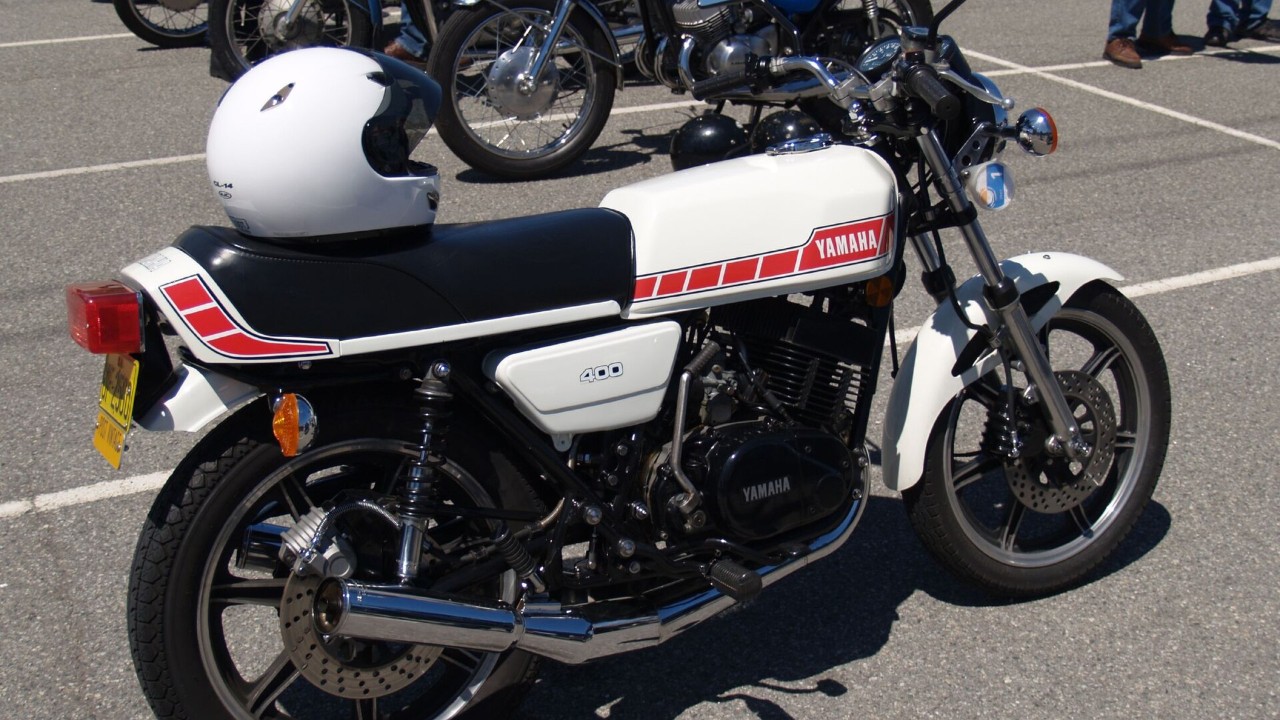
1. 1979 Yamaha RD400F Daytona Special
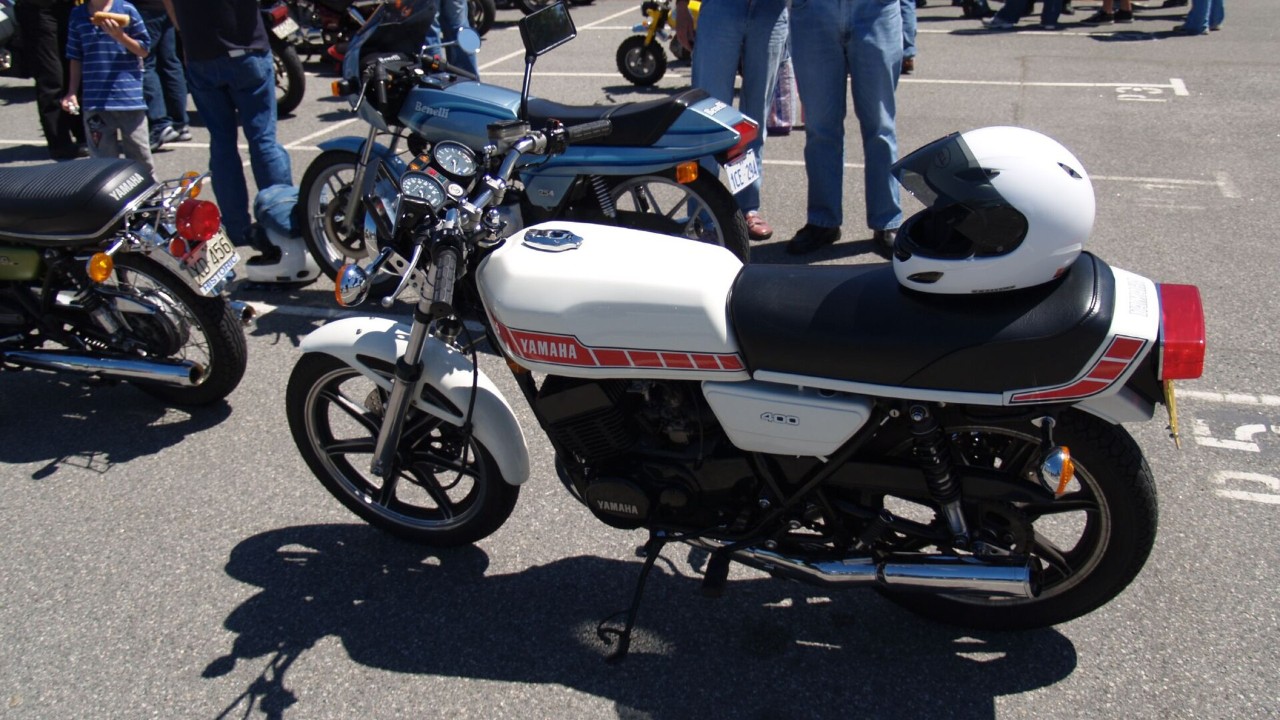
Yamaha sold its RD400 street twin from 1976 to 1979. The engine was an air-cooled 399cc parallel twin, rated at 44 horsepower at 7,000 rpm. Along the way, the RD400 broke new ground. In fact, the RD400C became the first motorcycle from a major maker with cast wheels, and the 1978 RD400E added electronic ignition.
The final model year brought the Daytona name. Yamaha sold that 1979 bike in the US as the RD400F Daytona Special. Years later, Motorcyclist called it “almost the final chapter in road-going two-strokes.” That line explains why it matters to us. It closed out the air-cooled RD400 story in America. It also followed earlier US models that had made do with points ignition.
Our take: the Daytona Special is the RD we would chase first. It has the later ignition and the cast wheels, so it is the easiest air-cooled RD to live with. Plenty of old RDs end up modified, so we think an unmodified one deserves a premium. If you find a stock example with its original paint and exhaust, we would not haggle too hard.
2. 1973 Suzuki T500 Titan

Suzuki’s big twin wore a string of names. It arrived in 1968 as the Cobra, became the Titan for 1969, and then picked up a new model letter almost every year. The 1973 version, the T500K, brought a quiet but useful fix. According to the Suzuki owners’ site suzukicycles.org, Suzuki raised the gearbox oil capacity by about 200cc to stop gear wear, and it modified the lower crankcase half.
That same page lists the 1973 bike at 45 horsepower at 6,000 rpm, a little less than the earlier Titans. The engine was a 492cc air-cooled two-stroke twin. Even so, the T500 had a reputation as a tough, over-engineered machine. It also had racing credentials, since Frank Whiteway won the 1970 Production 500cc race at the Isle of Man TT on one.
Our take: the T500 is a gentle giant among old two-strokes. It is not the fastest bike here, but it is easy to ride and easy to understand. Because Suzuki sold more than 100,000 of them, good examples turn up. In our view, the later bikes with the gearbox fix are the smart buy, and we expect tidy ones to cost more every year.
3. 1989 Suzuki RGV250
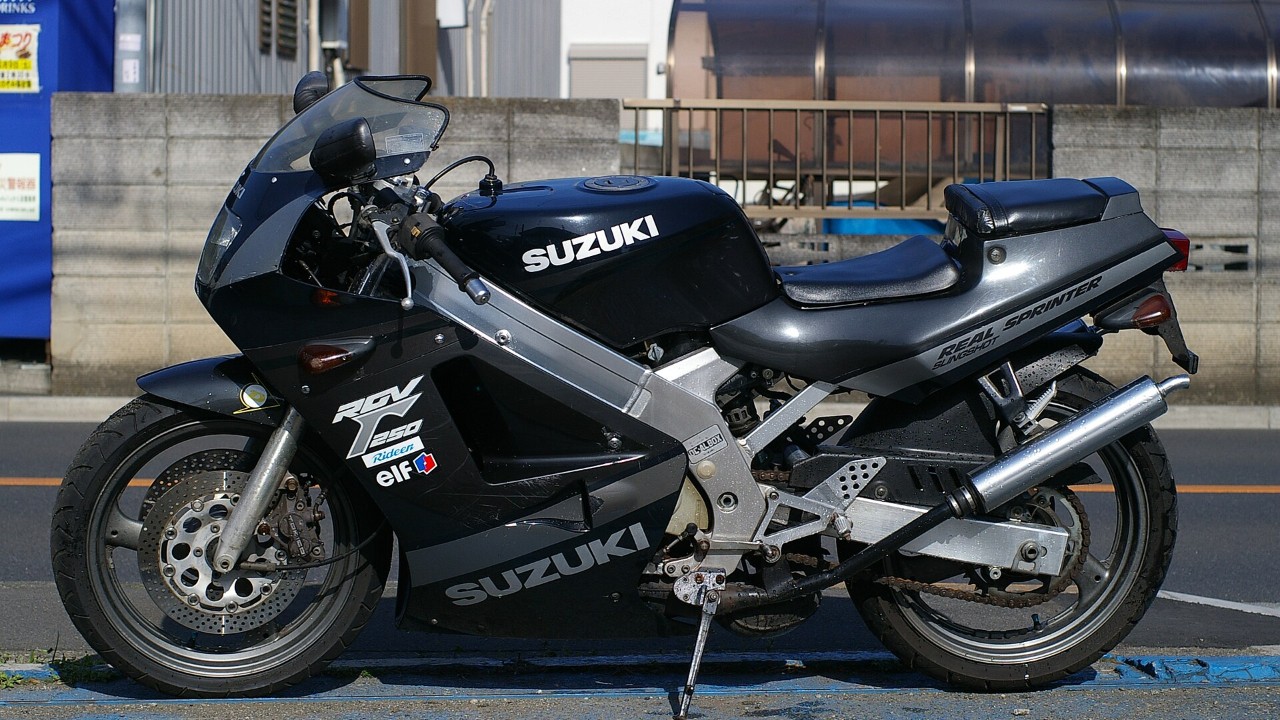
Suzuki built the RGV250 as a race replica for the street. The first version, known by its VJ21 frame code, went on sale in Japan in 1988. Its engine was a water-cooled 249cc two-stroke V-twin with a 90-degree angle between the cylinders. Suzuki quoted 58 horsepower for 1988 and 59 for 1989.
Japanese home-market bikes had to follow a national limit, so those versions ran at 45 horsepower. Export models made more than 50. The engine was also good enough for other makers. Aprilia, for example, used a modified version of it in the RS250. Later RGVs added an electronic power valve, upside-down forks and, in the final years, a new 70-degree engine.
Our take: the early RGV is the one we would watch. It is lighter on electronics than the later bikes, and it carries the look of Suzuki’s Grand Prix machines of the period. Many of these bikes started life in Japan, so expect import paperwork. Also, check the exhaust valves, because the next-generation bikes had a known cracking and sticking problem. A sorted early RGV, in our view, is a bargain that won’t last.
4. 1977 Yamaha RD250
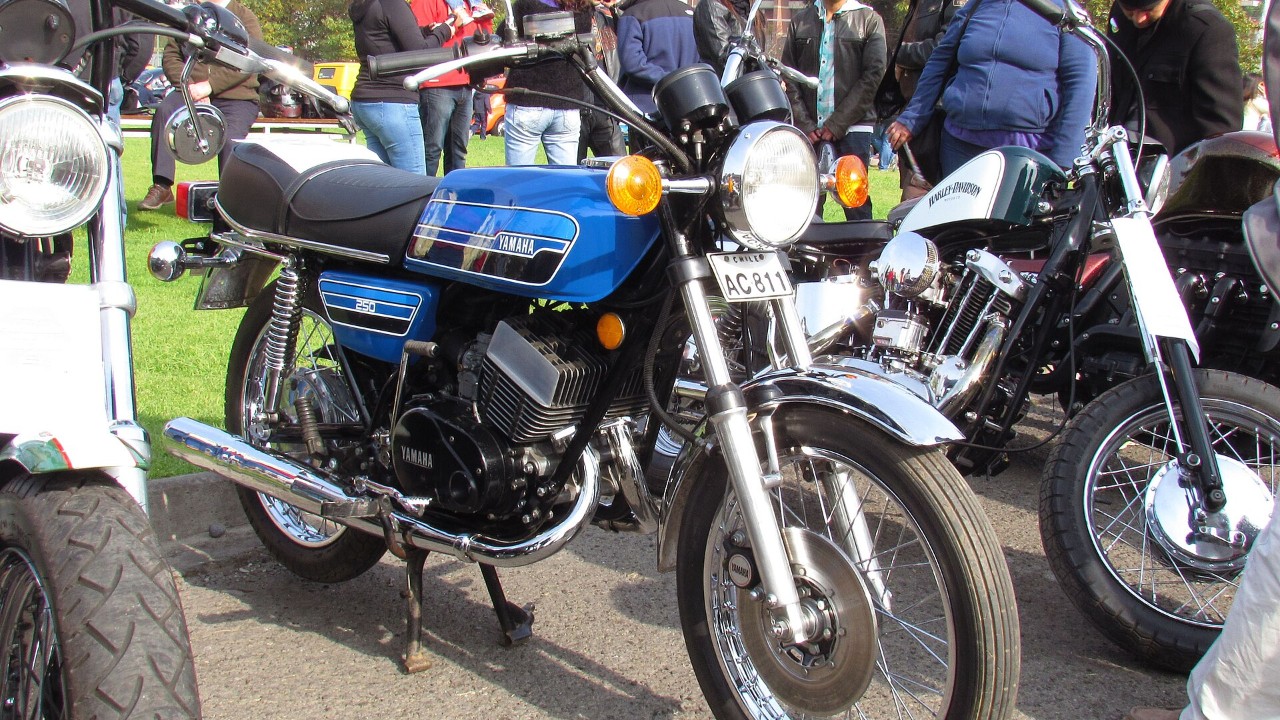
The air-cooled RD250 was the little brother to the RD350 and RD400. Yamaha built it from 1973 to 1979 before switching to water cooling for the RD250LC. The engine was a 247cc two-stroke twin with a square 54mm bore and stroke, and it drove through a six-speed gearbox.
There is a fun quirk on the earliest bikes. On the first version, sixth gear was blocked off. An owner could enable it by removing a blanking plate on the gear selector drum. Later, the RD250 name grew powerful enough to change the law. In 1983, the UK cut the largest engine size for learner riders to 125cc, a change linked to the performance of the RD250.
Our take: the air-cooled RD250 lives in the shadow of the later LC bikes. That is exactly why we like it. It gives you the RD look, the twin-cylinder howl and the light weight for less money than the famous water-cooled models. We think the gap between the two will close. So if a straight, original 1977 bike appears at a fair price, we would buy it and ride it.
5. 1984 Honda MVX250F two-stroke V3
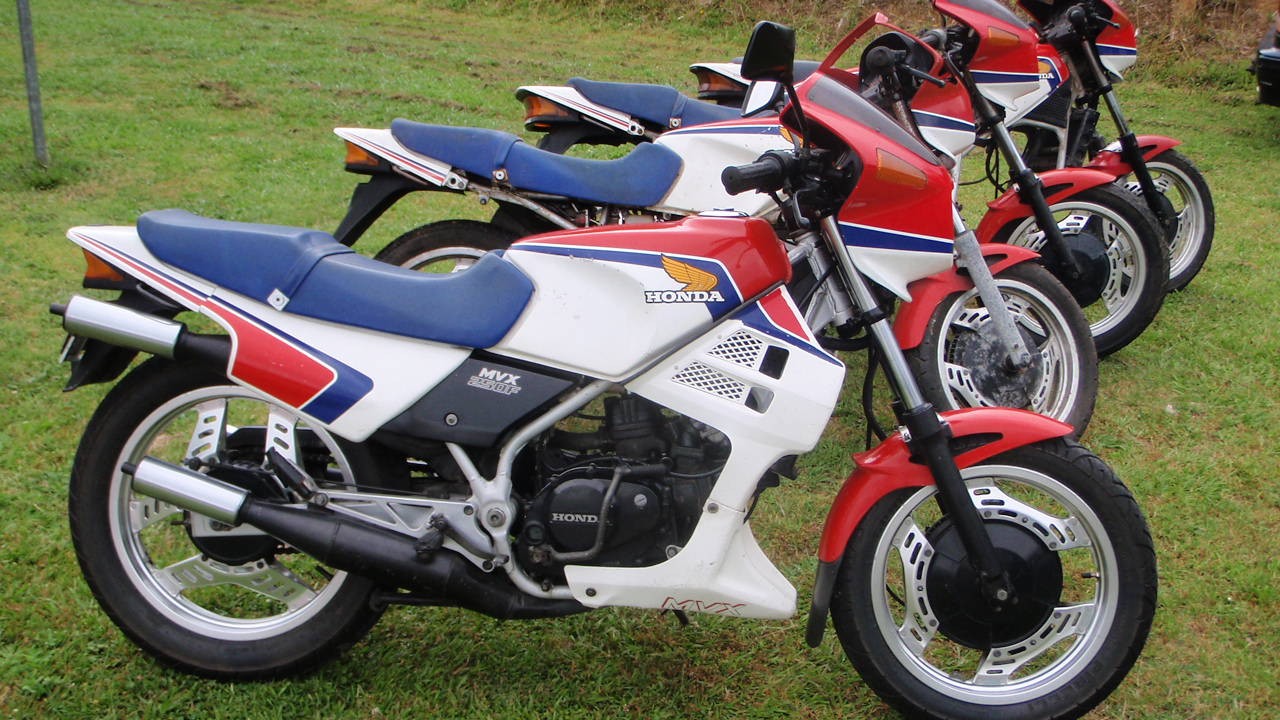
Honda’s MVX250F is one of the oddest engines on this list. It is a liquid-cooled 249cc two-stroke V3. The two outer cylinders point forward and lie nearly flat, while the center cylinder stands upright. Reed valves in the crankcase handle the intake. Honda built the bike in 1983 and 1984.
Few markets saw the MVX new. New Zealand and Switzerland were two of the rare countries outside Japan where Honda dealers sold it. Even so, the idea outlived the bike. Honda followed it with the NS250R and NSR250R, and it revamped the V3 layout for the bigger NS400R. In other words, the MVX was the first draft of a design Honda kept working on.
Our take: the MVX250F is a collector’s two-stroke rather than a daily rider. It’s rare outside Japan, and parts will take patience. However, that is the appeal. Few people at a bike night will know what it is, and fewer will have seen a V3 two-stroke road bike. We think rare Honda engineering seldom stays cheap for long, so we would buy the best one we could find. It belongs with the motorcycles collectors overlooked for years.
6. 1985 Honda NS400R
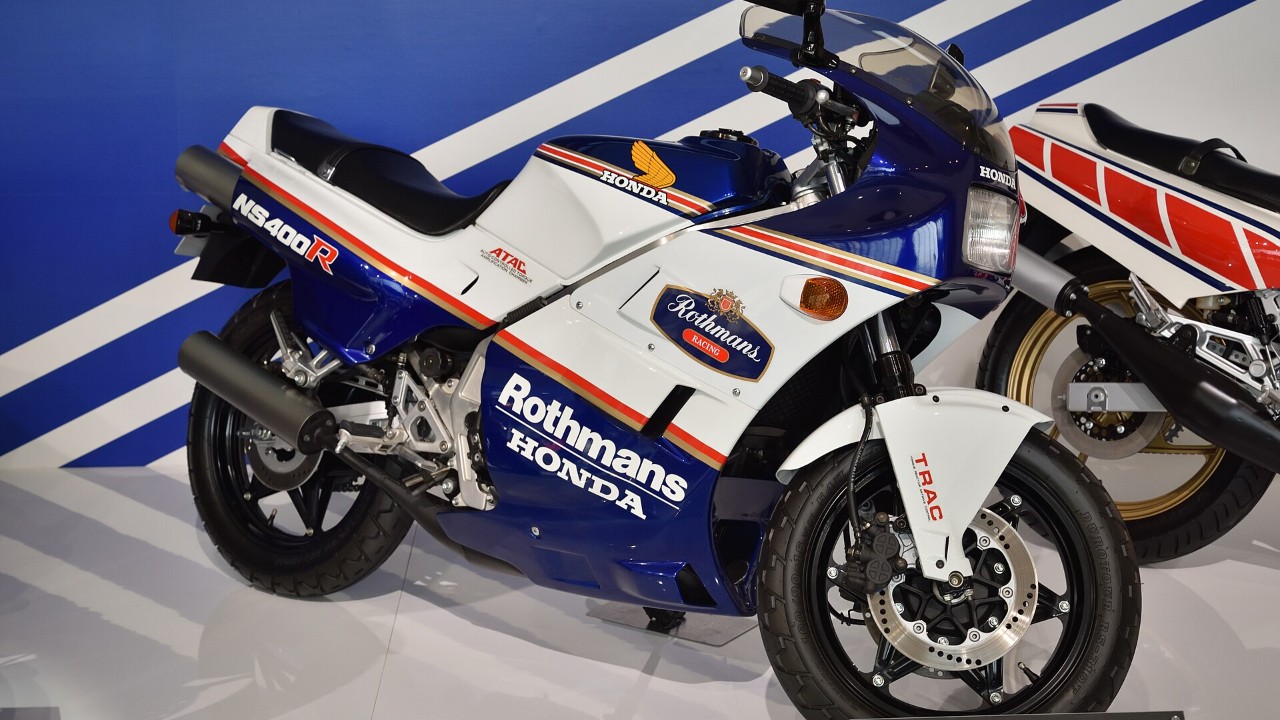
The NS400R arrived in 1985 as a road version of Honda’s NS500 Grand Prix bike. Freddie Spencer won the 1983 500cc World Championship on that three-cylinder racer. The street bike used a 387cc liquid-cooled, oil-injected V3, rated at 72 horsepower at 9,500 rpm. Its engine grew out of the MVX250F above.
Honda also gave it a clever front end. TRAC, short for Torque Reactive Anti-dive Control, kept the fork from diving under hard braking. Dry weight came to 163 kg, about 359 pounds. Export bikes could reach 135 mph, while Japan got a restricted 59-horsepower version. Honda built about 12,000 of them between 1985 and 1987.
Our take: the NS400R is the friendly way into a 1980s Grand Prix replica. It is smoother and simpler than the big square-four rivals, and twelve thousand bikes is a small number spread around the world. Bennetts BikeSocial, in its RG500 guide, treats the NS400R as more of a 250-class rival, and we see that as a plus for riding. We would find a complete one with original bodywork now. For more bikes from the same decade, see our list of collectible motorcycles from the 1980s.
7. 1986 Yamaha TZR250
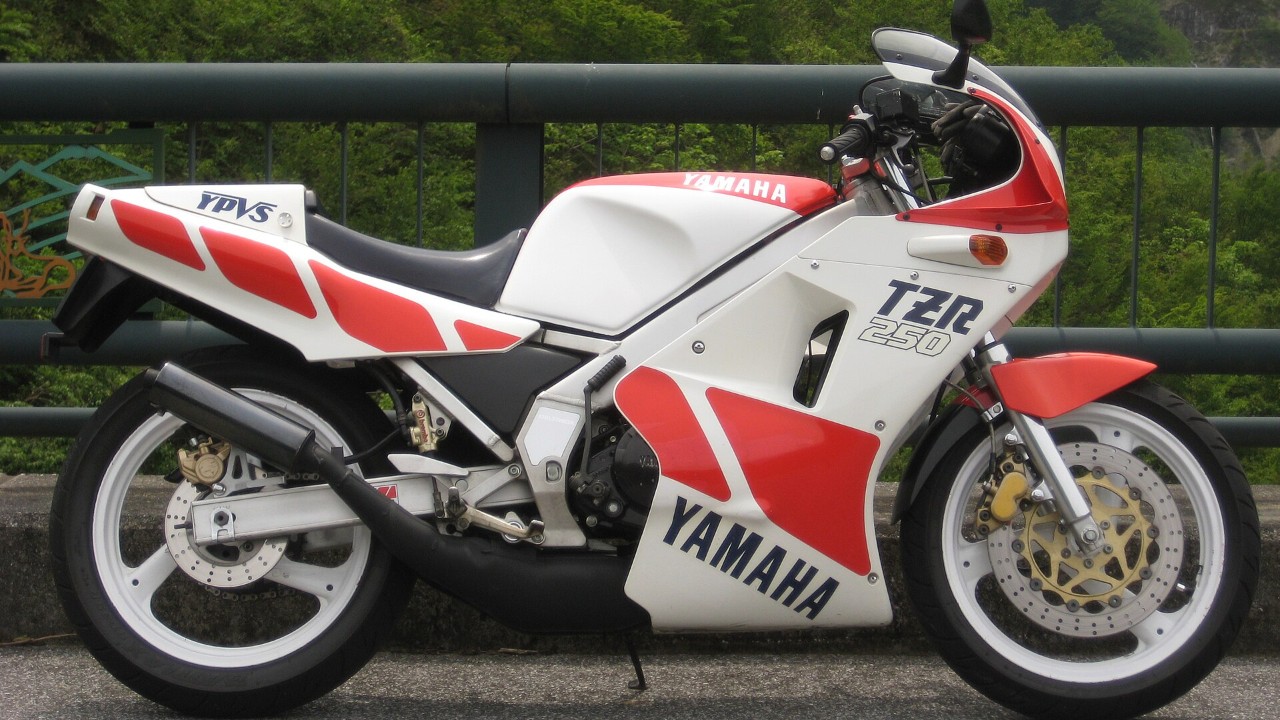
The TZR250 took over from Yamaha’s water-cooled RD twins in 1986. Its 249cc parallel twin used YPVS, Yamaha’s exhaust power valve, which starts opening at around 6,000 rpm. Yamaha based the bike loosely on its TZ250 production racer. In fact, several versions shared engine cases and frames with the racer of the same period.
The model kept changing. Japanese bikes carried a more restrictive ignition to meet the 45-horsepower rule, while UK bikes had stalk-mounted turn signals for type approval. For 1989, Yamaha turned the engine around in the reverse-cylinder 3MA, and later TZRs switched to a V-twin. Riders also kept racing them, and the bike appears in the Yamaha Past Masters series run by Britain’s BMCRC club.
Our take: the first parallel-twin TZR is the purest version and the easiest to understand. Since it shares so much with a racer, it has a ready supply of tuning know-how. That also means many have lived hard lives. We would look for a stock, early bike with clear history. In our view, the plain early twin is the better buy than the flashier later versions.
8. 1972 Suzuki GT250 Hustler
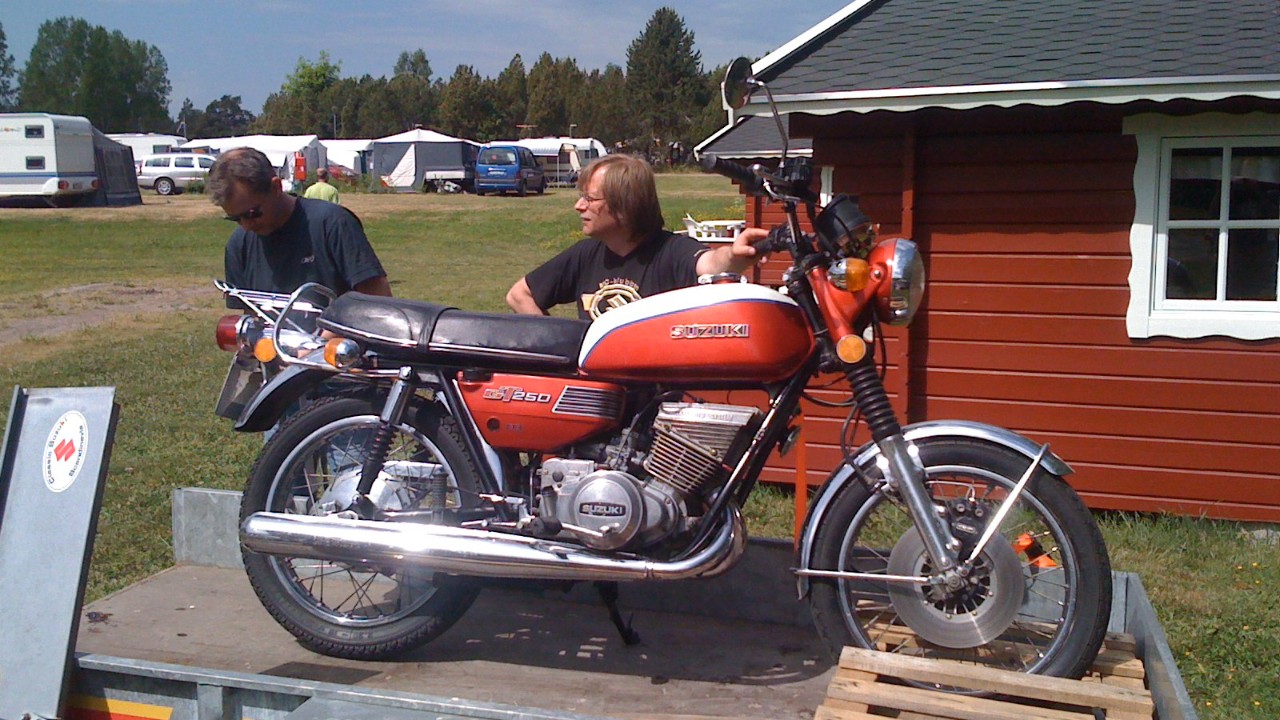
American buyers knew Suzuki’s 247cc twin as the Hustler. Suzuki built the GT250 from 1971 to 1981. It used an air-cooled two-stroke parallel twin and a six-speed gearbox. From 1971, the cylinder head wore Ram Air cooling shrouds, an idea borrowed from the bigger GT380 and GT550.
The Ram Air setup didn’t last. When Suzuki updated the engine for 1976, it dropped the shrouds and enlarged the head fins instead, and output rose to 32 horsepower at 7,500 rpm. Then in 1978, the X7 arrived with a more compact engine and a lighter frame. That bike could reach about 100 mph in good conditions, and it led to the RG250 Gamma.
Our take: the early Ram Air Hustler is the one with the most character. The shrouded head is a period detail you won’t see on later bikes, and the six-speed gearbox makes the small twin feel livelier than its size. We think the Hustler is one of the cheapest ways into a classic Japanese two-stroke right now. As a result, we would not expect that to last as the bigger names climb.
9. 1985 Suzuki RG500 Gamma
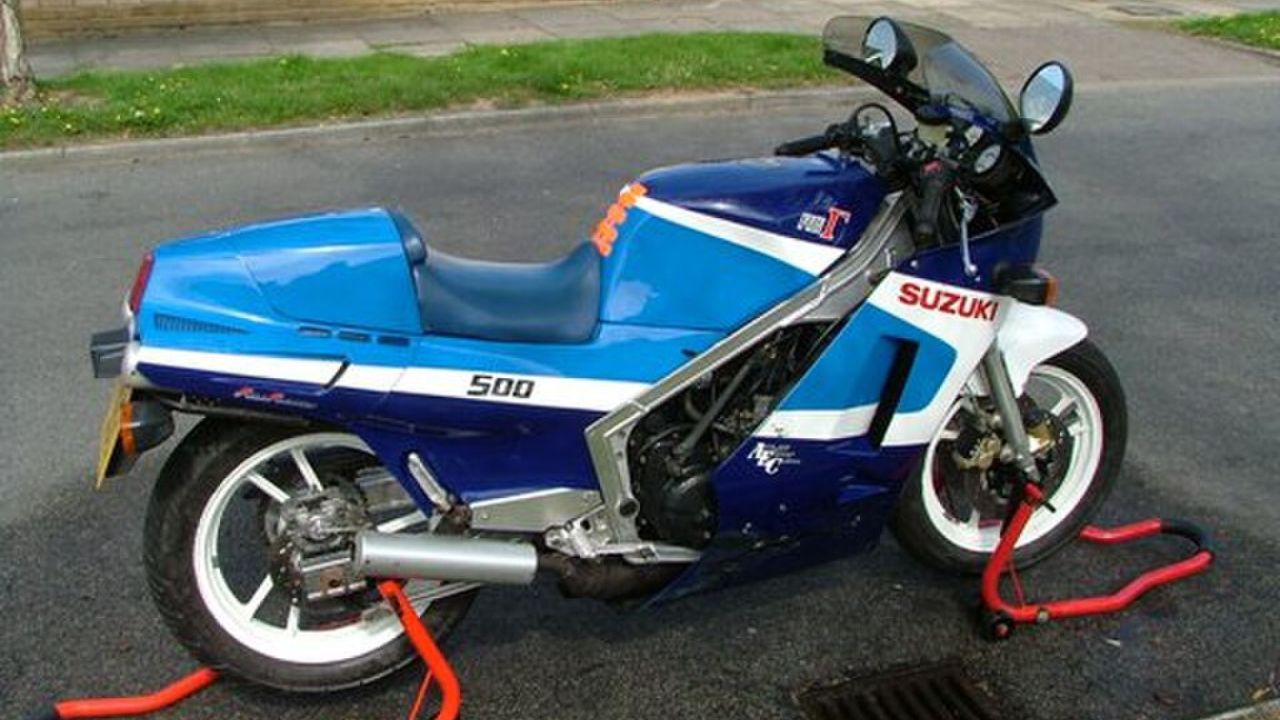
The RG500 Gamma is the bike here that has already started climbing. Back in 1985, it cost £3,299 new in the UK, according to a used-buyer guide from Bennetts BikeSocial. That same guide puts rough bikes at £10,000 to £13,000, tidy ones at £15,000 to £19,000 and mint examples at £20,000 to £25,000, and it describes values as rising slowly.
The hardware explains the prices. Suzuki based the road bike on its 500cc Grand Prix racer, with a 498cc square-four, disc-valve two-stroke and twin crankshafts. Suzuki claimed 95 horsepower at 9,500 rpm. Bennetts also warns that the engine cases are line-bored as a pair. As a result, a damaged case usually means a whole new engine.
Our take: the cheap RG500 is already gone, and we doubt it comes back. Suzuki sold about 9,284 of them, and good original bodywork is scarce. If you want one, we would pay up for a well-documented bike instead of a project, because Bennetts notes that rebuilds can get very expensive. A tidy, running Gamma is the smart money, in our view.
10. 1981 Maico Mega 2 490
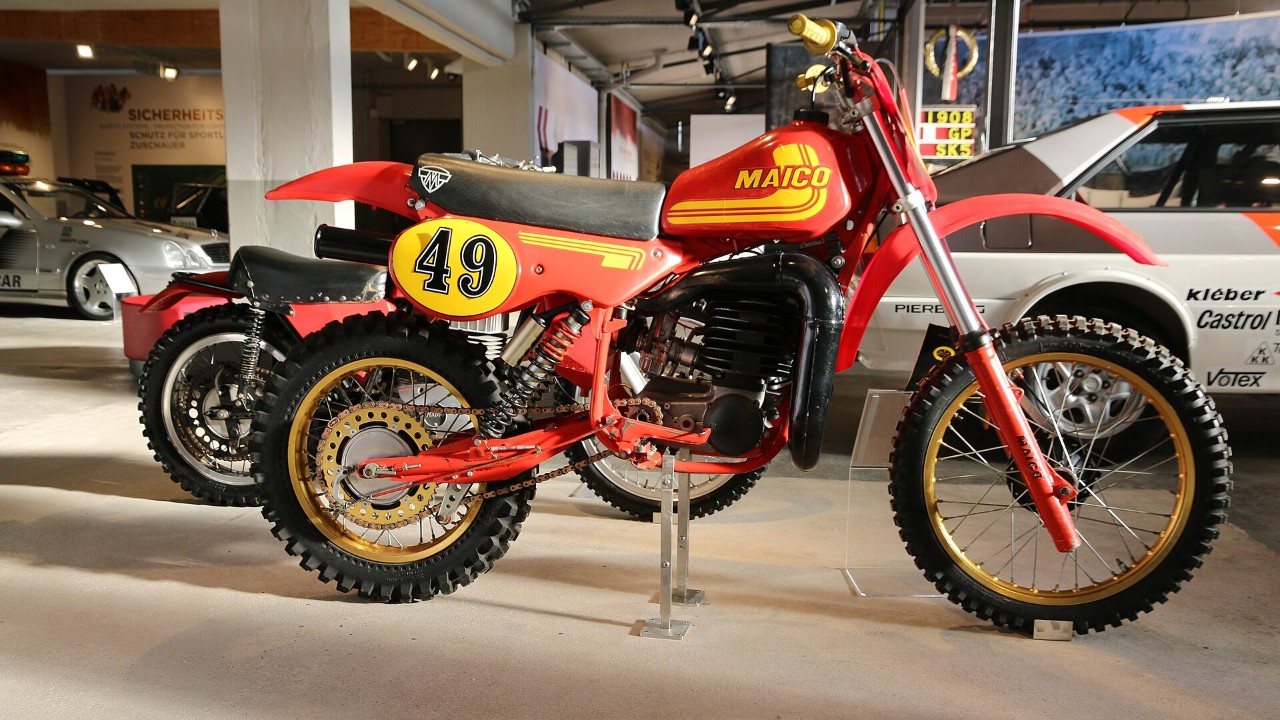
Not every two-stroke on this list belongs on the street. Maico’s 1981 Mega 2 was an open-class motocross bike from Germany, and Motocross Action has called it the greatest open-class motocross bike of all time. Cycle World tested the 490 in June 1981. It measured the engine at 488cc, up from 438cc the year before, thanks to a bore that grew from 82mm to 86.5mm.
The test bike earned its reputation. In a Saddleback race, the stock 490 got to the top of the hill first in both motos, ahead of 37 other bikes. Cycle World listed the price at $2,699 and praised its cornering and steering. The fork used 42mm tubes with 12.2 inches of travel. However, the testers also found hard starting, heavy vibration and weak brakes. Maicowerk filed for bankruptcy in 1983.
Our take: the Mega 2 490 is a vintage motocross icon, and that kind of reputation rarely gets cheaper. Most motocross bikes raced hard, so a straight, complete one is worth a lot more than a tired one. We would budget for suspension work and expect to pay a premium for original parts.
11. 1975 Montesa Cota 247
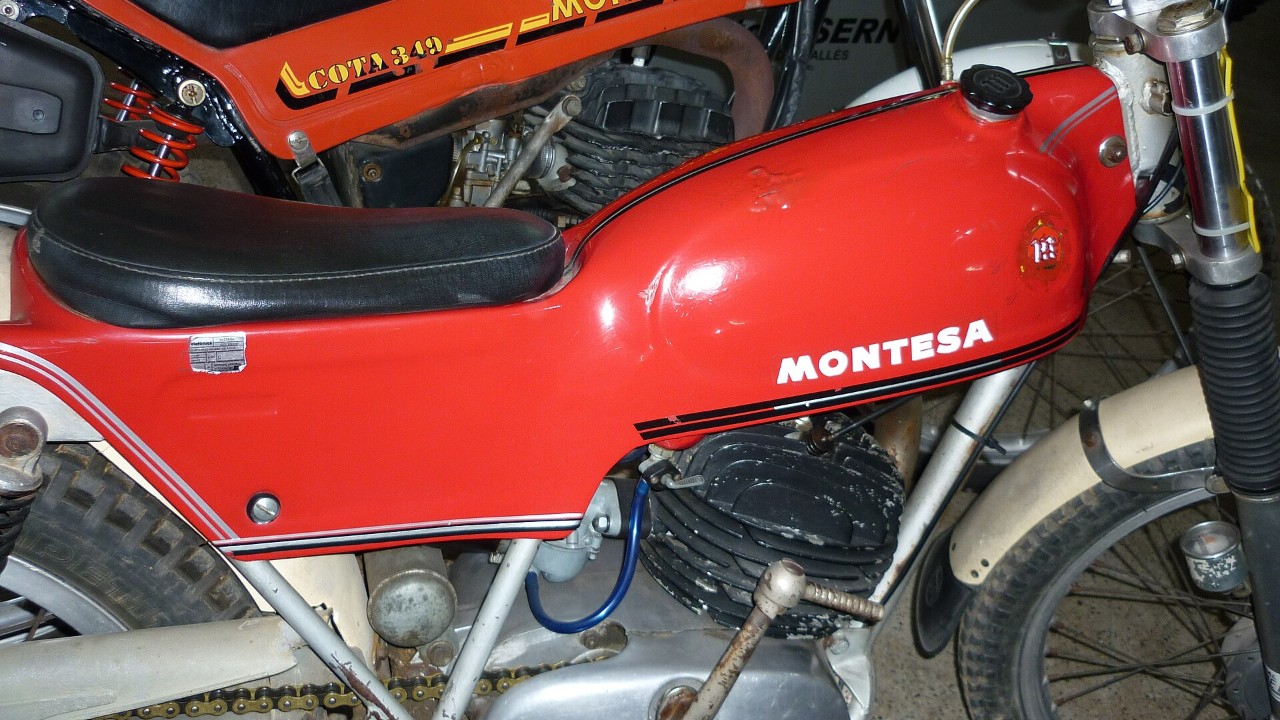
Spain’s Montesa built the Cota for trials, the slow, technical sport of riding over rocks and logs without putting a foot down. The 247 used a 247cc piston-port two-stroke single with a 72.5mm bore and 60mm stroke. Rider magazine rates it at about 19 horsepower at 6,500 rpm, with a dry weight of 200 pounds for the street-legal 247-T.
Rider also says the bike cost more than its rivals, which is one reason few came to the US. By its sketchy records, Montesa built about 2,300 of the 247-T. Meanwhile, the Cota line had a winning record, starting with the 1968 Spanish Trials Championship. A Cota 247 even turns up in a chase scene in the 1974 film Freebie and the Bean. Today, the National Motorcycle Museum shows a Cota 247 as its only Montesa on display.
Our take: the Cota 247 is the most relaxed bike on this list and maybe the most fun at walking pace. A small US supply doesn’t help buyers, in our view. We would look for one with its original tank and fenders, then actually ride it.
More from Fast Lane Only