Pontiac sold 32,450 copies of the first Pontiac GTO in 1964, and the name went on to cover a decade of muscle cars and a brief comeback in the 2000s. Most people can picture the classic version. It’s a mid-1960s hardtop with a hood scoop and a big V8 rumbling under it.
But the GTO story has plenty of side roads. Pontiac offered engine packages that only a few hundred buyers ticked, body styles that barely sold and later cars that hid the badge on very different platforms. Some of those GTOs are so scarce that even regular car-show visitors may never stand next to one.
These seven are our picks. They’re the GTOs we’d stop and study if one rolled into a parking lot, chosen for their unusual options, low production or odd place in the family tree. The opinions are ours, and the build numbers come from published production records.
1. 1964 Pontiac GTO Tri-Power hardtop
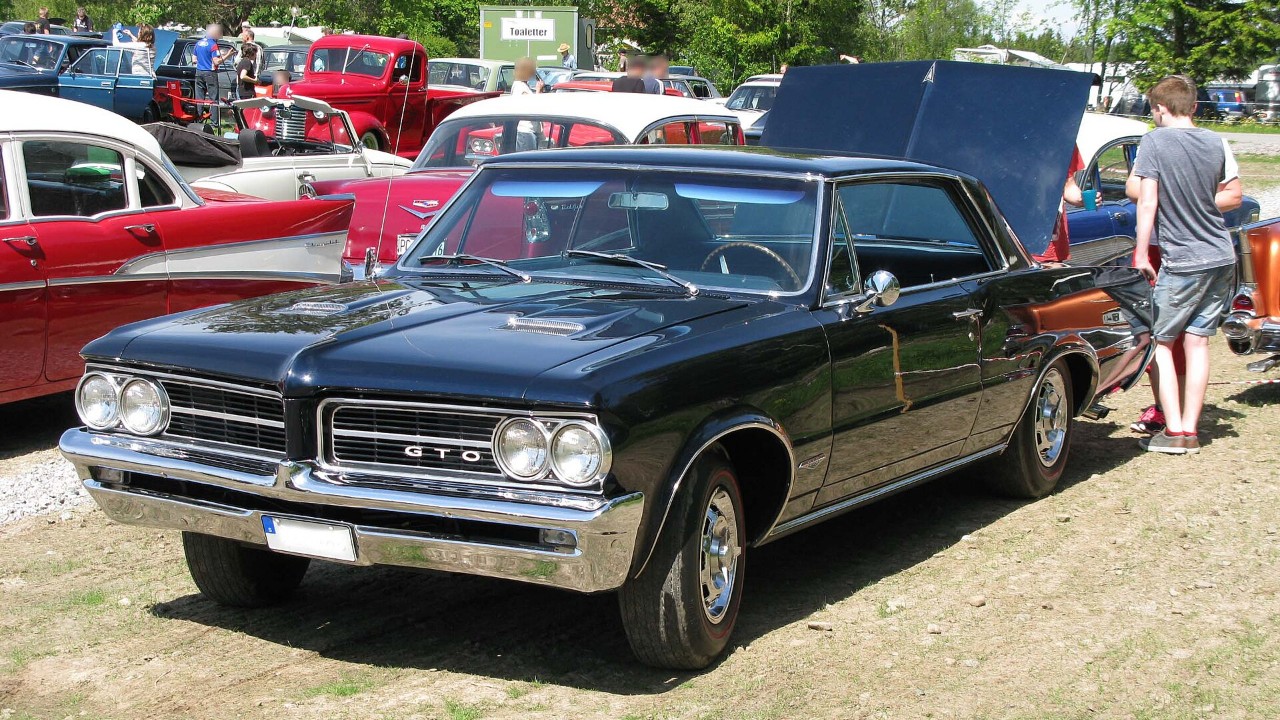
The first GTO wasn’t a model at all. It was a $295.90 option, RPO 382, on the Tempest LeMans, according to the 1964 GTO production page at Web-Cars. The hardtop was the most popular way to order it, with 18,422 built, ahead of the coupe and the convertible.
The engine choice is what makes this one hard to find. Most buyers took the 325-hp 389 with a single Carter four-barrel, and 24,205 cars left the line that way. Only 8,245 got the 348-hp Tri-Power setup, which used three Rochester two-barrel carburetors on one intake. In other words, about one first-year GTO in four had the triple carbs.
Our take: Tri-Power is the sound and the look that define the early GTO for a lot of fans. Three carburetors in a row under the air cleaners still look like pure 1964 to us. A real Tri-Power hardtop is the version we’d want for that reason alone. If you shop for one, ask for paperwork, because a three-carb intake is easy to bolt onto a car that left the factory with a four-barrel.
2. 1967 Pontiac GTO 400 Ram Air
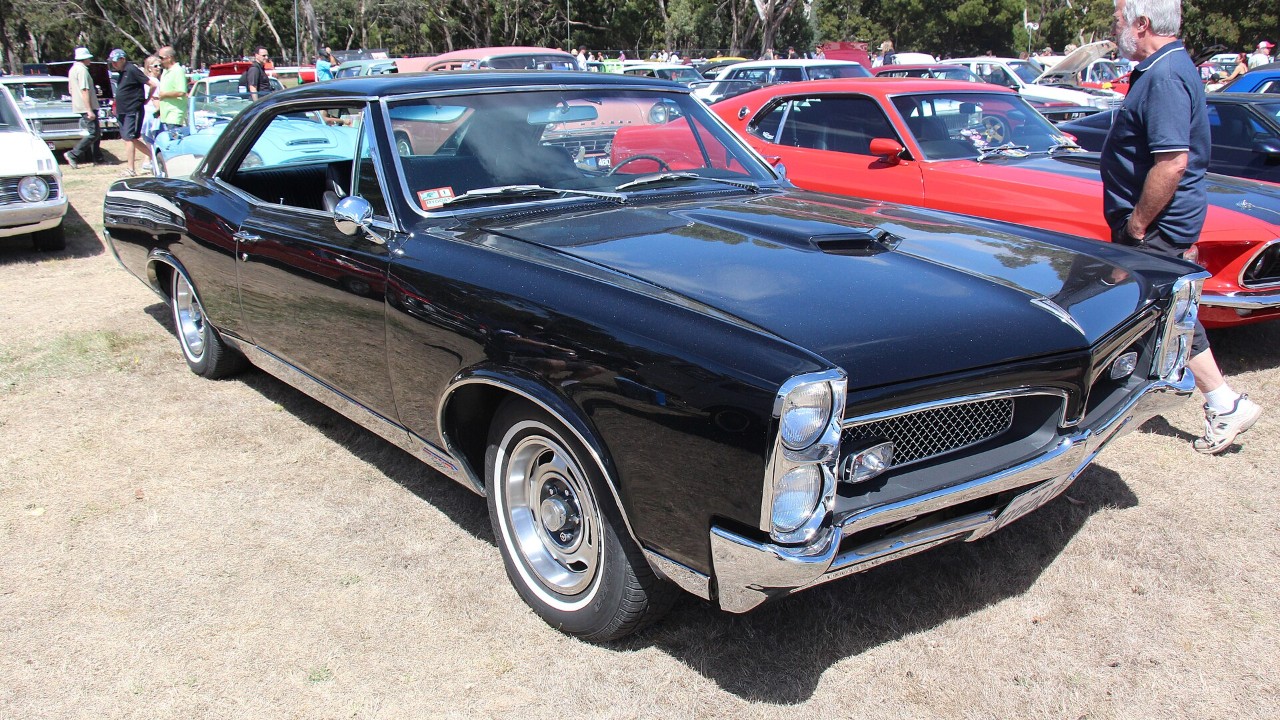
For 1967, the GTO moved to a 400-cubic-inch V8 offered in four versions. The best seller was the 335-hp four-barrel, with 64,177 built, according to Web-Cars. The 360-hp 400 HO found 13,827 buyers. At the top sat the 400 Ram Air, also rated at 360 hp, and only 751 cars got it.
The Ram Air shared its streamlined exhaust manifolds with the HO, according to Hagerty’s history of Ram Air GTOs. It also used the 744 camshaft. Then, in May 1967, Pontiac phased in “997” cylinder heads with polished valves and stronger springs. Meanwhile, Web-Cars notes that a dealer-installed part made the hood scoops functional.
That makes the ’67 Ram Air a car for detail people. On paper it matched the HO’s horsepower, so a casual buyer had little reason to pay more. In our view, though, the Ram Air was the enthusiast’s pick, aimed at drivers who cared about every bit of airflow. We’d seek one out precisely because it is so easy to overlook. If you find one, the paperwork and the engine codes matter more than the hood, since scoops can be swapped in an afternoon.
3. 1969 Pontiac GTO Judge Ram Air IV
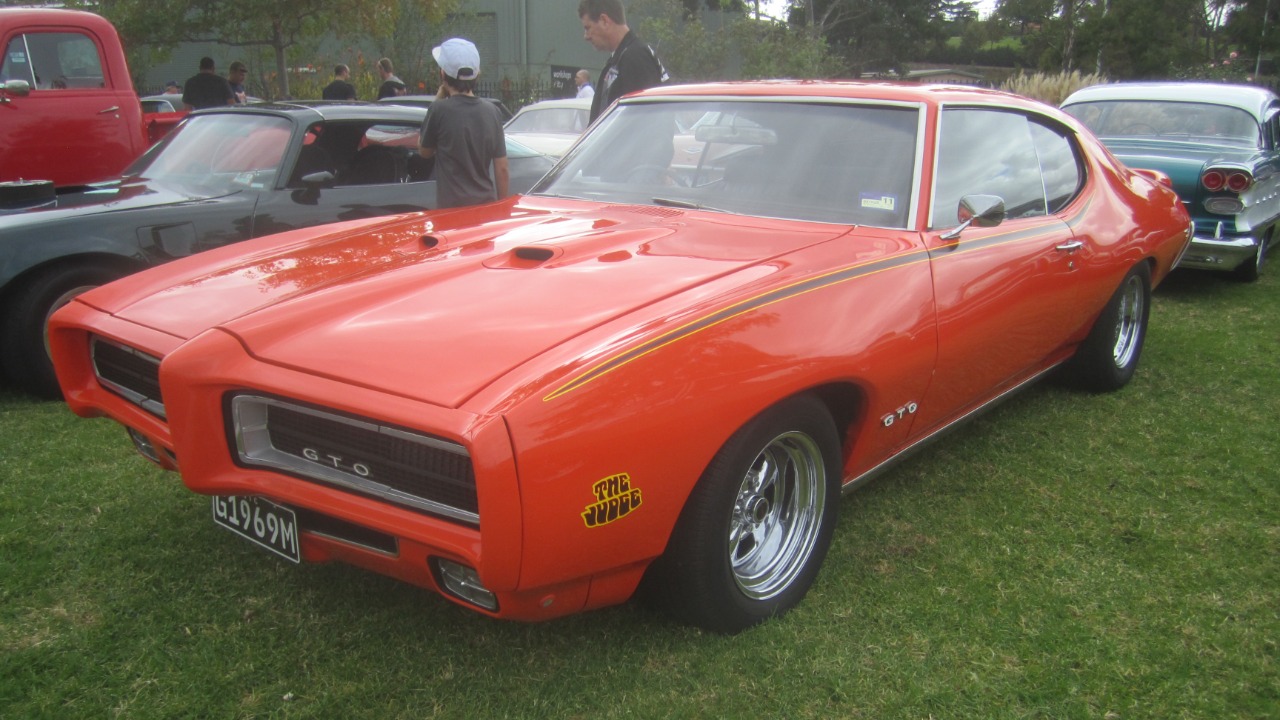
The Judge arrived in 1969 as a $332 package on top of a regular GTO. It included the Ram Air 400, Rally II wheels without trim rings, a T-handle Hurst shifter, wider tires, decals and a rear spoiler. At first, Pontiac offered it only in Carousel Red. That year, 6,833 of the 72,287 GTOs built were Judges.
The hardest Judge to find, though, is the one with the Ram Air IV engine. It made 370 hp at 5,500 rpm and 445 lb-ft of torque. Hagerty’s Ram Air history calls it the successor to the short-lived Ram Air II. It also notes the engine’s “722” round-port heads and the same “041” cam, and Pontiac even planned a four-intake version with two inlets in the front valance. That design never reached production.
Our take: a Judge in Carousel Red is cheerful enough on its own. A Ram Air IV Judge, however, is the version that backs up the cartoon graphics with real engineering. For that reason, it’s the one we’d travel to see. Our earlier roundup of Pontiacs that seemed almost too wild for the drag strip covers more of that era. If you’re buying, budget for an expert inspection, since a real Ram Air IV car carries a big premium over a standard Judge.
4. 1971 Pontiac GTO 455 HO convertible
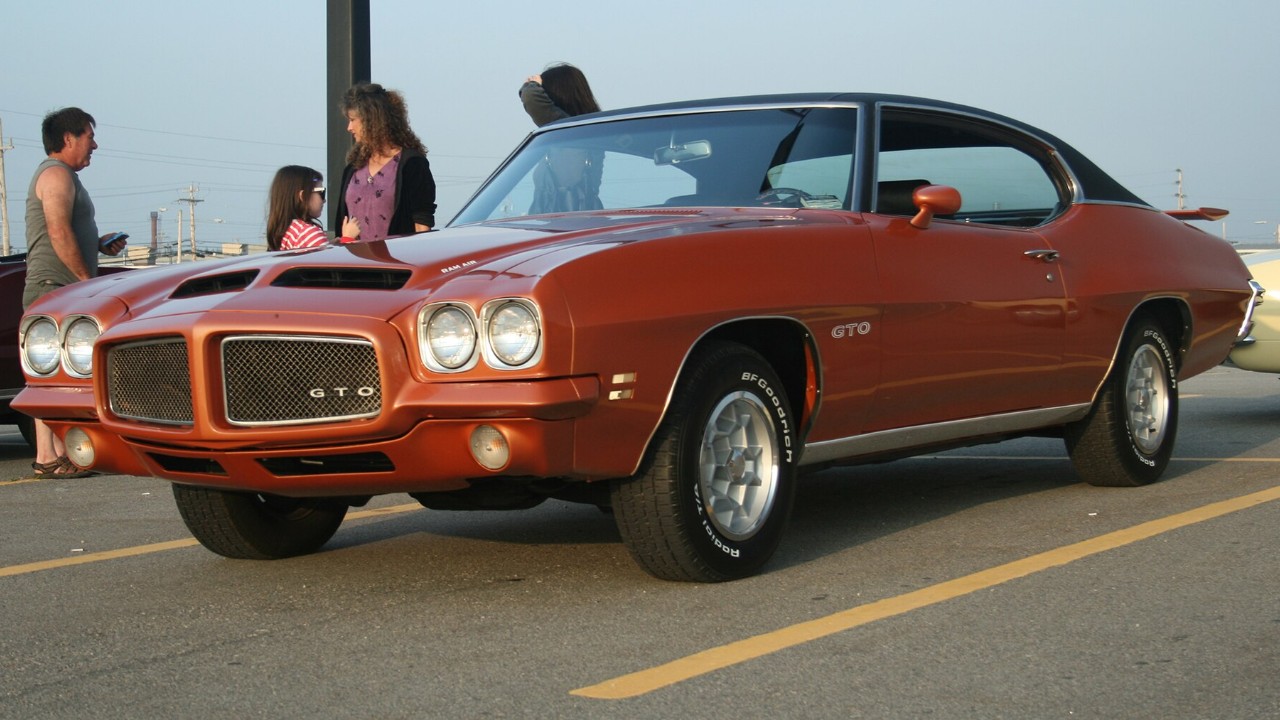
By 1971, the GTO convertible was fading fast. Pontiac built only 678 of them that year, against 9,854 hardtops, according to Web-Cars. The top engine was the 455 HO, rated at 335 gross horsepower, or 310 net. Only 48 convertibles got it, with 21 manuals and 27 automatics.
That 455 HO was a different kind of performance engine. Hagerty notes that it used round-port heads and the “068” cam. It also ran 8.4:1 compression, because GM lowered compression a year before the government required it. As a result, the big engine made its power with torque rather than high revs. Air induction wasn’t standard on the 455 HO except on the Judge, Hagerty adds.
We think this is one of the most underrated GTOs of all. You get an open top, a big-inch V8 and production numbers that are tiny by any standard. It’s also a relaxed, torque-rich cruiser rather than a peaky drag car. Our take: if a 455 HO convertible ever comes up for sale, check the paperwork twice. With only 48 built, documentation is the difference between a real one and a well-dressed clone.
5. 1973 Pontiac LeMans GTO Colonnade coupe
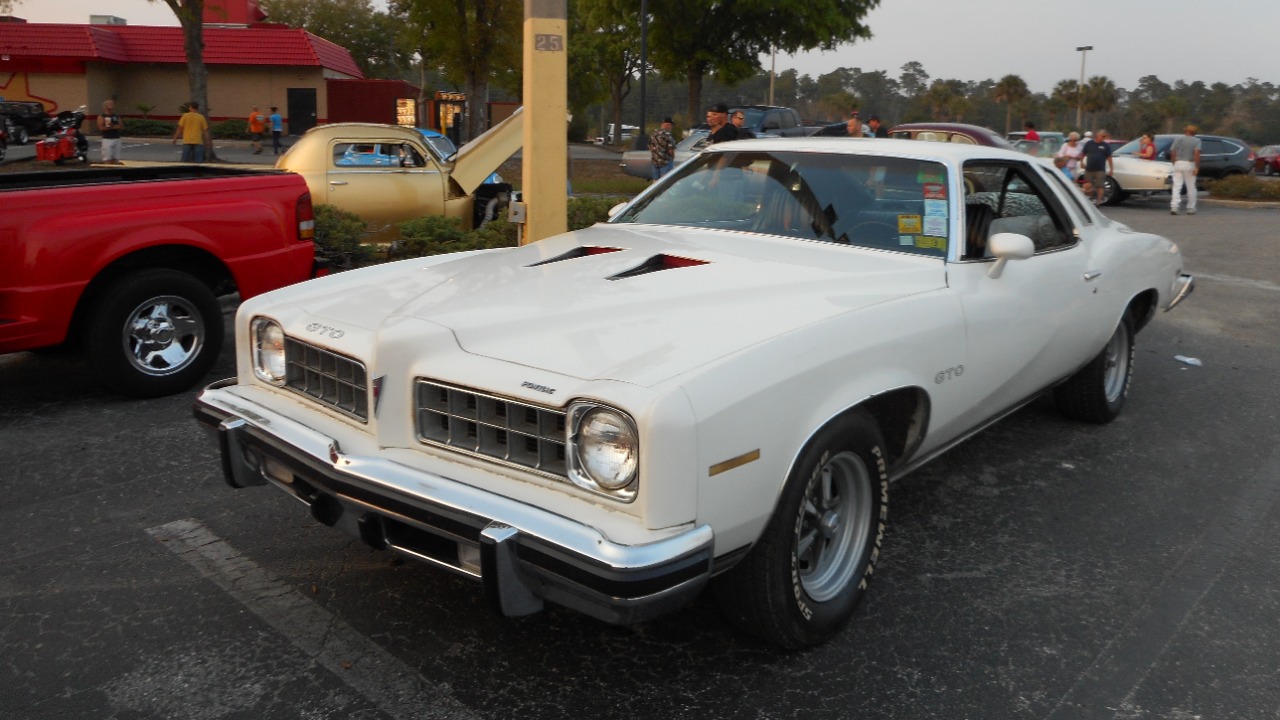
In 1973, the GTO stopped being its own model and became an option on the LeMans. The car used GM’s Colonnade A-body, with rubber bumpers and two large bug-eye headlights. According to SlashGear’s look at the forgotten 1973 GTO, Pontiac sold only 4,806 of them, and unmodified examples are very hard to find today.
The engines show how far the muscle-car world had shifted. The standard 400 was rated at 230 hp, and the optional 455 at 250 hp, which came only with the Turbo Hydra-Matic. Pontiac also announced a Super Duty 455 for the GTO. However, it never went on sale to the public, and the few prototypes didn’t survive.
Our take: the 1973 car is the black sheep of the GTO family, and that’s exactly why we like it. Hagerty calls 1973 the GTO’s production low point, and the car wears a body style most fans have never linked with the badge. If you want one, look for a car with its factory bumpers and trim. After all, trim parts for a one-year package won’t turn up at every swap meet.
6. 1974 Pontiac Ventura GTO hatchback

The last GTO of the original run moved to the compact Ventura. Hagerty’s look back at the 1974 GTO notes the package cost $414 to $461, depending on body style and trim. Buyers could order a coupe or a hatchback. Power came from a four-barrel 350 V8 rated at 200 net hp, and production rose to 7,058 cars.
The best detail is under the hood scoop. Unlike the Firebird Trans Am’s shaker, which stopped working after 1972, the GTO’s shaker was functional. A solenoid-operated flap opened under hard acceleration, Hagerty explains, so the Quadrajet could breathe cooler air. A three-speed manual on the floor came standard, while a four-speed or an automatic each cost $200 more.
Motor Trend timed one at 9.4 seconds to 60 mph, according to Hagerty, while a four-speed car tested by CARS did it in 7.7. That’s honest performance for 1974. Our take: the hatchback is the version we’d pick, because it turns a compact muscle car into a useful one. If you’re hunting, be patient, because a clean, original car is worth the wait. Our earlier list of Pontiacs that deserve to be the most collectible of their era has more cars from this corner of the brand.
7. 2005 Pontiac GTO LS2

The modern GTO came from Australia, based on the Holden Monaro. The first cars used the 5.7-liter LS1. For 2005, Cars.com reported that a new 6.0-liter LS2 V8 replaced it, rated at 400 hp and 400 lb-ft. A twin-scoop hood became available, and a revised rear fascia carried a new split dual exhaust.
Buyers could choose a four-speed automatic or a Tremec close-ratio six-speed manual. Larger brakes, traction control and a limited-slip differential came along too. Price was part of the story, too. The revived GTO was first planned at about $25,000, but it launched in the U.S. at well over $34,000. Pontiac imported 11,069 GTOs for 2005, so this one isn’t rare on paper. However, the plain, rounded body made it easy to miss in traffic, so few people gave it a second look.
Our take: the LS2 car is the modern GTO we’d buy. It added 50 hp over the 350-hp LS1 car and looked more purposeful with the scoops. It’s also a coupe you can drive every day. Look for an unmodified six-speed car with records. In our view, a clean, stock 2005 GTO LS2 is now harder to find than its production total suggests.
More from Fast Lane Only