A 1974 Dodge Monaco police car became one of the most famous movie cars of all time, because the Bluesmobile in The Blues Brothers was based on one. Most real patrol cars never got that kind of fame. They worked their shifts and were retired when the next model arrived.
A few survived anyway, and they draw crowds at car shows today. Some were big American sedans with engines tuned for the highway. Others came from Europe, where police forces picked Swedish sedans and German sports cars for very different jobs.
These are our picks: seven police cars that we think continue to turn heads decades later. The verdicts are our opinion, while every engine, year and figure comes from the record. Each car is described as the livery in its photo shows it.
1. 1974 Dodge Monaco police car
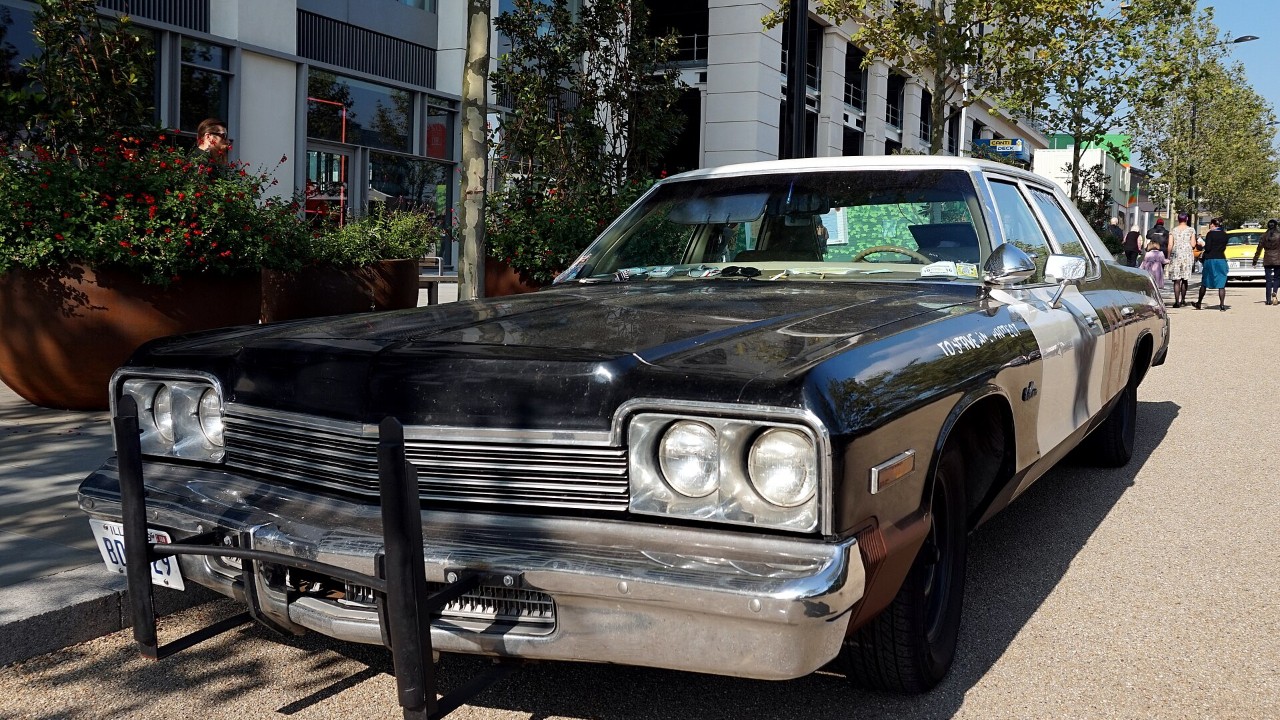
Dodge completely redesigned its full-size Monaco for 1974, with an all-new unibody platform and new sheet metal. The timing was terrible. The 1973 oil crisis began within days of the car’s introduction, and sales suffered. Even so, the big C-body suited police work, and buyers could order engines from a 360 V8 up to a four-barrel 440.
Size was part of the appeal. By 1975, the Monaco weighed over two tons and had a top speed of 127 mph. The 1974 car also dropped the hidden headlamps of the earlier Monaco for fixed lamps, which gave it the blunt face that movie fans know. Later, in 1980, The Blues Brothers turned a 1974 Monaco into the Bluesmobile.
Our take: this is the police car that pop culture made famous, and we think a well-kept Dodge Monaco police car draws as many smiles as any muscle car at a show. Look for one with its original police equipment and paperwork. A civilian Monaco dressed as a cop car is fun, but it isn’t the same thing. Also, its sheer size gives it real presence parked next to a modern patrol car.
2. 1966 Plymouth Fury police car
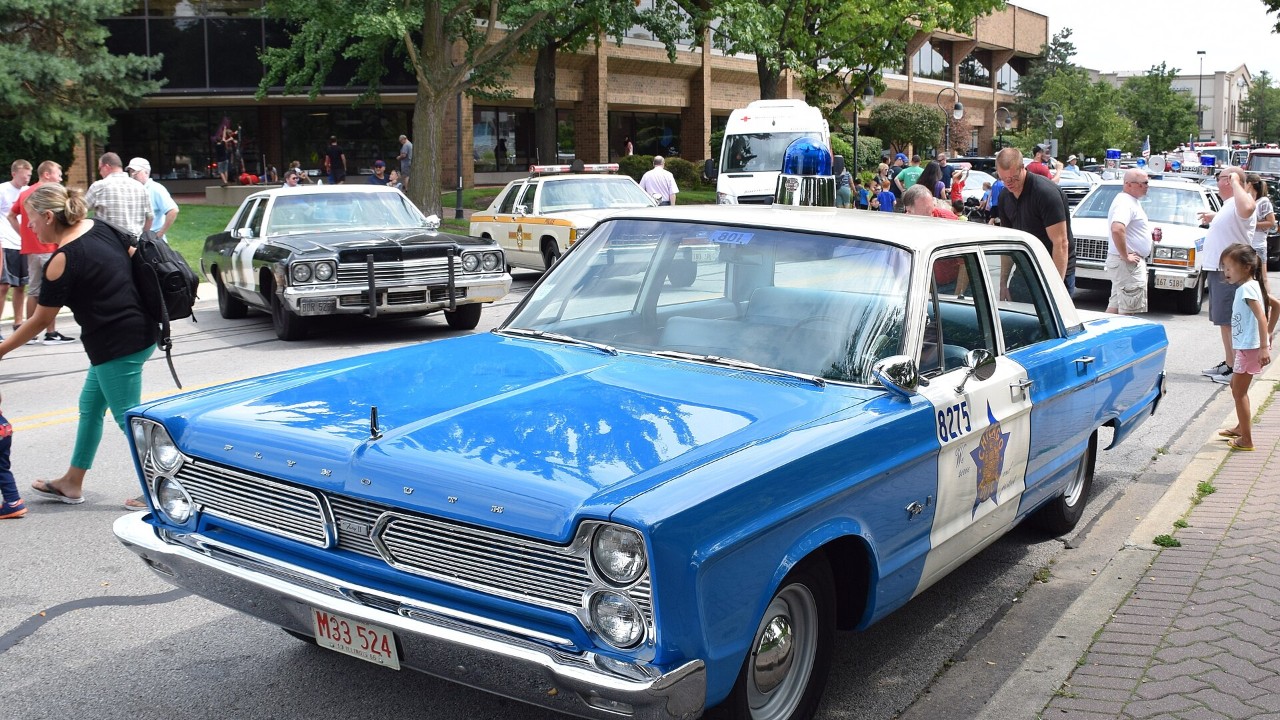
Plymouth moved the Fury back to the full-size C-body for 1965, on a 119-inch wheelbase. The 1966 car kept the same profile, with a split grille front and rear. Meanwhile, the range ran from the plain Fury I to the Sport Fury and a new luxury VIP model.
The engine list went a long way up from the base car. A 318 V8 with a three-speed manual was standard in 1966, yet most Fury buyers ordered the TorqueFlite automatic. At the top, Plymouth’s full-size lineup in this era included the 426 “street wedge” V8 at 385 horsepower. That spread meant a Fury could be a frugal city car or a fast highway cruiser.
Our take: a 1966 Fury patrol car has the crisp, straight-edged style of mid-1960s Mopar, and that look has aged well. In our view, it’s also a fresh sight next to the usual Ford and Chevy cruisers, which makes it a real conversation starter. Buy one with a documented police history if you can, because clones are easy to make. Besides, a car this simple is easy to keep on the road.
3. 1975 Plymouth Gran Fury Michigan State Police car
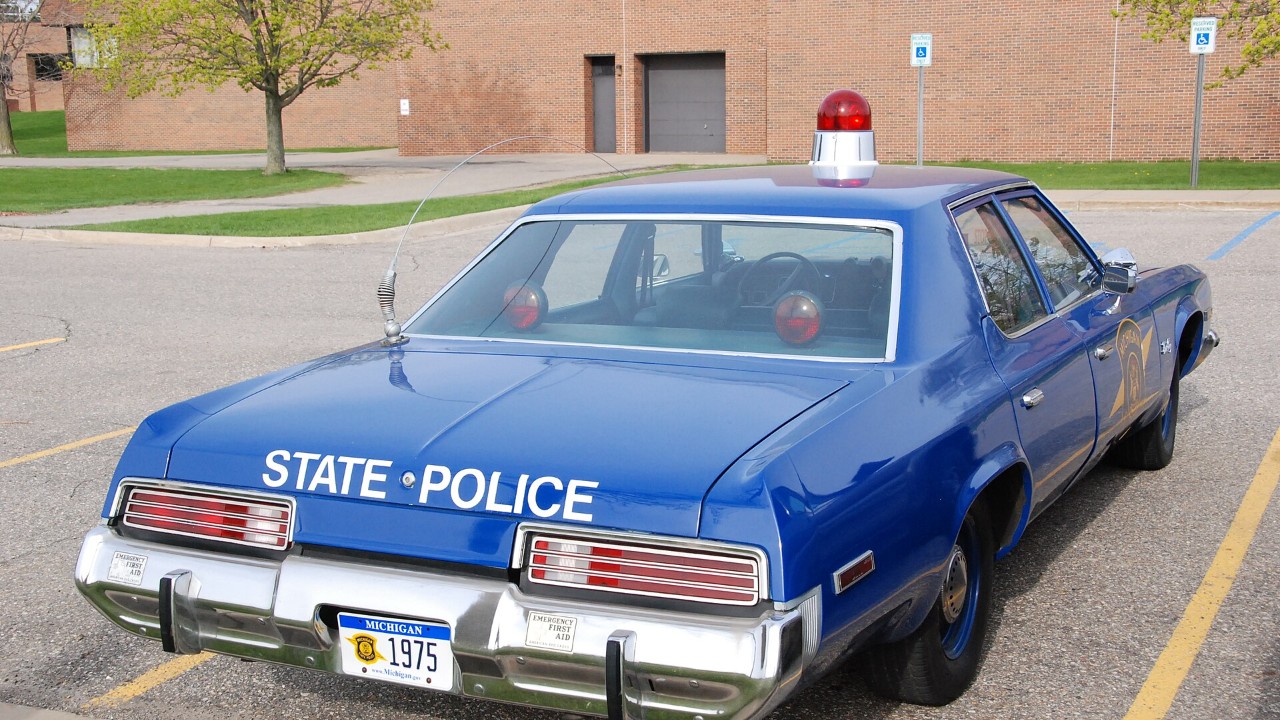
For 1975, Plymouth renamed its full-size C-body car the Gran Fury, and it lasted through 1977. Meanwhile, the Fury name moved to the mid-size B-body line. On that smaller Fury, the four-barrel 440 became a police-only option for four-door sedans. In other words, the big police Plymouth of these years wore a new badge.
The Gran Fury in Michigan State Police colors carries a special place in police history. According to Officer.com’s history of the Michigan trials, the agency considers 1975 the first year of its current vehicle-testing program, and the format has stayed largely the same since. The same story pictures a 1975 Plymouth Gran Fury nicknamed the “Last of the Dinosaurs” beside a 2016 Chevrolet Caprice.
Our take: that nickname says it all. A 1975 Gran Fury is a huge, chrome-trimmed sedan wearing the livery of the agency that started its modern testing program that same year. Because it comes from the first year of that program, it also links the old era of patrol cars to the modern one. We’d call it one of the best talking points on this list.
4. 1988 Volvo 244 police car
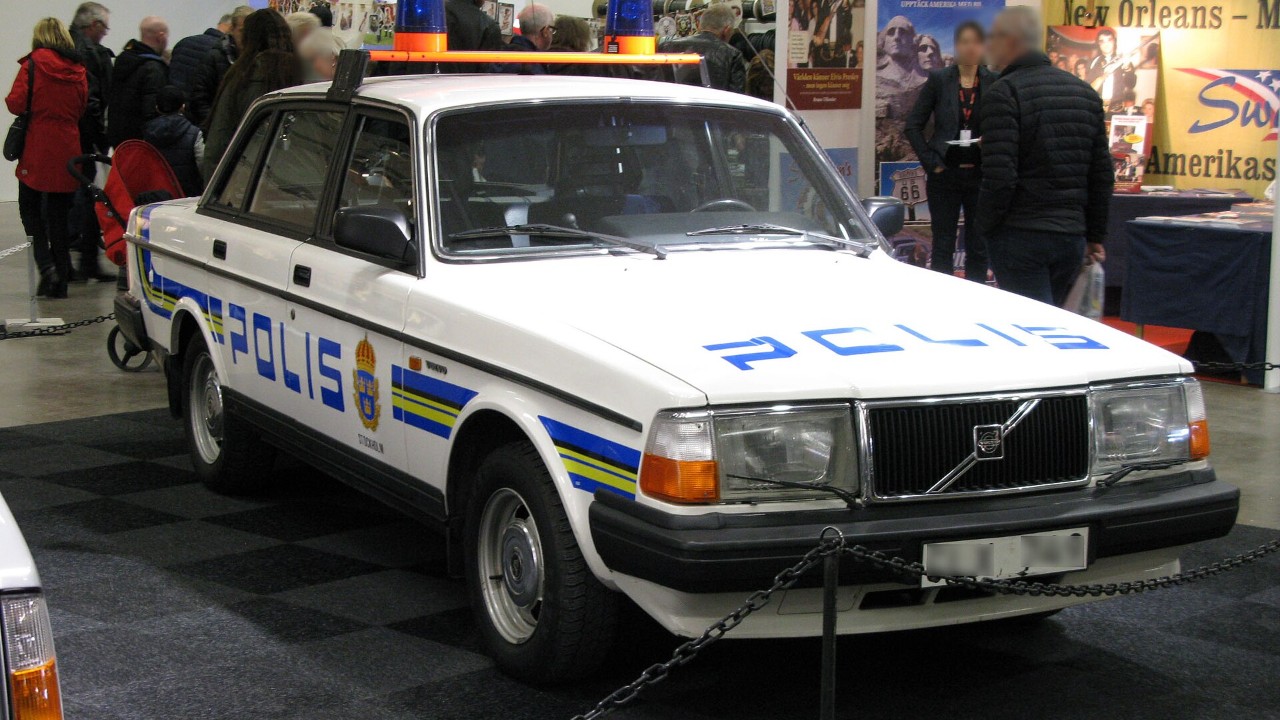
Volvo built its 200 Series from 1974 to 1993, and the range established the brand’s reputation for safety and durability. The four-door 244 sedan was the backbone of that range. Volvo also built a dedicated 240 Police model from 1981 to 1985 for the Swedish police. It came with vinyl trim, steel wheels and no sunroof, and some British constabularies ran right-hand-drive versions.
The 1988 car in our photo comes from after that special model, and it wears police livery as photographed. Mechanically, it uses the later engine. In 1985, Volvo replaced the B21A with the 2.3-liter B230F in all non-turbo 240s, rated at 114 horsepower SAE. Large front and rear crumple zones, drawn from Volvo’s experimental safety vehicle work, came standard on these cars.
Our take: a Volvo patrol car is a fun change of pace at any show full of Detroit iron. It has the boxy shape everyone knows, along with a work history that suits such a tough sedan. We’ve rounded up more forgotten police cars in an earlier list. If you buy one, ask for its service history and any record of its police use.
5. 1977 Ford LTD 351 Police Package
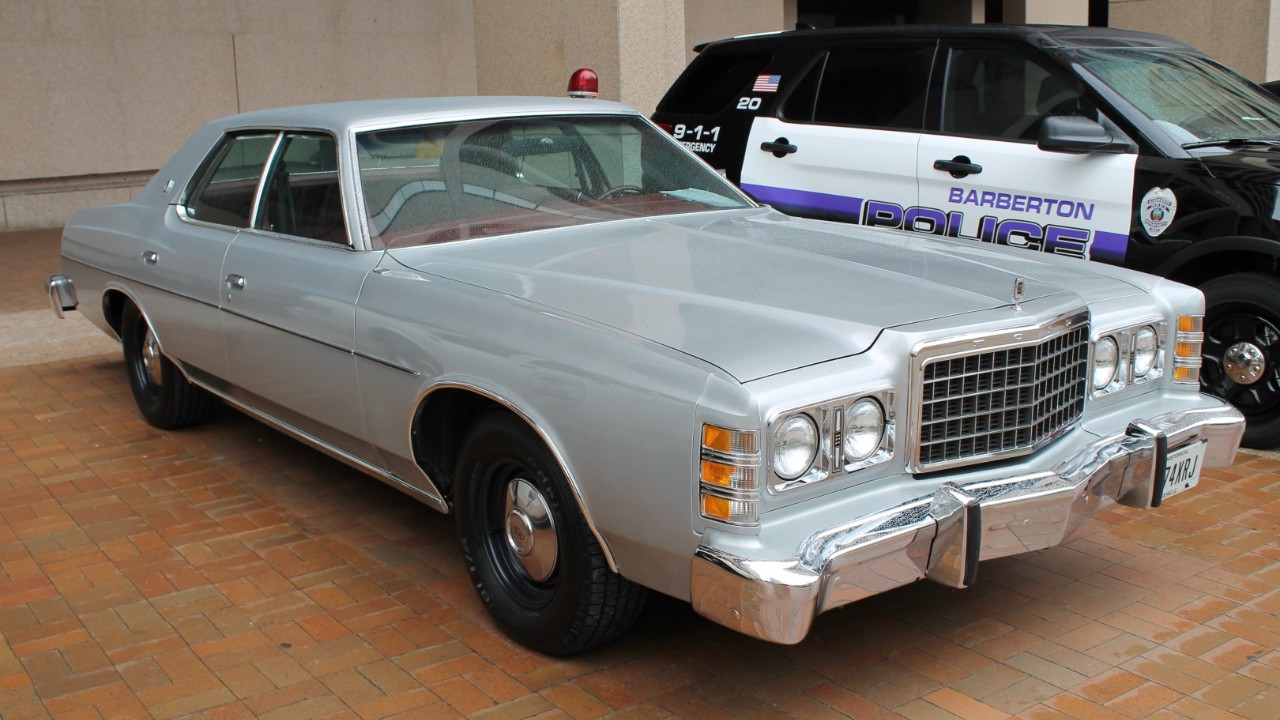
Ford’s full-size LTD offered two police setups from 1973 to 1978. The Police Package used a 351 or 400 V8 for city patrol cars. The Police Interceptor, meanwhile, used a 460 V8 rated at 260 net horsepower for high-speed highway work. In effect, Ford offered one car for city streets and another for the open road.
Of the two, the 351 car is the humbler choice, built for city patrol work. For comparison, the 460 Interceptor could reach 60 mph in the 8-second range and top 135 mph. The 1977 LTD also brought a four-door pillared hardtop body style, and the car kept its full-size bulk.
Our take: a 1977 LTD 351 Police Package is the everyday cop car of the late 1970s, the one people actually remember seeing in their rearview mirror. That familiarity is why it turns heads now. We’ve written about police cars Detroit built for the chase if the faster Interceptors interest you more. Also, its plainer specification makes it an easier project than a rare Interceptor, in our view. If you shop for one, confirm the police package with its original paperwork.
6. 1964 Porsche 356 C 1600 SC Cabriolet Polizei
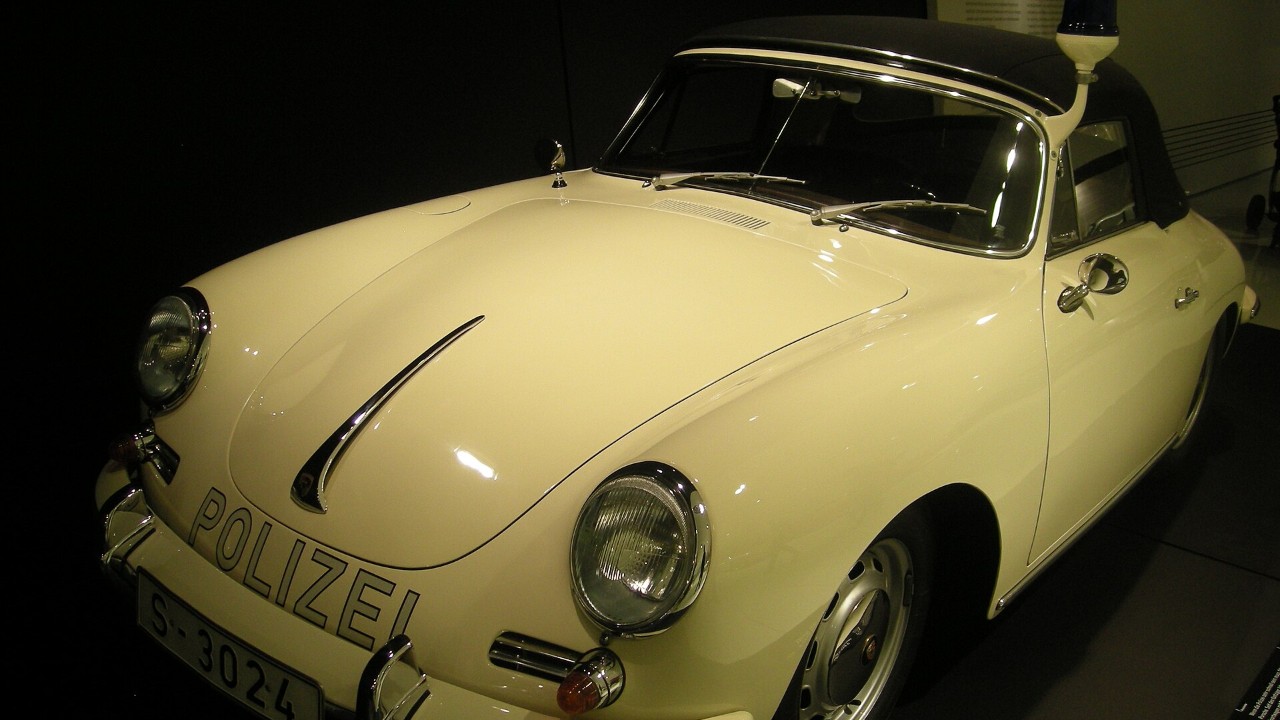
The 356 C arrived for the 1964 model year with disc brakes all round, replacing the drums of earlier cars. Its top 1600 SC engine made 95 horsepower, the most powerful pushrod engine Porsche had built. As Porsche explains, several regional German police forces used 356 coupes and cabriolets, fitted with radios and sirens and often assigned to Autobahn duty.
The open body had a practical purpose. A cabriolet let officers stand up inside the car and direct traffic. The Dutch Rijkspolitie used the same logic, and Hagerty UK reports that the force ordered 507 Porsches between 1962 and 1996. In fact, the last ten 356 cabriolets ever assembled went to that Dutch force in 1966.
Our take: the car in our photo is displayed at the Porsche Museum in Stuttgart, so you won’t find this exact one for sale. Any 356 police car is a rare sight, and it makes every other patrol car on this list look enormous. As a result, it carries a story few other Porsches can match. We’d simply call it the most charming police car ever built.
7. 1968 Ford Galaxie NYPD car
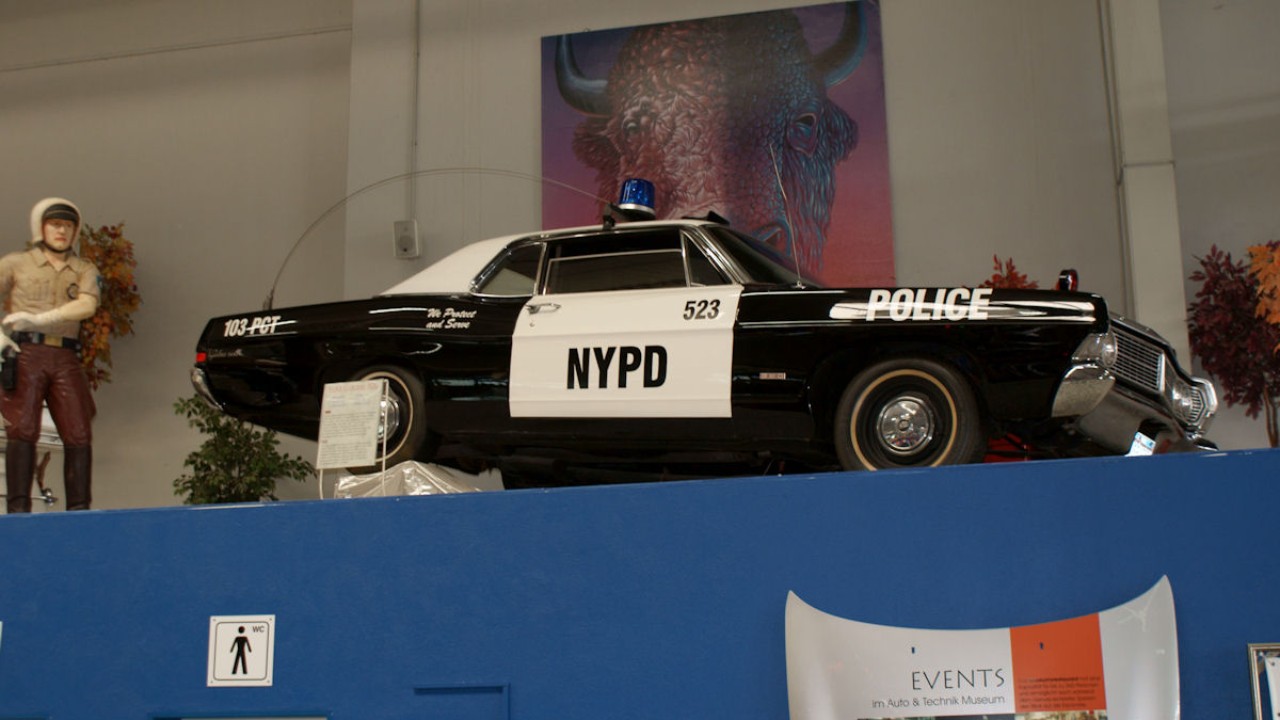
Ford restyled its full-size Galaxie for 1968 with horizontally arranged headlights and a more upright roofline. The base V8 grew from 289 to 302 cubic inches that year. Ford also built 448,376 Galaxies for 1968, out of 920,247 full-size Fords in all, so plenty of them were on the road.
The police versions had a special engine. From 1966 through 1968, police Galaxies could get the 428 “Police Interceptor” V8 rated at 360 horsepower, compared with 345 horsepower for the civilian 7 Litre 428. Side marker lights and shoulder belts arrived on cars built after December 1, 1967. As a result, the 1968 car carries safety gear that earlier Galaxies lack.
Our take: the car in our photo wears New York City police colors and was photographed in Sinsheim, Germany, proof that the look travels well. We think a 1968 Galaxie in big-city livery is pure period theater. If you buy one, look for the 428 Police Interceptor paperwork, because that engine makes the story. Then again, a civilian Galaxie in police colors can be just as much fun at a show.
More from Fast Lane Only