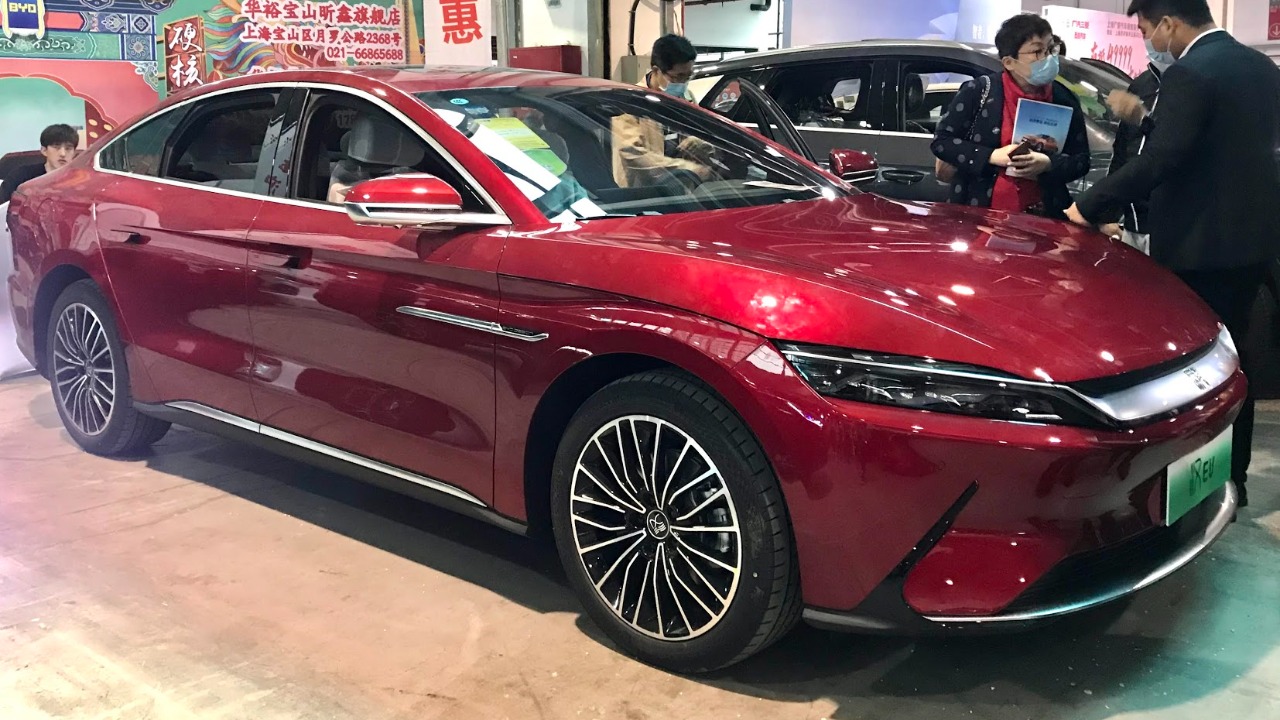
A new push in Washington aims to keep Chinese-connected cars from ever crossing a U.S. border checkpoint. The proposal would treat internet-linked vehicles tied to Chinese companies as potential security threats, blocking them at ports of entry rather than trying to manage risks once they are already on American roads. The fight over this bill is becoming a test case for how far the United States is willing to go to wall off its auto market from Chinese technology.
How the proposed border ban on Chinese-connected cars has evolved
The latest legislation grows out of mounting concern over vehicles that function as rolling smartphones, packed with cameras, microphones, GPS modules, and high-speed data links. Representative Haley Stevens and Representative Elissa Slotkin have introduced a bill that would prohibit Chinese connected vehicles from entering the United States, treating them as a national security risk at the border rather than a consumer choice issue. Their measure would direct U.S. agencies to block any vehicle that uses connected services controlled by Chinese entities, not just cars physically assembled in China, in order to close off data pathways back to Beijing, according to a press release.
The Stevens and Slotkin proposal builds on a broader bipartisan effort to keep Chinese-made vehicles with advanced connectivity out of the U.S. market. Lawmakers have framed the issue as a response to cars that constantly upload driving data, location history, and sensor feeds to remote servers. A bipartisan bill described Chinese-made vehicles with connected auto technology as a route for foreign intelligence collection, especially when those vehicles travel near military bases, critical infrastructure, or government facilities.
Earlier pressure from the Senate shows how this debate has shifted from tariffs and trade to direct exclusion. Senators previously urged the White House to keep Chinese automakers from selling into the U.S. market at all and to block new factories on American soil. In that push, lawmakers asked the administration to deny entry to Chinese-branded vehicles produced in Mexico or Canada that might otherwise slip in under existing trade rules, as reported in a letter highlighted by senators.
Some lawmakers went further, warning that Chinese companies could use North American plants to route cars into the United States while avoiding direct tariffs. They called for a ban on Chinese automakers building vehicles in the United States and for stopping entry of cars assembled in Canada and Mexico that rely on Chinese platforms or control systems, according to a detailed account of the senators’ letter. The new House bill echoes that logic, but through the narrower lens of connectivity and data control rather than brand or factory location alone.
Why the attempt to block Chinese-connected vehicles matters now
The stakes of this bill are higher than a standard trade dispute because connected cars sit at the intersection of transportation, telecommunications, and national security. Modern vehicles routinely collect precise location data, driver behavior patterns, biometric identifiers, and even in-cabin audio and video. When that information flows through software stacks and cloud services controlled by Chinese firms, lawmakers argue that it could be accessed by the Chinese government under its national security laws. The Stevens and Slotkin bill treats that data channel as an unacceptable vulnerability at scale, especially if low-cost Chinese electric vehicles gain large U.S. market share.
Supporters also see the measure as a way to get ahead of a potential flood of inexpensive Chinese EVs and smart cars that have already begun reshaping markets in Europe and Latin America. If those vehicles enter North America through Mexico or Canada and then cross into the United States under existing trade agreements, U.S. regulators would face a difficult choice between allowing them in or scrambling to impose new rules. By focusing on connected systems and data control, the proposed legislation tries to create a bright-line rule that would apply regardless of where final assembly occurs.
National security officials have drawn parallels between connected vehicles and earlier fights over telecom gear and smartphone apps. In those cases, U.S. policymakers argued that equipment linked to Chinese vendors could be used for espionage or sabotage, even if no specific incident had been documented. The same logic now applies to cars that constantly communicate with remote servers. A single connected vehicle parked outside a sensitive facility might not matter much, but thousands of such vehicles, all feeding detailed sensor data into a foreign-controlled network, create a strategic concern that is hard to unwind once the fleet is in place.
The bill also lands in the middle of a broader industrial policy contest. U.S. automakers are racing to catch up with Chinese competitors on battery technology, software integration, and low-cost manufacturing. A border-focused ban on Chinese-connected vehicles would effectively carve out a protected space for domestic and allied manufacturers to roll out their own connected models without facing direct competition from Chinese brands that have already driven down prices in other regions. Critics are likely to argue that such a move risks retaliation and could fragment global auto supply chains, but supporters see it as a necessary shield for both security and jobs.
Consumers would feel the effects as well. If Chinese-connected vehicles are kept out entirely, American drivers might miss out on some of the lowest-priced EVs and compact smart cars that Chinese firms have developed. The legislation could also pressure non-Chinese automakers to accelerate their own connected offerings, since they would not be undercut by subsidized imports that rely on data pipelines Washington views as unsafe. Privacy advocates are likely to push for parallel rules that address data collection by all connected cars, not just those tied to China, to avoid creating a double standard where domestic companies gain a free pass.
What to watch as the border-focused car restrictions move forward
The next phase will test whether Congress can translate security alarm into detailed, enforceable rules at the border. Agencies such as Customs and Border Protection and the Department of Transportation would need clear criteria for what counts as a Chinese-connected vehicle. That could involve tracing ownership of software and cloud services, identifying critical components such as telematics control units, and verifying where data is stored and processed. If the bill advances, regulators will have to decide whether a car with a Chinese-made infotainment module but Western-controlled cloud storage is treated the same as a fully Chinese-branded EV.
Diplomatic and trade repercussions are also likely. China has already signaled that it views restrictions on its tech and industrial champions as discriminatory. A categorical ban on connected vehicles tied to Chinese firms could invite reciprocal measures against U.S. brands operating in China or against American technology companies that supply software and chips to Chinese automakers. Trade partners in Canada and Mexico might push back as well, especially if vehicles assembled in their territories are turned away at U.S. crossings because of Chinese software or components embedded in their systems.
Automakers and suppliers will lobby heavily on the fine print. Some global manufacturers rely on joint ventures with Chinese firms or use Chinese-developed software in their connected services. They will seek carve-outs or certification pathways that allow them to keep selling into the United States while addressing security concerns. Industry groups are likely to push for a risk-based framework that focuses on specific high-risk components or data flows, rather than a blanket prohibition tied to nationality, to preserve flexibility in sourcing and design.
Ultimately, the debate will feed into a larger conversation about how the United States governs data-rich technologies that move across borders. If lawmakers succeed in barring Chinese-connected cars at ports of entry, similar logic could be applied to other categories such as smart appliances, industrial equipment, or drones that rely on foreign-controlled data services. The outcome of this bill will signal whether Washington is prepared to build a more expansive perimeter around the digital systems that underpin everyday products, or whether it will limit such hard lines to the highest profile targets like vehicles.
More from Fast Lane Only
- Unboxing the WWII Jeep in a Crate
- 15 rare Chevys collectors are quietly buying
- 10 underrated V8s still worth hunting down
- Police notice this before you even roll window down
*Research for this article included AI assistance, with all final content reviewed by human editors.