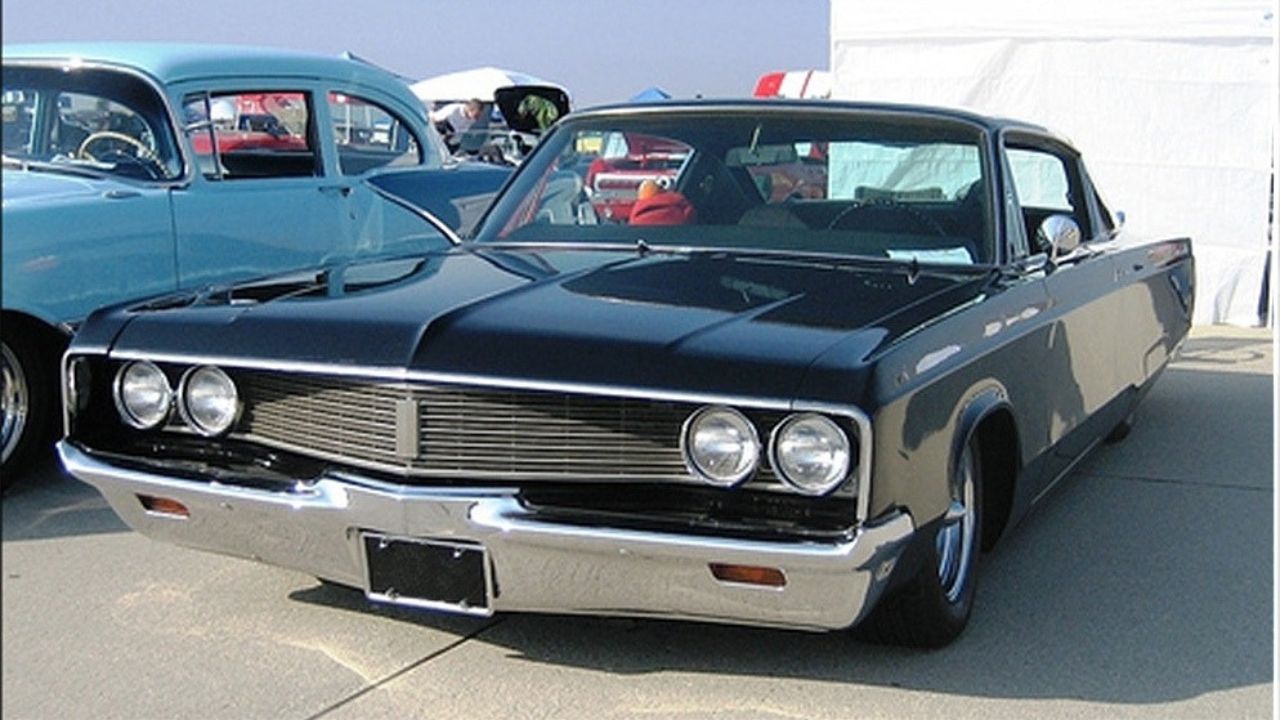
The 1968 Chrysler Newport rarely appears in discussions about American performance cars, yet it delivered a level of effortless power and engineering refinement that often surprised those who drove it. Positioned as Chrysler’s entry full-size model, the Newport was not designed to be a muscle car. Instead, it was built for comfort, space, and highway composure. Still, beneath its understated exterior lay big-block V8 power that gave it more performance credibility than its quiet reputation suggests.
In an era dominated by flashy muscle cars and aggressive marketing, the Newport moved in the opposite direction. It offered strength without spectacle, speed without noise, and comfort without compromise. Over time, it has earned recognition as one of the most unintentionally capable full-size cruisers of the late 1960s.
What happened
By 1968, Chrysler Corporation had established a clear hierarchy across its brands. Plymouth targeted affordability and performance value, Dodge leaned into aggressive muscle car identity, and Chrysler focused on luxury and refinement. Within that structure, the Chrysler Newport served as the entry point into the Chrysler brand’s full-size lineup.
The 1968 model year marked a significant redesign for Chrysler’s full-size cars, introducing new styling that reflected the company’s evolving design language. The Newport adopted cleaner body lines, a longer and lower profile, and a more formal roofline that emphasized highway presence over sporty aggression.
Despite its role as a base luxury model, the Newport was far from underpowered. Buyers could equip it with Chrysler’s legendary big-block V8 engines, including the 383 cubic-inch V8, which became one of the most common performance-oriented choices. In higher-output configurations, this engine produced strong horsepower and substantial torque, giving the large sedan impressive real-world acceleration for its size.
Paired with Chrysler’s robust TorqueFlite automatic transmission, the Newport delivered smooth but decisive power delivery. The transmission became one of the most respected automatics of its era, known for durability and consistent performance under load. It allowed the Newport to accelerate without drama, reinforcing its image as a refined cruiser rather than a street fighter.
The chassis design reflected Chrysler’s engineering priorities at the time. Built on a full-size platform, the Newport featured a long wheelbase that contributed to its stable highway behavior. Suspension tuning favored comfort, with soft coil springs and a focus on absorbing road imperfections. While not intended for aggressive cornering, the setup provided excellent straight-line stability and a smooth ride quality that appealed to long-distance drivers.
Styling played a significant role in the Newport’s identity. The 1968 redesign introduced stacked headlamps in some configurations, a wide grille, and a long rear deck that emphasized its size and presence. Unlike Chrysler’s more upscale New Yorker models, the Newport maintained a simpler appearance, but it still carried a sense of quiet authority.
Inside, the cabin reflected Chrysler’s focus on comfort and space. The Newport offered wide bench seating, generous legroom, and a dashboard layout designed for ease of use rather than performance driving. Optional features included air conditioning, power steering, and upgraded interior trim, reinforcing its position as a comfortable long-distance vehicle.
While it was never marketed as a performance car, the Newport’s underlying mechanical capability meant it could outperform expectations in everyday driving. Its big-block V8 allowed it to merge onto highways with ease, overtake slower traffic confidently, and maintain high cruising speeds without strain.
This combination of refinement and strength gave the Newport a dual identity: a calm luxury sedan that could still deliver serious forward motion when needed.
Why it matters
The 1968 Chrysler Newport matters because it challenges the conventional definition of performance in the muscle car era. While most attention is given to smaller, lighter, and more aggressively marketed vehicles, full-size sedans like the Newport demonstrated that real-world power was not exclusive to performance-badged cars.
Its significance lies in how it balanced luxury and capability. Chrysler engineered the Newport to serve families, executives, and long-distance drivers who valued comfort above all else. However, the availability of large-displacement V8 engines meant that buyers did not have to sacrifice acceleration to achieve refinement.
This duality reflects a broader trend in late-1960s American automotive design. Manufacturers were increasingly offering high-output engines across multiple vehicle segments, not just dedicated muscle cars. As a result, even entry-level luxury models could deliver performance that would have been considered exceptional only a few years earlier.
The Newport also highlights Chrysler’s engineering strengths during this period. The brand’s focus on torque-rich engines and smooth automatic transmissions created vehicles that excelled in real-world driving conditions. Rather than chasing high-revving horsepower figures, Chrysler emphasized usable power, which made cars like the Newport particularly effective on highways and in everyday traffic.
In terms of market positioning, the Newport filled an important role within Chrysler’s lineup. It provided an accessible entry point into the Chrysler brand while still offering the size, comfort, and mechanical capability expected from a full-size American sedan. This made it appealing to buyers who wanted a step up from Plymouth or Dodge without moving into premium luxury territory.
Insurance and ownership costs also played a role in its appeal. While large V8 engines were becoming associated with higher premiums, the Newport’s luxury branding sometimes softened its classification compared to overt muscle cars. This allowed some buyers to enjoy strong performance without the same level of scrutiny applied to performance-specific models.
From a historical perspective, the Newport represents the quieter side of the muscle era. It was not built for drag strips or performance headlines, yet it shared many of the same mechanical principles that defined the period: big displacement engines, rear-wheel drive platforms, and a focus on straight-line capability.
Over time, this has given the Newport a unique place in automotive history. It serves as a reminder that performance was not always about branding or image—it was often embedded in everyday vehicles that prioritized comfort and practicality.
What to watch next
Interest in full-size classic American sedans is gradually increasing as collectors expand beyond traditional muscle cars. The 1968 Chrysler Newport stands to benefit from this shift due to its combination of affordability, availability, and mechanical simplicity.
Future value trends are likely to favor well-preserved, original-condition vehicles with documented maintenance history. Cars equipped with larger V8 engines and factory options such as air conditioning and upgraded trim packages may attract additional attention.
Parts availability remains relatively strong due to Chrysler’s shared mechanical components across multiple models. However, interior trim pieces and specific model-year details may become more difficult to source over time.
As automotive media continues to revisit overlooked vehicles from the 1960s, the Newport is likely to gain recognition as an example of understated performance within a luxury-oriented package.
More From Fast Lane Only: