US auto manufacturers and dealers are asking you to pay attention to an unusually blunt demand: they want President Donald Trump to keep Chinese vehicles out of the American market entirely. Their push goes far beyond tariffs and routine trade disputes and instead aims to close the door on Chinese brands before they gain any foothold with US buyers.
As you weigh what that means for jobs, prices, and your next car purchase, you are really looking at a test of how far the United States is willing to go to shield its auto industry from a fast‑rising competitor that has already reshaped markets in Europe and Latin America.
The letter that set off the latest fight
There are now five major auto trade groups speaking with one voice. According to a joint letter described in detail by major auto trade, the Alliance for Automotive Inno and several allied organizations urged President Trump to stop Chinese manufacturers from exporting finished vehicles into the United States and from opening US manufacturing plants.
The same coalition, in a letter described as “Letter Sent” and dated Thursday March 12, 2026, framed its case as a defense of American industrial capacity. The Alliance for Automotive Inno and its partners argued that if Chinese brands establish factories on US soil, they could circumvent existing import restrictions that already make direct Chinese vehicle shipments extremely difficult.
In that letter, the groups stressed that they want you to see Chinese carmakers not just as another low‑cost option, but as state backed competitors that benefit from heavy subsidies, cheap financing, and control over key battery materials. They warned that this combination allows Chinese companies to offer vehicles that undercut US rivals on price while matching them on technology and quality.
Why Chinese automakers are seen as a threat
From your perspective as a buyer, Chinese brands might look attractive. Many of the companies that US groups are targeting, such as BYD and other Chinese Car Companies highlighted in coverage of Automakers Raise Alarm, are known for affordable electric vehicles with long range and advanced infotainment. The joint letter described Chinese products as combining “innovation and superb quality” with aggressive pricing, a mix that could quickly win over cost conscious shoppers.
Industry leaders argue that this is exactly why they are so worried. In their view, the arrival of fully built Chinese vehicles at scale would trigger a price war that current US producers, with higher labor and regulatory costs, would struggle to survive. One analysis of Chinese vehicle tariffs notes that even now, Chinese imports face a “prohibitive” standard rate plus additional penalties, yet importers are still exploring ways to enter the market, which suggests how competitive these vehicles could be once barriers fall.
The groups also tie their warning to the broader supply chain. They point to companies like CATL, described as the world’s largest battery maker and a key supplier to Tesla, which has started building new factories outside China. For you, that raises the question of whether critical technologies and jobs will be anchored in North America or gradually shift toward Chinese controlled networks.
Trump’s role and the tariff backdrop
All of this lands on the desk of Donald Trump, whose trade record already looms over your car budget. Earlier this year, the United States Supreme Court ruled that many of President Trump’s broad tariffs imposed under the Internation Emergency Economic Powers Act were illegal. According to a detailed summary of what happened On February 20, 2026, the United States Supreme Court sharply limited that tool, which had been central to earlier tariff waves.
President Trump responded by ordering new import penalties through other legal channels. A tariff tracker notes that he issued a directive titled Trump Orders New 10% Tariffs After Supreme Court Ruling, which followed the Supreme Court decision and hinted that more targeted levies on autos and parts could follow. For you, that means the cost of a new vehicle already reflects multiple layers of trade policy that have added billions to automaker expenses and filtered into sticker prices.
Auto groups are now asking Trump to go further, not simply by raising tariffs but by using remaining powers to prevent Chinese brands from entering at all. One account of their demands explains that the groups explicitly referenced the International Emergency Economic Powers Act in arguing that the president should treat Chinese vehicle imports as a national security concern tied to industrial capacity.
Lobbying tactics and the Trump Xi context
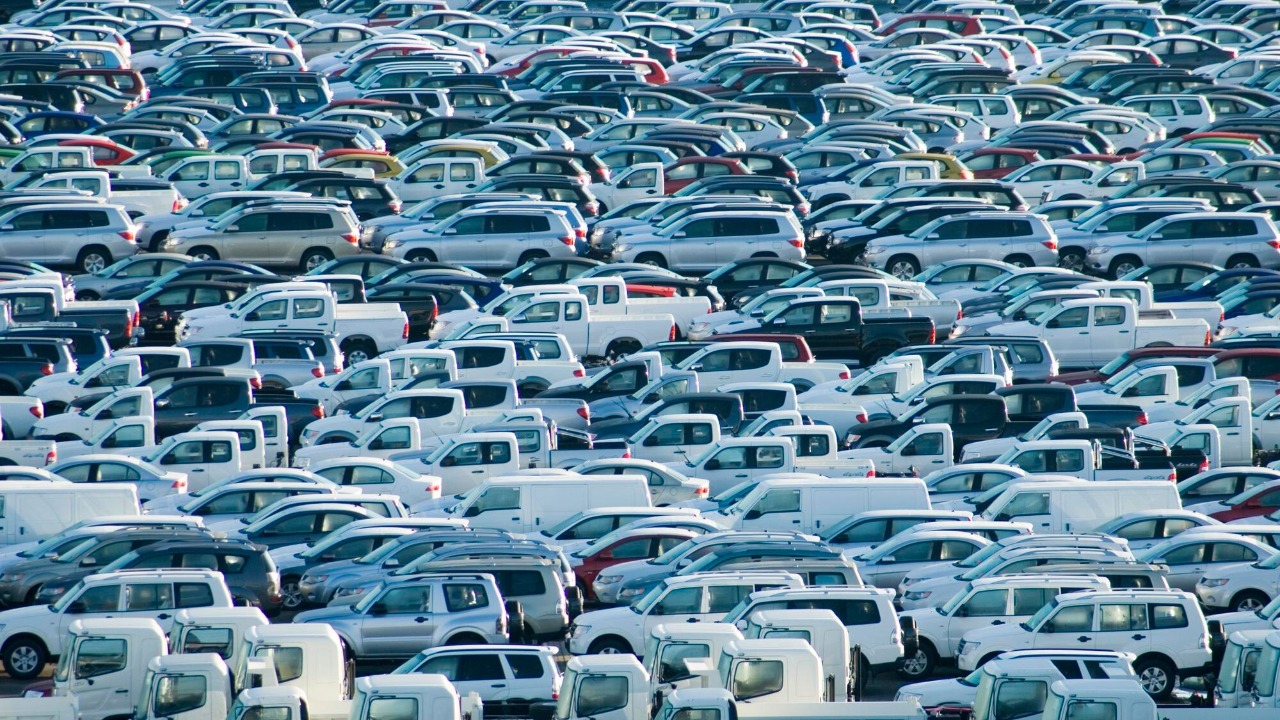
The timing of the letter is not accidental. Carmakers raised their alarm just as Trump prepared for a meeting with Chinese President Xi Jinping. In coverage that described cars lined up for export at the port in Lianyungang, China, with a photographer from AFP documenting the scene, you can see how quickly Chinese exporters have scaled up shipments to global markets.
Major U.S. auto industry groups have used that visual backdrop to warn Trump on China. In one detailed account, Major U.S. auto urged Donald Trump to uphold strict restrictions on Chine based automakers and to keep those automakers from the U.S. market entirely.
At the same time, US auto giants have mounted a parallel public campaign. A separate analysis notes that US auto giants to block Chinese cars by framing the issue as a defense of national manufacturing strength rather than simple protectionism. For you, that messaging is designed to make support for tough measures feel like a patriotic choice rather than a corporate request.
How auto groups want the rules to work
When you read through the joint letter and the follow up lobbying, you see a detailed wish list. First, the groups want Trump to keep existing tariffs and restrictions on Chinese vehicles in place, including the high “most favored nation” rate and any additional penalties that apply specifically to Chinese origin products. Second, they want the Administration to reject attempts by Chinese manufacturers to circumvent these rules through joint ventures or shell companies based in third countries.
Third, and most aggressively, they ask the Administration to stop Chinese firms from opening US manufacturing plants. One summary quotes their warning that the Administration should block Chinese manufacturers from opening U.S. manufacturing plants, since those plants could be used to ship vehicles across North America under trade agreements while still relying on subsidized Chinese supply chains.
In a separate account of the same push, you see how the groups describe their goals. They argue that they want to protect U.S. auto manufacturing and that they also strongly urge the Administration to reject any attempt by Chinese manufacturers to circumvent existing restrictions. That framing is designed to convince you that the rules they seek are defensive rather than an attempt to limit your choices.
What it means for you as a buyer
The immediate effect of a successful lobbying campaign would be to delay or block the arrival of low cost Chinese EVs in US showrooms. Reporting on the first Chinese brands entering North America in 2026 highlights models that could compete with vehicles like the Chevrolet Equinox EV or Tesla Model 3 on range while undercutting them on price. If those brands remain locked out, you would keep facing a market dominated by US, European, Japanese, and Korean companies.
That might protect wages and investment in places like Michigan, Ohio, and Tennessee, where factories still anchor local economies. At the same time, it could slow the price competition that has helped European buyers access cheaper EVs. When you see Chinese brands selling compact crossovers with modern driver assistance for thousands less than comparable Western models abroad, you can imagine the pressure they would put on US pricing if allowed in.
More from Fast Lane Only