Some vintage sports cars were built in numbers so small that most people will never see one on the road. Porsche made only 90 of its 550 Spyder, and Zagato built only a little over 200 Giulietta Sprint Zagatos. When one of them pulls into a parking lot today, people walk over to look.
Rarity is only part of it, though. Many shapes from this era came from small design studios in Italy, Germany and Japan, and they look nothing like a modern car. Many were also built to race, so they sit low and look purposeful even when parked.
These 12 are our picks, the vintage sports cars we think stop traffic decades after they left the factory. Every verdict is our opinion. The production counts, engines and sale results come from auction catalogs and model histories.
1. 1955 Porsche 550 Spyder
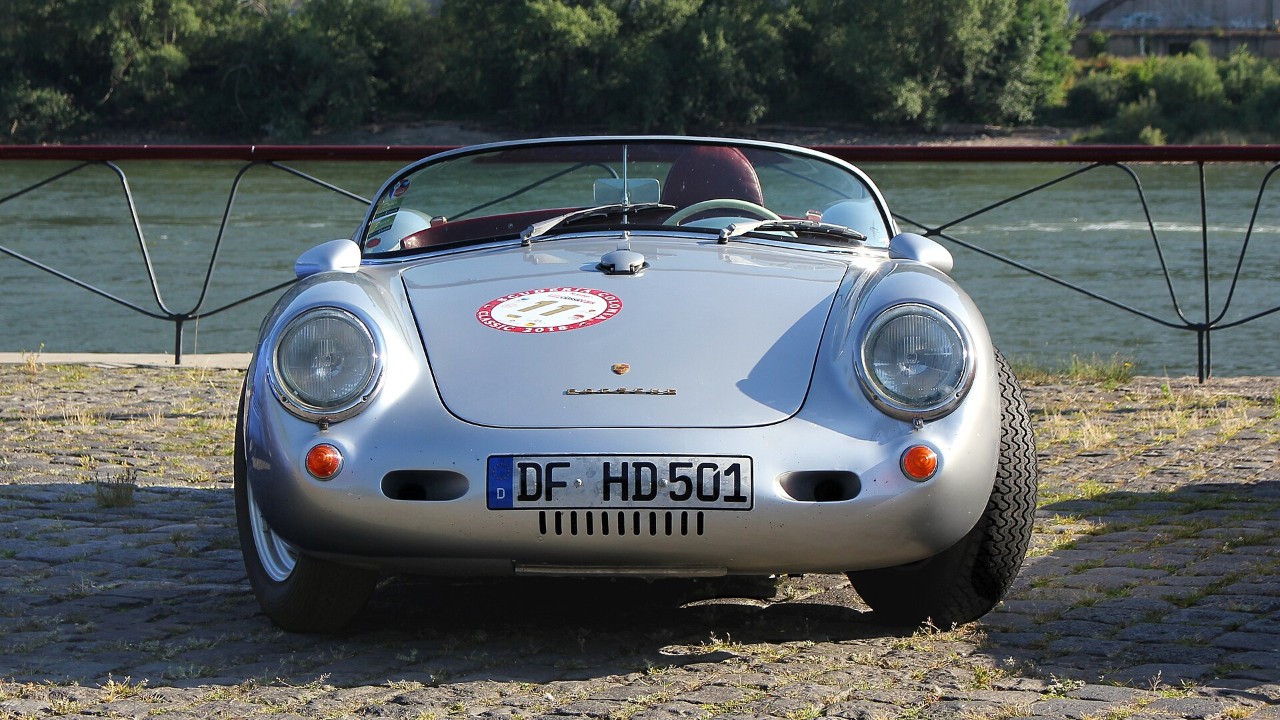
Porsche’s 550 Spyder was a tiny, purpose-built racing roadster. It weighed about 550 kilograms, or roughly 1,213 pounds. In all, Porsche built only 90 of them between 1953 and 1956.
Its engine was the Type 547, known as the Fuhrmann engine. Specifically, the 1.5-liter air-cooled boxer had double overhead camshafts on each cylinder bank. In its first version, it made 110 PS at 6,200 rpm. In a car that light, that was plenty. That was enough to win. Later in 1953, the 550 took class wins at both the 24 Hours of Le Mans and the Carrera Panamericana.
Our take: the 550 is so low and so small that it looks like a toy until you hear it. Then the four-cam engine changes your mind fast. With only 90 built, nearly every one draws a crowd. If you see one at a show, look at the exposed engine bay. It tells you how serious this little car was.
2. 1957 BMW 507
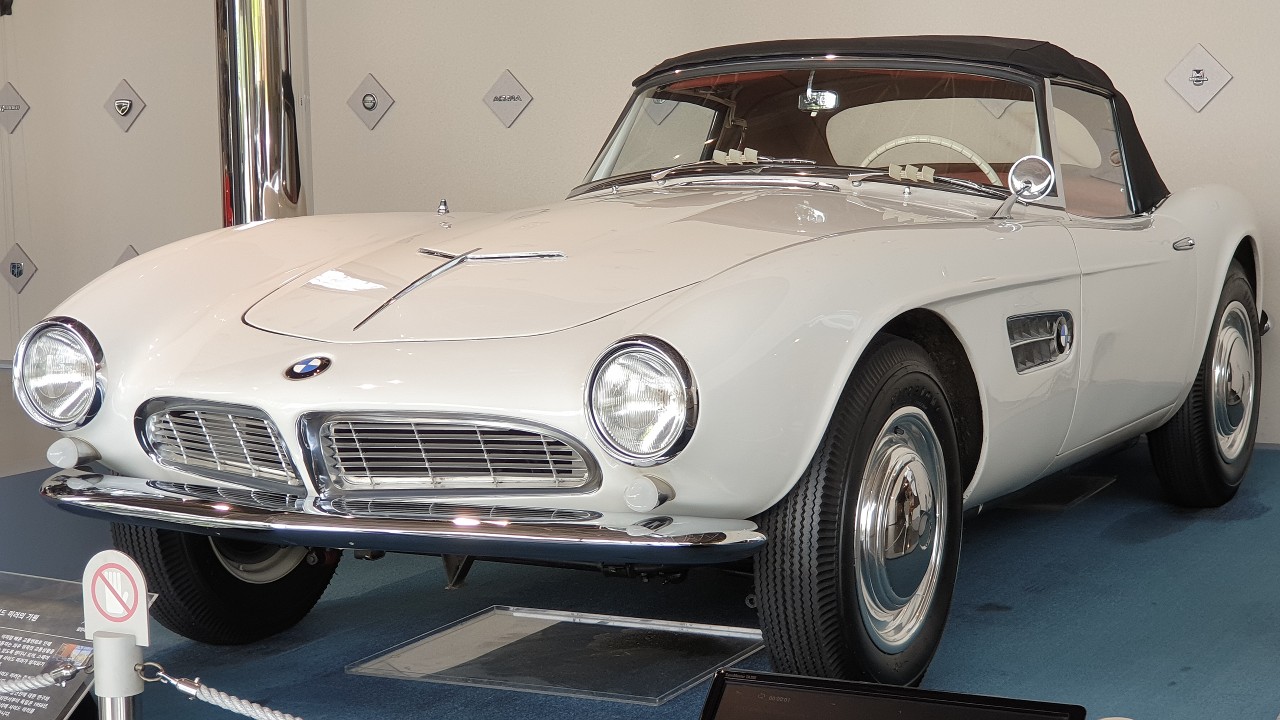
The BMW 507 began with a sales plan from American importer Max Hoffman. He wanted a roadster priced around $5,000, which he believed could sell 5,000 cars a year. Instead, the U.S. price climbed to $9,000 and then $10,500.
Meanwhile, Albrecht von Goertz drew the body, and BMW gave it a 3.2-liter aluminum V8 with 150 PS. As a result, the company lost money on every 507 it built. Then, in 1959, it stopped after just 252 cars plus two prototypes. Elvis Presley bought one, a 1957 car, while he was stationed in Germany. Years later, BMW Classic restored that car and returned it to its original white paint.
Our take: the 507 almost broke BMW, and that is part of its legend. Even so, its long hood and short tail look perfect from every angle. Very few vintage sports cars draw stares like this one. With only 252 built, you will rarely see one away from a major concours.
3. 1960 Maserati 3500 GT Vignale Spyder
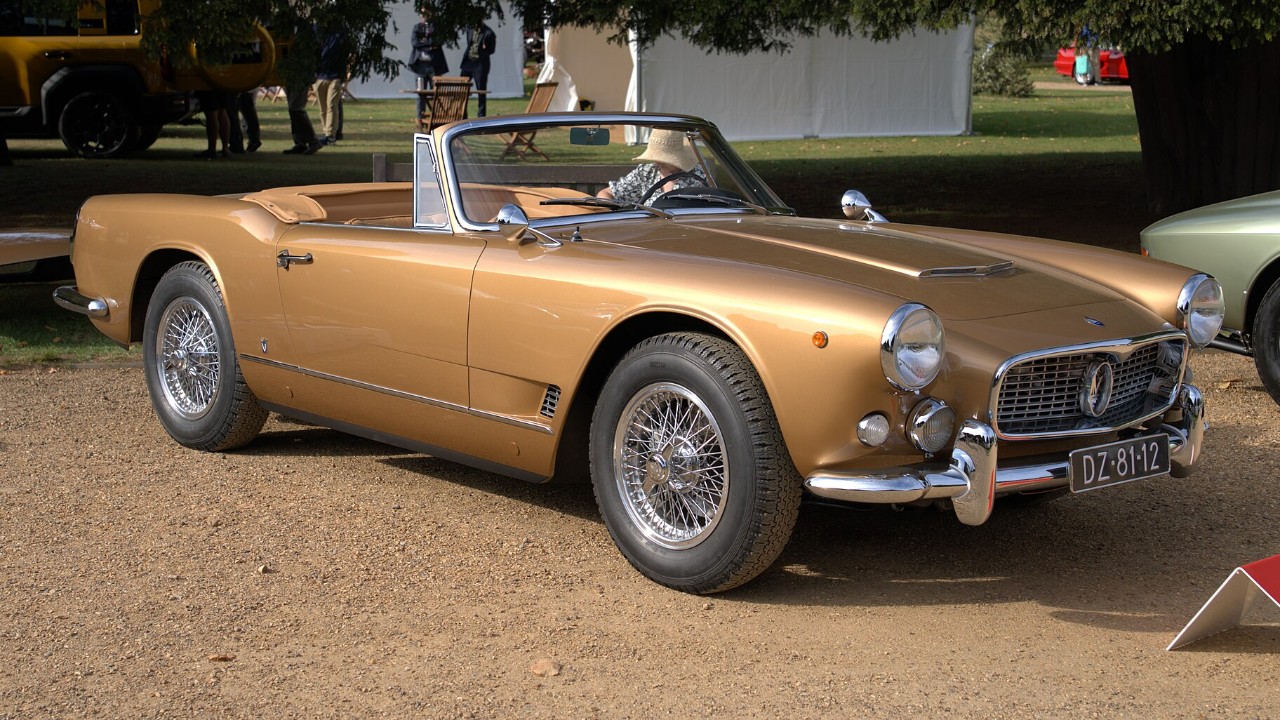
Maserati’s 3500 GT was a grand tourer coupe, but the Spyder by Vignale turned it into something more glamorous. Specifically, Giovanni Michelotti designed the body at Carrozzeria Vignale. The car debuted at the 1959 Paris Salon and then went into production.
The Spyder rode on a wheelbase 10 centimeters shorter than the coupe’s. Its 3.5-liter Tipo 101 straight-six made 220 PS with Weber carburetors. Later, the GTi version added Lucas mechanical fuel injection and 235 PS. In fact, it became the first fuel-injected Italian production car in 1961. Maserati built only 245 Vignale convertibles, compared with more than 2,000 coupes and convertibles in all.
Our take: the Vignale Spyder is the most elegant way to own an early road-going Maserati, in our view. It has the strong six-cylinder of a serious GT, yet it wears a body made for the Riviera. If you see one, look for the Vignale badge on its flanks.
4. 1960 Alfa Romeo Giulietta Sprint Zagato

The SZ started with a wreck. In late 1956, Zagato rebodied a crashed Giulietta Sprint Veloce. That one-off became the SVZ, of which Zagato built 18, and the SVZ led to a full production car.
After that, production of the SZ began in December 1959 and ran into 1962. Accounts differ on the exact total, but one common figure is 217 cars. The last 30 or so got a cut-off Kamm-style rear known as the Coda Tronca. Some sources say 46 cars got that tail, and Zagato also rebodied some existing cars, which is why the totals vary. Overall, the car weighed about 770 kilograms and used the Giulietta’s 1,290cc twin-cam engine. It also shared its chassis and mechanicals with the Sprint Speciale.
Our take: the SZ looks like a smooth pebble on wheels, and that shape makes people stop. We think the early round-tail Coda Tonda cars are the purest version. If you ever get the choice, look closely at which tail a car carries.
5. 1964 Porsche 904 Carrera GTS
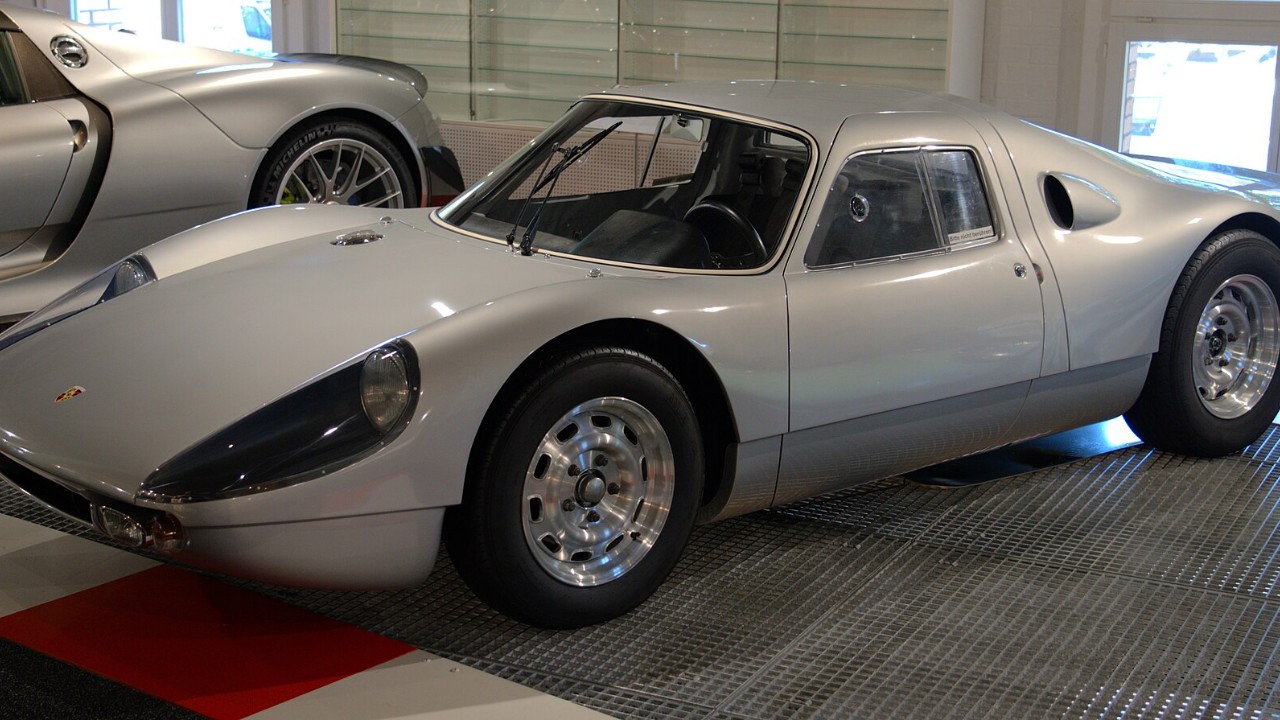
Porsche could not call this car the 904 in public. Peugeot owned the rights to such numbers, so Porsche sold it as the Carrera GTS. It was also the first Porsche to use a ladder chassis and a fiberglass body.
Porsche bonded the fiberglass body to the steel chassis for extra stiffness, and it put the engine in the middle. Ferdinand Alexander Porsche and Erwin Komenda also shared the design work. The engine was a 1,966cc four-cam flat-four. In the end, Porsche built 106 cars, just above the 100 needed for racing approval. It listed at $7,245 at the factory in Stuttgart.
Our take: the 904 won the 1964 Targa Florio outright, and it looks as fast as that record suggests. It was a race car first and a road car second. That low, wide shape is the reason people stop. Because only 106 exist, you are most likely to see one at a historic race.
6. 1965 Alfa Romeo Giulia Sprint GTA

The “A” in GTA stands for alleggerita, which means lightweight in Italian. Alfa Romeo made the body from Peralumin 25 aluminum, bonded and riveted to a steel frame. As a result, the GTA weighed about 200 kilograms less than a standard Giulia Sprint GT.
According to an RM Sotheby’s catalog, the 1,570cc twin-plug engine made 113 horsepower in road trim. By comparison, race versions made about 170 horsepower. Alfa Romeo built roughly 500 road and race GTAs between 1965 and 1969. It won on its official debut, the Jolly Club Four Hour race on March 20, 1966. After that, GTAs helped Alfa Romeo and its Autodelta racing arm win the European Touring Car Championship three years running.
Our take: the GTA looks like an ordinary Alfa coupe until you see it move. Then, in our view, it becomes the most famous small racing coupe of its era. Because values are high, a real GTA needs paperwork to match its fame.
7. 1966 Austin-Healey 3000 Mk III BJ8
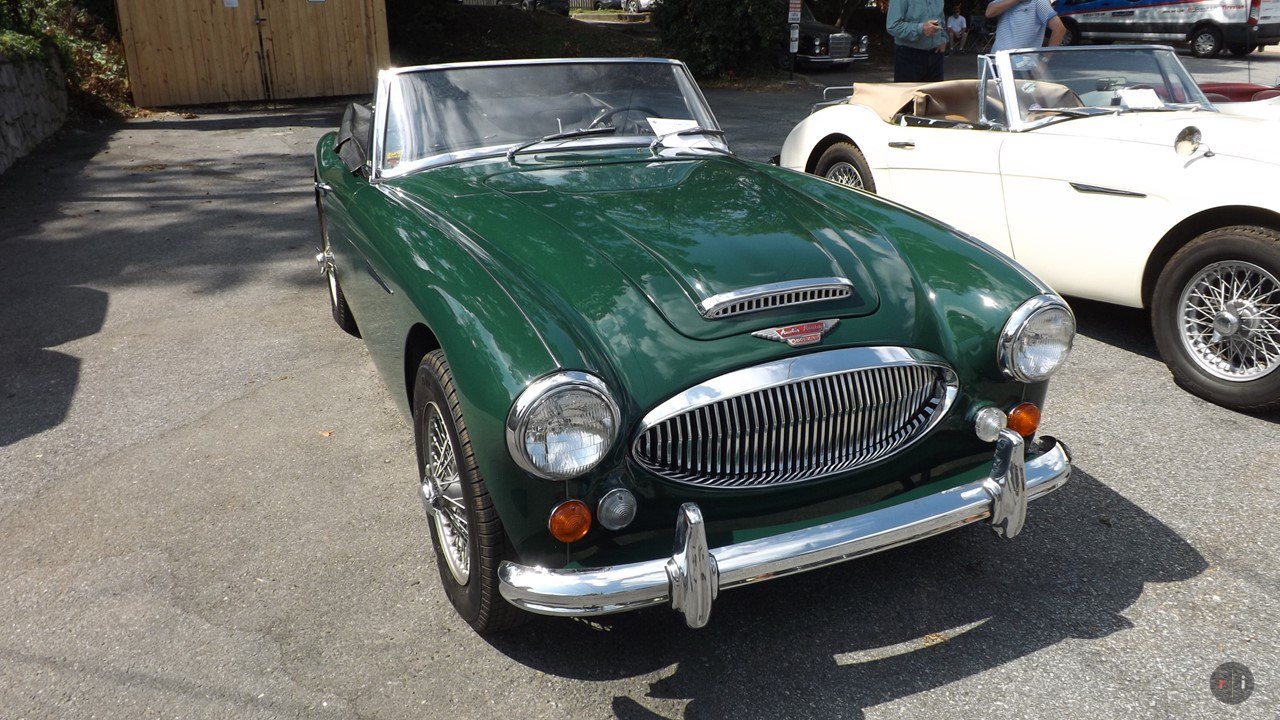
The BJ8 was the last of the big Healeys. First, a new, higher-lift camshaft raised output from 136 to 150 horsepower. Inside, the speedometer and tachometer sat right in front of the driver, and Ambla vinyl covered the seats.
Austin-Healey made 17,712 Mark III cars before production ended at the close of 1967. That is far more than most cars on this list. Austin-Healey had already built 13,650 Mark I and 11,564 Mark II cars before it. However, the BJ8 stands out for a different reason. Its long nose, low doors and deep exhaust note make it impossible to ignore at a traffic light.
Our take: we rate the 3000 Mk III among the most usable British sports cars of its time. It may also be the most fun to hear. If you want one, check the frame and floors for rust and repairs. A clean BJ8 with its original body panels is worth paying extra for.
8. 1966 Honda S800, the smallest of these vintage sports cars
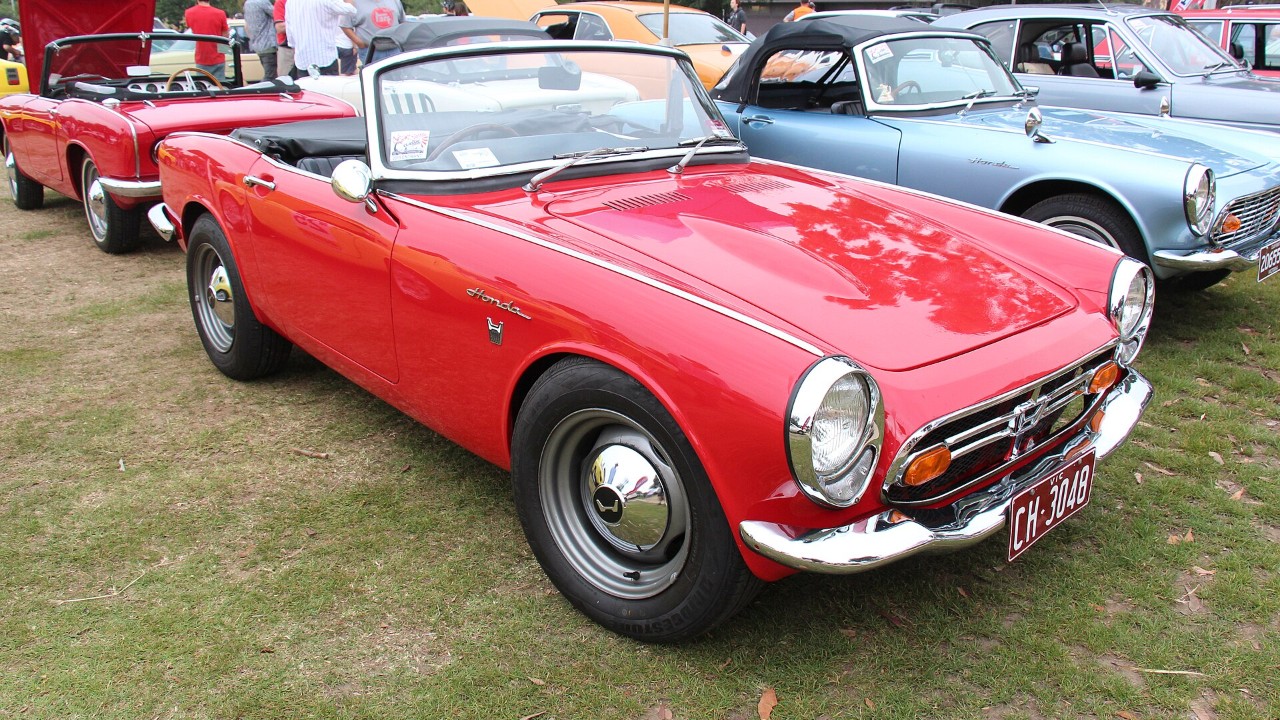
The S800 debuted at the 1965 Tokyo Motor Show and went on sale for 1966. Its 791cc four-cylinder made 70 horsepower at 8,000 rpm and could rev to 8,500. That made it Honda’s first 100 mph car. In our view, an 8,500 rpm redline was a remarkable number for a road car in 1966.
Early cars used chain drive and independent rear suspension. Later, Honda switched to a driveshaft and a live rear axle. Buyers could pick a coupe or a roadster, and Honda built 11,536 S800s before production ended in May 1970. We covered that high-revving engine in our feature on the 1968 S800.
Our take: the S800 is tiny, but it sounds like a motorcycle at full song, and that gets attention. It is also a reminder that Honda built engines before it built cars. If you find an early chain-drive car, keep it original.
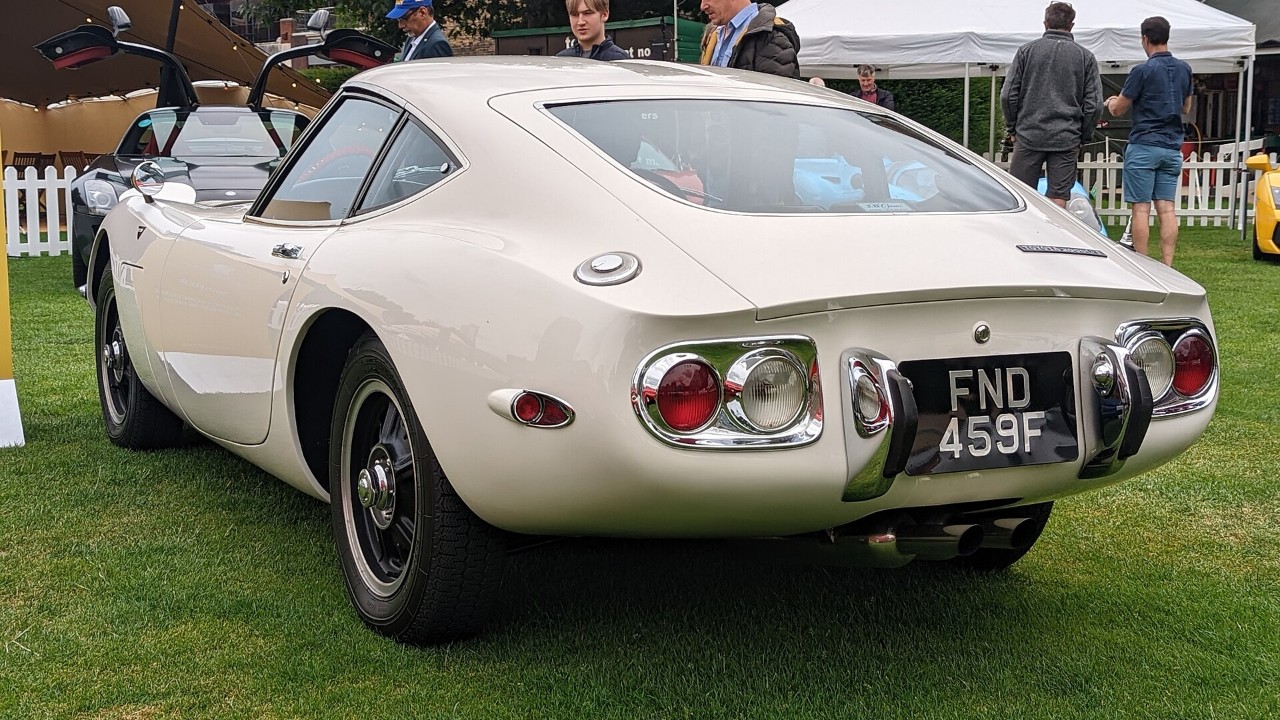
9. 1967 Toyota 2000GT

Yamaha designed the 2000GT as its first move into cars, and Toyota was its second choice of partner. The engine started as a Toyota Crown six. Yamaha then gave it new double overhead camshafts and an aluminum hemi-head, for 150 horsepower from 2.0 liters. Yamaha built the cars at its Iwata factory in Shizuoka.
The car first appeared at the 1965 Tokyo Motor Show. In 1966, it set 13 FIA world records for speed and endurance in a 72-hour test. According to an RM Sotheby’s catalog, just 351 cars had been built by the time production ended in 1970. In America, a 1968 car listed for about $7,150. Our story on how the 2000GT put Japan on the map covers its wider impact.
Our take: the 2000GT is the car that made the world look at Japan differently. Two topless cars even appeared in the James Bond film You Only Live Twice. With only 351 built, it draws a crowd anywhere it goes.
10. 1967 Lancia Fulvia Coupé Rallye HF
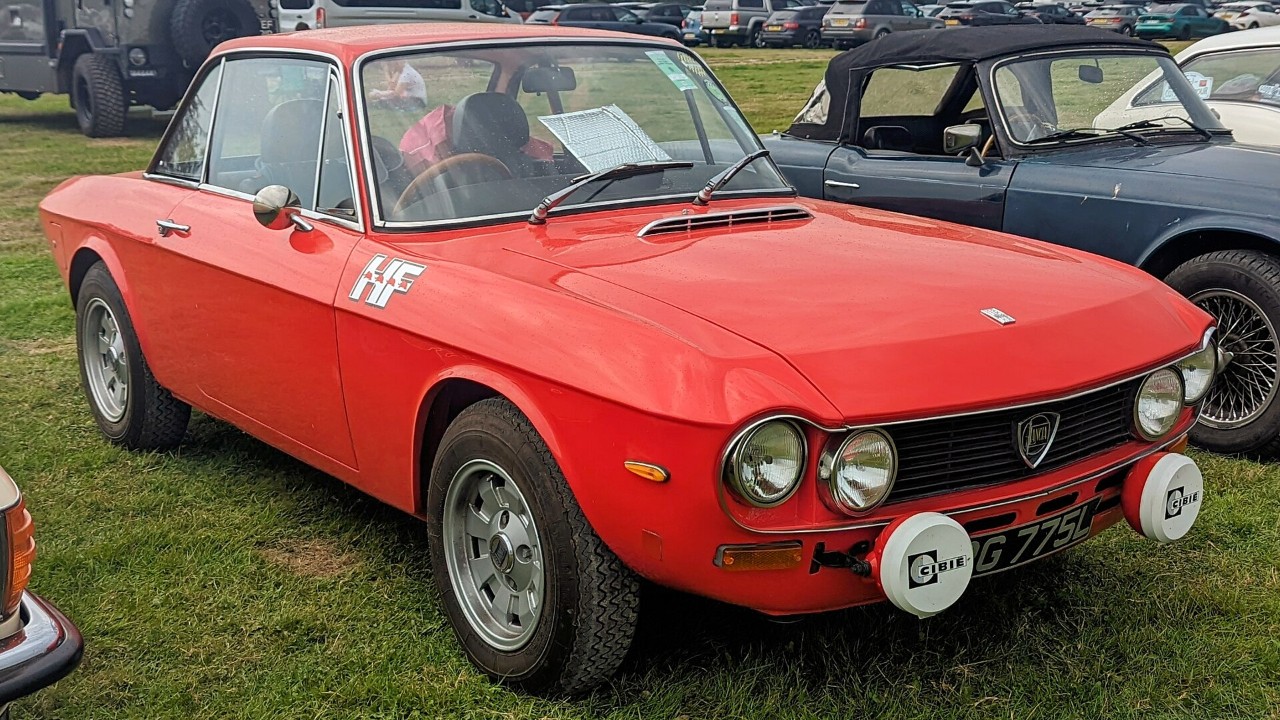
The Fulvia Coupé HF was the competition version of Lancia’s small coupe. To save weight, Lancia used an aluminum hood, doors and trunk lid, plus Plexiglas side and rear windows. It also removed the bumpers and fitted bare steel wheels with no hubcaps.
The engine was Lancia’s narrow-angle V4. Its cylinders sat just 12 degrees apart, so one cylinder head covered them all. In the HF, the tuned 1,216cc version made 88 CV at 6,000 rpm. Fulvias later won the 1972 Monte Carlo Rally, and Lancia clinched that year’s International Championship for Manufacturers two rounds early. Lancia built 139,797 Fulvia Coupés in all, so the stripped HF was a small slice of a big family.
Our take: the Fulvia HF looks plain at first, but the missing bumpers and bare wheels give it away. It is a car for people who know their rally history. We think that kind of hidden purpose makes it more interesting than many louder classics.
11. 1967 Datsun Fairlady 2000 SR311

The Fairlady 2000, sold in America as the Datsun 2000, ran from March 1967 to April 1970. It used a 1,982cc U20 four with a single overhead cam and an aluminum head. Datsun also gave it a five-speed manual, an unusual choice for a production car at the time.
In original trim, the 1968–70 car made 135 horsepower, SAE gross. An optional Competition package raised that to 150. The first half-year of cars numbered fewer than 1,000. Together, the Datsun 1600 and 2000 roadsters won 10 national SCCA championships, with drivers including John Morton and Bob Sharp.
Our take: the SR311 is the Japanese roadster that beat British cars at their own game, in our view. It has the look of a classic open two-seater, but the five-speed and overhead cam make it feel modern. Check the floors and rocker panels carefully, since rust is the enemy of any roadster from this era.
12. 1968 Ferrari Dino 206 GT
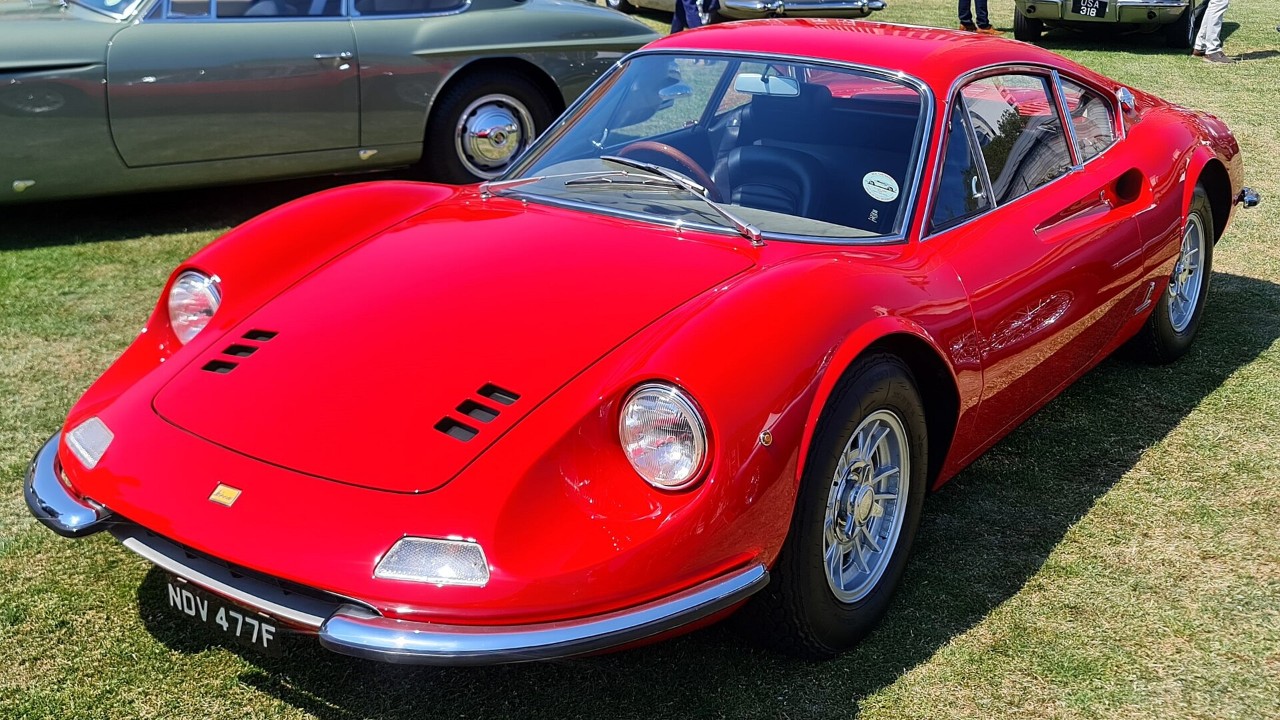
Pininfarina designers Aldo Brovarone and Leonardo Fioravanti styled it, and Scaglietti built the body. Its 2.0-liter V6 sat crosswise behind the cabin and made 178 horsepower.
Ferrari built only 153 aluminum-bodied Dino 206s between 1967 and 1969. That makes the 206 the rare, early version of a car many people recognize. Its all-aluminum body is a big part of what makes it special.
Our take: the curves of the Dino make it one of the most beautiful shapes of the 1960s. That is why it stops traffic wherever it appears. Pininfarina’s designers gave it curves that need no badge, and Scaglietti’s aluminum bodywork makes each one feel hand-built. With only 153 made over three years, you are more likely to see one at a concours than on the street. In 2023, RM Sotheby’s sold a 1968 Dino 206 GT in London for £421,250.
More from Fast Lane Only