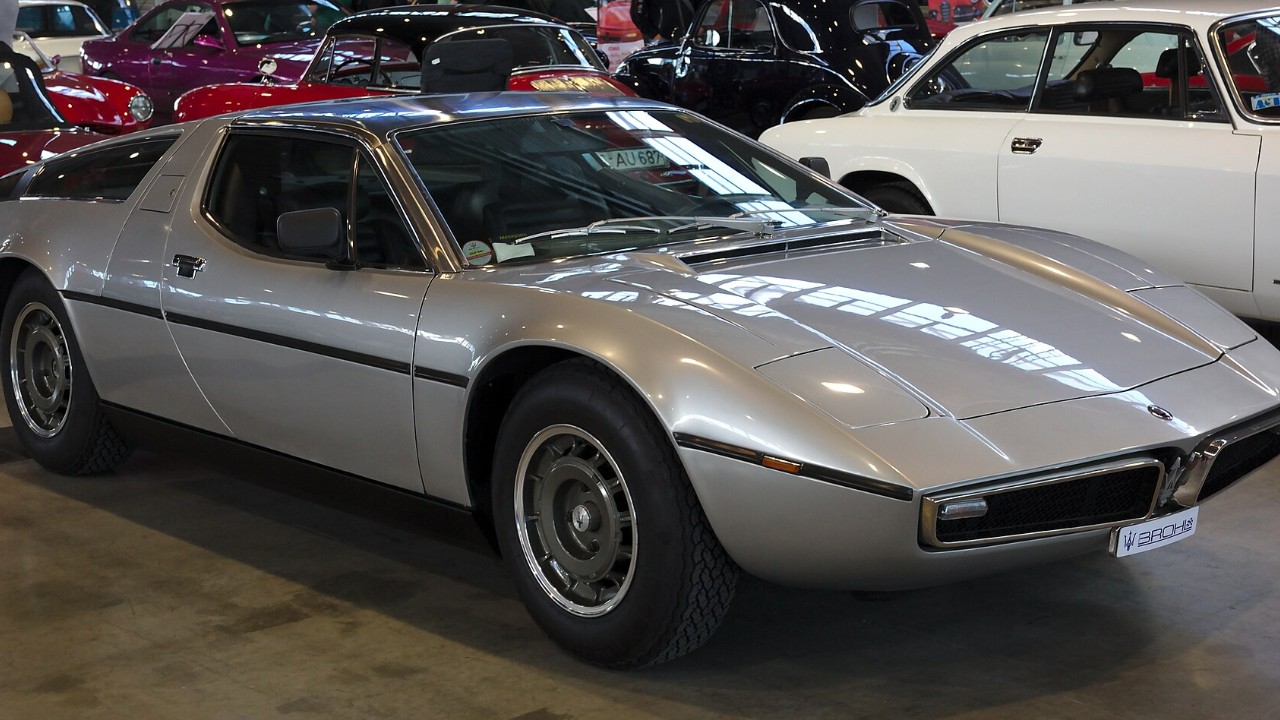
Maserati built just 564 examples of the Bora, its mid-engined grand tourer, from 1971 to 1978. That’s a small number for a car that carried a 4.7-liter V8 behind the seats and Citroën hydraulics under the skin. The Maserati Bora is also a good example of a pattern that runs through this list.
Putting a big engine behind the driver makes a car fast, balanced and dramatic. It also makes it expensive, hard to build and tough to sell in any real volume. Again and again, small makers and racing departments built mid-engine cars that seemed to outrun the companies behind them, then simply stopped.
These 12 are our picks for forgotten mid-engine cars that felt too powerful for their own factory to keep building. That verdict is our opinion. The outputs, production counts and dates behind each pick come from auction records, maker histories and published model references.
1. 1967 De Tomaso Mangusta
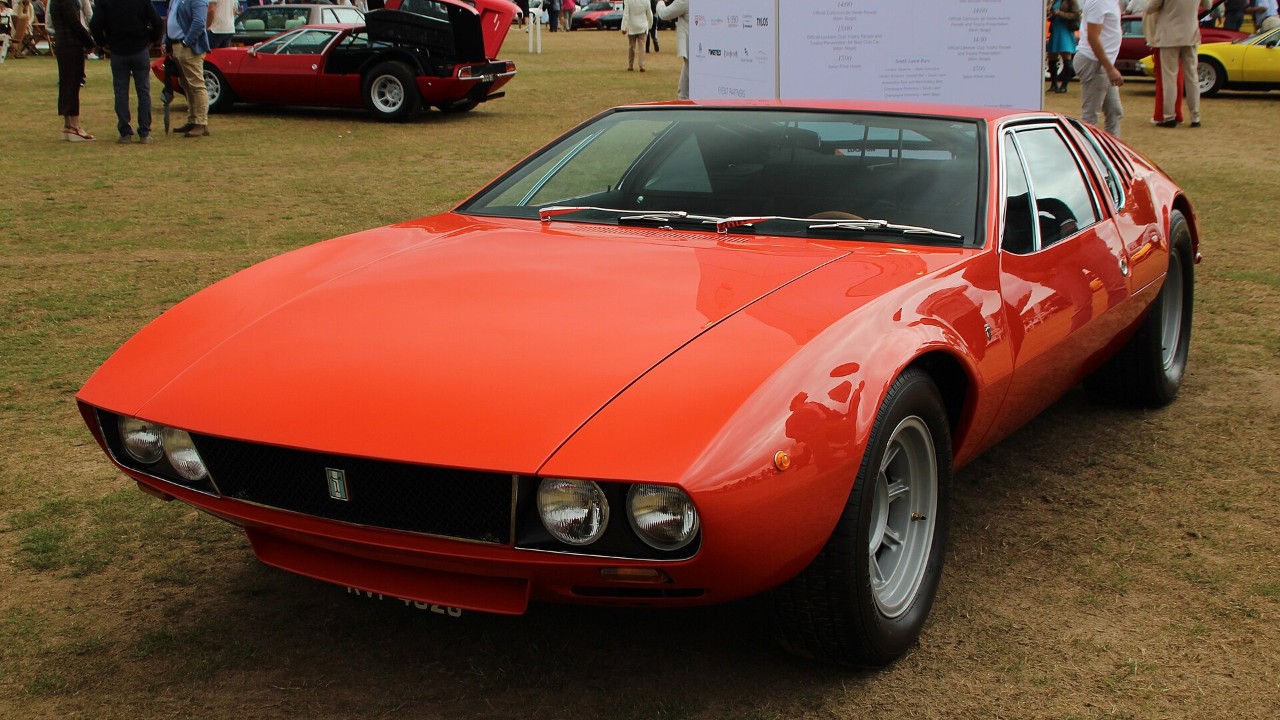
Giorgetto Giugiaro designed the Mangusta’s body while at Ghia. Underneath sat a steel backbone chassis developed from De Tomaso’s earlier P70 project. A Ford V8 sat behind the cabin, covered by a two-piece, center-hinged engine lid that opened like gull wings.
Early European cars used a Ford 289 rated at 306 horsepower. Nearly all the rest got a 302 with 230 horsepower. De Tomaso built 401 Mangustas from 1967 to 1971, and about 150 went to Europe. However, the car carried 56% of its weight on the rear wheels and had a reputation for unstable handling.
In our view, the Mangusta is the classic case of a small company’s car outrunning its chassis. It looked incredible and went hard, but De Tomaso replaced it with the Pantera after only five years. If you want one, find a car with a known history and have the suspension checked by someone who knows these cars. After all, this is a shape you buy for drama first, and the handling needs care.
2. 1972 Maserati Bora

Maserati introduced the Bora at the Geneva Motor Show in March 1971. It put a V8 behind the seats and gave Maserati buyers four-wheel independent suspension. Giugiaro shaped it at Italdesign, and its drag coefficient measured 0.30.
The original 4,719 cc V8 made 310 PS at 6,000 rpm. Later, a 4.9-liter version from the Ghibli went into U.S. cars, and from 1976 into every Bora. Citroën’s high-pressure hydraulic system ran the brakes, moved the pedal box, adjusted the driver’s seat and raised the hidden headlights. RM Sotheby’s sold a 1975 Bora 4.7 at its Monaco sale in 2016 for €201,600.
Our take: the Bora was a serious, refined supercar, but Maserati struggled after De Tomaso bought it in 1975, and the car ended in 1978. Of the 564 built, 289 had the 4.7-liter engine. Buyer advice: the Citroën hydraulics are the system to inspect first on any Maserati Bora, since they touch the brakes, seat, pedals and lights. In other words, a healthy hydraulic system is the difference between a joy and a headache.
3. 1968 Ford GT40 Mk III
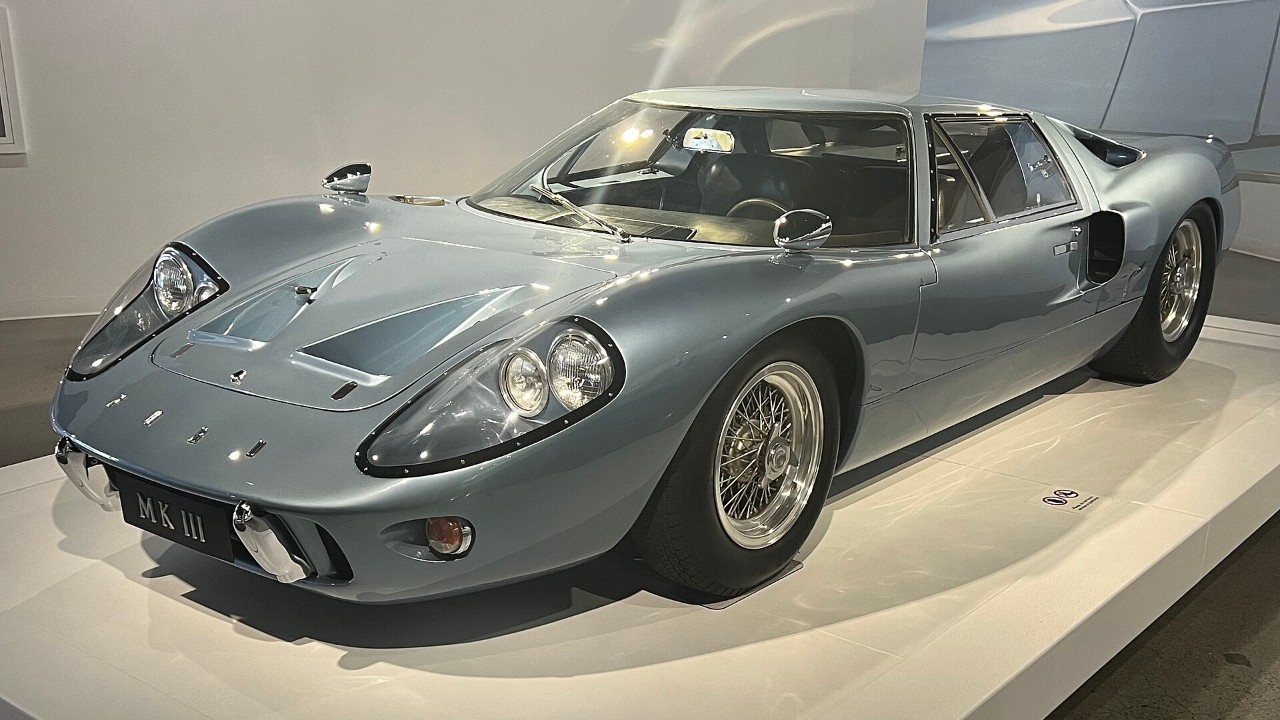
Ford won Le Mans four straight times from 1966 to 1969. The Mk III was Ford’s attempt to turn that racing car into something you could drive on the street. It used the Mk I’s 289 V8, detuned to 306 horsepower for road use.
Ford changed the car for daily life. It got four headlamps raised to meet U.S. lighting rules, an expanded rear for luggage, softer shocks, a center-mounted gear lever and even an ashtray. Ford assembled the Mk III at Slough in England, and it built just seven, four of them with right-hand drive.
In our view, the Mk III is the best proof that a Le Mans winner doesn’t easily become a road car. Seven cars is barely a production run. Yet it remains the closest thing to a factory road-going GT40 from the original era. That’s why, in our opinion, it belongs at the heart of this list. Meanwhile, the GT40 Mk I chassis 1075 won Le Mans twice, in 1968 and 1969, with a 4.9-liter Ford V8.
4. 1984 Peugeot 205 T16
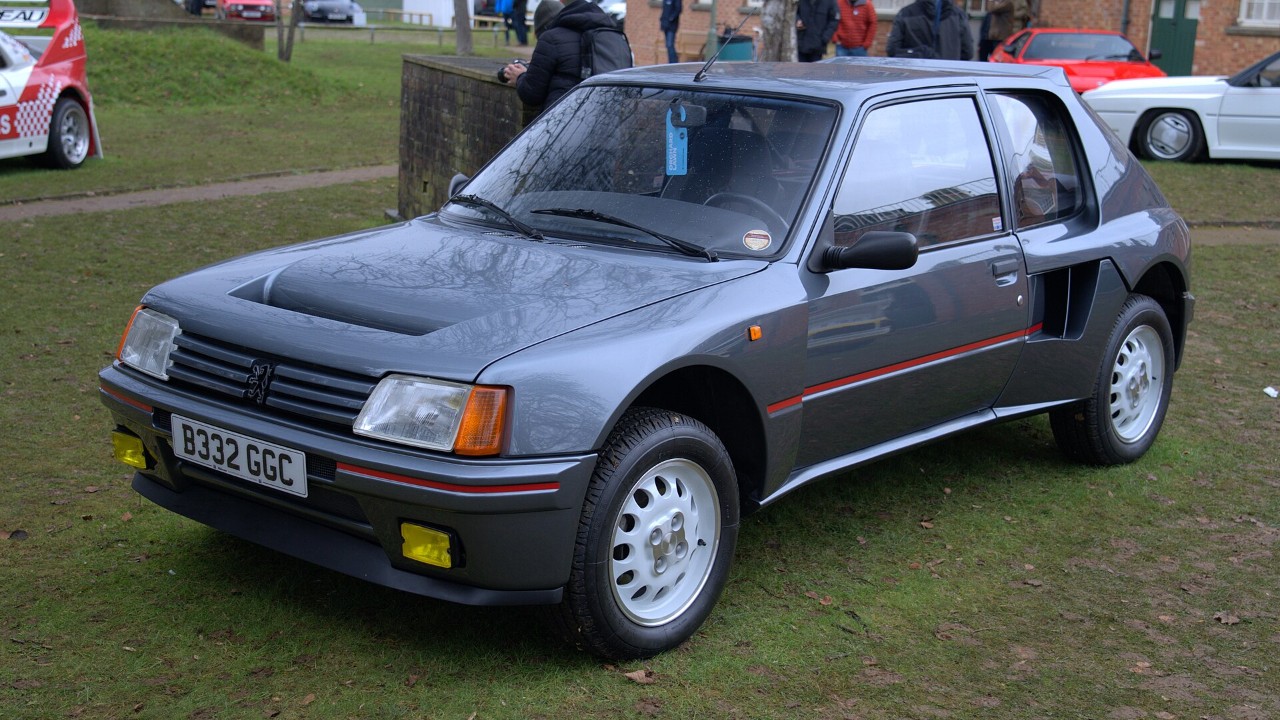
Group B rally rules, introduced in 1982, asked makers to build just 200 road cars for homologation. Peugeot used that rule to turn its small 205 hatchback into a mid-engine, four-wheel-drive machine. The engine moved from the nose to behind the front seats, mounted crosswise.
The road car’s 1,775 cc turbocharged four made around 200 PS at 6,750 rpm. Peugeot numbered the road versions P1 through P200. Meanwhile, the factory rally cars, run by Jean Todt’s Peugeot Talbot Sport, won the World Rally Championship drivers’ and constructors’ titles in 1985 and 1986. Timo Salonen took the 1985 drivers’ crown and Juha Kankkunen the 1986 title.
Our take: the 205 T16 is the most successful car on this list, which makes its end even more striking. Peugeot built a world-beater, and then the rules that made it possible disappeared. The FIA banned Group B from the WRC from 1987 over safety concerns. As a result, the 205 T16 went from champion to museum piece almost overnight. For that reason, the road cars now stand as the only way most fans can experience the formula.
5. 1982 Lancia 037 Stradale
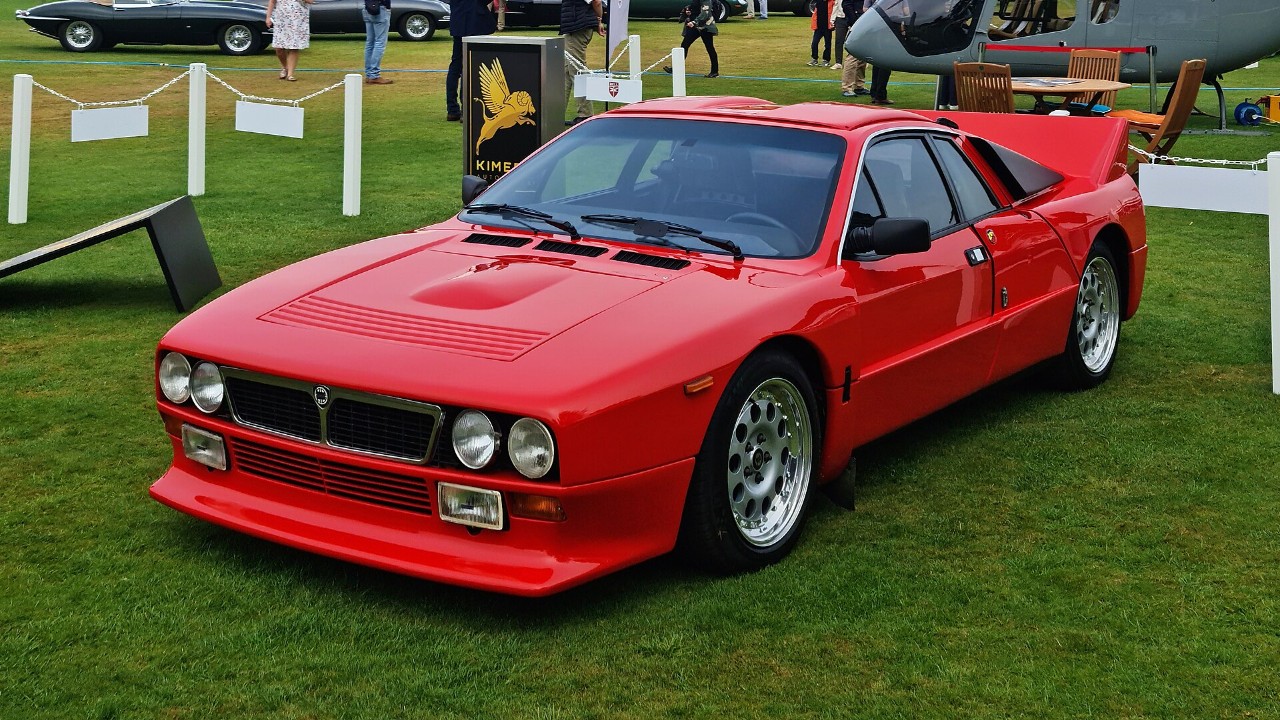
Abarth did most of the design work on the 037, with Pininfarina collaborating. The road-going Stradale used a 1,995 cc twin-cam four with 16 valves and an Abarth Volumex supercharger. It made 205 horsepower at 7,000 rpm, and it drove only the rear wheels.
Lancia needed at least 200 Stradales for homologation, and 207 are known to have been built between 1982 and 1984. In rallying, rear-wheel drive made the 037 less stable on loose surfaces than the all-wheel-drive Audi Quattro. Even so, Lancia won the 1983 manufacturers’ championship with it.
In our view, the 037 is the greatest rear-drive rally car of its era, and its road version is one of the purest supercar shapes of the 1980s. Then Lancia’s four-wheel-drive Delta S4 took over its job. If you ever see a Stradale, remember that it used a supercharger rather than a turbo, which gave it a very different character from its rivals. In addition, its low, wide body makes it look fast even when parked.
6. 1985 MG Metro 6R4

The name tells you the recipe: 6-cylinder, Rally, 4-wheel drive. Rover gave a boxy little Metro a mid-mounted 3.0-liter V6 designed by David Wood, with twin cams and four valves per cylinder. Unlike most rivals, the engine had no turbocharger. Williams Grand Prix Engineering handled development.
Rover showed the car in May 1985 and completed the homologation cars at Longbridge by November. Around 200 road-going Clubman versions went on sale for £40,000, with output in the region of 250 horsepower. Twenty International-spec cars made more than 410 horsepower. In November 1985, Tony Pond finished third on the RAC Rally in a works car.
Our take: the 6R4 is the strangest car on this list and one of the most lovable. A Formula 1 team helped turn an economy hatchback into a rally weapon. Then Group B ended halfway through 1986, and the 6R4 lost its reason to exist. Afterward, it found a second life as a frequent rallycross and national championship entrant. So, unlike several cars here, the 6R4 kept racing long after its factory moved on.
7. 1986 Ford RS200
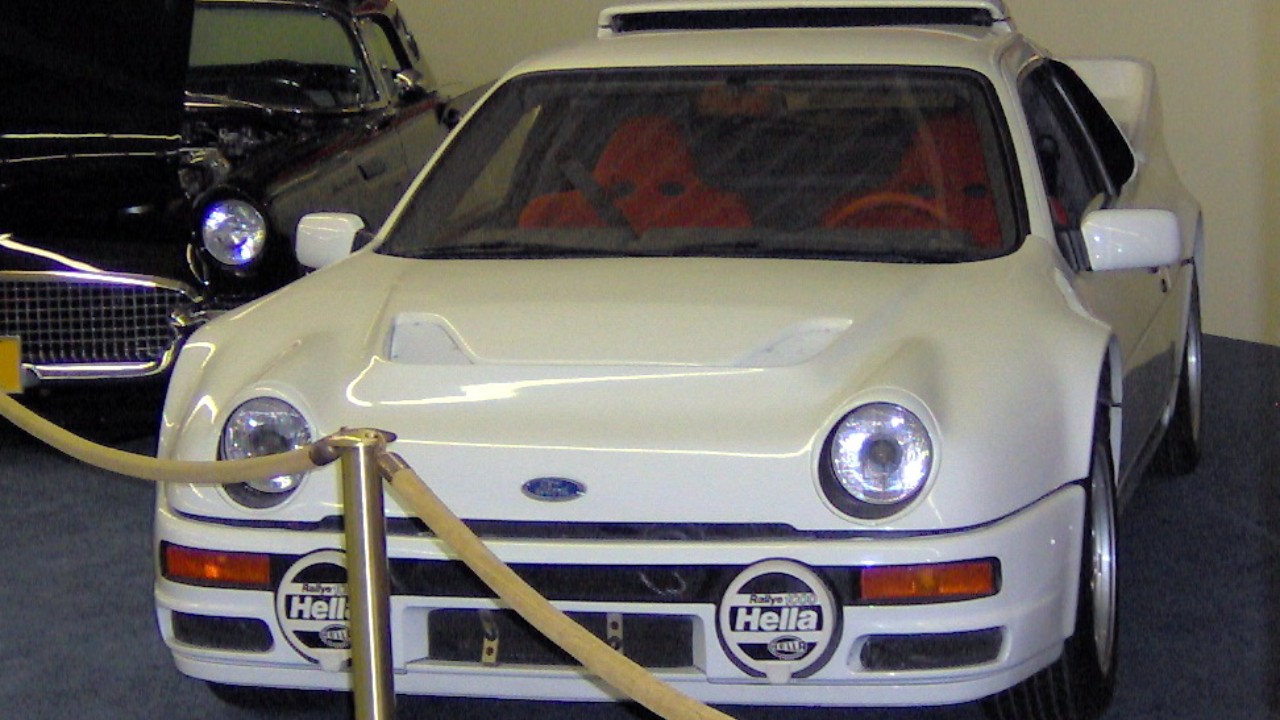
Ford contracted Reliant to build at least 200 road-legal RS200s at Shenstone, England, from 1984 to 1986. Ghia designed the body, with Filippo Sapino credited, and Reliant built it from fiberglass composite. Its 1.8-liter Cosworth BDT turbo made 250 horsepower in road trim.
The layout was clever. The engine sat in the middle, but the gearbox sat up front, so power ran forward to the front wheels and then back to the rear. Later, 24 of the 200 cars became Evolution models with a 2.1-liter BDT-E, typically rated at 580 horsepower at 8,000 rpm. That’s more than double the road car’s output.
In our view, the RS200 was one of the cleverest Group B designs, and it arrived just in time to lose its series. Ford entered it in 1986 with Stig Blomqvist and Kalle Grundel. A few months later, Group B was gone. Buyer advice: with only 24 factory Evolution conversions, any car sold as one needs documented history. Meanwhile, a clean road car is the purer way to enjoy the design.
8. 1990 Vector W8
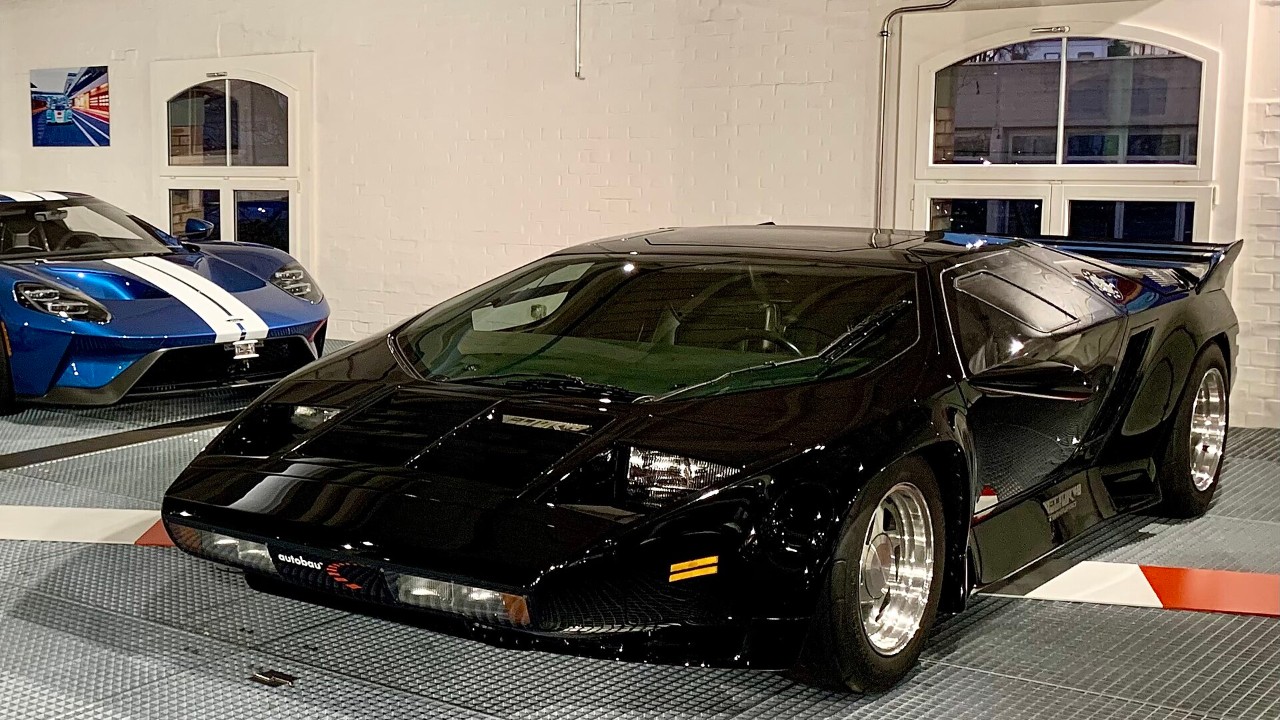
Jerry Wiegert designed the Vector W8, and David Kostka refined it. Vector called its build method “Aeromotive Engineering.” The body used carbon fiber and Kevlar, the floor pan was aluminum honeycomb, and about 5,000 aircraft-spec rivets held it together.
Behind the cabin sat a 6.0-liter twin-turbo V8 advertised at 625 horsepower at 5,700 rpm on 8 psi of boost. Vector said it reached 1,200 horsepower on the factory dyno at 14 psi. Tennis star Andre Agassi bought one in 1991, then returned it for a refund after the rear carpet burned from a hot exhaust. We’ve written about the Vector W8 and the fantasy few ever forgot before.
Our take: the W8 is the American entry on this list, and it fits the theme perfectly. Its main shareholder, Megatech, staged a hostile takeover, and Vector entered receivership in 1993. Before that, the company built 17 customer cars and two pre-production cars. In our view, few cars have promised so much from so small a company. Even so, the W8’s wedge shape and aircraft-style build make it a fascinating piece of American supercar history.
9. 1989 Isdera Imperator 108i

Eberhard Schulz, a Porsche design engineer, developed the Imperator in his spare time. It grew out of the 1978 CW311 concept, which carried a Mercedes badge but never reached production. The Imperator kept that car’s gullwing doors and added a roof periscope in place of normal mirrors.
Power came from Mercedes V8s. The original used a 5.0-liter M117, and later cars offered 5.6-liter and 6.0-liter AMG engines with as much as 390 horsepower. Isdera built the car from 1984 to 1993, a long run for such a tiny company. In that time, it made about 30 examples, and the company itself closed in 1993.
In our view, the Imperator is one of the most overlooked supercars of the 1980s. It had Mercedes power, a striking shape and a real engineering pedigree, yet about 30 cars meant very few people ever saw one. If you love gullwing doors, this is the forgotten successor to the 300SL spirit that Mercedes itself never built.
10. 1991 Bugatti EB110 GT
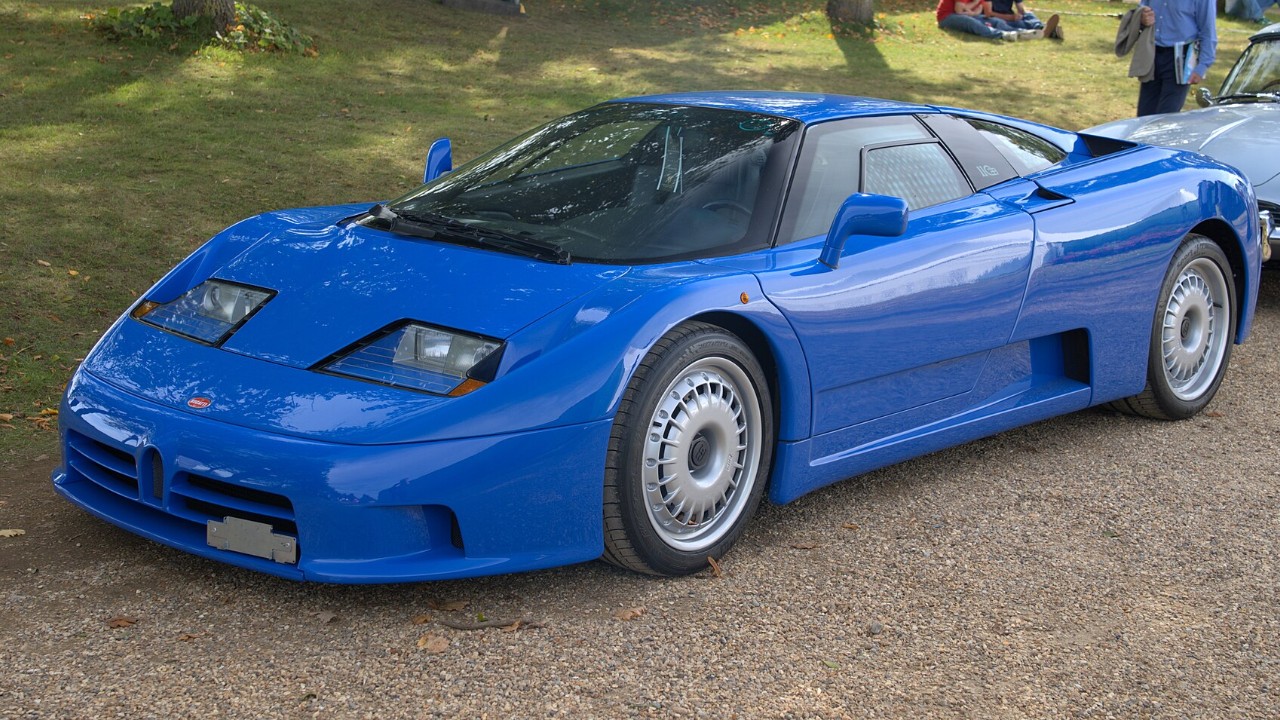
Bugatti unveiled the EB110 GT on September 14, 1991, near Paris, and continued the launch the next day in Molsheim. September 15 marked the 110th anniversary of Ettore Bugatti’s birth, which gave the car its name. Its 3.5-liter V12 used four turbochargers to make 560 PS, or 553 horsepower, at 8,000 rpm.
The chassis was carbon fiber bonded to aluminum honeycomb, and all-wheel drive put the power down. Six months later, the Super Sport arrived at Geneva with 603 horsepower and 150 kg less weight. We’ve covered the EB110’s cutting-edge engineering in an earlier story.
Our take: the EB110 is the clearest case on this list of a car outrunning its company. Bugatti was liquidated in 1995, hurt by chairman Romano Artioli’s purchase of Lotus, the cost of developing the EB112 sedan and missed supplier payments. In our view, the car itself was never the problem, since it delivered on every engineering promise. By then, Bugatti had built 139 EB110s, plus a few completed after the bankruptcy.
11. 1991 Jaguar XJR-15
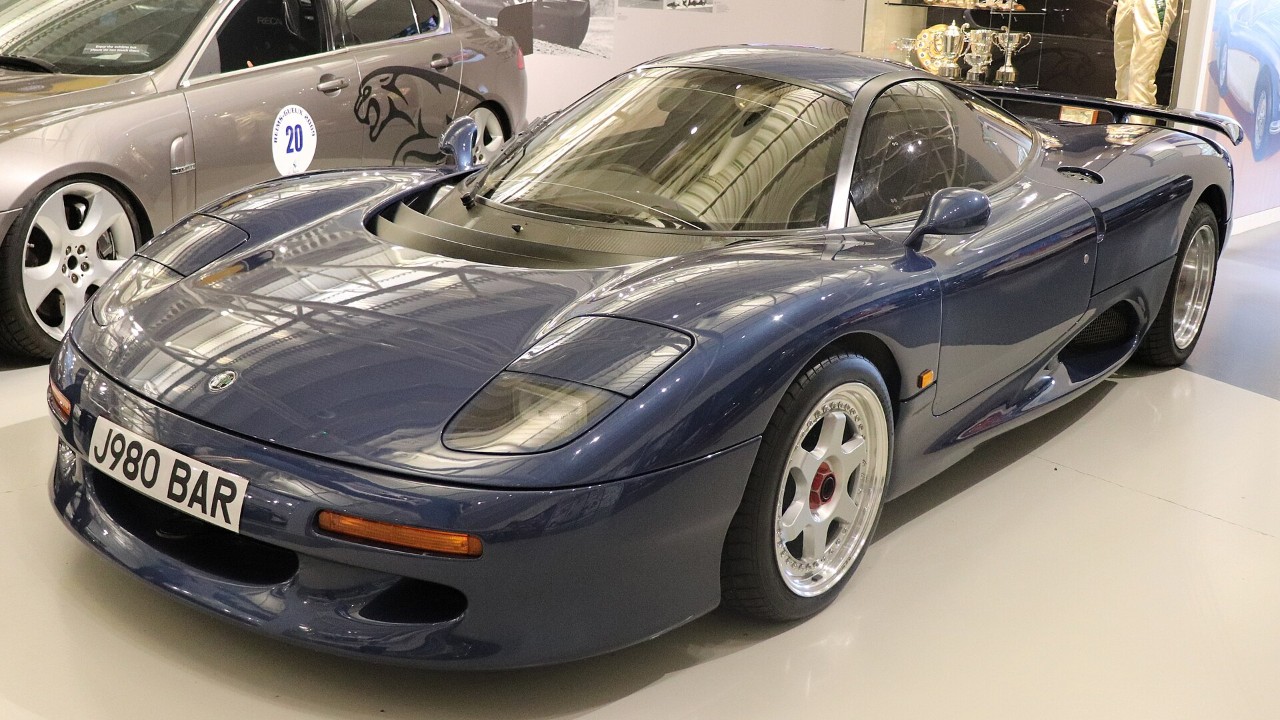
The XJR-15 came from the XJR-9, the Le Mans-winning race car designed by Tony Southgate. JaguarSport, a joint venture of Jaguar and Tom Walkinshaw Racing, built it in Bloxham, Oxfordshire. Peter Stevens, who later co-designed the McLaren F1, drew the body.
Its 6.0-liter V12 made 450 horsepower in a car that weighed about 2,300 pounds. According to Hagerty, the XJR-15 was the world’s first all-carbon road car, and it sold new for roughly $1 million in 1991 money. Hagerty also counts 27 road-going cars, with the rest built for the track. The 1991 Jaguar Intercontinental Challenge ran them at Monaco, Silverstone and Spa for a $1 million prize.
In our view, the XJR-15 is a race car that happened to get license plates. Because it shared so much with a Le Mans winner, it never made sense as a long-running product. Production ran from 1990 to 1992, and builders made 53 chassis, three more than planned. In 2021, a chassis 028 car sold at Monterey for $1,902,500, according to Hagerty.
12. 1994 Venturi 400 GT
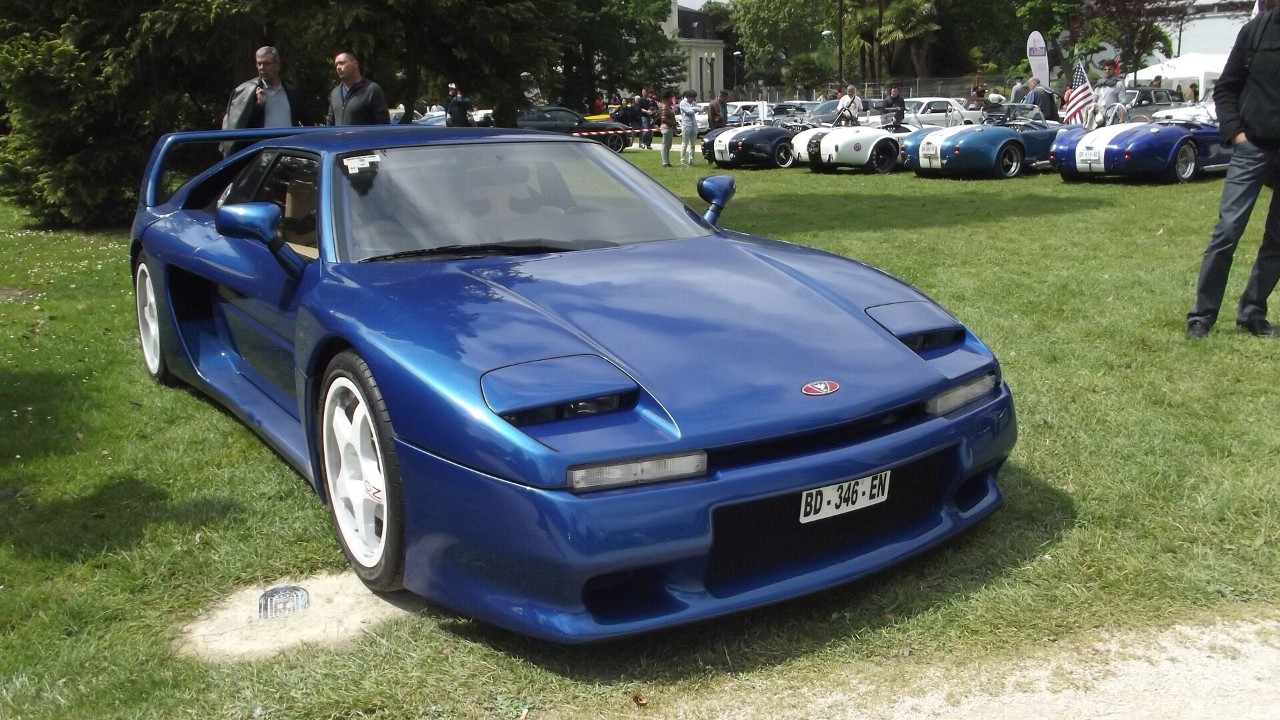
Venturi built the 400 GT as a road version of its 400 Trophy race car, with small changes for road homologation. The Trophy’s twin-turbocharged V6 made 408 horsepower, and the GT used the same engine as the racer. Venturi, a small French maker, sold it from 1994 to 1997.
In fact, the racing program came first. Venturi created the Gentlemen Drivers Trophy as a one-make championship for the 400 Trophy. It lasted four seasons, with six races, among them Le Mans. In total, Venturi built fewer than 100 of the 400 family, including about 73 racing units.
Our take: the 400 GT is the last and least known car here, and it may be the best fit for the headline. A small French company built a race car, turned it into a road car, and then stopped. In our view, it’s one of the most surprising supercars of the 1990s, and few people outside France remember it at all. Venturi built only about 15 street versions of the 400 GT.
More from Fast Lane Only