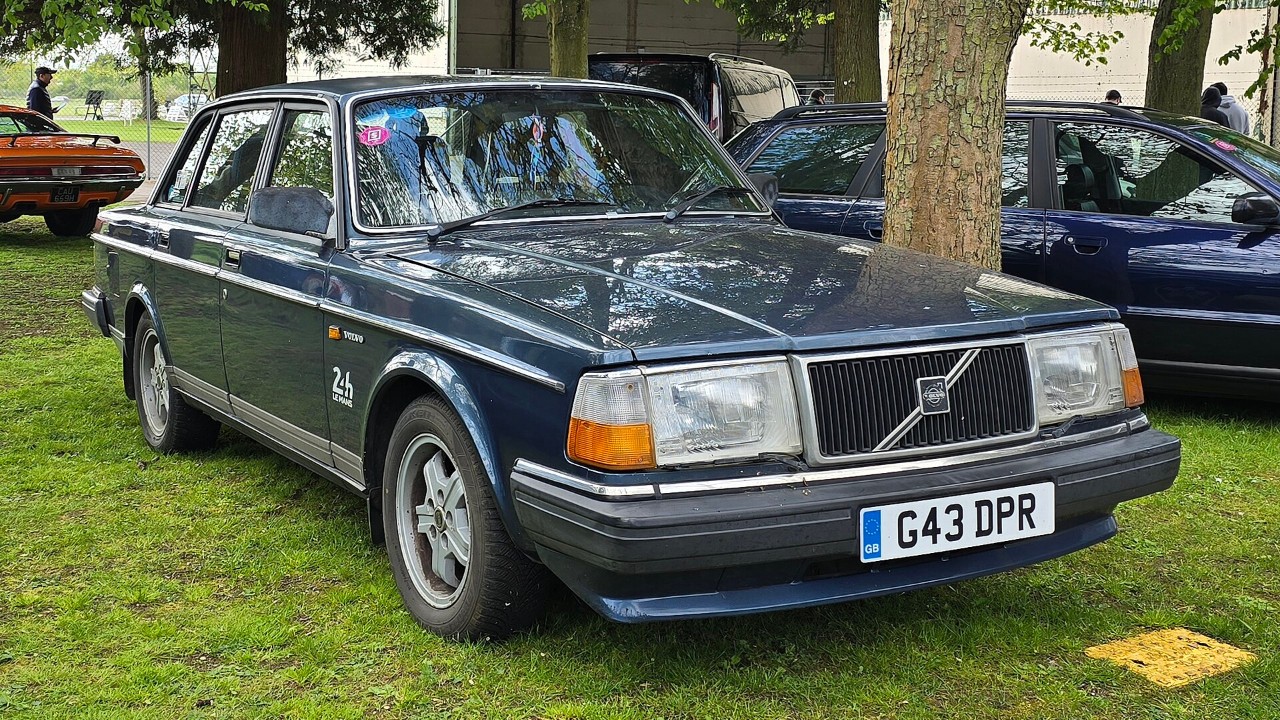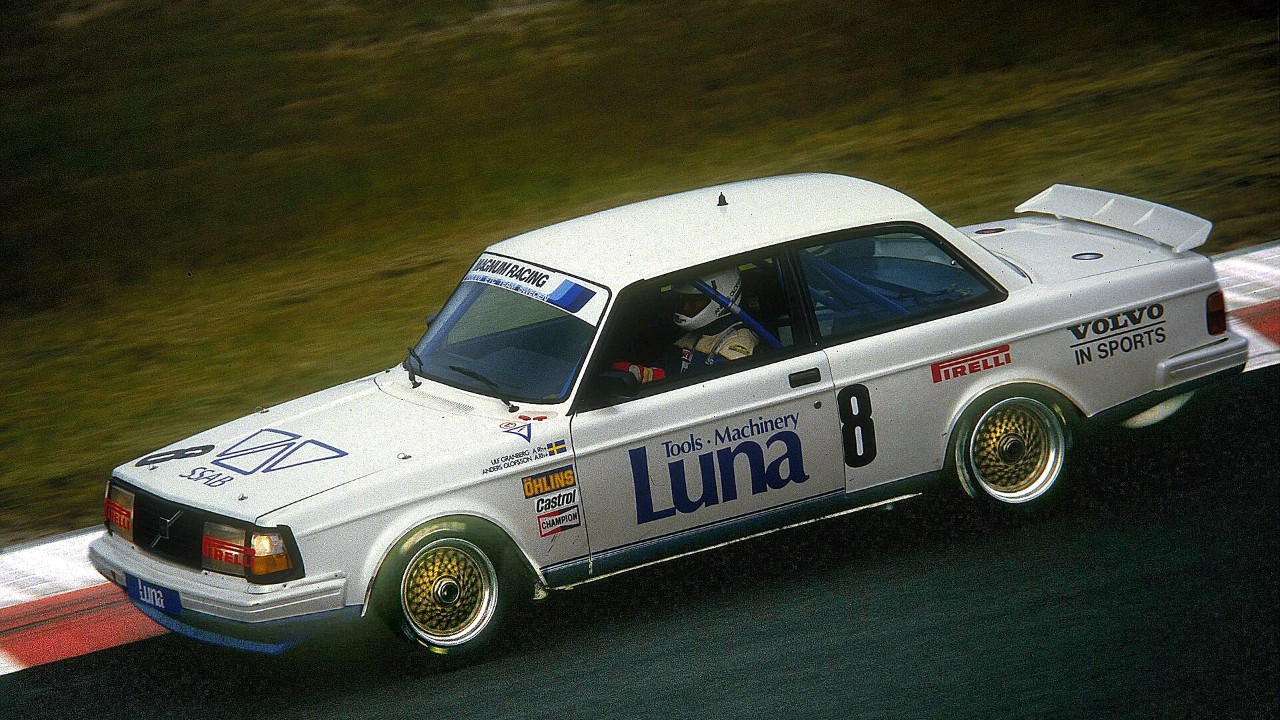
In 1985, a square-edged Swedish sedan beat BMW and Rover to the European Touring Car Championship. The Volvo 240 Turbo won six of the season’s 14 races. When the final round ended at Estoril, Portugal, on October 13, Thomas Lindström and Gianfranco Brancatelli were the champions.
The car’s shape earned it a nickname, “the flying brick.” Its rivals packed much bigger engines. However, the Volvo had a turbocharged four-cylinder, a clever homologation special and a Swiss team, Eggenberger Motorsport, running the works effort.
Here is how a family sedan turned into a title winner, and how quickly its racing story ended.
The road-going Volvo 240 Turbo
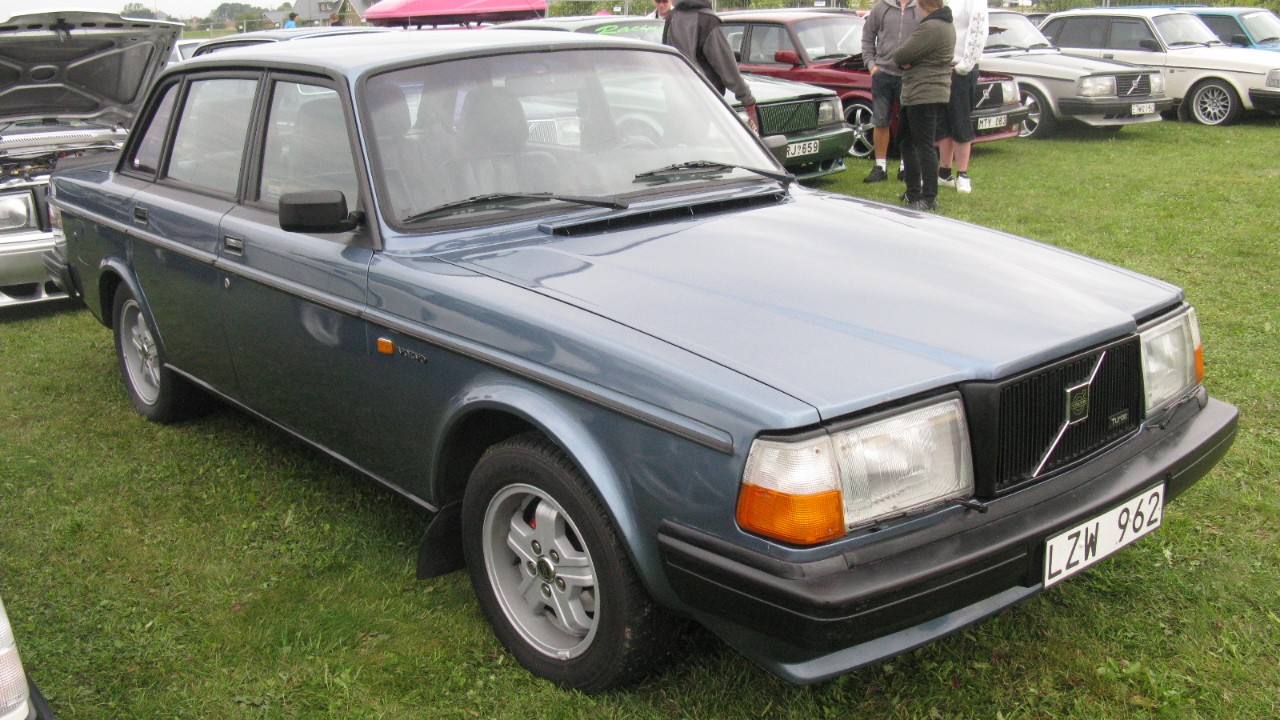
Volvo launched the 240 Turbo in 1981 as part of the 240 family. Its B21ET engine displaced 2.1 liters and made 155 hp, according to Volvo’s own 30th-anniversary release. That was enough for 0 to 100 km/h in nine seconds and a top speed of 195 km/h.
The 240 Turbo also came as an estate. Volvo calls that version the world’s fastest estate car of its day.
Volvo fans will know the brand’s earlier sporting side too. Our story on how the 1963 Volvo P1800 blended safety and style goes back two decades, and so does our look at when the Volvo Amazon set safety priorities.
Group A and the 500 Evolution cars
New Group A rules arrived in 1982. They required race cars to come from the assembly line with limited changes. Makers also had to build at least 5,000 cars of a model each year, with at least four seats and a minimum weight tied to engine size.
On top of that, an Evolution version needed at least 500 cars. So Volvo built the 240 Turbo Evolution. It had bigger turbos, revised engine controls and a water-injection system called Water Turbo Traction, which Volvo developed and patented.
In July 1983, the 500 cars lined up for inspection on two fields in the United States, one on each coast, Volvo says. Even so, Motorsport Magazine notes a lasting controversy over whether all 500 Evo cars were really built.
From 155 hp to around 300
Under the skin, the race car changed a great deal. Volvo puts its output at around 300 hp, almost double the road car’s 155 hp. As a result, top speed climbed from 195 km/h to 260 km/h.
A Garrett turbo ran up to 1.5 bar of boost. Inside the engine, Volvo used aluminum cylinder heads and forged pistons, connecting rods and crankshafts. It also fitted a custom Bosch K-Jetronic injection system.
The body lost weight, too. Doors and the hood used thinner metal, and the rear axle was six kilos lighter. For stopping, the car used four-piston calipers and ventilated discs. Finally, a quick-fill system could add 120 liters of high-octane fuel in 20 seconds.
The 1985 season
Volvo’s first year of Group A racing came in 1984. That year, Ulf Granberg and Robert Kvist won the round at Zolder, Belgium. In addition, Per Stureson won at the Norisring in the first DTM season.
For 1985, two teams ran as factory squads in the championship. Rudi Eggenberger’s Swiss team, entered as Volvo Dealer Team Europe, ran Lindström, Brancatelli, Sigi Müller Jr. and Pierre Dieudonné. Sweden’s Magnum Racing entered Granberg, Anders Olofsson and Ingvar Carlsson.
They raced against the Rover 3500 V8 and the BMW 635, both with far bigger engines. Still, Volvo won six of the 14 rounds, and Lindström and Brancatelli took the title. By Motorsport Magazine’s count, that made Volvo only the third different marque to win the championship in 11 years. BMW had won nine of them.
The success spread beyond the series. In Germany, Stureson won the DTM title with one victory and five podiums. Volvo also won touring car titles in Finland, Portugal and New Zealand that year.
A short reign
The 240 Turbo looked set to repeat in 1986. Then a protest from Tom Walkinshaw, who ran the Rover team, changed the season, according to World of Volvo. He alleged that Volvo used lead-free 99-octane fuel at Anderstorp and that its fuel tank size was wrong at Zeltweg.
The FIA disqualified Volvo. Two wins came off Volvo’s tally, the title slipped away, and Volvo withdrew from circuit racing. Meanwhile, in Australia, Robbie Francevic won the 1986 Australian Touring Car Championship in a 240 Turbo, the first turbocharged car to take that series.
In 2018, Motorsport Magazine valued the race cars at up to £220,000. In the record books, the boxy Volvo 240 Turbo remains the 1985 European Touring Car champion, with six wins from 14 races.
More from Fast Lane Only