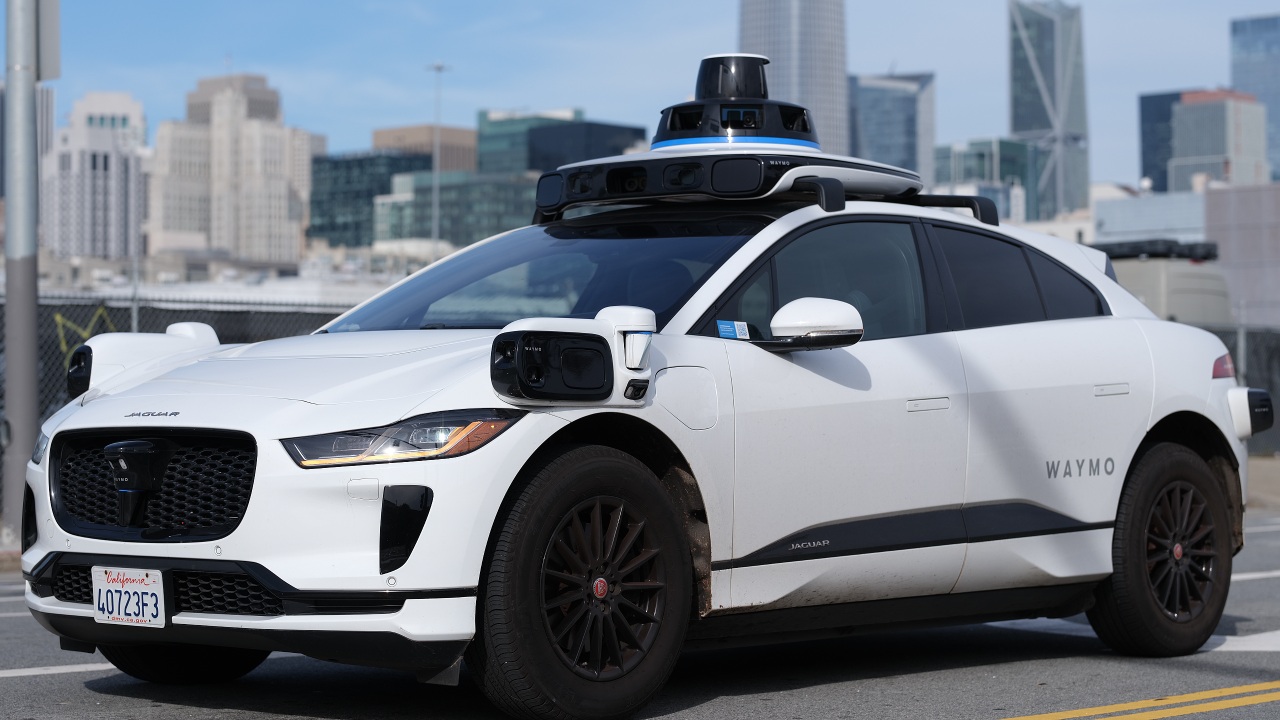
Waymo’s rapid move to fully driverless testing in Texas has reignited a familiar criticism in the autonomous vehicle world: that its approach, rooted in detailed mapping and carefully staged rollouts, cannot scale. The company’s recent activity across the state, from highway freight pilots to a new logistics hub, suggests it is trying to prove the opposite, using Texas as a stress test for how quickly its technology can adapt to new terrain. The stakes are high, not only for Waymo’s business model, but for whether high‑automation driving can move beyond a handful of showcase cities into a truly national network.
As I look at the latest deployments, the picture that emerges is less about a single Texas experiment and more about a coordinated push to show that the same core stack can handle dense cities, sprawling suburbs, and long‑haul freight corridors. The company is leaning on years of safety work and millions of public‑road miles to argue that its system is portable, not fragile, and that the Texas rollout is a preview of how it intends to expand across the United States.
Texas as a proving ground for rapid deployment
Waymo’s choice of Texas as a test bed is not accidental. The state offers a mix of fast‑moving interstates, freight‑heavy corridors, and complex urban environments that can quickly expose weaknesses in any autonomous system. By moving from limited pilots to fully driverless operations in this environment, Waymo is effectively using Texas to demonstrate that its technology can be transplanted into a new region without years of incremental tuning. The company has already signaled that its broader strategy is to test its self‑driving system in different environments and driving conditions across the United States, positioning Texas as one node in a larger expansion plan that includes new cities beyond its original strongholds in the Southwest and California, as reflected in its plans to expand autonomous vehicle testing to new cities in the US.
That broader context matters because critics often frame Waymo’s success as a product of unusually favorable conditions in a few handpicked markets. By layering Texas into a portfolio that already includes multiple cities, the company is trying to show that its system is not tied to a single geography. Reporting on its expansion notes that Waymo is operating in multiple cities in the US, while competitors such as Baidu are deploying hundreds of vehicles in China that only operate in select geographic areas. That comparison underscores the industry‑wide challenge: every major player is still constrained to defined zones, but Waymo is arguing that the speed with which it can bring a new region like Texas online is the real measure of scalability.
Inside the “not scalable” critique
The most persistent knock on Waymo is that its vehicles rely on very specific pre‑mapped areas, which some observers argue is not a scalable solution. The criticism, voiced bluntly in discussions around Waymo’s recent multibillion‑dollar funding round, is that a system that depends on dense, high‑definition mapping and exhaustive validation in each new city will always lag behind a more generalized, map‑light approach. In this view, every new deployment is a bespoke project, not a repeatable product, and the Texas rollout is just another carefully curated demo zone rather than evidence of a platform that can spread quickly.
Waymo’s defenders counter that this framing misunderstands both the technology and the business. They point to the company’s long record of public‑road driving, including 20 million miles on public roads, as proof that the system is not brittle, but instead has been trained and validated across a wide range of conditions. They also note that the company’s safety case is built around demonstrating and explaining how the system is determined to be ready for deployment in a given operational design domain, and how the evidence collected is sufficient and credible. In that light, the reliance on detailed mapping is not a crutch, but a deliberate safety choice, and the question becomes whether Waymo can industrialize that process fast enough to keep up with demand.
Freight corridors and the Dallas–Fort Worth hub
Nowhere is Waymo’s scalability argument more concrete than in freight. In Texas, the company is building a dedicated hub for self‑driving trucks in the Dallas–Fort Worth area, a facility spanning 9 acres that is designed to accommodate hundreds of trucks coming and going. The center is meant to support operations for its heavy haulers, providing space for maintenance, calibration, and logistics coordination. By investing in a physical footprint of that size, Waymo is signaling that it expects sustained, high‑volume activity on Texas highways, not just a short‑term pilot.
That hub sits on top of a growing web of freight partnerships that use Texas as a backbone. Waymo Via, the company’s autonomous Class 8 truck platform, has been tapped for strategic runs between Houston and Fort Worth on Interstate 45 for a Hunt shipper customer, integrating driverless technology into real commercial lanes rather than closed tests. Separate reporting on autonomous trucks notes that tests with Waymo’s highly autonomous trucks led to a formal strategic alliance with a fleet and a six‑week pilot project along the I‑45 corridor between Houston and Dallas. Taken together, these efforts show Waymo using a single interstate corridor as a laboratory for repeatable, revenue‑linked operations, which is a very different proposition from a one‑off demo.
Robotaxis, versatility, and the case for a unified stack
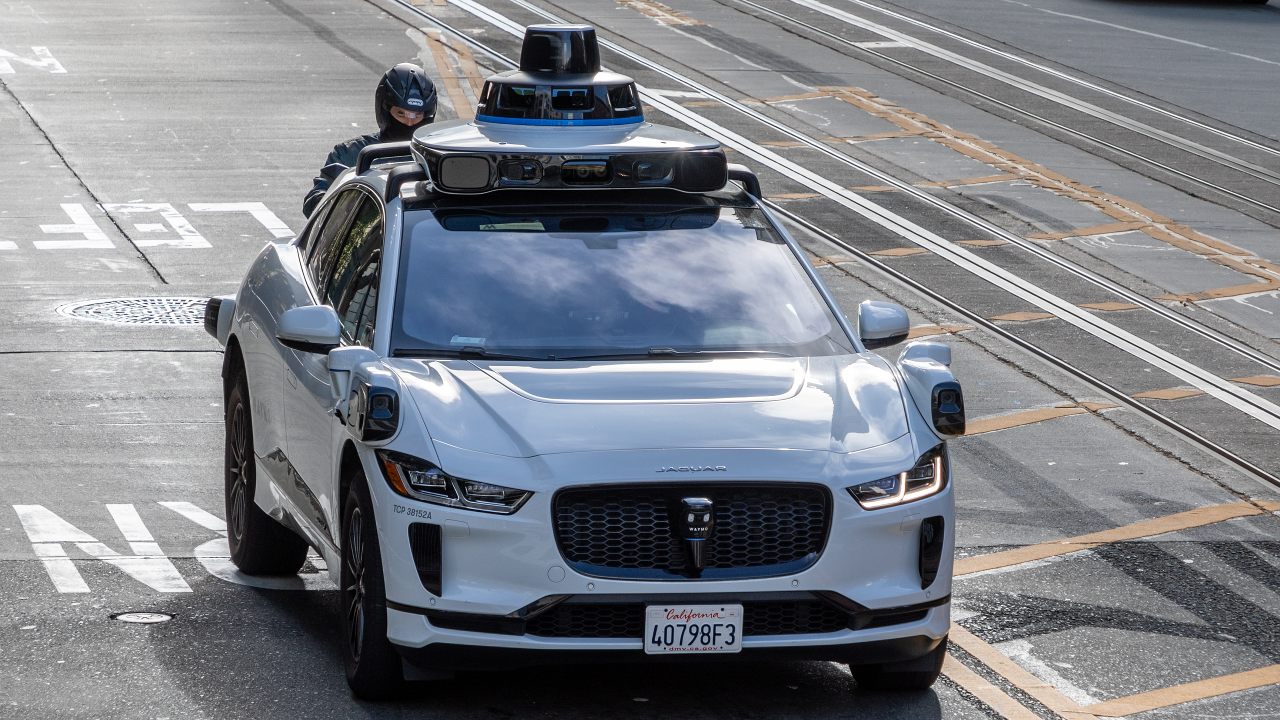
Waymo’s push in Texas freight is only one side of its argument that its technology can scale. The company has long emphasized that its most important capability might not be the raw number of miles driven or the sheer variety of environments, but the versatility of its autonomous driving system. The same core stack is intended to power both robotaxis and heavy trucks, with the company already operating a commercial service that involves no human driver in some urban markets. By applying that stack to Texas highways and, potentially, to Texas cities, Waymo is trying to show that it can reuse software, safety processes, and operational playbooks across very different vehicle types and use cases.
That versatility is central to how Waymo responds to the charge that it is locked into narrow, pre‑mapped zones. If the same system can handle a Phoenix suburb, a San Francisco hill, and a Texas freight corridor, then the mapping and validation work starts to look more like a repeatable industrial process than a bespoke science project. Reporting on the company’s broader trajectory notes that Waymo is picking up speed as the robotaxi race heats up, with plans to expand to five more states in the coming months. The Texas deployments, in that context, are not isolated experiments but part of a multi‑state rollout that leans on a unified technology base.
Safety, funding, and the long road to national scale
Underpinning all of this is a safety framework that Waymo has spent years building. A key goal of the company’s safety case is not only to demonstrate and explain how the system is determined to be ready for deployment, but also to show that the evidence used to make that determination is sufficient for the purpose and credible. That means every new region, including Texas, must pass through a structured process of simulation, closed‑course testing, and supervised on‑road driving before vehicles are allowed to operate without a human behind the wheel. Critics see that as a drag on speed. Waymo presents it as the only responsible way to scale.
The financial backing behind this approach is substantial. Waymo’s recent $5.6 billion investment round, which sparked renewed debate about its reliance on pre‑mapped areas, gives the company the runway to keep building hubs, expanding test cities, and refining its safety case. Elsewhere in its operations, Waymo is beefing up its autonomous truck ambitions, announcing that it is building out its freight infrastructure and partnering with companies such as Ryder to manage its fleet. Those moves suggest that investors are betting that a methodical, safety‑first expansion, even if slower in the short term, will ultimately prove more durable than a faster but looser approach.
Texas and the global race for autonomous dominance
Texas also sits within a broader global contest over who can make autonomous driving economically viable at scale. With Alphabet’s Waymo operating in multiple cities in the US and Baidu deploying hundreds of vehicles in China, the world is watching two very different models play out. Baidu’s robotaxis, including its Apollo Go service and RT6 vehicles, are designed to be supercheap and are deployed in large numbers, but they only operate in a select geographic area. Waymo, by contrast, is pursuing a higher‑cost, high‑safety model that aims to prove it can transplant the same system into new markets like Texas without sacrificing performance.
From my vantage point, the Texas rollout is less a final verdict on scalability and more a critical data point in that global race. If Waymo can show that its Texas operations, from the 9‑acre Dallas–Fort Worth truck hub to the I‑45 freight runs and any future robotaxi services, can be replicated in other states with similar speed and reliability, the “not scalable” critique will start to lose its edge. If, however, each new region requires years of bespoke work, then the skeptics who see detailed mapping as a permanent bottleneck will feel vindicated. For now, the company is betting that Texas will help prove that its careful, safety‑driven model can, in fact, move fast.