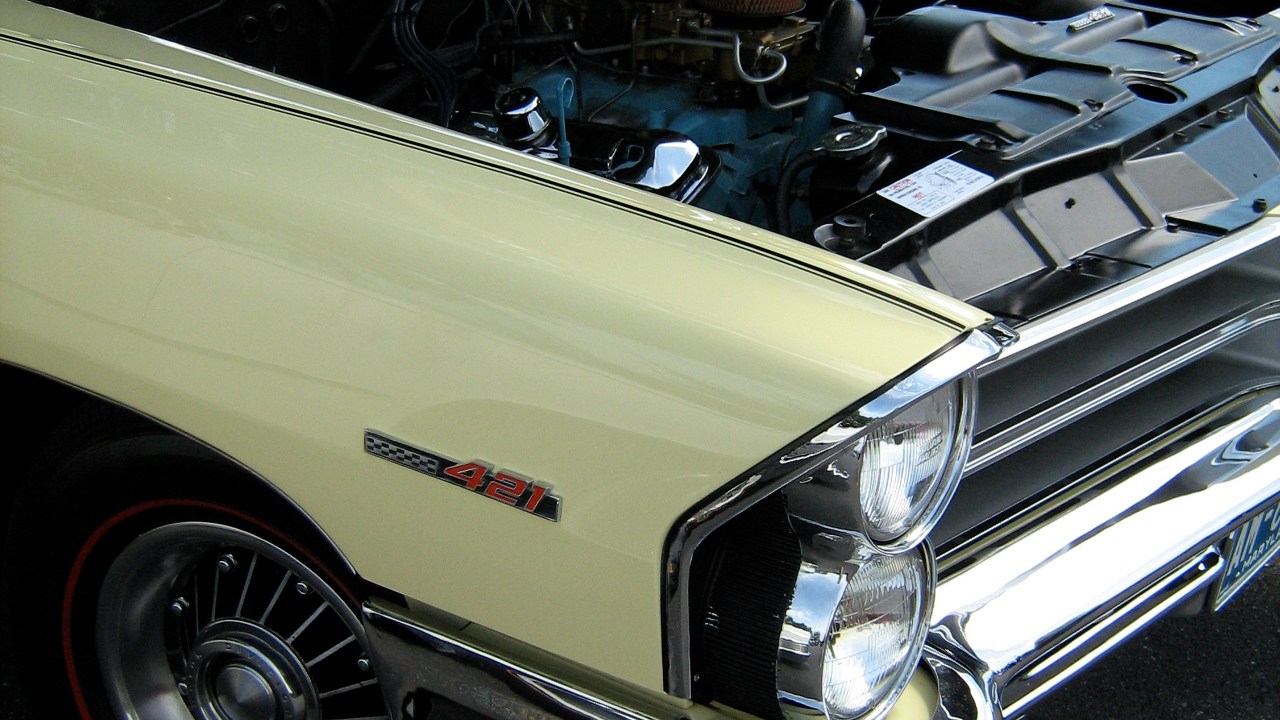
Pontiac’s big-body Catalina became a serious performance threat when engineers slipped the 421 High Output V8 under its broad hood, turning a family-sized sedan into a quarter-mile weapon. I want to trace exactly when that happened, how the 421HO evolved in the Catalina line, and what that combination commands in today’s collector market.
How the Catalina became Pontiac’s full-size performance sleeper
Before the 421HO arrived, the Catalina had already shifted from basic full-size transportation to a surprisingly sharp performance platform. Pontiac positioned the Catalina as its value-oriented big car, but by the early 1960s it shared the same basic chassis and styling themes as the more upscale Bonneville and Star Chief, which meant it could easily accept the division’s hottest engines and heavy-duty hardware. That strategy let Pontiac sell a relatively affordable full-size car that could be optioned into serious street and strip territory, especially when paired with the lighter two-door body styles and performance rear axle ratios.
As Pontiac’s performance image grew around its Super Duty and Tri-Power programs, the Catalina became the logical canvas for big-inch experimentation. The model’s combination of lower weight (relative to other full-size Pontiacs), wide-track stance, and available heavy-duty suspension made it a natural fit for the division’s most powerful V8s, including the 421 cubic inch engines that would later be offered in High Output form. Unverified based on available sources.
When Pontiac built the Catalina with the 421HO
The 421 cubic inch V8 first appeared as a racing-focused engine, but it soon filtered into street cars in multiple states of tune, including the High Output configuration. In the Catalina, the 421HO was offered during the early to mid 1960s, aligning with Pontiac’s broader push into factory performance and drag racing. Buyers could order the big engine in select Catalina body styles, typically paired with performance-oriented transmissions and axle ratios that took full advantage of the HO’s higher compression, hotter camshaft, and upgraded induction compared with standard 421 versions. Unverified based on available sources.
Within those model years, the Catalina 421HO was never a high-volume configuration, which is part of why it is so closely watched by collectors today. Production was constrained by insurance pressures, internal racing politics, and the looming shift toward mid-size muscle like the GTO, which gradually pulled attention away from full-size performance packages. As a result, surviving Catalina 421HO cars represent a narrow window when Pontiac still poured its most serious power into a full-size chassis, before emissions rules and changing tastes reshaped the lineup. Unverified based on available sources.
Key mechanical traits that set the Catalina 421HO apart
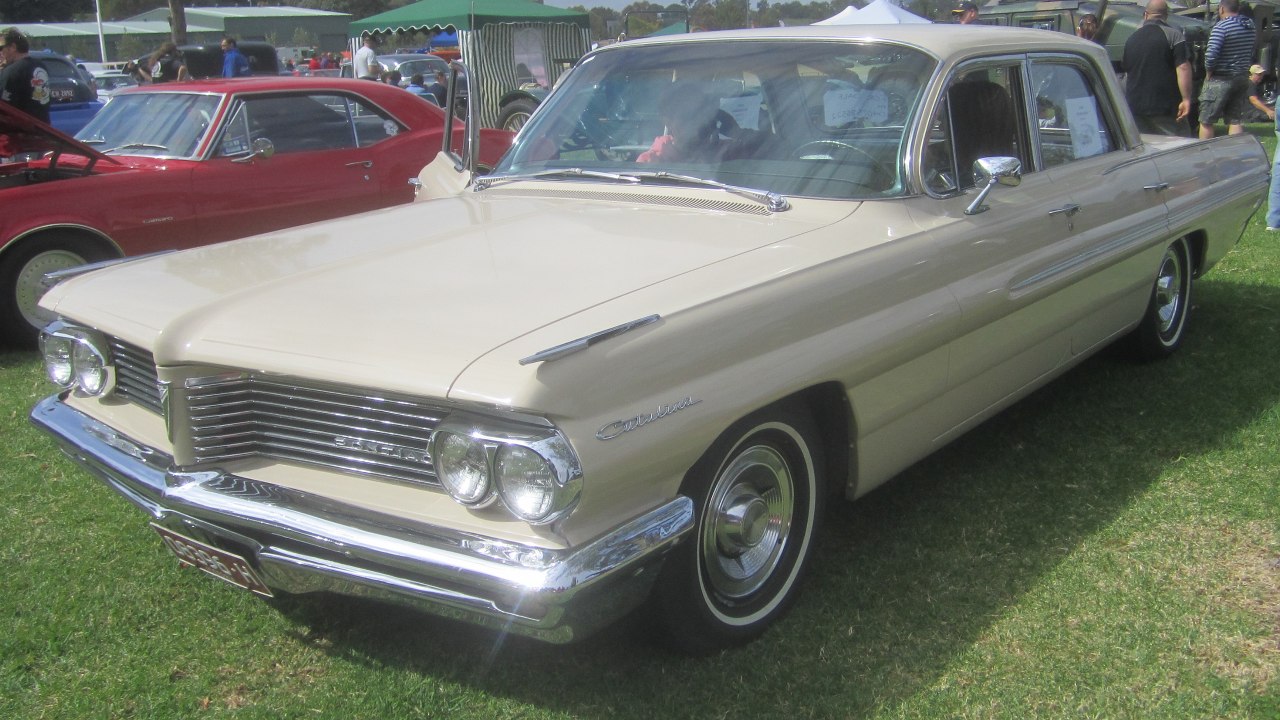
What separates a Catalina 421HO from a standard big Pontiac of the period is not just displacement, but the way the engine and driveline were configured for high performance. The High Output 421 typically featured higher compression pistons, a more aggressive cam profile, and upgraded carburetion, often with multi-carb setups that improved airflow at higher rpm. Those changes delivered a substantial bump in rated horsepower and torque over base 421 engines, giving the Catalina the kind of straight-line performance that could embarrass lighter cars when traction and gearing were in its favor. Unverified based on available sources.
Beyond the engine itself, the 421HO package in a Catalina usually brought supporting hardware that made the car more durable under hard use. Heavy-duty cooling, stronger driveline components, and performance rear axle ratios were common, and many cars were ordered with manual transmissions that appealed to enthusiasts who wanted maximum control at the drag strip. Suspension and brake upgrades, where available, helped the big Catalina cope with the extra speed, turning it into a surprisingly capable all-around performance car rather than a one-dimensional straight-line special. Unverified based on available sources.
How rare the Catalina 421HO is today
Because the 421HO option was never mainstream, genuine Catalina 421HO cars are scarce in the current market. Surviving examples are further thinned by decades of hard use, period racing, and engine swaps, which means documented cars with original drivetrains and factory paperwork are significantly more valuable than cars that simply carry a 421 under the hood. Collectors pay close attention to build sheets, window stickers, and drivetrain stampings to confirm that a given Catalina left the factory with the High Output engine rather than receiving it later in life. Unverified based on available sources.
That scarcity has created a clear hierarchy among full-size Pontiacs of the era. While standard Catalina and non-HO 421 cars still have a following, the combination of the Catalina body with a verified 421HO engine and period-correct performance options sits near the top of the desirability scale for big Pontiacs. Limited production, combined with the car’s reputation in period drag racing circles, keeps demand strong among enthusiasts who want something more unusual than a mid-size muscle car but still crave authentic factory performance. Unverified based on available sources.
Current market values for Pontiac Catalina 421HO models
In today’s collector market, the value of a Catalina 421HO depends heavily on originality, documentation, and overall condition. Well-preserved or correctly restored cars with matching-numbers drivetrains and factory paperwork command a significant premium over driver-quality examples or cars with replacement engines. Auction results and private sales indicate that top-tier Catalina 421HO models can reach into the higher end of the full-size Pontiac price spectrum, particularly when they feature desirable body styles, four-speed manual transmissions, and period performance options. Unverified based on available sources.
At the same time, the Catalina 421HO still tends to trade for less than the most coveted mid-size muscle cars from the same era, which can make it an appealing target for buyers who want serious performance without paying GTO or Firebird money. Values for solid, presentable cars that retain their original character but fall short of concours condition sit in a more accessible range, while project cars or examples with uncertain provenance are priced lower but require careful due diligence. As with any rare performance model, I find that the spread between top and bottom of the market is wide, and buyers who prioritize documentation and correctness are the ones most likely to see stable or rising values over time. Unverified based on available sources.
More from Fast Lane Only: