The 1950 Chevrolet Fleetline arrived at a moment when American drivers were hungry for something sleeker than the upright sedans that had carried them through the war years. With its fastback roof and low, flowing profile, it turned a mass market family car into a rolling style statement that helped define what postwar modernity looked like on Main Street. I see that car not just as a model year, but as a pivot point where design, production scale, and public taste finally aligned.
From wartime austerity to a new Chevrolet silhouette
By 1950, the United States was shifting from wartime rationing to a consumer boom, and Chevrolet understood that buyers wanted more than basic transportation. The company had already laid the groundwork with the 1949 model year, which marked a major redesign of its passenger cars and introduced the Pre Tri Five generation that would carry Chevrolet through the early fifties. Within that lineup, the Fleetline and its companion Styleline gave the brand a fresh visual language, replacing the prewar look with lower bodies, integrated fenders, and a stance that felt ready for the new decade.
That shift was not just cosmetic, it was strategic. Earlier in the late 1940s, the Fleetline had already proven that style could sell in volume, with the fastback body accounting for 31,86% of Chevrolet sales, or 213,938 out of 671,543 cars, according to period production figures. Those numbers showed that the Fleetline nameplate had real pull with buyers who wanted something more fashionable than a plain sedan, and they set the stage for Chevrolet to double down on the formula as the 1950 models rolled into showrooms.
The fastback that made practicality look glamorous
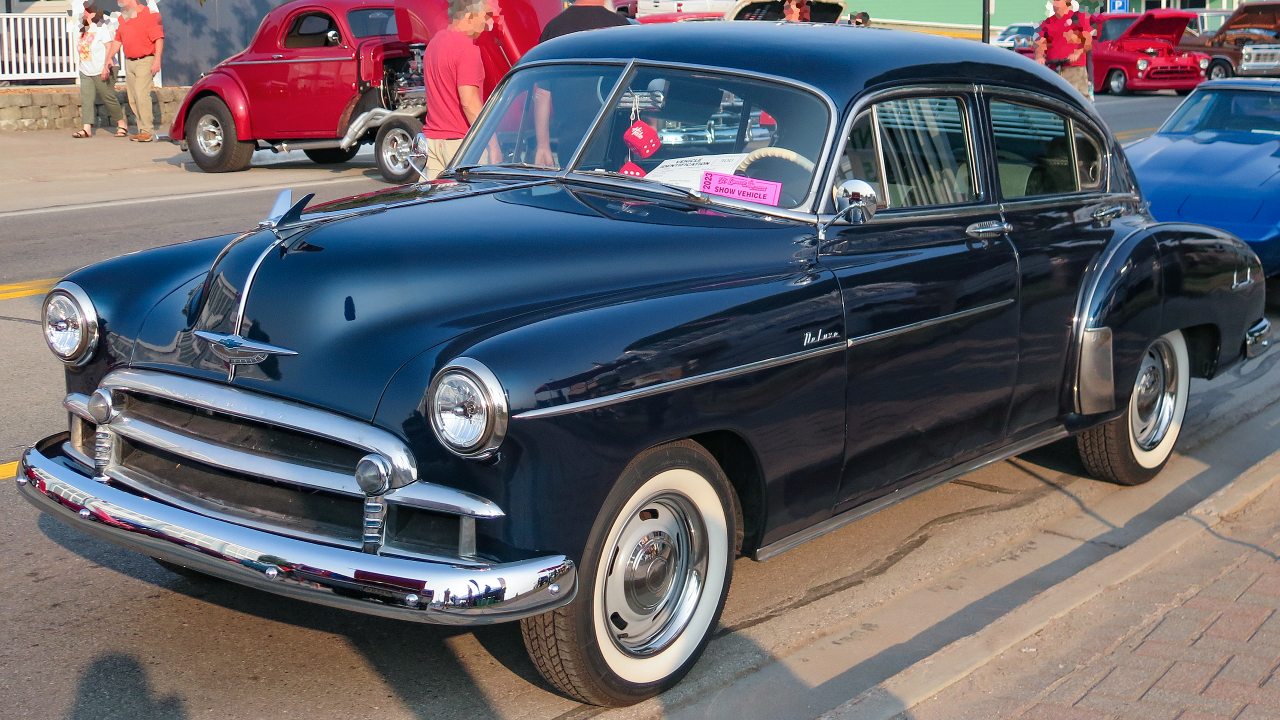
What made the 1950 Fleetline feel so modern was how it blended everyday usefulness with a shape that looked like it was moving even when parked. The car’s signature feature was its rear-sloping roofline, a fastback arc that flowed from the windshield to the tail in one continuous sweep. Their Fleetline variants had a low profile that, combined with that distinctive roof, gave the car a sporty look without sacrificing the interior space families expected from a full size Chevrolet.
That balance mattered in an era when most buyers still needed one car to do everything. The Fleetline’s trunk and rear seating remained practical, yet the silhouette suggested speed and sophistication that had previously been reserved for coupes and specialty models. Contemporary reviewers and later historians have noted that this fastback form influenced design trends well into the 1950s, as other manufacturers experimented with similar rooflines and lower, more streamlined bodies in response to the visual impact that the Fleetline had already proven could succeed in the showroom.
How the 1950 Fleetline fit into Chevrolet’s evolving lineup
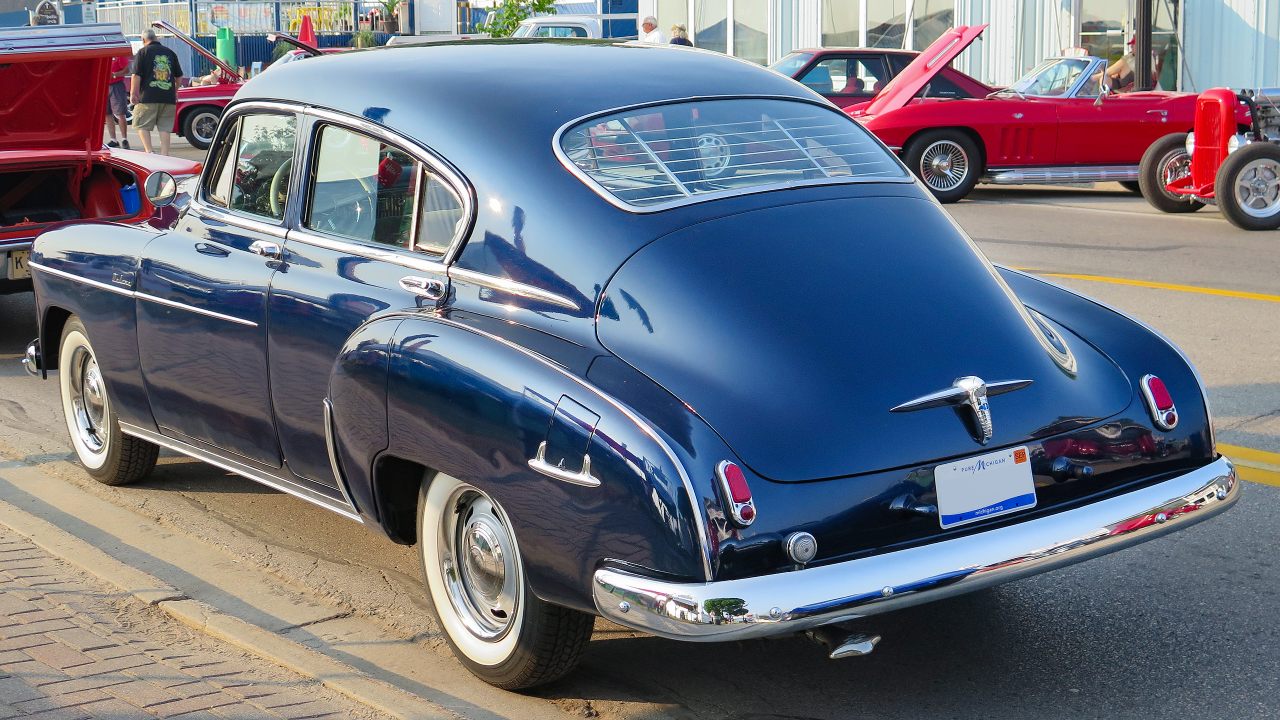
Within Chevrolet’s catalog, the Fleetline did not stand alone, it shared the stage with the more upright Styleline series that targeted buyers who preferred a traditional three box sedan. The 1949 to 1952 Chevrolet Fleetline and Styleline models formed a coherent Pre Tri Five family, with shared chassis and mechanical components wrapped in different sheet metal to appeal to distinct tastes. I see the 1950 Fleetline as the expressive sibling in that family, the one that pushed the brand’s styling boundaries while the Styleline reassured conservative customers.
That internal balance helped Chevrolet maintain broad market coverage at a time when competition from other domestic brands was intense. For the years 1949 through 1952, the fastback Fleetline remained an important part of the lineup, even as some rivals began to retreat from similar body styles. The fact that Chevrolet kept the Fleetline in production through those years, after seeing it reach 31,86% of sales with 213,938 units out of 671,543 earlier in its run, underscores how central the model was to the company’s strategy of pairing mass production with aspirational design.
Why collectors still chase the postwar Fleetline look
Today, when I talk with collectors and restorers, the 1950 Fleetline often comes up as a gateway car into postwar American classics. Its proportions lend themselves naturally to period correct customs, from mild dechroming and lowered suspensions to full lead sled treatments that emphasize the long roof and tapered tail. That same low profile and rear sloping roofline that once signaled modernity to new car buyers now gives enthusiasts a canvas that feels inherently stylish even before any modifications.
At the same time, the Fleetline’s mechanical simplicity and shared components with other 1949 to 1952 Chevrolet models make it approachable for hobbyists who are not ready to tackle rare or exotic machinery. The Pre Tri Five underpinnings mean that parts availability and community knowledge are strong, while the body style still stands out at shows filled with later Tri Five Chevrolets. In that sense, the 1950 Fleetline occupies a sweet spot, it is distinctive enough to draw attention, yet grounded in the same robust engineering that helped Chevrolet dominate the early fifties market.
The Fleetline’s lasting imprint on everyday American style
Looking back, I see the 1950 Chevrolet Fleetline as a car that taught Detroit how far it could push style in a mainstream product without losing practicality. Its success built on the earlier moment when the Fleetline had captured 31,86% of Chevrolet sales, or 213,938 out of 671,543 units, proving that buyers would embrace a fastback silhouette if it was wrapped around a dependable package. That lesson carried forward as automakers refined lower rooflines, integrated fenders, and smoother body sides into the default language of American car design through the 1950s.
The influence of that shape still echoes in how we picture the postwar street scene, from small town main drags to urban boulevards lined with chrome and curved glass. Their Fleetline variants, with their low profile and distinctive rear sloping roofline, helped shift the national taste away from upright, prewar forms toward a more streamlined, motion oriented aesthetic that would define the decade. When I think about postwar style in motion, I picture a 1950 Fleetline gliding past neon signs at dusk, a mass produced car that managed to look like a custom job straight from the factory.