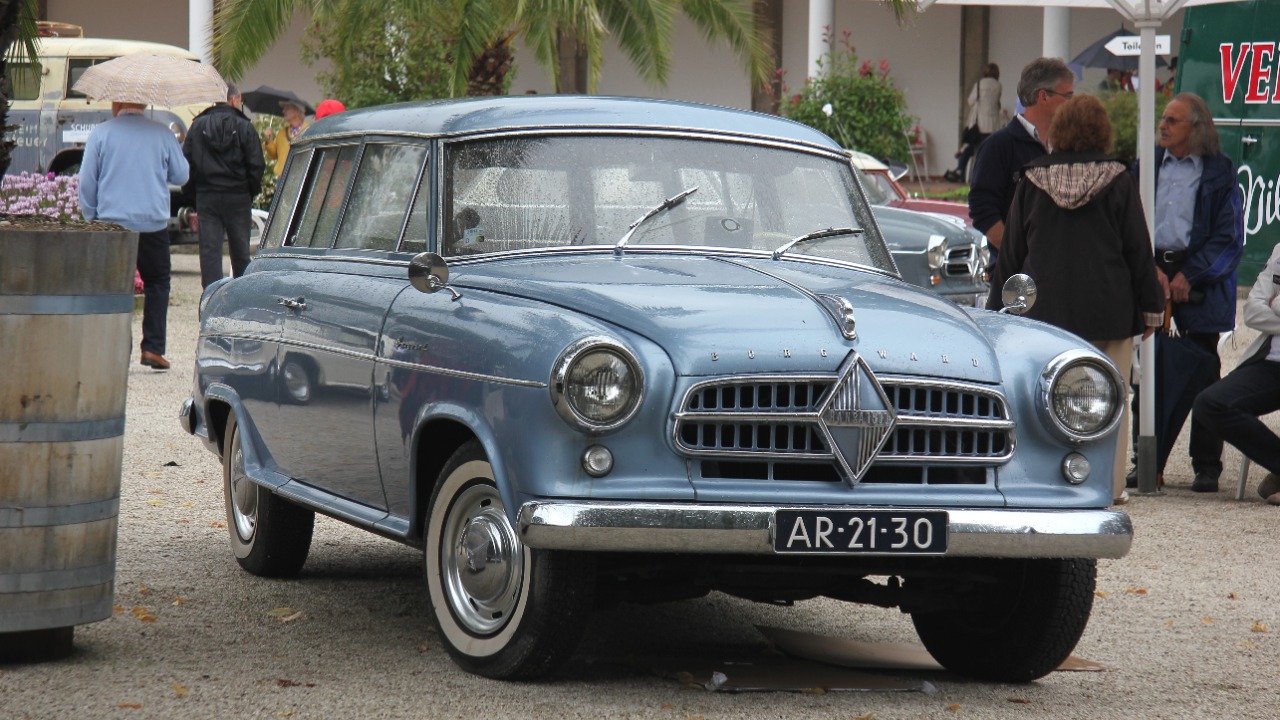
The Borgward Isabella arrived in the mid 1950s as a compact sedan with big ambitions, built to show that a German independent could play in the same aspirational space as the established luxury names. By 1957, the year its sleek coupé joined the range, the car had become a rolling statement that style, engineering and a touch of glamour did not have to be reserved for the very rich. When I look back at that moment, I see a company using one model to chase prestige so aggressively that it briefly climbed near the top of Germany’s industry, then burned out almost as quickly.
From Bremen upstart to status symbol
To understand why the Isabella mattered, I start with the badge on its nose. The car was built by the Bremen Carl F. W. Borgward company, a manufacturer that had grown quickly in the years after the Second World War and was hungry to move beyond utilitarian transport. The Borgward Isabella itself was conceived as more than a basic family car, with clean three-box styling and a level of finish that signaled a step up from the firm’s earlier products. In a market still rebuilding, that combination of practicality and polish helped the Isabella become a commercial success, and it turned the Borgward name into shorthand for something a little more sophisticated than the average German sedan.
The scale of that ambition shows up in the production numbers and the company’s position in its home market. The Isabella sold strongly enough that, by 1958, over 100,000 examples had been built, a remarkable figure for a car from a relatively small firm. Around the same period, Borgward had grown so quickly that, in 1957, Borgward was described as Germany’s second-largest auto manufacturer, sitting just behind Volkswagen in output. For a brief window, the Isabella was not just a model line, it was the public face of a challenger brand that seemed poised to join the country’s industrial elite.
Why 1957 mattered for the Isabella’s image
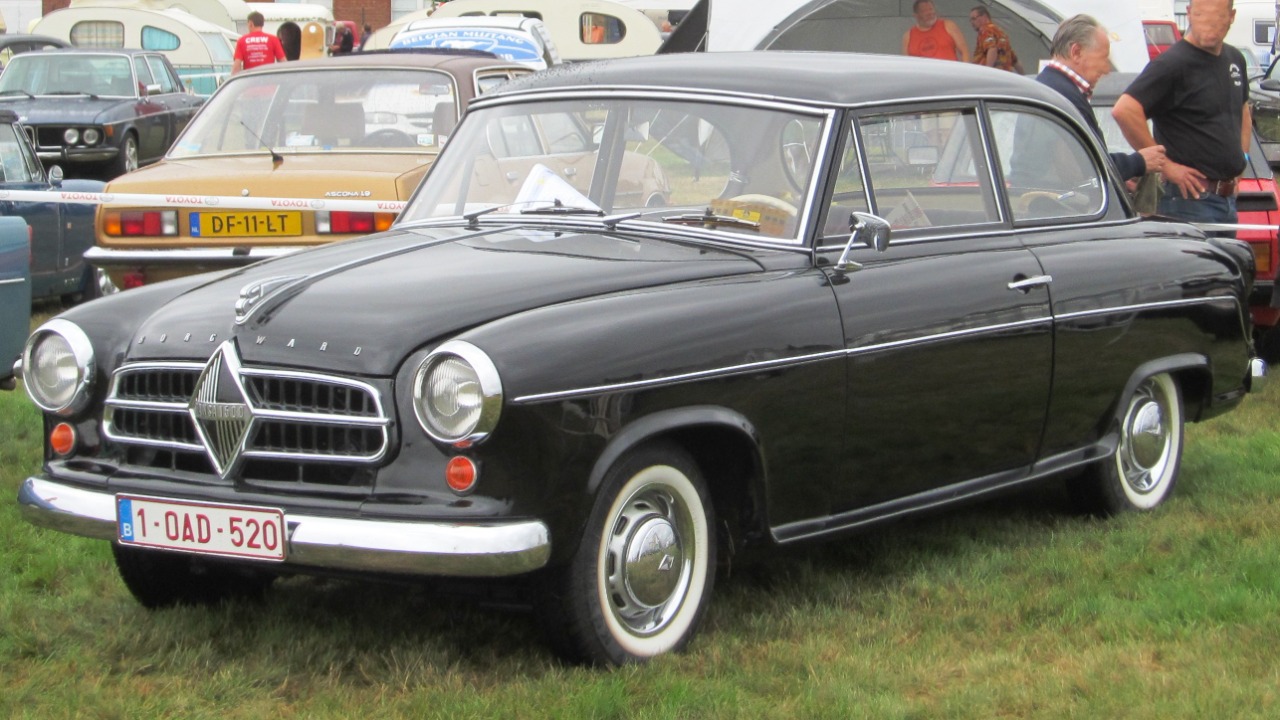
When I focus on 1957, I see a turning point where the Isabella stopped being merely successful and started to look aspirational. That year, the company introduced the sporty Isabella Coupé, a car that traded some of the sedan’s practicality for a lower roofline and more dramatic proportions. The Isabella Coup appeared in 1957 and was celebrated for both its aesthetics and its technical setup, signaling that Borgward was no longer content to be seen as a maker of sensible saloons. The coupé’s presence in showrooms gave the whole range a halo, the kind of car that might be rare on the road but loomed large in advertising and in the imagination of young enthusiasts.
Even in its day, that coupé body was not universally loved, yet its quirks became part of its charm. Contemporary observers noted that, even in its day, the coupé was a bit strangely proportioned, but that oddity contributed in a positive way to its unique character, right down to details like a prominent clock and a cigarette lighter in the cabin, as highlighted in one Even period look back. In a decade when European manufacturers were still figuring out how to blend American-inspired glamour with their own design language, the Isabella Coupé’s slightly offbeat stance made it stand out in traffic and in classified ads, reinforcing its role as the prestige-chasing member of the family.
Engineering ambition and the cabriolet gamble
Prestige in the 1950s was not just about how a car looked, it was also about how much engineering effort a company was willing to pour into variants that would never sell in huge numbers. Borgward’s decision to offer an open version of the Isabella is a case in point. The production of the cabriolet was contracted to the firm Karl Deutsch in Cologne, a specialist coachbuilder trusted to handle the complex task of turning an early monocoque design into a structurally sound convertible, as detailed in period histories of Production of the model. That choice underlined how far Borgward was willing to go to give the Isabella the kind of glamorous body styles usually associated with larger, more expensive brands.
At the same time, the company pushed the Isabella into export markets that were far from its Bremen base. Reports on the car’s global footprint note that the Borgward Isabella reached customers well beyond Europe, with small but telling numbers even in Southeast Asia, where ten were sold in Malaysia according to Portuguese language coverage of the Borgward Isabella. For me, those scattered cabriolets and exports capture the company’s mindset in 1957: it was not enough to build a competent sedan for domestic buyers, the goal was to be seen, in distant ports and on sunny boulevards, as a maker of stylish, technically advanced cars.
How the Isabella shaped and strained Borgward
Chasing prestige through one model can lift a brand, but it can also stretch it to breaking point, and the Isabella did both. On the upside, the car’s success gave Borgward the confidence to move into more luxurious territory, with the Isabella often cited as the moment when the company shifted from basic transport to more upmarket offerings. Later retrospectives on the brand’s revival note that, during the following decades, they started to build more luxurious models, like the Isabella, and that the car was available in several body styles that broadened its appeal, as summarized in coverage of how During the brand’s history. In that sense, the Isabella did exactly what its creators hoped: it pulled the company’s image upward and made the Borgward badge aspirational for a new class of buyers.
The strain came from how quickly the company expanded and how much it invested in complex variants and export pushes tied to the Isabella’s momentum. While the car remained popular, Borgward’s finances grew fragile, and the same histories that celebrate the Isabella’s success also record that Borgward filed for bankruptcy in 1961, only a few years after its high point as Germany’s number two manufacturer. When I trace that arc, I see the Isabella as both hero and burden, a car that demanded constant investment in styling, engineering and marketing to sustain its prestige, until the company behind it could no longer keep up with the costs that came with chasing the big names.
The Isabella’s afterlife and the pull of a 1950s dream
Even after the company’s collapse, the Isabella’s image as a 1950s dream car has proved surprisingly durable. In enthusiast circles, the car is remembered as a classic of the era, with its mix of modest size and upscale detailing appealing to people who want something different from the usual German icons. That appeal shows up in contemporary stories like one Brazilian feature that introduces readers to a homebuilt project called Isabella and, in the same breath, nods to the Borgward Isabella as a clássico dos anos 50 that still inspires admiration. When I see a young builder naming his own creation after the car, it feels like proof that the Isabella’s prestige chase left a cultural mark that outlasted the company’s balance sheet.
On the collector market, the Isabella’s more glamorous variants continue to carry the torch for that brief moment of ambition. Auction listings and specialist dealers still highlight the coupé and cabriolet as the most desirable versions, leaning on the same talking points that Borgward used in the 1950s: elegant lines, advanced engineering for their time and a certain underdog charm. For me, that ongoing fascination closes the loop on the story that began in 1957, when the Isabella Coupé appeared and the company from Bremen decided it could stand shoulder to shoulder with the likes of Volkswagen and the established luxury marques. The prestige it chased may have come at a high price, but the car it produced continues to turn heads, decades after the factory gates in Bremen fell silent.
More from Fast Lane Only: