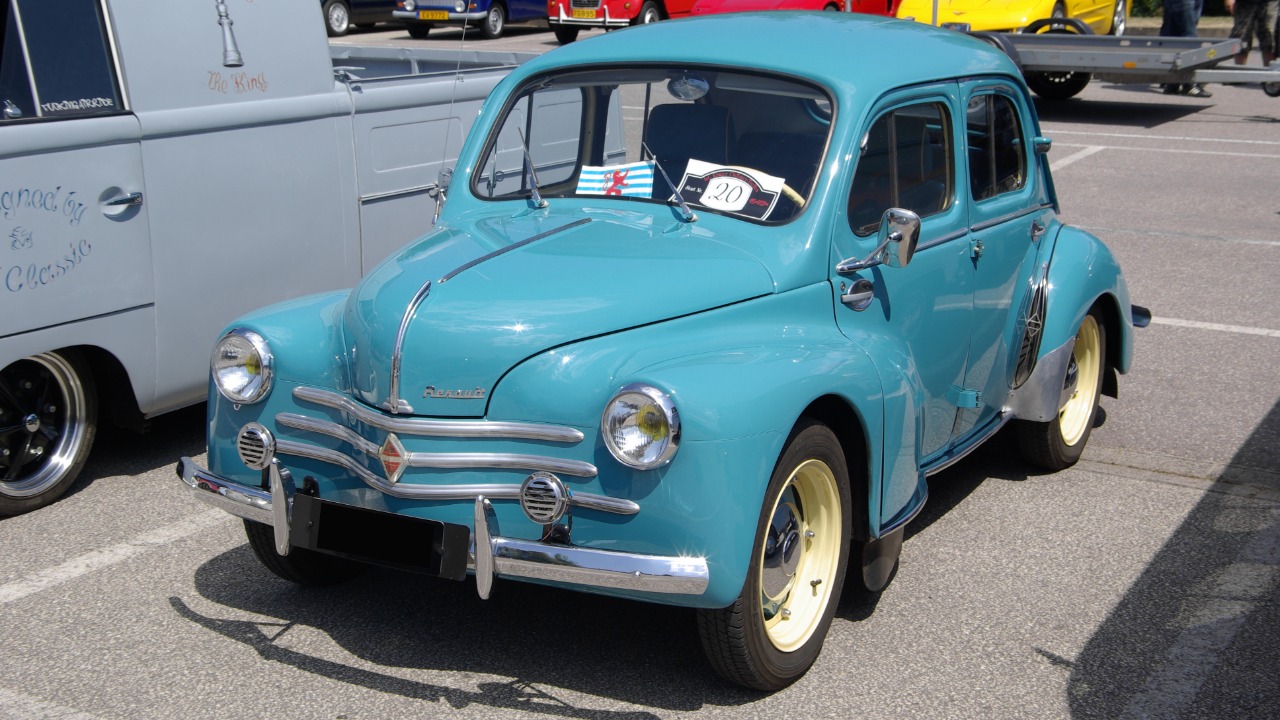
The 1956 Renault 4CV arrived at a moment when Europe was still rebuilding, and it quietly rewrote the rules for what a family car could be. Compact, affordable and cleverly engineered, it showed that a truly small car was not a compromise but a practical answer to crowded cities and tight postwar budgets. By the time that model year rolled off the line, the 4CV had already proven that downsizing could work on a national scale and, increasingly, on a global one.
When I look back at that little rear‑engined saloon, I see more than a charming classic. I see a template for modern urban cars, from city runabouts to budget hatchbacks, that still leans on the same mix of light weight, efficient packaging and just‑enough performance that made the 4CV such a breakthrough.
From secret wartime sketch to postwar necessity
The story of the Renault 4CV starts in the shadows, not in a bright motor show hall. In the midst of the Second World War, engineers at Renault were quietly working on a tiny car that could mobilise a country once peace returned. That clandestine project, known internally by the term 4cv, was conceived as a light, economical machine that would use minimal materials yet still feel sturdy enough for rough roads and long ownership. Designing such a car during conflict was a gamble, but it meant that when factories could finally switch back to civilian work, Renault already had a blueprint for a people’s car ready to go.
As the first new road‑going Renault launched after World War Two, the production 4CV was explicitly aimed at cheap, cheerful motoring for ordinary families rather than prestige buyers. It was small on the outside but packaged to carry four people, and its modest engine and simple mechanicals kept running costs low at a time when fuel and money were both scarce. That positioning, as the first postwar Renault for everyday use, is what allowed the 4CV to become a familiar sight on French streets and to set the stage for a broader acceptance of small cars as serious transport rather than fringe curiosities.
Engineering smallness without feeling cheap
What made the 4CV so persuasive was not just its size, but how intelligently that size was used. The car’s rear‑mounted drivetrain freed up space in the cabin, giving passengers more room than the stubby body suggested and improving traction on slippery roads. An important part of the 4CV’s success also came from new production methods, including transfer lines designed to machine engine blocks in a more efficient, repeatable way. Those manufacturing innovations, highlighted in technical histories of the model, meant Renault could build the car in large numbers while keeping quality and price in check, a combination that helped the 4CV become a mass‑market product rather than a niche experiment in minimalism, as detailed in Ready for production accounts.
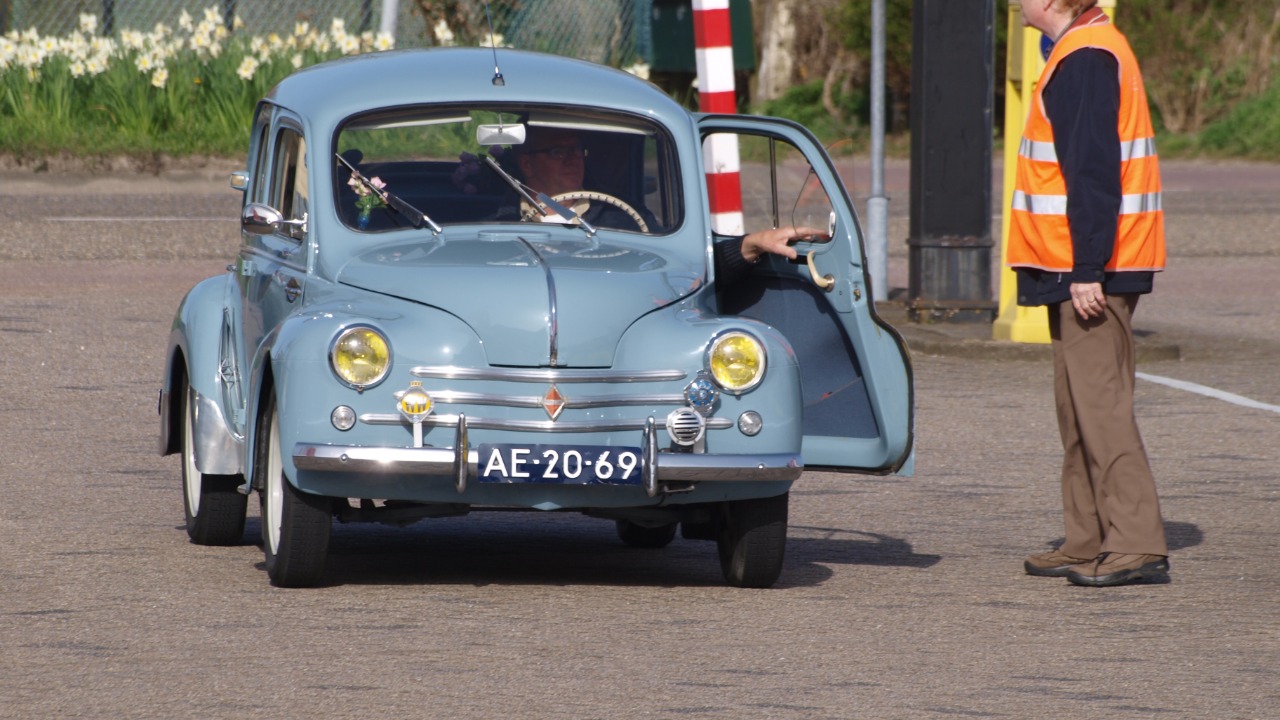
Even the doors told a story about how Renault balanced cost and modernity. Period footage and commentary from enthusiasts like Kristoff show that so‑called suicide doors were still common in the auto industry until the 1950s, and on this four‑door Renault they were used to simplify structure and access without adding weight. Watching a preserved car in motion, with its compact proportions and upright stance, you can see how designer Ren and his colleagues leaned on proven ideas to keep tooling costs low while still delivering a car that felt contemporary to buyers of the time, a point that comes through clearly in Kristoff’s walk‑around of the model.
A little car that took France by storm
Once production finally ramped up, the 4CV did exactly what its creators had hoped and more. It took Renault about a year to get the lines running smoothly, but when they did, the car took France by storm, quickly becoming a fixture in towns and villages as well as in the growing suburbs. Contemporary accounts describe how its low purchase price, relatively high fuel economy and ability to carry a small family made it an obvious choice for first‑time buyers. That momentum turned the 4CV into a cornerstone of Renault’s recovery and gave the company the confidence to keep investing in compact cars, a dynamic captured in detail in Renault focused retrospectives.
The cultural impact went beyond sales charts. The 4CV is a vehicle that dominates the background of 1950s and early 1960s French films, often parked along boulevards or buzzing through rural scenes, and it occupies a place in the popular imagination as the car of a generation that finally had the means to travel for pleasure. Owners remember its simple dashboard, its modest performance and even its quirky indicators as part of a shared national experience of newfound mobility. That omnipresence in cinema and memory is why writers on French lifestyle and travel still describe the 4CV as a symbol of postwar optimism, a theme explored in pieces like French reflections on the car’s joys.
Global reach and a new confidence in small cars
By the mid‑1950s, and especially in 1956, the 4CV had grown from a French phenomenon into a global product that proved small cars could succeed in very different markets. The model found success in various countries around the world, with Spain emerging as a particularly strong market and West Germany also embracing the car despite its own domestic microcar boom. Japan went further, building the 4CV under licence and adapting it to local needs, which showed that the basic package of a compact, rear‑engined saloon could be transplanted into different industrial and cultural contexts. That international spread, documented in Spain and Japan focused histories, is a big part of why the car is now seen as a proof point that small really could be universal.
The company’s own heritage narrative reinforces that idea. Renault’s story begins in 1899 with three brothers, Louis and Marcel among them, who built their reputation on clever engineering and accessible cars rather than luxury toys. Later brand histories point to the 4CV as an especially important chapter in that legacy of innovation and timeless design, because it showed that a compact, affordable model could be engineered with the same seriousness as larger sedans. In that sense, the 4CV did not just sell well, it validated Renault’s belief that small cars could carry the company’s identity into new decades, a point underlined in corporate retrospectives like Renault and its Legacy of Innovation and Timeless Design.
From family runabout to motorsport and beyond
What really fascinates me about the 4CV is how its basic layout turned out to be more versatile than anyone expected. Thanks to the rear‑mounted drivetrain, it was a pretty good rally car straight out of the box, with strong traction and a light nose that coped well with rough surfaces. That unexpected competence inspired drivers like Rédélé to create tuned versions and even specialist derivatives, some of which evolved into more focused sports cars that still relied on the humble 4CV’s mechanical core. The way a simple economy car could be stretched into competition use, while still being sold at a lower price in its standard form, is captured in motorsport‑tinged histories that highlight how Thanks to that drivetrain, the car punched above its weight.
Specialist builders took the idea even further, using the 4CV as a donor for lightweight coupes and racing specials through the late 1940s into the 1960s. Those projects, chronicled in detailed timelines of Renault 4cv based specials, show how the same compact engine and chassis could underpin everything from home‑built racers to more polished coachbuilt machines. For me, that ecosystem of spin‑offs is the clearest sign that the 4CV had proved a point: if a small, inexpensive car could support family duties, motorsport and creative engineering experiments, then small cars were not a compromise at all, but a flexible foundation for the future of everyday motoring.
More from Fast Lane Only: