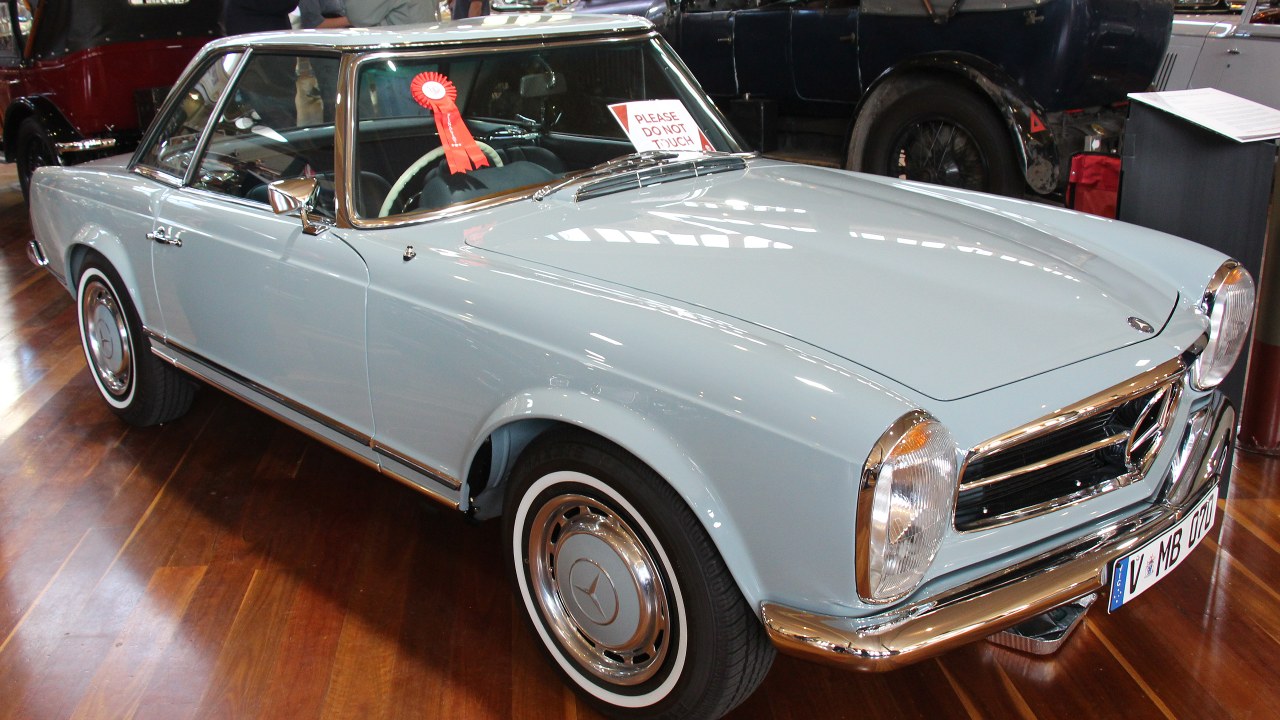
The debut of the 1963 Mercedes-Benz 230 SL marked a sharp turn in how a sporting roadster could look, feel, and behave on real roads. Replacing both a hardcore racing-derived icon and a softer boulevard cruiser, it introduced the so-called Pagoda shape and a new idea of everyday usability wrapped in modernist style. I see that moment as the point when the SL line stopped chasing extremes and instead defined a balanced grand touring template that still shapes Mercedes thinking today.
From 190 SL compromise to a clean-sheet brief
By the mid 1950s, Mercedes engineers knew the existing SL lineup could not stretch much further. The glamorous 300 SL was fast and technically advanced, but it was expensive and demanding to drive, while the smaller 190 SL looked similar yet lacked the performance to match its image. Inside the company, History notes that Mercedes, Benz Technical Director Prof, Fritz Nallinger and his team had “no illusions” about the 190, which they saw as a compromise that did not fully satisfy either sporting drivers or comfort-focused customers. That internal realism set the stage for a replacement that would not simply tweak the old formula but rethink what an SL should be.
The new project that eventually became the W113 series was tasked with doing two jobs at once, succeeding both the 300 and the 190 without repeating their weaknesses. Rather than chase outright speed at any cost, the engineers prioritized safety, structural rigidity, and long-distance comfort, while still delivering credible performance. The result was a car that sat between the extremes of its predecessors, with a more compact footprint and a focus on “a high degree of traveling comfort” backed by modern chassis engineering. That shift in priorities explains why the 230 SL felt so different from the cars it replaced, even though it carried the same SL badge.
Geneva 1963 and the birth of the Pagoda identity
The turning point came when Mercedes pulled the wraps off the 230 SL at the Geneva Motor Show in Mar 1963. The car arrived nine years after the original 300 SL and 190 SL, yet it did not lean on nostalgia; instead it presented a crisp, almost architectural shape with clean surfaces and a distinctive removable hardtop. Contemporary accounts describe the launch as a sensation, with the new SL immediately recognized as a modern interpretation of open-top luxury rather than a simple evolution of the earlier cars. The Geneva Motor debut signaled that Mercedes was confident enough to retire both the halo 300 and the entry-level 190 in favor of a single, more rational model.
That new model, internally designated W113, entered series production shortly after its show appearance, with Production of the Mercedes 230 SL running through the mid 1960s. The factory treated it as a core product rather than a low-volume experiment, and the car’s balanced specification reflected that mainstream ambition. The 230 engine size, paired with the 113 chassis, gave the car its formal identity, but it was the visual drama of the roofline that quickly overshadowed the numbers. Within a short time, owners and observers had given the car a nickname that would stick far longer than its internal code.
Why the concave roof became “Pagoda”
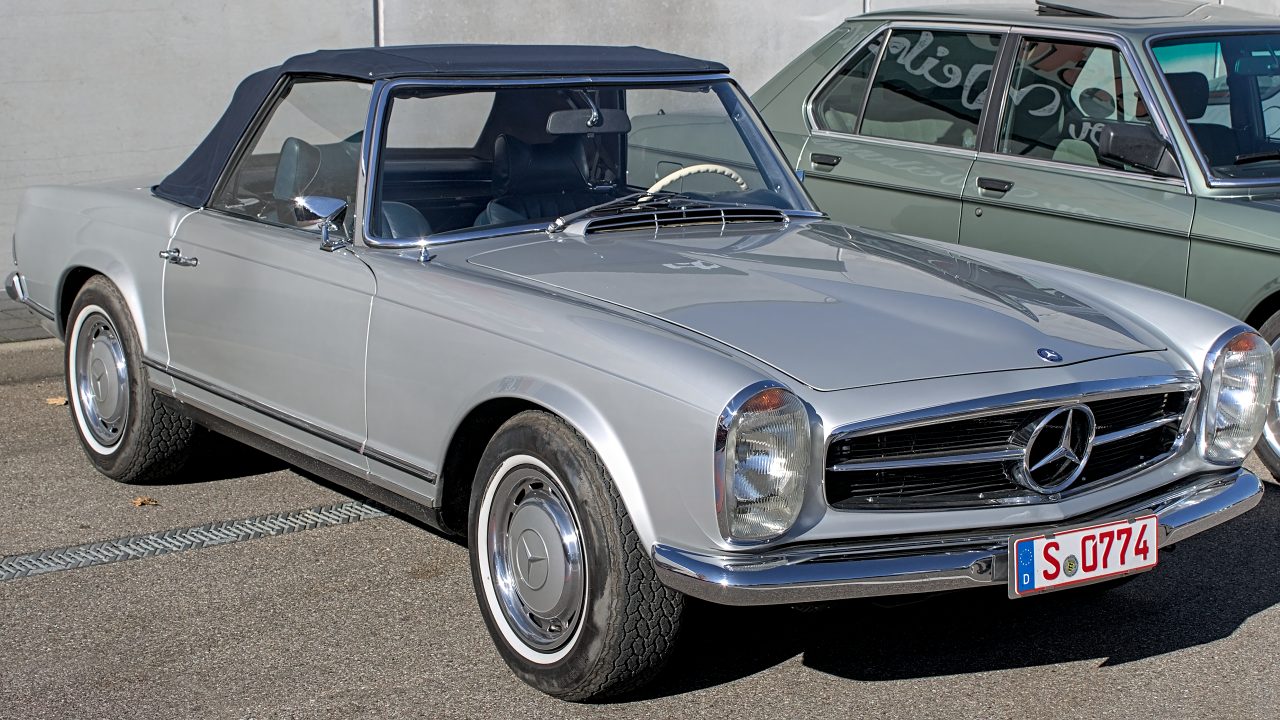
The most recognizable feature of the 230 SL was its unusual hardtop, which dipped gently in the middle instead of arching upward like a conventional coupe roof. This concave profile, framed by slim pillars and large glass areas, created a light, pavilion-like effect that contrasted with the solid body sides. The shape was not a styling gimmick; it was engineered to improve rollover strength and visibility while keeping weight low, a combination that suited the car’s grand touring mission. Over time, enthusiasts began comparing the roof to East Asian temple architecture, and the Pagoda nickname emerged as a shorthand for the entire W113 series.
Later derivatives such as the Mercedes-Benz 280 SL carried the same roof concept, and period commentary notes that The Mercedes, Benz, Pagoda label attached itself firmly to these cars because of that single design stroke. Even when the hardtop was removed, the association lingered, since the rest of the bodywork had been drawn to harmonize with the roof’s horizontal emphasis and crisp lines. The nickname eventually became so pervasive that it now functions almost like an unofficial model name, used across markets and generations to describe any W113, regardless of engine size.
Engineering a new kind of SL for real roads
Under the elegant body, the 230 SL introduced a technical package that was far more modern than its restrained styling suggested. The car used a rigid safety body with defined crumple zones, a concept that Mercedes had been developing in parallel with its sedans, and applied it to a two-seat roadster. The suspension and steering were tuned to deliver stable, predictable behavior at speed, prioritizing control and comfort over the nervous agility of some earlier sports cars. In period descriptions, the W113 is presented as a car that could cruise at high speeds on emerging motorways while still coping gracefully with rougher secondary roads.
The powertrain followed the same philosophy of usable performance. The Mercedes, Benz 230 engine delivered enough power to move the relatively compact body briskly, but it was not configured as a racing unit. Instead, the focus was on smooth power delivery, reliability, and the ability to sustain long journeys without drama. Later price and ownership guides emphasize that The Mercedes, Benz 230 SL, with its 230 displacement and 300 SL heritage in the background, was designed to be driven regularly rather than stored as a fragile exotic. That usability is a key reason why the Pagoda era still resonates with modern buyers who want classic style without sacrificing everyday practicality.
From contemporary roadster to enduring classic
When I look at the Pagoda today, I see a car that anticipated the modern idea of a premium roadster decades before it became common. The W113 combined cultivated power delivery, as later factory retrospectives put it, with captivating elegance in a way that made sense for both city use and long-distance touring. The Mercedes, Benz SL, Pagoda narrative that the company now promotes highlights exactly this blend of attributes, positioning the car as a milestone in the SL story rather than a nostalgic curiosity. That framing aligns with how collectors and drivers treat the model, as a usable classic that still feels coherent in contemporary traffic.
The production run of the 113 series, covering the 230 and its successors, cemented the Pagoda’s place in the brand’s history. Factory histories describe How The Geneva Motor debut of the W113 set a template that later SL generations would follow, with each new model balancing performance, comfort, and safety rather than chasing pure speed. Market analyses that track values into the present, including updated 2025 guides, show that interest in the 230 SL remains strong, reflecting both its design appeal and its reputation for robust engineering. More than six decades after its introduction, the car that first wore the Pagoda roof still defines what many people picture when they think of a classic Mercedes roadster, a testament to the clarity of the brief that Prof, Fritz Nallinger and his team set in motion back in the 190 SL era.
More from Fast Lane Only: