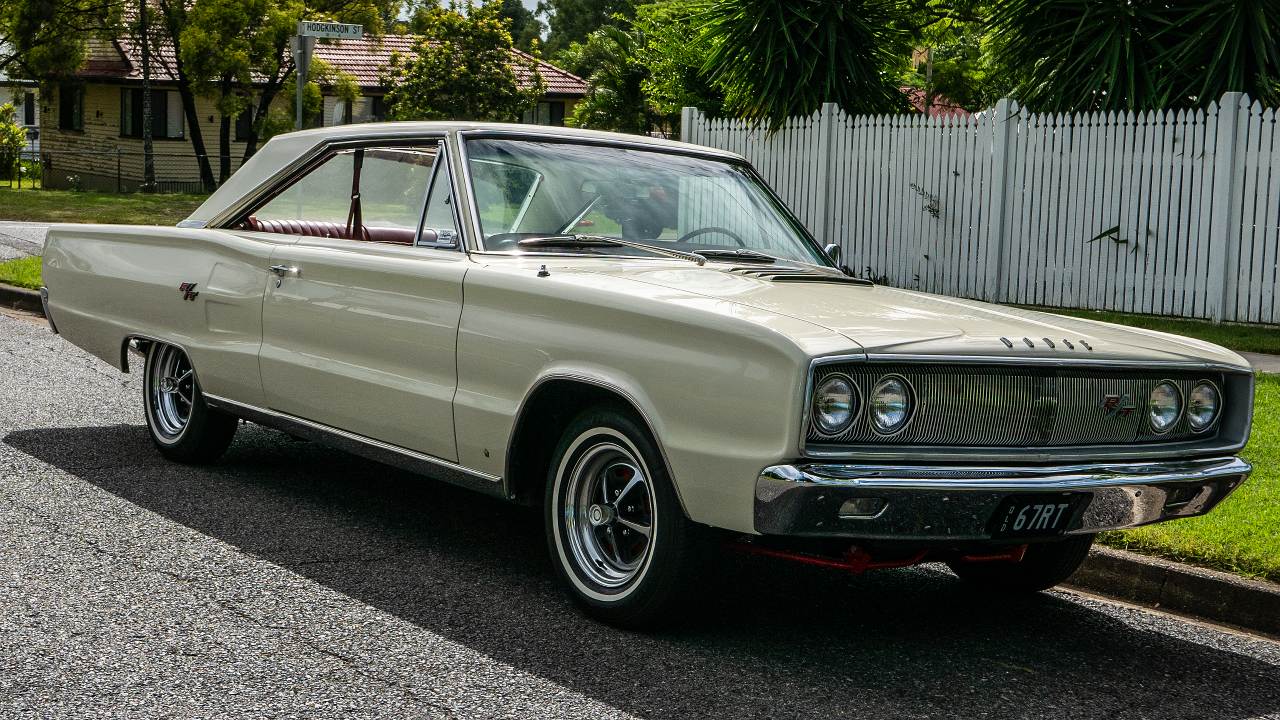
The 1967 Dodge Coronet R/T arrived at a moment when Detroit was turning raw displacement into a marketing language of its own, and it quickly became one of the clearest statements of that power-first philosophy. As the first year for the R/T badge on The Coronet, it marked the point where Dodge stopped flirting with performance and committed to building a full-size street machine that could carry its weight on both the boulevard and the drag strip.
How Dodge turned The Coronet into an R/T
When Dodge added the R/T suffix to The Coronet for 1967, it was not just a trim package, it was a declaration that this midsize platform would be a serious performance player. The Coronet R/T arrived as a two-door hardtop or Convertible, both built around a standard big block V8 that was tuned specifically for higher output and marketed as a step above the more ordinary Coronet 440 and Coronet 500 models. Under the hood, the standard engine was a 440 cubic inch V8 rated at well over 300 horsepower, identified in period material as the Magnum, which immediately positioned the car in the thick of the displacement race that was defining late‑1960s American performance.
That decision to make the 440 the default powerplant put Dodge directly into the same conversation as Chevy and Mopar rivals that were escalating cubic inches year over year. Reporting on the period notes that this 440 engine helped ignite a displacement war with Chevy and Mopar competitors, culminating in the Coronet 440 R/T as a headline car for Dodge’s performance lineup. By anchoring the R/T identity to a big block rather than a cosmetic package, Dodge ensured that the badge meant something tangible every time a driver pressed the throttle.
Production reality and rarity on today’s roads
For all its swagger, the 1967 Coronet R/T was never a mass‑market commodity, and that limited production is a big part of why it stands out today. One detailed build history notes that there were 9,826 Coronet R/Ts built for the United States, including both hardtops and convertibles, with at least one documented example Built at the Lynch Road Plant before being sold in Maryland. That figure is modest by Detroit standards of the era, especially when spread across multiple body styles and engine combinations, and it helps explain why seeing a correct, numbers‑matching car at a show still feels like an event.
The Convertible versions in particular sit at the top of the rarity scale, a fact that is reinforced every time a surviving car surfaces in enthusiast circles. Video walk‑arounds of restored examples, such as a Dodge Coronet R/T Convertible finished in Red and powered by a 440, underline how few of these cars were ordered with both the open roof and the big block. When a host cues up the 440 Engine Sound on a channel like My Car Story, the subtext is clear: this is not just another mid‑sixties drop‑top, it is one of a relatively small run of serious performance convertibles that Dodge was willing to build.
On the road: more muscle cruiser than Track star
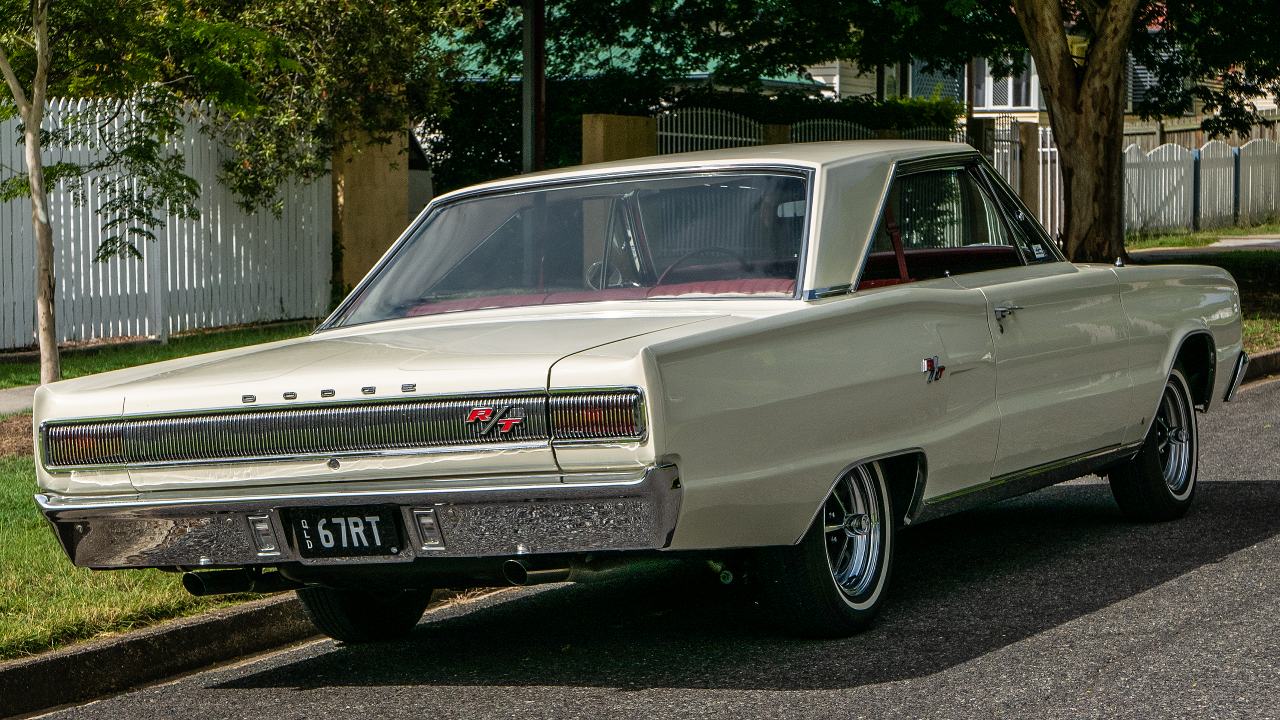
Period testing makes it clear that the Coronet R/T’s strengths leaned more toward effortless highway pace than all‑out Track dominance. Contemporary reviewers recorded 0 to 60 in 8.6 seconds for an automatic‑equipped car, a figure that, while respectable for a full‑size machine with a three‑speed automatic and street gearing, did not match the most aggressive small‑block pony cars of the same era. What the numbers did show was a car that could surge from low revs with minimal drama, trading razor‑edge acceleration for a broad, usable torque band that suited real‑world driving.
The chassis and driveline choices reinforced that dual‑purpose character. Reports on factory specifications note that R/Ts equipped with 440s and TorqueFlite automatics were typically paired with an 8 ¾‑inch rear axle using 2.94:1 gears, with 3.23:1 gearing available when buyers wanted a bit more snap off the line. Those ratios, combined with heavy‑duty springs in the rear, gave the Coronet R/T a relaxed cruising temperament at highway speeds while still allowing the big block to pull hard when prodded. It was a car that could cover long distances quickly and comfortably, even if it was not the quickest machine through the quarter mile.
From showroom muscle to collector benchmark
The way the 1967 Coronet R/T has aged in the market shows how thoroughly it has crossed from everyday muscle car to blue‑chip collectible. Valuation data for the Dodge Coronet line indicates that a 1967 Coronet R/T in good condition with average specification now commands around $83,400, a figure that would have been unthinkable when these cars were simply used performance coupes. That number reflects not only the limited production and the appeal of the 440, but also the growing recognition that the first‑year R/T represents a turning point in Dodge’s performance story.
Individual, well‑documented cars illustrate how collectors now scrutinize details that once seemed mundane. One Coronet R/T with a full paper trail, including its build sheet and Dodge Certicard, is tracked from its origin at the Lynch Road Plant to its first sale in Maryland, with every subsequent restoration choice weighed against factory specifications. Enthusiast videos that feature hosts like John Oaks walking around a 1967 DODGE CORONET R/T at Ros highlight the same priorities, from correct badging and trim to the way the 440 idles and revs. The car has shifted from being a tool for speed to a reference point for authenticity.
Why the 1967 Coronet R/T still resonates
Part of the enduring appeal of the 1967 Coronet R/T lies in how cleanly it captures a specific moment in American car culture, when displacement, styling, and marketing all aligned. The R/T badge arrived as Dodge’s answer to a market that was already crowded with performance claims, yet the decision to standardize the 440 and to offer the package on both hardtop and Convertible bodies gave it a distinct identity. Enthusiast coverage that describes the 1967 Dodge Coronet RT the first year of the RT, sometimes framed with phrases like mopar Magic, reflects how that debut year has taken on almost mythic status among brand loyalists.
At the same time, the car’s presence in modern media keeps its legend from becoming purely nostalgic. Clips of a Red Convertible easing out of a garage, the 440 clearing its throat as the camera lingers on the tail panel, or a carefully restored hardtop idling while a host narrates its history, all serve as rolling proof that the Coronet R/T was more than a spec sheet. When I look at the way collectors chase specific gear ratios like 2.94 or 3.23, debate the merits of the 440 versus the rarer 426 Hemi, and track auction results that hover around $83,400 for strong drivers, it is clear that the 1967 Coronet R/T has moved beyond its original role. It has become a benchmark for what a full‑size American performance car can be when it hits its stride at exactly the right time.
More from Fast Lane Only: