The 1967 Pontiac GTO occupies a rare place in automotive memory, where nostalgia and hard numbers align. It was not the first fast American coupe, but it distilled the emerging muscle car formula so completely that it still feels like the moment brute performance, street attitude, and mass appeal finally locked into place.
As the final year of the first-generation GTO, the 1967 model arrived just as Detroit’s horsepower race was heating up and left a template that rivals would chase for decades. Its mix of refined styling, serious V8 power, and everyday usability turned a performance experiment into a cultural reference point that still defines what a muscle car should be.
The GTO that perfected the original muscle recipe
By 1967, Pontiac had already proven that stuffing a big engine into a midsize body could sell in serious numbers, but the latest GTO showed how mature that idea had become. The 1967 Pontiac GTO is described in enthusiast reporting as a legendary muscle car that blends raw V8 power with more polished styling and road manners, a balance that helped it stand out even as competitors crowded the market. As the final model year of the first generation, it represented the peak of Pontiac’s early performance push, with the car widely portrayed as a true icon of American muscle and a favorite among collectors and drivers who wanted both speed and style.
Contemporary accounts of the car’s legacy consistently frame the 1967 Pontiac GTO as a defining symbol of the muscle era and a high point of Pontiac’s dominance in that space. Reports on the model emphasize that it is often hailed as one of the greatest muscle cars ever built and the pinnacle of the first wave of GTO development, a status reinforced by its continued popularity in enthusiast groups and classic car circles. That reputation rests not only on nostalgia but on the way the 1967 car sharpened the original GTO formula into something that felt complete and fully realized.
Design that made power look inevitable
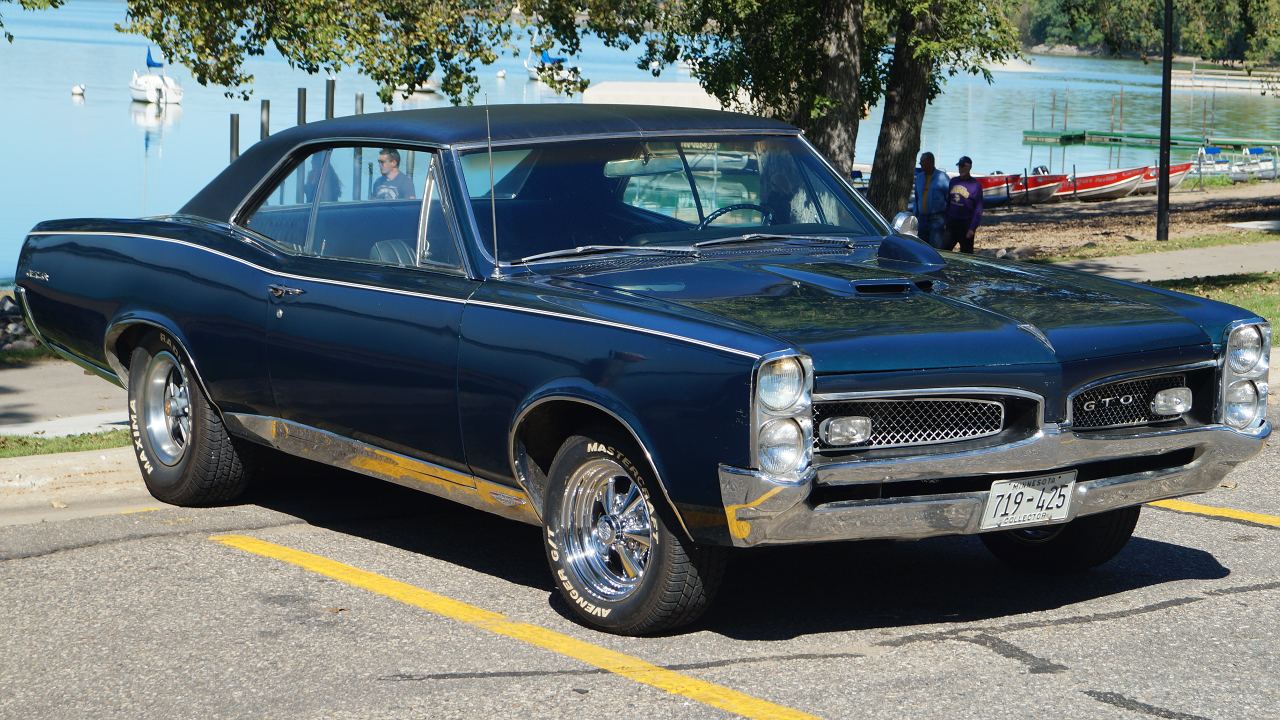
The 1967 Pontiac GTO’s styling did more than keep pace with the times, it visually announced that muscle had arrived as a permanent fixture on American roads. Enthusiast descriptions highlight its bold split grille, stacked headlights, and sleek body lines, details that gave the car an aggressive stance without tipping into cartoonish excess. At the rear, the taillights were redesigned as horizontal units integrated into a full-width panel, which created a cleaner, more modern look and made the car appear wider and more planted. These touches helped the GTO project authority even when parked, signaling that performance was central to its identity.
Reports on the 1967 model repeatedly stress how cohesive the design had become by this point in the GTO’s evolution. The car is often characterized as sleek, aggressive, and unapologetically fast, with its stacked headlights and sculpted sides working together to convey motion and intent. Commentators describe the 1967 Pontiac GTO as a legendary classic that represents the height of Pontiac’s muscle car dominance, noting that the exterior details, from the grille to the tail panel, were not just decorative but part of a deliberate effort to make the car look as serious as it drove. In that sense, the styling helped cement the GTO as a visual shorthand for American performance.
V8 performance that matched the attitude
The 1967 Pontiac GTO’s reputation would ring hollow if the performance did not live up to the styling, but period specifications and later reporting show that the car’s powertrain delivered on its promises. Accounts of the model describe it as a standout in muscle car history, with a strong V8 that provided the kind of straight-line acceleration buyers expected from a serious performance car. The 1967 GTO is repeatedly linked with the idea of “400 V8 power” and characterized as a classic muscle icon that was both aggressive and genuinely fast, not merely loud or visually intimidating.
Enthusiast summaries of the car’s features emphasize that the 1967 Pontiac GTO was not just about raw output but about making that power accessible to ordinary drivers. Reports note that the model year refined the GTO’s mechanical package, pairing its V8 with driveline and chassis updates that helped the driver stay in command. The car is often described as the “godfather of muscle in peak form,” a phrase that reflects how its performance hardware, from the engine to the suspension, worked together to create a confident, controllable experience. That combination of serious speed and usable dynamics helped the GTO feel like a complete performance car rather than a straight-line novelty.
The cultural moment when muscle went mainstream
The 1967 Pontiac GTO did not emerge in a vacuum, it arrived in the middle of a broader shift in American car culture that the GTO itself had helped trigger. Earlier in the decade, Pontiac had taken the unusual step of dropping a large displacement V8 into a midsize platform and marketing the result directly to younger buyers, a move that some historians credit with sparking the muscle car revolution. Reporting on the GTO’s origins notes that this strategy made high performance accessible to a wider audience, turning what had been a niche pursuit into something that could be ordered from a showroom and driven to work.
By the time the 1967 model appeared, that experiment had become a movement, and the GTO was widely regarded as the car that defined it. Enthusiast commentary often refers to the GTO as the “original muscle car” and describes the 1967 version as the point where the concept reached its first peak. Accounts of the era portray the car as a street icon that combined speed, style, and a certain defiant attitude, helping to fix the idea of the muscle car in the public imagination. In this reading, the 1967 Pontiac GTO feels like the moment when muscle stopped being a novelty and became a central part of American automotive identity.
A legacy that still shapes how muscle is judged
Decades after the last first-generation GTO left the factory, the 1967 model continues to serve as a benchmark for what a muscle car should be. Enthusiast groups and collectors frequently single out this year as a high point, describing the 1967 Pontiac GTO as a true icon of American performance and a defining symbol of the muscle era. Reports on its legacy emphasize that it represents the peak of Pontiac’s performance story, with bold styling and stacked headlights that remain instantly recognizable even to casual observers. That enduring visibility keeps the car relevant in a market crowded with later, often more powerful machines.
Modern discussions of muscle cars still measure newcomers against the template the 1967 GTO helped set: a midsize body, a big V8, assertive styling, and a price that once put serious performance within reach of ordinary drivers. Commentators describe the 1967 Pontiac GTO as a “muscle legend” and a “classic muscle car icon,” language that reflects how thoroughly it has come to embody the category it helped define. The car’s continued presence in shows, auctions, and enthusiast communities underscores why it still feels like the moment muscle truly arrived, not because it was the first fast car of its kind, but because it captured the idea so completely that everything after has been, in some way, a response to it.
More from Fast Lane Only